

Commentary
Andrei Kolesnikov
{
  "authors": [
    "Andrei Kolesnikov"
  ],
  "type": "legacyinthemedia",
  "centerAffiliationAll": "",
  "centers": [
    "Carnegie Endowment for International Peace",
    "Carnegie Russia Eurasia Center"
  ],
  "collections": [
    "Inside Russia"
  ],
  "englishNewsletterAll": "",
  "nonEnglishNewsletterAll": "",
  "primaryCenter": "Carnegie Endowment for International Peace",
  "programAffiliation": "",
  "programs": [],
  "projects": [],
  "regions": [
    "Russia"
  ],
  "topics": [
    "Political Reform"
  ]
}
Source: Getty
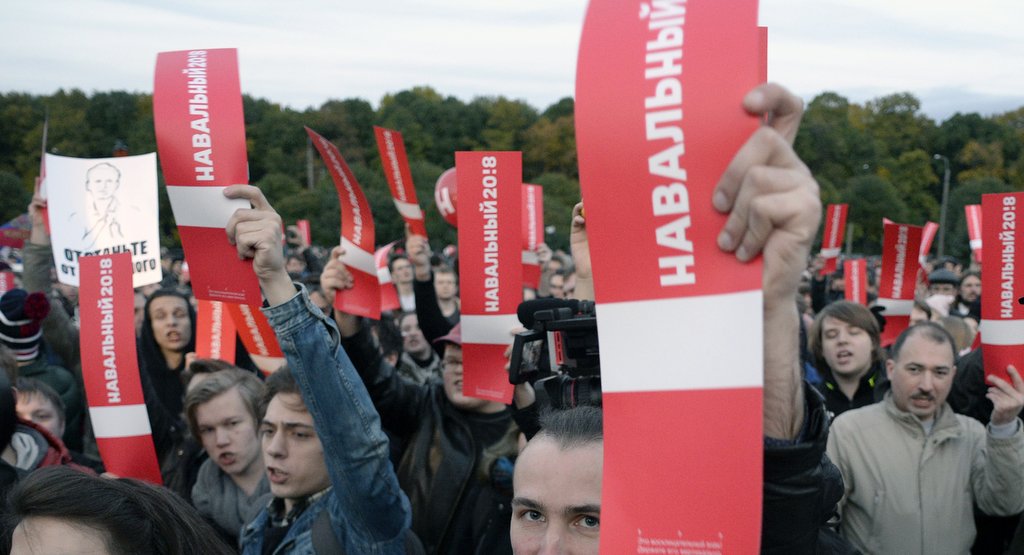
Time is on Navalny’s side. If he doesn’t commit a blunder that disenchants potential voters, and if the authorities don’t take the brute force approach of locking him away for a number of years, he could emerge as a key opposition figure between 2018 and 2024.
Source: Moscow Times
Navalny was given a 20-day sentence — his third incarceration since he announced his run for the presidency back in December 2016. Ever since his strong showing in the Moscow mayoral elections in September 2013, the authorities see Navalny as a serious threat and fear him.
Navalny’s brother, Oleg, is being held hostage in prison and Navalny himself is also occasionally taken out of circulation, with authorities detaining him.
But the Kremlin has yet to take the step of bringing another criminal charge against the opposition leader and locking him up for good. The reason is not because those orchestrating the elections need Navalny. They would never let him run for president anyway, and Putin does not need a vocal opponent to increase voter turnout and give the elections a veneer of legitimacy.
The reason is that the Kremlin doesn’t want Navalny to gain national fame as someone who is constantly persecuted and a charismatic victim of the regime. A better strategy is never to mention Navalny and to obstruct him as much as possible — by arresting him, for example. Authorities were hoping President Vladimir Putin could enjoy his 65th birthday without Navalny holding an insufferable protest rally in the president’s hometown of St. Petersburg (even though that plan backfired with Navalny’s campaign organizing events in almost 80 cities.)
Navalny undertook his recent tour of Murmansk, Yekaterinburg, Omsk, Khabarovsk, Vladivostok, Novosibirsk, Orenburg, and Nizhny Novgorod as a way to break out of the so-called “internet ghetto”— to give thousands of Russians a chance to “touch him with their own hands,” and to prove that he is a man of the people and not some sort of immovable Moscow fixture.
He is in it for the long-term, and 2018 is just an opportunity to build up his public image and prepare himself for the 2024 presidential race as a candidate of national standing.
Although he is Russia’s only politician — in the true sense of the word, and not simply playing the role of a Kremlin stooge — he has been unable to unite those who oppose the ruling regime, even though that is, of course, the goal of his “solo career.”
Navalny is no Boris Yeltsin, who, from the late 1980s, became such a unifying figure because he embodied a single message: that Russia should abandon communism. What’s more, the current situation is much more complicated than it was during perestroika. Now, most Russians support the ruling regime and its leader, and the remaining minority does not consider Navalny their only representative in the world of opposition politics.
What’s more, Russia’s democratic opposition has long suffered from “narcissism of petty differences” — for every two opposition figures there are at least three opinions.
Navalny is envied by those who he could theoretically unite. For example, popular media figure Ksenia Sobchak has said that more people buy tickets to attend her shows than come to Navalny’s free public rallies. That overlooks the difference between attending a non-political performance and the physical danger that threatens anyone attending an opposition rally — events that the authorities always manage to subvert in one way or another. At the same time, Navalny also often displays envy toward his colleagues, such as Dmitry Gudkov, who put together an exceptionally effective team for the Moscow municipal elections in September.
Navalny’s strategy is a slow-burning one. His campaign is becoming something of an ongoing revolution as it reaches an increasing number of people who are getting, at the very least, the chance to form a firsthand opinion of the protest leader.
Of course, for Navalny to retain his position as a key opposition figure, he needs to focus not only on the negative message of ousting Putin’s elite, but also on a positive message, by producing a road map for a better future.
The demand for such a road map definitely exists. In August, the Moscow Carnegie Center and the Levada Center conducted a national survey measuring Russians’ preparedness for change. Only 2 percent of respondents saw Navalny as having the potential to put forward a reform program — but this is mostly because he is an opposition figure and far less well known than those already in power.
Interestingly, the greatest number of people who saw him as capable of formulating a program of reform were those between the ages of 25 and 39, with a higher education (4 percent), Muscovites (5 percent), and the residents of cities with populations between 100,000 and 500,000. That is, the exact locations where Navalny’s rallies have enjoyed the most support.
Time is on Navalny’s side. If he doesn’t commit a blunder that disenchants potential voters, and if the authorities don’t take the brute force approach of locking him away for a number of years, he could emerge as a key opposition figure between 2018 and 2024. And, potentially, he would be one of the main players in a post-Putin Russia. With one caveat — Russia has to make that transition first.
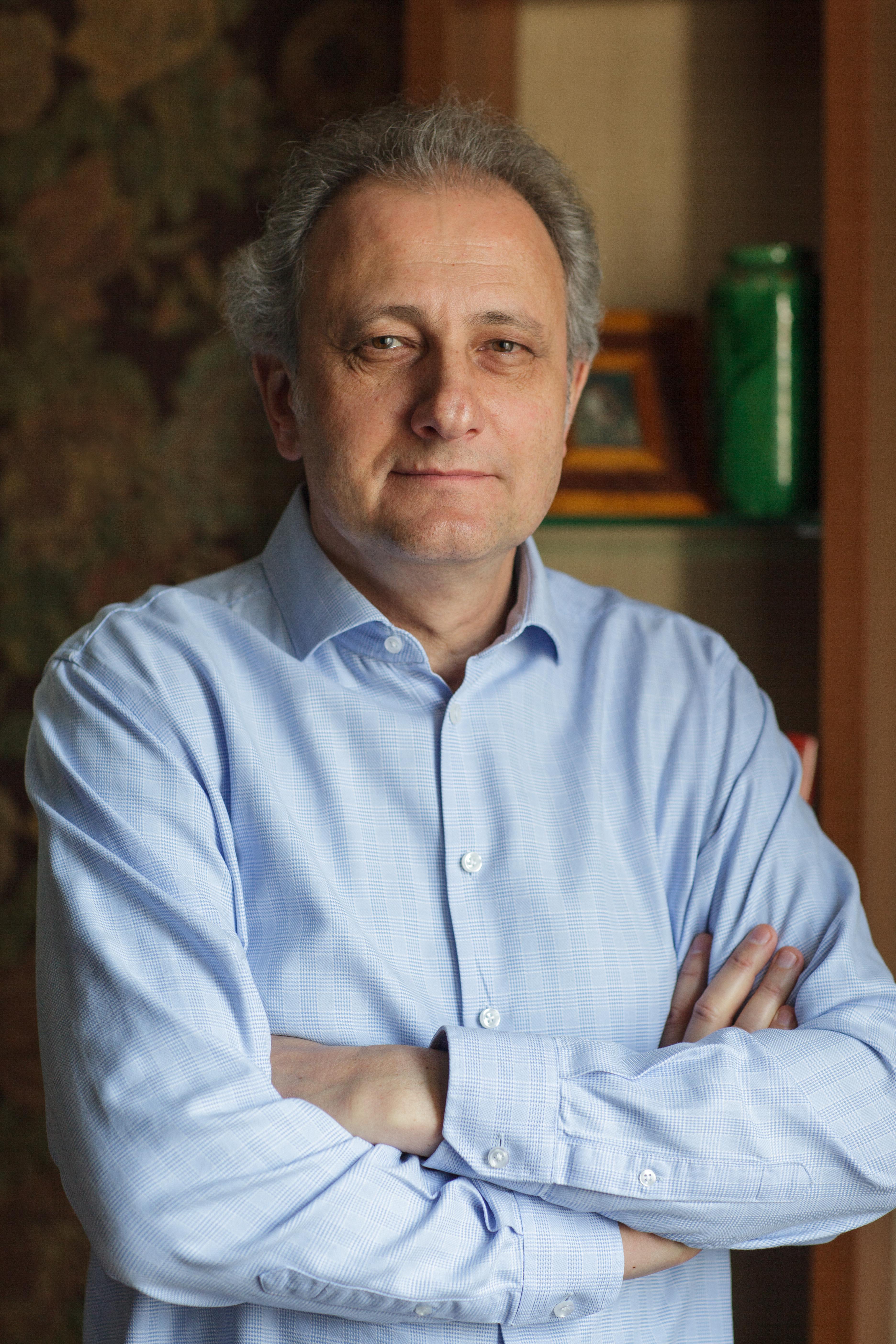
Former Senior Fellow, Carnegie Russia Eurasia Center
Kolesnikov was a senior fellow at the Carnegie Russia Eurasia Center.
Recent Work
Andrei Kolesnikov
Andrei Kolesnikov
Carnegie India does not take institutional positions on public policy issues; the views represented herein are those of the author(s) and do not necessarily reflect the views of Carnegie, its staff, or its trustees.

This piece argues that India’s central challenge is not managing a single flashpoint but resolving the underlying tension between expansion and institutional coherency of the BRICS grouping.

Vrinda Sahai
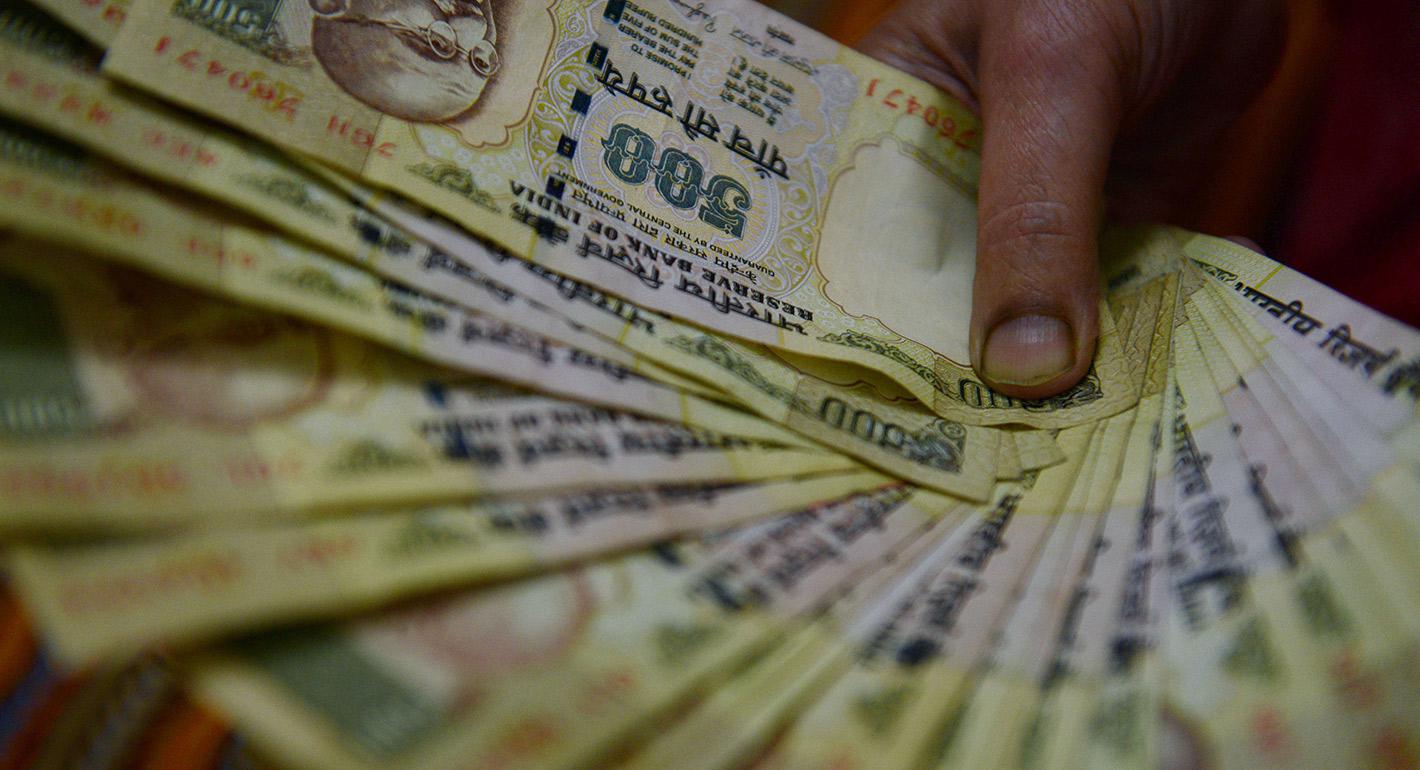
As India’s economy recovers from the coronavirus pandemic, Indian businesses need efficient financial structures to regain their ground. Key reforms to India’s Insolvency and Bankruptcy Code could fill these gaps.

Anirudh Burman
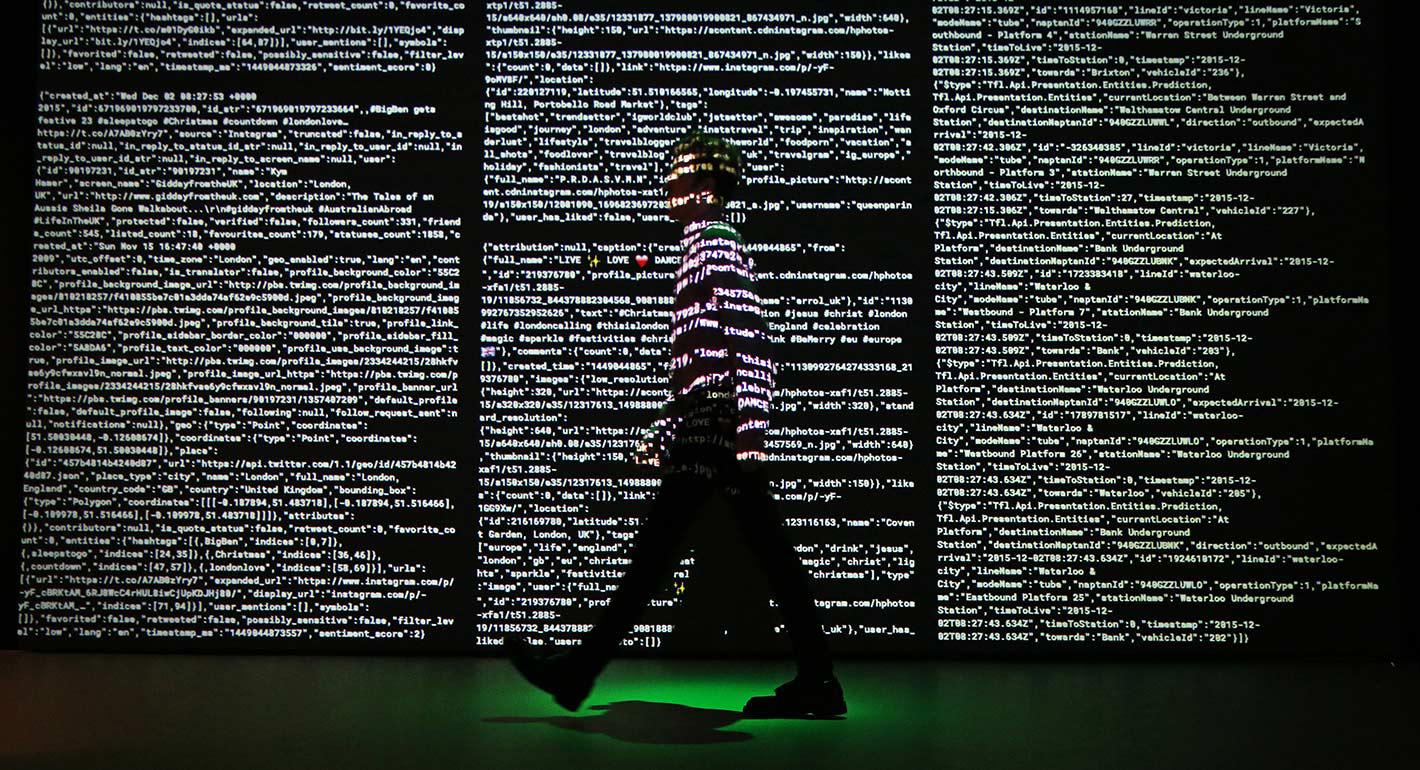
Access to cross-border data is an integral piece of the law enforcement puzzle. India is well placed to lead the discussions on international data agreements subject to undertaking necessary surveillance reforms.
Smriti Parsheera, Prateek Jha
After the coronavirus pandemic wanes, how will China’s reorientation of the Belt and Road Initiative to address global health concerns influence its relationships with South Asian countries?
Deep Pal, Rahul Bhatia
Early in the outbreak, government researchers forecast several high-risk scenarios that were downplayed or ignored in public messaging.
Gautam I. Menon