

• Research
  • About
  • Experts
Carnegie India logoCarnegie lettermark logo
AI
{
  "authors": [
    "Deborah Gordon",
    "David Livingston"
  ],
  "type": "other",
  "centerAffiliationAll": "dc",
  "centers": [
    "Carnegie Endowment for International Peace"
  ],
  "collections": [],
  "englishNewsletterAll": "",
  "nonEnglishNewsletterAll": "",
  "primaryCenter": "Carnegie Endowment for International Peace",
  "programAffiliation": "SCP",
  "programs": [
    "Sustainability, Climate, and Geopolitics"
  ],
  "projects": [
    "Carnegie Oil Initiative"
  ],
  "regions": [
    "United States",
    "South Asia",
    "North America"
  ],
  "topics": [
    "Climate Change"
  ]
}

Source: Getty

Other

Petroleum Coke Use in India and South Asia: Recent Trends and Emerging Policy Options

Petcoke, a highly-polluting byproduct of refining heavier oils, can be more polluting than coal. Broad indicators show that highly-degraded petcoke ends up being burned to generate power in Asia, making it important to take stock of global petcoke markets and flows around South Asia.

Link Copied
By Deborah Gordon and David Livingston
Published on Oct 1, 2017
Project hero Image

Project

Carnegie Oil Initiative

The Carnegie Oil Initiative analyzed global oils, assessing their differences from climate, environmental, economic, and geopolitical perspectives. This knowledge provides strategic guidance and policy frameworks for decision making.

Learn More

Source: Institute for Policy, Advocacy, and Governance

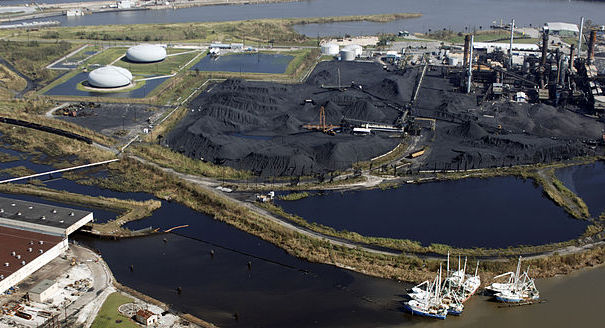
Heavier oils are naturally higher in their carbon content, creating challenges in production, refining, transport, and marketing. In order to refine heavier oils, the ‘coking’ process was patented in 1913 in order to make more high-value transport fuels out of the ‘bottom of the oil barrel.’ Wringing out more liquids using coking, however, results in a solid residue called petroleum coke, or ‘petcoke.’

The heavier the oil, the more petcoke produced. The higher an oil’s sulfur and heavy metal content, the lower the petcoke’s quality and value. While petcoke that is low in sulfur and heavy metals can be treated (calcined) and used to produce aluminum, steel, and as industrial feedstock, fuel grade or “green” petcoke, which is high in sulfur and heavy metals, is burned in power plants to generate electricity.

Fuel grade petcoke is generally too dirty to produce power in the United States. To prevent petcoke from piling up, the U.S. sells its stores of fuel grade petcoke, mostly to Asia where environmental regulations tend to be less stringent. With as much as 9% sulfur along with elevated levels of nickel and vanadium, burning petcoke emits particulates, sulfates, and other air contaminants that degrade the environment and threaten public health...

Read the full chapter

This chapter was originally published in Connectivity and Trading in Power And Energy: A Regional and International Dimension by the Institute for Policy, Advocacy, and Governance.

About the Authors

Deborah Gordon

Former Director and Senior Fellow, Energy and Climate Program

Gordon was director of Carnegie’s Energy and Climate Program, where her research focuses on oil and climate change issues in North America and globally.

David Livingston

Former Associate Fellow, Energy and Climate Program

Livingston was an associate fellow in Carnegie’s Energy and Climate Program, where his research focuses on emerging markets, technologies, and risks.

Authors

Deborah Gordon
Former Director and Senior Fellow, Energy and Climate Program
Deborah Gordon
David Livingston
Former Associate Fellow, Energy and Climate Program
Climate ChangeUnited StatesSouth AsiaNorth America

Carnegie India does not take institutional positions on public policy issues; the views represented herein are those of the author(s) and do not necessarily reflect the views of Carnegie, its staff, or its trustees.

More Work from Carnegie India

  • Commentary
    India Signs the Pax Silica—A Counter to Pax Sinica?

    On the last day of the India AI Impact Summit, India signed Pax Silica, a U.S.-led declaration seemingly focused on semiconductors. While India’s accession to the same was not entirely unforeseen, becoming a signatory nation this quickly was not on the cards either.

      Konark Bhandari

  • Commentary
    The Impact of U.S. Sanctions and Tariffs on India’s Russian Oil Imports

    This piece examines India’s response to U.S. sanctions and tariffs, specifically assessing the immediate market consequences, such as alterations in import costs, and the broader strategic implications for India’s energy security and foreign policy orientation.

      Vrinda Sahai

  • Commentary
    NISAR Soars While India-U.S. Tariff Tensions Simmer

    On July 30, 2025, the United States announced 25 percent tariffs on Indian goods. While diplomatic tensions simmered on the trade front, a cosmic calm prevailed at the Sriharikota launch range. Officials from NASA and ISRO were preparing to launch an engineering marvel into space—the NASA-ISRO Synthetic Aperture Radar (NISAR), marking a significant milestone in the India-U.S. bilateral partnership.

      Tejas Bharadwaj

  • Commentary
    TRUST and Tariffs

    The India-U.S. relationship currently appears buffeted between three “Ts”—TRUST, Tariffs, and Trump.

      Arun K. Singh

  • Commentary
    The India-U.S. TRUST Initiative: Advancing Semiconductor Supply Chain Cooperation

    As part of the TRUST initiative, leaders of the two countries committed to building trusted and resilient supply chains, including for semiconductors and critical minerals. India and the United States have made steady progress in this area over the years. This essay explores the takeaways from discussions on semiconductor supply chains that took place at Carnegie India’s 9th Global Technology Summit.

      Konark Bhandari

Get more news and analysis from
Carnegie India
Carnegie India logo, white
Unit C-4, 5, 6, EdenparkShaheed Jeet Singh MargNew Delhi – 110016, IndiaPhone: 011-40078687
  • Research
  • About
  • Experts
  • Projects
  • Events
  • Contact
  • Careers
  • Privacy
  • For Media
Get more news and analysis from
Carnegie India
© 2026 Carnegie Endowment for International Peace. All rights reserved.