

Commentary
Marc Pierini
{
  "authors": [
    "Marc Pierini"
  ],
  "type": "legacyinthemedia",
  "centerAffiliationAll": "dc",
  "centers": [
    "Carnegie Endowment for International Peace",
    "Carnegie Europe",
    "Malcolm H. Kerr Carnegie Middle East Center"
  ],
  "collections": [
    "Turkey’s Transformation",
    "Transatlantic Cooperation"
  ],
  "englishNewsletterAll": "ctw",
  "nonEnglishNewsletterAll": "",
  "primaryCenter": "Carnegie Europe",
  "programAffiliation": "EP",
  "programs": [
    "Europe"
  ],
  "projects": [],
  "regions": [
    "Europe",
    "North America",
    "Türkiye",
    "United States",
    "Middle East",
    "Iran"
  ],
  "topics": [
    "Security",
    "Political Reform",
    "Military"
  ]
}
Source: Getty
Turkey’s incursion into Afrin marks a significant move in Ankara’s campaign against the Kurdish People’s Protection Units (YPG).
Source: Axios
Turkey’s incursion into Afrin, in northwestern Syria, marks a significant move in its campaign against the Kurdish People’s Protection Units (YPG). It was authorized by Russia, with the likely aim of returning local control to the Assad regime, and signals displeasure with the U.S.’s recent announcement of a 30,000-strong border protection force. Rex Tillerson called news of such a force “misportrayed,” but amid conspiracy theories and anti-American sentiment, his clarification came too late.
At this point, there’s little the U.S. and EU can do apart from pressing Turkey to seek moderation and avoid civilian casualties. The EU might also offer cross-border humanitarian assistance on Syrian soil.
The stakes will be raised if and when President Erdogan launches a promised ground operation against the town of Manbij, located at the Western edge of a vast region controlled by the Syrian Democratic Forces (SDF), themselves under the command of the YPG. Because the SDF are backed by U.S. Special Forces, the risk of a U.S.–Turkish confrontation is real.
What's next: Given restrictions on free speech within Turkey, the media is expected to produce a unanimously positive image of the operation. By playing up this limited operation as a major success, Erdogan is attempting to burnish his image as the providential leader best able to steer the country through difficult times.

Senior Fellow, Carnegie Europe
Marc Pierini is a senior fellow at Carnegie Europe, where his research focuses on developments in the Middle East and Turkey from a European perspective.
Recent Work
Marc Pierini
Marc Pierini
Carnegie India does not take institutional positions on public policy issues; the views represented herein are those of the author(s) and do not necessarily reflect the views of Carnegie, its staff, or its trustees.

How is AI reshaping space security, creating governance challenges, and where does international diplomacy stand today?


Tejas Bharadwaj, Almudena Azcárate Ortega

After the chill in ties between 2020 and 2024 that brought India–China relations to their lowest point in several decades, the two countries have engaged each other afresh. This paper argues that there are predominantly four imperatives guiding India’s approach to China, and they exist in an order of priority.

Saheb Singh Chadha
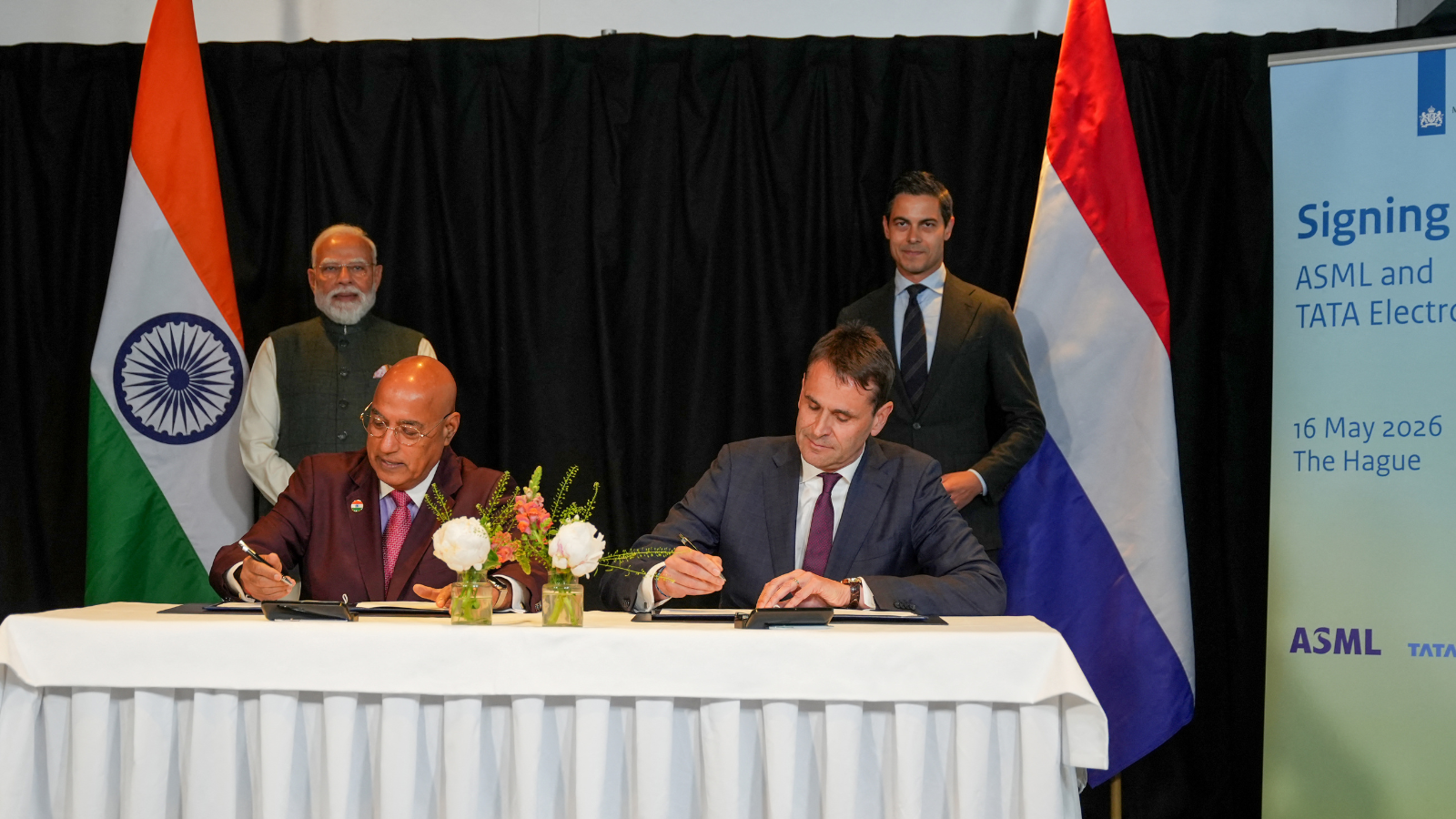
The ASML MoU with Tata Electronics is an indicator of how far the Indian semiconductor ecosystem has come. This ecosystem has been years in the making and represents real commercial logic.

Konark Bhandari

The U.S.–India semiconductor cooperation story is well-stocked with top-level strategic intent. What remains unresolved, however, are some underlying challenges that will determine whether the cooperation actually functions. Three such friction points stand out.

Shruti Mittal

The India–EU Free Trade Agreement (FTA) is shaping up to be one of the most consequential trade negotiations, both economically and strategically. But, what’s in the agreement, what’s missing, and what will determine its success in the years ahead

Vrinda Sahai, Nicolas Köhler-Suzuki