

Commentary
Asia’s two largest nuclear powers have never threatened each other with nuclear weapons. How much will the recent deadly border clashes between China and India change the security landscape?
Toby Dalton, Tong Zhao, Rukmani Gupta
{
  "authors": [
    "Wyatt Hoffman",
    "Tristan Volpe"
  ],
  "type": "other",
  "centerAffiliationAll": "dc",
  "centers": [
    "Carnegie Endowment for International Peace"
  ],
  "collections": [],
  "englishNewsletterAll": "ctw",
  "nonEnglishNewsletterAll": "",
  "primaryCenter": "Carnegie Endowment for International Peace",
  "programAffiliation": "NPP",
  "programs": [
    "Nuclear Policy"
  ],
  "projects": [],
  "regions": [],
  "topics": [
    "Nuclear Policy",
    "Arms Control"
  ]
}
Source: Getty
Over the next decade, the spread and maturation of additive manufacturing could challenge major control mechanisms for inhibiting nuclear proliferation.
Source: Bulletin of the Atomic Scientists
Additive manufacturing – which leverages recent advances in automated robotics, digital computation, and the flow of information over the Internet – is being heralded as a major technological innovation. More commonly referred to as 3-D printing, additive manufacturing is already being employed by the aerospace and defense industries as a more versatile, cost-effective, and quicker way to fabricate parts for jet engines and missiles – parts that, because of their complex designs, are difficult to manufacture through traditional methods.
The nuclear industry, to reap similar benefits, is also investing in additive manufacturing. But over the next decade, the spread and maturation of additive manufacturing technology through the nuclear sector could allow illicit proliferation networks to thwart export controls – while blurring the already fuzzy distinction between prohibited and permitted dual-use activities at civil nuclear energy programs. The digital nature of additive manufacturing might provide nefarious actors with new means to subvert nodes in nuclear supply chains at which proliferation activities have traditionally been detected. An aspiring proliferator could, for example – instead of moving physical components through heavily monitored transshipment hubs – acquire an entire additive manufacturing production process from a digital build file. Such a file might include design information, automated commands for a 3-D printer, and functional specifications for a finished part.
To be sure, the nonproliferation policy community is aware of these risks, and several recently published reports have identified key patterns and capabilities related to additive manufacturing that should be carefully tracked. Policy makers appear to be taking steps to ensure that multilateral export control regimes and detection systems evolve in response to additive manufacturing technology.
Despite the risks associated with additive manufacturing, however, there is an opportunity to leverage this technology to create a fundamentally new environment for dual-use activities. Suppliers of manufacturing equipment and services, including systems for metallic additive manufacturing, have already built remote monitoring sensors into their platforms to collect large amounts of data for business purposes. The digital networks built into commercial additive manufacturing systems provide the basis to create an Internet of Nuclear Things – an interconnected web of devices and machines comprising aboveboard supply chains for nuclear capabilities. At a minimum, such a network could provide a novel way for suppliers to maintain continuous custody over sensitive information, machines, and material, and could enhance their ability to verify the end-uses and end-users of sensitive capabilities. If an Internet of Nuclear Things expands and begins to produce vast amounts of information, it would provide an invaluable resource regarding legitimate procurement and production patterns – making it easier to identify clear signatures of peaceful use. In such an environment, an illicit procurement network could find it harder to operate without setting off alarms.
The integration of cyber-physical manufacturing into nuclear supply chains entails an inevitable extension of the digitization of nuclear industry. Governments will struggle to control the evolution of these technologies and the proliferation risks they engender. However, a potential silver lining emerges in the form of unique opportunities for promoting information visibility surrounding nuclear activities. But what would an Internet of Nuclear Things actually look like? Will the interests of industry help manage – or exacerbate – the proliferation risks these technologies pose? Current trends suggest that commercial additive manufacturing firms and suppliers of nuclear technology both have an incentive to cooperate with government to develop systems that not only provide real-time certification, feedback, and quality control – but also reduce the risk of diversion to nefarious actors of sensitive technologies and processes. Further examination, however, reveals potential conflicts of interest between industry and government and among nation-states; these must be ironed out if an Internet of Nuclear Things is to be harnessed within a broader approach toward risk management. Fortunately, additive manufacturing is still at an early stage of development, so industry and government enjoy a prime opportunity to address these points of contention from the start.
This article was originally published in the Bulletin of the Atomic Scientists.
Former Senior Research Analyst, Cyber Policy Initiative
Wyatt Hoffman was a senior research analyst with the Nuclear Policy Program and the Cyber Policy Initiative at the Carnegie Endowment for International Peace.

Former Nonresident Fellow, Nuclear Policy Program
Tristan Volpe was a nonresident fellow at the Carnegie Endowment for International Peace and assistant professor of defense analysis at the Naval Postgraduate School.
Carnegie India does not take institutional positions on public policy issues; the views represented herein are those of the author(s) and do not necessarily reflect the views of Carnegie, its staff, or its trustees.

Asia’s two largest nuclear powers have never threatened each other with nuclear weapons. How much will the recent deadly border clashes between China and India change the security landscape?


Toby Dalton, Tong Zhao, Rukmani Gupta
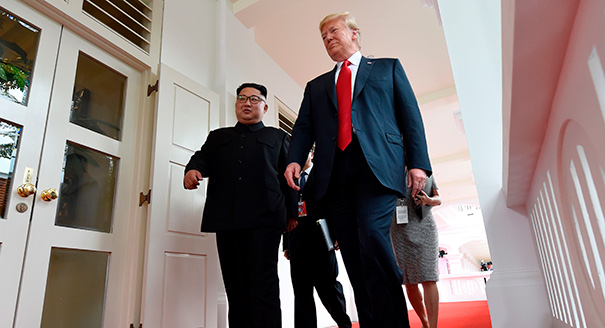
In the course of one morning in Singapore, U.S. President Donald Trump and the North Korean leader Kim Jong-un have begun to loosen a deeply entrenched and hostile relationship.
C. Raja Mohan
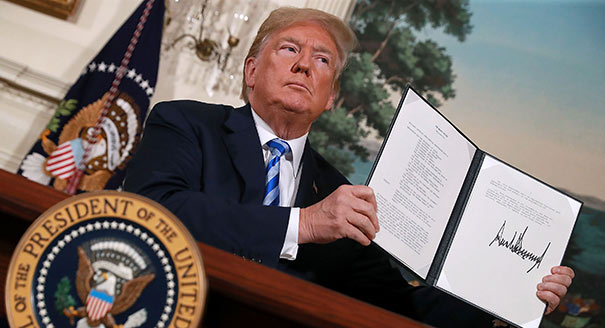
U.S. President Donald Trump’s decision to pull out of the Iran nuclear deal appears to have put regime change at the very center of the new American power play against Tehran.
C. Raja Mohan

The South Asian stalemate is likely to endure even as South and North Korea appear poised to turn the page.
C. Raja Mohan
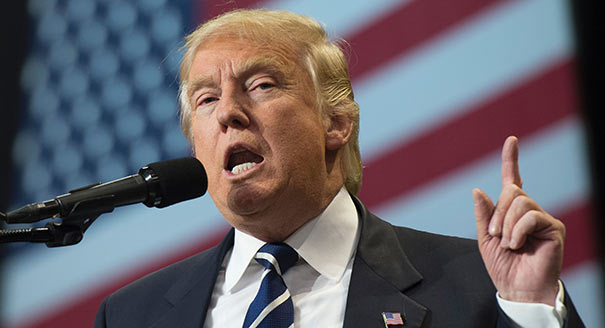
While the Trump administration’s efforts to get tough on Pakistan face challenges and potential dangers, the change in stance signals a new political will to pursue previously untried measures which offer some hope of success.
C. Raja Mohan