

Q&A
Matt Ferchen
{
  "authors": [
    "Matt Ferchen"
  ],
  "type": "legacyinthemedia",
  "centerAffiliationAll": "",
  "centers": [
    "Carnegie Endowment for International Peace",
    "Carnegie China"
  ],
  "collections": [
    "China and the Developing World",
    "China’s Foreign Relations"
  ],
  "englishNewsletterAll": "",
  "nonEnglishNewsletterAll": "",
  "primaryCenter": "Carnegie China",
  "programAffiliation": "",
  "programs": [],
  "projects": [],
  "regions": [
    "North America",
    "South America",
    "East Asia",
    "China"
  ],
  "topics": [
    "Economy"
  ]
}
Source: Getty
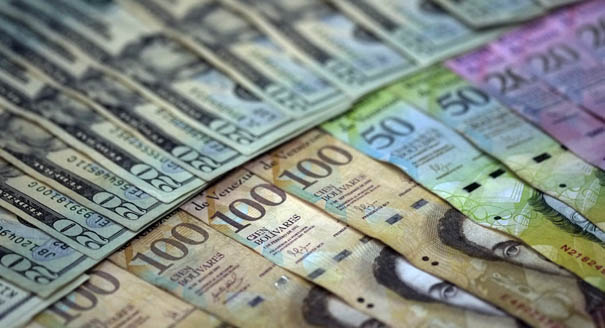
China and its keenest Latin American borrowers are left with the challenge of managing the legacy of past deals, including those that have gone awry.
Source: Latin America Advisor
The most notable absence from the 2017 list of Latin American recipients of Chinese official finance is Venezuela, which has been by far the largest destination for China Development Bank loans in the region. This clearly reflects China’s wariness of deepening its already unsustainable, ‘lose-lose’ loans-for-oil relationship with a Venezuela, which every day is sinking deeper into economic and political crisis. This underscores how even if China’s relatively low amount of state-to-state financing to Latin America in 2017 is indicative of a trend away from the volumes or types of loans we’ve seen in the last decade plus, China and its keenest Latin American borrowers are still left with the challenge of managing the legacy of past deals, including those that have gone awry. While the China-Venezuela case is extreme in the dysfunctions it has wrought and sustained, it is indicative of a growing awareness of the possibility of unsustainable debt relations flowing from China’s policy bank loans in regions far beyond Latin America, in countries like Sri Lanka and along the Belt and Road Initiative more generally. Yet what the lower lending figures to Latin America also indicate is that such concerns and lessons about debt sustainability, both at the economic and diplomatic level, are starting to be taken more seriously in China itself. The question now is how China will respond and the hope must be that rising concerns about debt sustainability, in particular sovereign loans from China’s policy banks, lead to constructive discussions between Chinese lenders and investors and those in Latin America and beyond who are eager to deepen commercial engagement with China but on more sustainable terms.

Former Nonresident Scholar, Carnegie-Tsinghua Center for Global Policy
Ferchen specializes in China’s political-economic relations with emerging economies. At the Carnegie–Tsinghua Center for Global Policy, he ran a program on China’s economic and political relations with the developing world, including Latin America.
Recent Work
Matt Ferchen
Matt Ferchen, Anarkalee Perera
Carnegie India does not take institutional positions on public policy issues; the views represented herein are those of the author(s) and do not necessarily reflect the views of Carnegie, its staff, or its trustees.

After the chill in ties between 2020 and 2024 that brought India–China relations to their lowest point in several decades, the two countries have engaged each other afresh. This paper argues that there are predominantly four imperatives guiding India’s approach to China, and they exist in an order of priority.

Saheb Singh Chadha

This piece argues that India’s central challenge is not managing a single flashpoint but resolving the underlying tension between expansion and institutional coherency of the BRICS grouping.

Vrinda Sahai

On March 10, 2026, India’s Union Cabinet approved amendments to Press Note 3, a regulation that mandated government approval on all foreign direct investment (FDI) from countries sharing a land border with India. This amendment raises questions primarily about whether its stated benefits will materialize and if the risks have been adequately weighed. This piece will address the same.

Konark Bhandari

This piece examines India’s response to U.S. sanctions and tariffs, specifically assessing the immediate market consequences, such as alterations in import costs, and the broader strategic implications for India’s energy security and foreign policy orientation.
Vrinda Sahai
This paper examines the evolution of India-China economic ties from 2005 to 2025. It explores the impact of global events, bilateral political ties, and domestic policies on distinct spheres of the economic relationship.

Santosh Pai