
• Research
  • About
  • Experts
Carnegie India logoCarnegie lettermark logo
{
  "authors": [
    "Dalia Ghanem",
    "Raquel Barras Tejudo",
    "Giovanni Faleg",
    "Yahia H. Zoubir"
  ],
  "type": "other",
  "centerAffiliationAll": "dc",
  "centers": [
    "Carnegie Endowment for International Peace",
    "Malcolm H. Kerr Carnegie Middle East Center"
  ],
  "collections": [],
  "englishNewsletterAll": "menaTransitions",
  "nonEnglishNewsletterAll": "",
  "primaryCenter": "Malcolm H. Kerr Carnegie Middle East Center",
  "programAffiliation": "MEP",
  "programs": [
    "Middle East"
  ],
  "projects": [],
  "regions": [
    "Maghreb",
    "North Africa"
  ],
  "topics": [
    "Security"
  ]
}

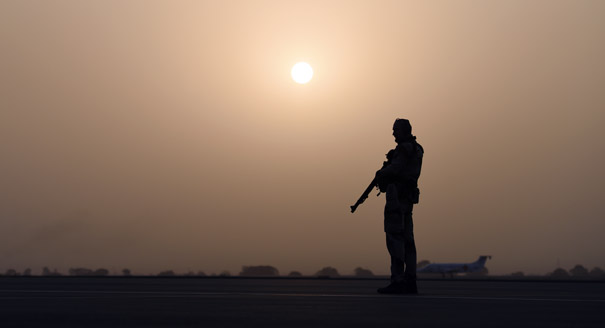
Source: Getty

Other
Malcolm H. Kerr Carnegie Middle East Center

The Sahel: Europe´s African Borders

The Sahel is a source of high instability for the Maghreb and by extension for Europe.

Link Copied
By Dalia Ghanem, Raquel Barras Tejudo, Giovanni Faleg, Yahia H. Zoubir
Published on Apr 11, 2018

Source: EuroMeSCo

Over the last decade, the EU’s engagement in the Sahel region has dramatically increased and is now more than ever focused on security. The Sahel has been suffering from a multidimensional crisis, such as poor governance, corruption, structural weaknesses and underdevelopment, while challenges such as droughts and famine affect all levels of society and can lead to strikes, revolts and violence. One must also add criminality, illicit trafficking and the rise of Jihadism. As a result, the Sahel is a source of high instability for the Maghreb and by extension for Europe.

The EU has been fostering bilateral and multilateral initiatives with Sahelian countries and tried to improve the dire socioeconomic conditions and the security situation. Despite all these efforts, the Sahel remains a quagmire and is likely to continue to be for the next decade. To stop the dangers coming from the Sahel, the EU must harmonise its multiple approaches to the region and ensure the ownership of Sahelian states over what happens and what is being undertaken, notably through the African Union and the Economic Community of West African States. Moreover, the EU has to treat regional partners such as Algeria like fully-fledged partners in Sahelian affairs.

The Joint Policy Study is composed of four chapters. The first chapter assesses the Jihadist threat in the Sahel; the second the impacts of foreign interventions; the third weighs the importance of including Algeria, an indisputable military power and peace broker; and, finally, the fourth assesses climate and demographic challenges for Sahelian security. All four chapters provide EU policy-makers with a set of policy recommendations to better approach what have become Europe’s African borders.

This Joint Policy Study was written in the framework of the EuroMeSCo Working Package “Sahel and Security in the Mediterranean”, led by Dr. Dalia Ghanem-Yazbeck, Resident Scholar at Carnegie Middle East Centre.

The full study was published on EuroMeSCo's website.

About the Authors

Dalia Ghanem

Former Senior Resident Scholar, Malcolm H. Kerr Carnegie Middle East Center

Dalia Ghanem was a senior resident scholar at the Malcolm H. Kerr Carnegie Middle East Center in Beirut, where her research focuses on Algeria’s political, economic, social, and security developments. Her research also examines political violence, radicalization, civil-military relationships, transborder dynamics, and gender.

Raquel Barras Tejudo

Giovanni Faleg

Yahia H. Zoubir

Authors

Dalia Ghanem
Former Senior Resident Scholar, Malcolm H. Kerr Carnegie Middle East Center
Dalia Ghanem
Raquel Barras Tejudo
Giovanni Faleg
Yahia H. Zoubir
SecurityMaghrebNorth Africa

Carnegie India does not take institutional positions on public policy issues; the views represented herein are those of the author(s) and do not necessarily reflect the views of Carnegie, its staff, or its trustees.

More Work from Carnegie India

  • Commentary
    The Impact of U.S. Sanctions and Tariffs on India’s Russian Oil Imports

    This piece examines India’s response to U.S. sanctions and tariffs, specifically assessing the immediate market consequences, such as alterations in import costs, and the broader strategic implications for India’s energy security and foreign policy orientation.

      Vrinda Sahai

  • Article
    Military Lessons from Operation Sindoor

    The India-Pakistan conflict that played out between May 6 and May 10, 2025, offers several military lessons. This article presents key takeaways from Operation Sindoor and breaks down how India’s preparations shaped the outcome and what more is needed to strengthen future readiness.

      Dinakar Peri

  • Book
    India and the Sovereignty Principle: The Disaggregation Imperative

    This book offers a comprehensive analysis of India's evolving relationship with sovereignty in a complex global order. Moving beyond conventional narratives, it examines how the sovereignty principle shapes India's behavior across four critical domains—from traditional military power to contemporary data governance.

      Rudra Chaudhuri, Nabarun Roy

  • Article
    Hidden Tides: IUU Fishing and Regional Security Dynamics for India

    This article examines the scale and impact of Chinese IUU fishing operations globally and identifies the nature of the challenge posed by IUU fishing in the Indian Ocean Region (IOR). It also investigates why existing maritime law and international frameworks have struggled to address this growing threat.

      Ajay Kumar, Charukeshi Bhatt

  • Book
    Violence and Development Along the India-Pakistan Border in Jammu and Kashmir

    This book examines the impact of cross-border violence on communities living along the Line of Control and the International Border in Jammu and Kashmir, India.

      Deep Pal, Surya Valliappan Krishna, Saheb Singh Chadha

Get more news and analysis from
Carnegie India
Carnegie India logo, white
Unit C-4, 5, 6, EdenparkShaheed Jeet Singh MargNew Delhi – 110016, IndiaPhone: 011-40078687
  • Research
  • About
  • Experts
  • Projects
  • Events
  • Contact
  • Careers
  • Privacy
  • For Media
Get more news and analysis from
Carnegie India
© 2026 Carnegie Endowment for International Peace. All rights reserved.





