

Commentary
- +8
Sophia Besch, Eric Ciaramella, Steve Feldstein, …
{
  "authors": [
    "Steve Feldstein"
  ],
  "type": "legacyinthemedia",
  "centerAffiliationAll": "dc",
  "centers": [
    "Carnegie Endowment for International Peace"
  ],
  "collections": [],
  "englishNewsletterAll": "democracy",
  "nonEnglishNewsletterAll": "",
  "primaryCenter": "Carnegie Endowment for International Peace",
  "programAffiliation": "DCG",
  "programs": [
    "Democracy, Conflict, and Governance"
  ],
  "projects": [],
  "regions": [
    "North America",
    "United States",
    "East Asia",
    "Russia",
    "Eastern Europe",
    "Western Europe"
  ],
  "topics": [
    "Democracy",
    "Security",
    "Foreign Policy",
    "Global Governance"
  ]
}
Source: Getty
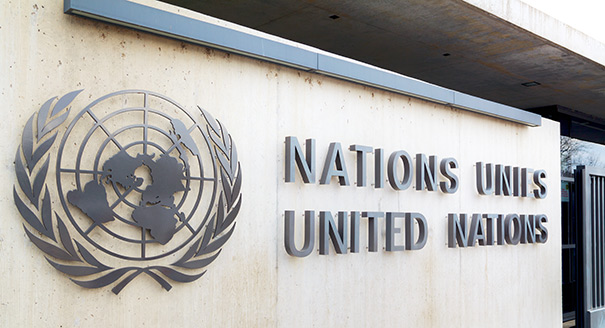
After months of threatening to leave the the U.N. Human Rights Council, the United States has withdrawn from the body. This is just another example of President Trump choosing to walk away when faced with the choice of reaching an agreement or compromise with a U.N. organization.
Source: World Politics Review
For months, the Trump administration has threatened to withdraw from the United Nations Human Rights Council. Finally, on June 19, Secretary of State Mike Pompeo and the U.S. ambassador to the U.N., Nikki Haley, jointly announced that the United States was leaving the body, charging that it was a “protector of human rights abusers, and a cesspool of political bias” against Israel. On one level, it should not come as a surprise that President Donald Trump chose to exit yet another U.N. organization—last year, he ditched UNESCO, the U.N.’s cultural body, over what his administration also called its “anti-Israel bias.”
When faced with the choice of reforming either an international organization or agreement from within, or simply packing up and leaving, Trump has consistently chosen the latter option, whether with the Paris climate change agreement or the Iran nuclear deal. Truth be told, the Human Rights Council has faced its share of criticism, both for its perceived prejudice against Israel, as well as for permitting egregious human rights violators to serve on its board. But like every decision the Trump administration has taken to disengage from the international system, its departure from the Human Rights Council comes at a steep cost.
The Trump administration’s underlying theory of its departure is that the best way to reform the council is to blow it up—to delegitimize it to such an extent that it either ceases to exist or radically transforms. The likelihood that either scenario will unfold is remote. The council will continue to operate, albeit with much less influence from Washington.
One of the biggest and least understood benefits of the Human Rights Council is that it is a remarkably good mechanism for confronting lower-priority human rights violations that otherwise escape the attention of the international community. When I served in the Democracy and Human Rights Bureau at the State Department from 2014 to 2017, we became increasingly concerned about escalating violence and potential mass atrocities in Burundi. But with conflagrations in Syria, Iraq, Yemen and Afghanistan soaking up policymakers’ limited time, they simply did not have the bandwidth to devote attention or resources to the deteriorating situation in Burundi. That is where the Human Rights Council proved its worth.
The State Department worked with other member states to organize a special session of the Human Rights Council focused on Burundi’s alarming uptick in human rights violations. Subsequently, the council authorized a three-person expert panel to investigate allegations of human rights abuses there. While violence persists in Burundi today, I still believe that such timely international attention prevented far worse brutalities from occurring at the time. In this instance, and in many others, such as helping to forestall atrocities in the Central African Republic or keeping the spotlight on ethnic cleansing in Myanmar, the council has proven its worth as a low-cost, high-impact forum.
Leaving the Human Rights Council diminishes American leverage without changing any outcomes.
A key argument made by the Trump administration for leaving the Human Rights Council is that its “anti-Israel” resolutions made continued U.S. participation untenable. As Pompeo and Haley intoned, “the Council’s continued and well-documented bias against Israel is unconscionable,” so much so that the organization “is not worthy of its name.” Although the council has rightly faced criticism for singling out Israel’s conduct toward Palestinians, while giving a pass to human rights violators like North Korea, departing the council will not decrease the number of resolutions critical of Israel. To the contrary, the main consequence of the U.S. exit will be to reduce its ability to push back against such resolutions. Leaving the Human Rights Council diminishes American leverage without changing any outcomes—a flawed strategy.
The Trump administration has also emphasized its profound disagreement with allowing states accused of committing gross human rights violations, like the Democratic Republic of the Congo, to serve as members of the council. It is perfectly reasonable for the U.S. to express concern about the hypocrisy of allowing Congo, or even China or Russia for that matter, into an organization expressly set up to confront serious human rights abuses. However, Congo’s membership has not prevented the council from authorizing human rights investigations and condemning the Congolese government for violations, as it has regularly done in the past few years, including holding an enhanced session on Congo in March. By leaving the council, the U.S. relinquishes its leverage to influence international action against bad governments. Perversely, Congo is now in a much stronger position to push back against further human rights investigations and accountability procedures at the U.N.
The Trump administration sadly underestimates and misunderstands the human rights impact of the council. While the organization would benefit from major changes to membership selection and the resolution process, it has nonetheless advanced important human rights priorities. In my experience, repressive governments closely watch its proceedings and furiously lobby behind the scenes to change resolutions to avoid official condemnation. If the council’s words and actions did not matter, then these very governments that violate human rights would not waste their time.
Even if the Trump administration wanted to make a public point about its disapproval of the Human Rights Council, it could have picked a middle option and chosen to remain as a nonvoting observer. This would have allowed the U.S. to preserve its ability to influence the proceedings of the council behind the scenes, even while making a symbolic show of disengaging from the body. Instead, Trump again picked the nuclear option. How such a decision will help his administration achieve its broader human rights agenda remains a mystery.
Of course, one wonders if the U.S. departure is less about its substantive disagreements with the workings of the council, and instead a brusque response to the U.N. High Commissioner for Human Rights, Zeid Raad al-Hussein, who oversees the council. Earlier this week, Zeid denounced the Trump administration’s policy of separating the children of migrants and asylum-seekers from their families at the southern border. “The thought that any state would seek to deter parents by inflicting such abuse on children is unconscionable,” he said.
Whatever the true motivations of the Trump administration—to delegitimize the council due to its perceived bias against Israel, or to score political points against Zeid, who is stepping down by September anyway—the result is the same: diminished U.S. credibility on the international stage and less influence to confront human rights violators. That is the real shame of quitting the Human Rights Council.
This article was originally published in World Politics Review.

Director and Senior Fellow, Democracy, Conflict, and Governance Program
Steve Feldstein is a senior fellow and director of the Democracy, Conflict, and Governance Program at the Carnegie Endowment for International Peace. His research focuses on technology, national security, the global context for democracy, and U.S. foreign policy.
Recent Work

Sophia Besch, Eric Ciaramella, Steve Feldstein, …
Steve Feldstein
Carnegie India does not take institutional positions on public policy issues; the views represented herein are those of the author(s) and do not necessarily reflect the views of Carnegie, its staff, or its trustees.

In any defense establishment, change is an ongoing process. However, despite the best of intentions, existing bureaucracies, bound by habit and years of socialization, have their limits in implementing transformative change.

Anit Mukherjee

How is AI reshaping space security, creating governance challenges, and where does international diplomacy stand today?


Tejas Bharadwaj, Almudena Azcárate Ortega

After the chill in ties between 2020 and 2024 that brought India–China relations to their lowest point in several decades, the two countries have engaged each other afresh. This paper argues that there are predominantly four imperatives guiding India’s approach to China, and they exist in an order of priority.

Saheb Singh Chadha

This piece argues that India’s central challenge is not managing a single flashpoint but resolving the underlying tension between expansion and institutional coherency of the BRICS grouping.

Vrinda Sahai

A partnership between India, a country of subcontinental size, and Africa, a continent of fifty-four countries, may seem asymmetric until one notes that both are home to nearly the same number of people—1.4 billion. This essay spells out the existing challenges to the partnership, its optimal potential, and the possible pathways to realize it over the next quarter-century.

Rajiv Bhatia