• Research
  • About
  • Experts
Carnegie India logoCarnegie lettermark logo
AI
{
  "authors": [
    "Frederic Wehrey",
    "Wolfram Lacher"
  ],
  "type": "legacyinthemedia",
  "centerAffiliationAll": "dc",
  "centers": [
    "Carnegie Endowment for International Peace",
    "Malcolm H. Kerr Carnegie Middle East Center"
  ],
  "collections": [],
  "englishNewsletterAll": "menaTransitions",
  "nonEnglishNewsletterAll": "",
  "primaryCenter": "Carnegie Endowment for International Peace",
  "programAffiliation": "MEP",
  "programs": [
    "Middle East"
  ],
  "projects": [],
  "regions": [
    "North Africa",
    "Libya",
    "Western Europe",
    "France"
  ],
  "topics": [
    "Political Reform"
  ]
}

Source: Getty

In The Media

The Wrong Way to Fix Libya

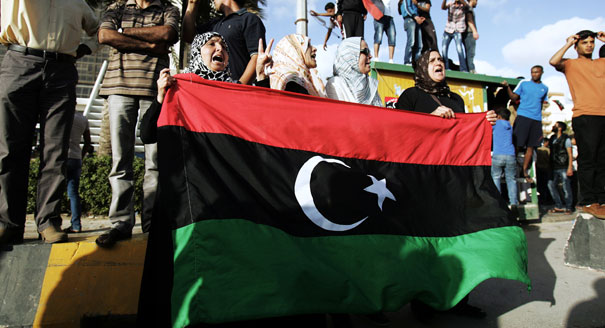
Without a firm constitutional basis, early elections in Libya would not only produce a government whose legitimacy is contested even more widely, but also leave the door open for another strongman to rise to power.

Link Copied
By Frederic Wehrey and Wolfram Lacher
Published on Jun 19, 2018

Source: Foreign Affairs

To visit Libya in recent months is to encounter a country holding its breath, caught in the throes of abeyance and a deep foreboding. It is a lawless place, riddled with criminality and flare-ups of fierce fighting in the south and east. Oil revenues have fallen due to recent factional clashes and elite plunder has everyday Libyans struggling for subsistence amid deep economic crisis. Overlaying all of this is a lingering political stalemate. Formal authority is split between a feeble, internationally recognized Government of National Accord (GNA) in the capital of Tripoli and eastern institutions dominated by Field Marshal Khalifa Hiftar, who once served under the former Libyan leader Muammar al-Qaddafi but later had a falling-out. But much of the country’s west and south escapes the control of these rival authorities.

There has been no shortage of Western proposals to break the gridlock and stave off further collapse, the most popular of which include early elections, as French President Emmanuel Macron recently advocated for in a meeting with Libyan leaders in Paris. Proponents of this approach argue that only elections can produce a new government with the popular backing needed to overcome the legal limbo affecting all of Libya’s competing legislative and executive bodies. It is a wiping of the slate, these advocates say, a chance to sideline spoilers on both sides and replace the long-suffering GNA with a more viable body.

Yet for all of these seductions, in reality, swift elections may lead to greater disorder. Without a firm constitutional basis, voting would produce a government whose legitimacy is contested even more widely. The absence of a constitution also leaves open the executive authority of the president—a particular concern for opponents of Hiftar, who see in his support for elections a thinly veiled ploy to become ruler for life. This by itself could be a major flash point. In the Hiftar-controlled east, free elections are impossible. But even outside it, in the best case, voting results would be heavily influenced by local strongmen and militias, and polling threatens to ignite violent local conflicts.

Read Full Text

This article was originally published in Foreign Affairs.

About the Authors

Frederic Wehrey

Senior Fellow, Middle East Program

Frederic Wehrey is a senior fellow in the Middle East Program at the Carnegie Endowment for International Peace, where his research focuses on governance, conflict, and security in Libya, North Africa, and the Persian Gulf.

Wolfram Lacher

Authors

Frederic Wehrey
Senior Fellow, Middle East Program
Frederic Wehrey
Wolfram Lacher
Political ReformNorth AfricaLibyaWestern EuropeFrance

Carnegie India does not take institutional positions on public policy issues; the views represented herein are those of the author(s) and do not necessarily reflect the views of Carnegie, its staff, or its trustees.

More Work from Carnegie India

  • Commentary
    What Can India, France, and Australia Achieve Together?

    Foreign ministers from India, France, and Australia recently met (virtually) at the Raisina Dialogue, India’s flagship annual conference on geopolitics and geoeconomics. What can they get done if they work together?

      Rudra Chaudhuri, Shibani Mehta

  • Paper
    India’s Sustained Economic Recovery Will Require Changes to Its Bankruptcy Law

    As India’s economy recovers from the coronavirus pandemic, Indian businesses need efficient financial structures to regain their ground. Key reforms to India’s Insolvency and Bankruptcy Code could fill these gaps.

      Anirudh Burman

  • Paper
    Cross-Border Data Access for Law Enforcement: What Are India’s Strategic Options?

    Access to cross-border data is an integral piece of the law enforcement puzzle. India is well placed to lead the discussions on international data agreements subject to undertaking necessary surveillance reforms.

      Smriti Parsheera, Prateek Jha

  • Article
    The BRI in Post-Coronavirus South Asia

    After the coronavirus pandemic wanes, how will China’s reorientation of the Belt and Road Initiative to address global health concerns influence its relationships with South Asian countries?

      Deep Pal, Rahul Bhatia

  • Commentary
    India’s Unheeded Coronavirus Warning

    Early in the outbreak, government researchers forecast several high-risk scenarios that were downplayed or ignored in public messaging.

      Gautam I. Menon

Get more news and analysis from
Carnegie India
Carnegie India logo, white
Unit C-4, 5, 6, EdenparkShaheed Jeet Singh MargNew Delhi – 110016, IndiaPhone: 011-40078687
  • Research
  • About
  • Experts
  • Projects
  • Events
  • Contact
  • Careers
  • Privacy
  • For Media
Get more news and analysis from
Carnegie India
© 2026 Carnegie Endowment for International Peace. All rights reserved.