

Commentary
Tatiana Stanovaya
{
  "authors": [
    "Tatiana Stanovaya"
  ],
  "type": "commentary",
  "centerAffiliationAll": "",
  "centers": [
    "Carnegie Endowment for International Peace",
    "Carnegie Russia Eurasia Center"
  ],
  "collections": [
    "Inside Russia"
  ],
  "englishNewsletterAll": "",
  "nonEnglishNewsletterAll": "",
  "primaryCenter": "Carnegie Endowment for International Peace",
  "programAffiliation": "",
  "programs": [],
  "projects": [],
  "regions": [],
  "topics": [
    "Economy"
  ]
}
Source: Getty
However resilient the Putin regime might look to an outsider, it isn’t ready and isn’t preparing itself for a possible decline in its popularity ratings, which may unleash consequences beyond the fall of individual governors and the ruling United Russia party. The Kremlin doesn’t believe that Vladimir Putin and the Russian regime as a whole could become unpopular, so it considers the current decline in support for the government to be a natural and manageable outcome of the recent increase in the retirement age.
Declining support for the government is gradually becoming one of the main problems for President Vladimir Putin’s regime, since the popularity rating of any state institution and the legitimacy of the entire system stem directly from the level of support for the president.
The Kremlin’s recent losses—its candidates were effectively defeated in four gubernatorial elections—have prompted the question of how the presidential administration and the president himself intend to adapt to the new conditions. Is Russia in for yet another wave of political reform, or will the Russian authorities make a different, unexpected move that could help them recapture past levels of popular support, as they did previously with the annexation of Crimea?
Before making any predictions about the Kremlin’s next moves, it must be acknowledged that the federal authorities don’t see the current decline in ratings and the gubernatorial election defeats as anything exceptional. They put these things down to simple miscalculations in the selection of candidates, rather than to changes in the public mood.
Only one of the four gubernatorial election losses—that in the Primorsky region—is seen by the Kremlin as serious, but even there the authorities link their problems to regional specifics, not complex nationwide issues such as increasing the retirement age or the fall in real incomes. As for the other regions, the Kremlin ascribes the losses to the longevity of the incumbent governors, who have apparently forgotten how to talk to people and have gotten too accustomed to automatic victories guaranteed by presidential support and the absence of real competition.
This interpretation allows the government to shift the focus from the decline in Putin’s popularity, which the system refuses to accept as a threat, to the problem of personnel rotation. Hence, government decisions in which appointing new figures takes precedence over using political instruments like parties, elections, and competition.
We saw a confirmation of these tactics right after the elections, when the federal center removed governors who appeared to have been in power for too long and who could have had problems getting reelected later. Their replacements were selected according to the principles of the corporate vertical: they are technocratic managers with little political experience, let alone political ambition. The center intends to elect them with the help of a populist agenda and political strategies. In this context, the governor becomes part of an impersonal corporate management mechanism, rather than an individual actor in a political process.
This reaction indicates that the Kremlin doesn’t believe that Putin and the Russian regime as a whole might become unpopular, so it treats the current decline in their ratings as a natural and manageable outcome of the unpopular recent move to raise the retirement age. The overall mood in the presidential administration is that there is no catastrophe, nothing to panic about. Everyone there is convinced that there is no alternative to Putin, so his rating can’t seriously decline.
This attitude also reflects the fact that Putin’s entourage is increasingly oriented toward the president’s own expectations and perception of his personal historical exceptionality that firmly protects him from any competition. Only Putin’s hand-picked successor could be an alternative to Putin: that’s the logic that has underpinned all the political decisions of the past few years. And if the president’s popularity continues to fall, there’s no doubt that the Kremlin will see it as anything but the president’s political weakness.
This is why we should not expect direct gubernatorial elections to be scrapped: a possibility that some have recently started to talk about. The Russian regime isn’t prepared to make that decision, and the president’s recent speeches are evidence of that. At a meeting with members of the Central Election Commission, he praised the electoral system and stressed the importance of elections for the people.
In reality, Putin’s reverential treatment of elections has little to do with any democratic propensities he might still have. He is simply convinced that the fairness of the regime’s agenda and the infallibility of its course make electoral losses impossible.
Putting an end to direct elections would mean that the president was acknowledging his unpopularity and the legitimacy of protest sentiment. In any case, Putin made it clear that the authorities will preserve the municipal filter—which requires those running for office to collect endorsements from local council members—by describing it recently as “democratic.” The president’s logic is simple: if the municipal filter didn’t prevent opposition candidates from being elected, it is not as harsh as it was made out to be.
At this time, the Kremlin is not remotely inclined to allow cardinal changes to the political system. Any changes that may occur will have to do with the transit of power rather than adjustments made due to falling ratings.
It’s not incompetence or lack of political foresight that makes the Kremlin underestimate the impending political risks. Rather, Kremlin officials are overly fixated on Putin’s moods. Unlike their predecessors, who mostly focused on the political system, the current political strategists cater to the president’s personal political needs, ensuring his comfort. The creative freedom and intrigues enjoyed by former deputy chiefs of staff Vladislav Surkov and Vyacheslav Volodin are absent, and there is no prospect of their return. This is probably why “administrators” have turned out to be more in demand today than political strategists.
However resilient the Putin regime might look to an outsider, it isn’t ready and isn’t preparing itself for a possible decline in its ratings, which may unleash consequences beyond the fall of individual governors and the ruling United Russia party. We already saw what that sort of decline can lead to back in late 2011, when even some members of the in-system opposition parties like the Communist Party and A Just Russia, as well as prominent establishment figures like former finance minister Alexei Kudrin and businessman and presidential candidate Mikhail Prokhorov joined protesters on Moscow’s Bolotnaya Square.
To maintain stability, the Kremlin is currently left with two potentially effective mechanisms. The first is to artificially inflate its ratings with the help of information campaigns and the institutional toughening up of the regime, eliminating the vestiges of real competition.
That option looks far more realistic than the alternative: regime liberalization, which terrifies the Kremlin and is seen as capitulation to the West by a significant part of the Russian elite, especially among the siloviki.
The regime is opting to create a corporatist state, which automatically equates corporate interests with the interests of the people, stripping the latter of their last remaining political rights. Only a lack of resolve among the “administrators” and the absence of an order from above to tighten the screws leave any hope for pluralization, which will only come from below.

Senior Fellow, Carnegie Russia Eurasia Center
Tatiana Stanovaya is a senior fellow at the Carnegie Russia Eurasia Center.
Recent Work
Tatiana Stanovaya
Tatiana Stanovaya
Carnegie India does not take institutional positions on public policy issues; the views represented herein are those of the author(s) and do not necessarily reflect the views of Carnegie, its staff, or its trustees.

On March 10, 2026, India’s Union Cabinet approved amendments to Press Note 3, a regulation that mandated government approval on all foreign direct investment (FDI) from countries sharing a land border with India. This amendment raises questions primarily about whether its stated benefits will materialize and if the risks have been adequately weighed. This piece will address the same.

Konark Bhandari

This piece examines India’s response to U.S. sanctions and tariffs, specifically assessing the immediate market consequences, such as alterations in import costs, and the broader strategic implications for India’s energy security and foreign policy orientation.

Vrinda Sahai
This paper examines the evolution of India-China economic ties from 2005 to 2025. It explores the impact of global events, bilateral political ties, and domestic policies on distinct spheres of the economic relationship.

Santosh Pai
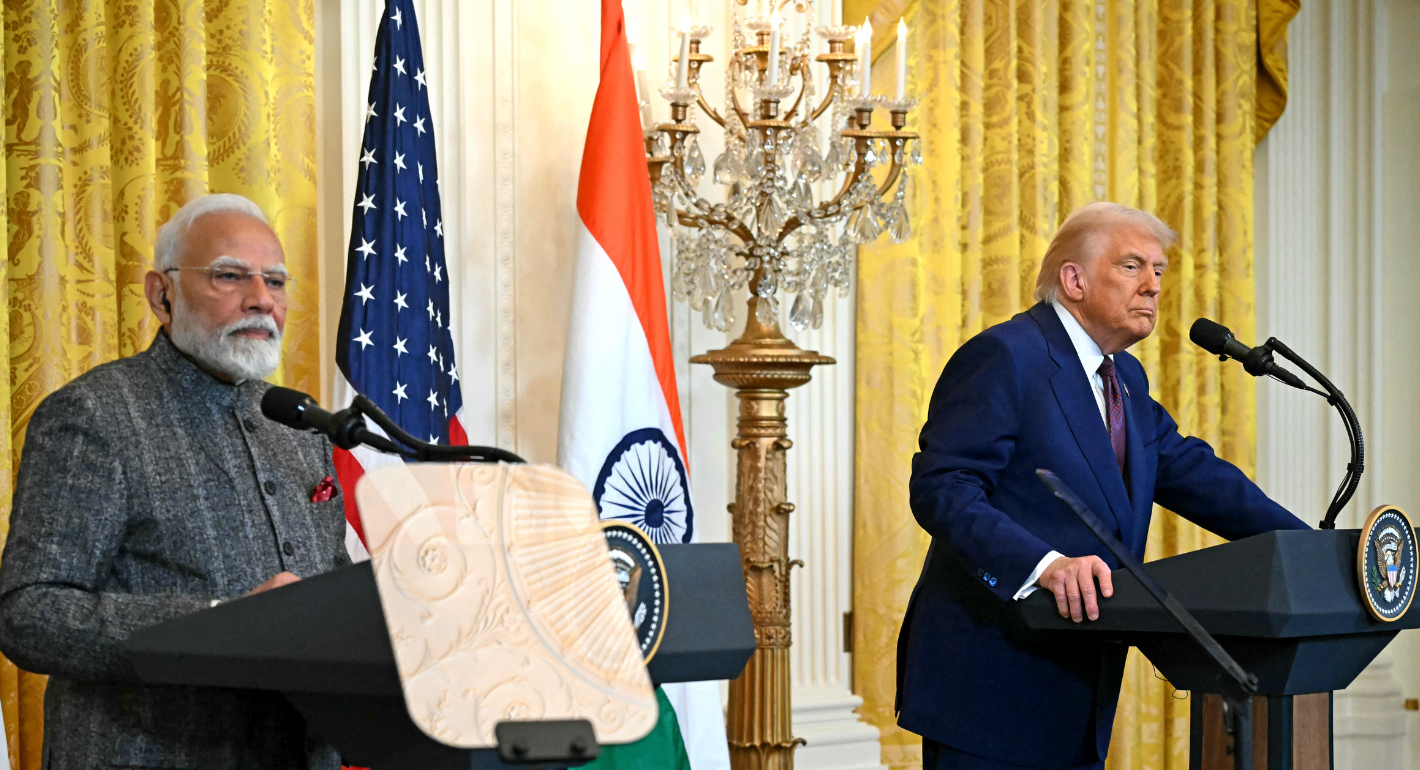
The India-U.S. relationship currently appears buffeted between three “Ts”—TRUST, Tariffs, and Trump.
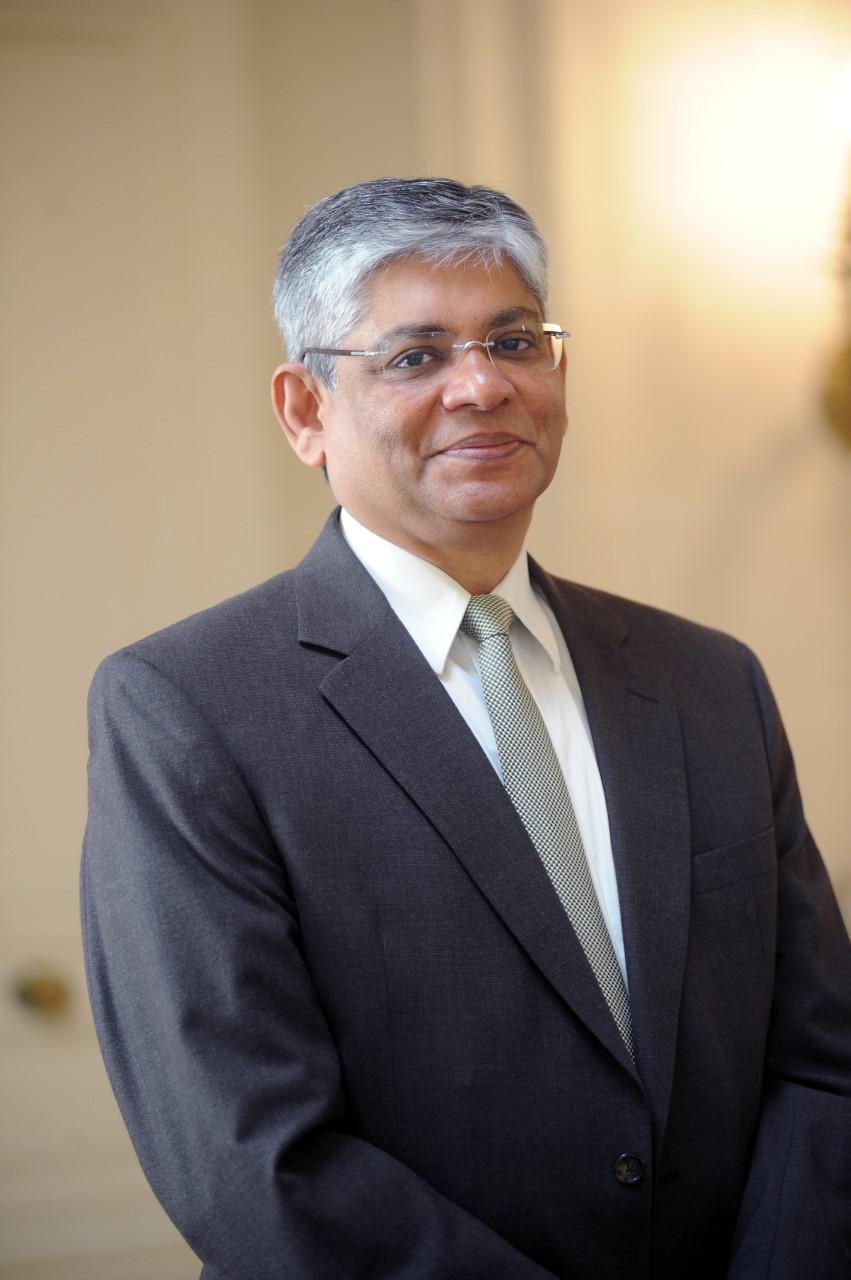
Arun K. Singh
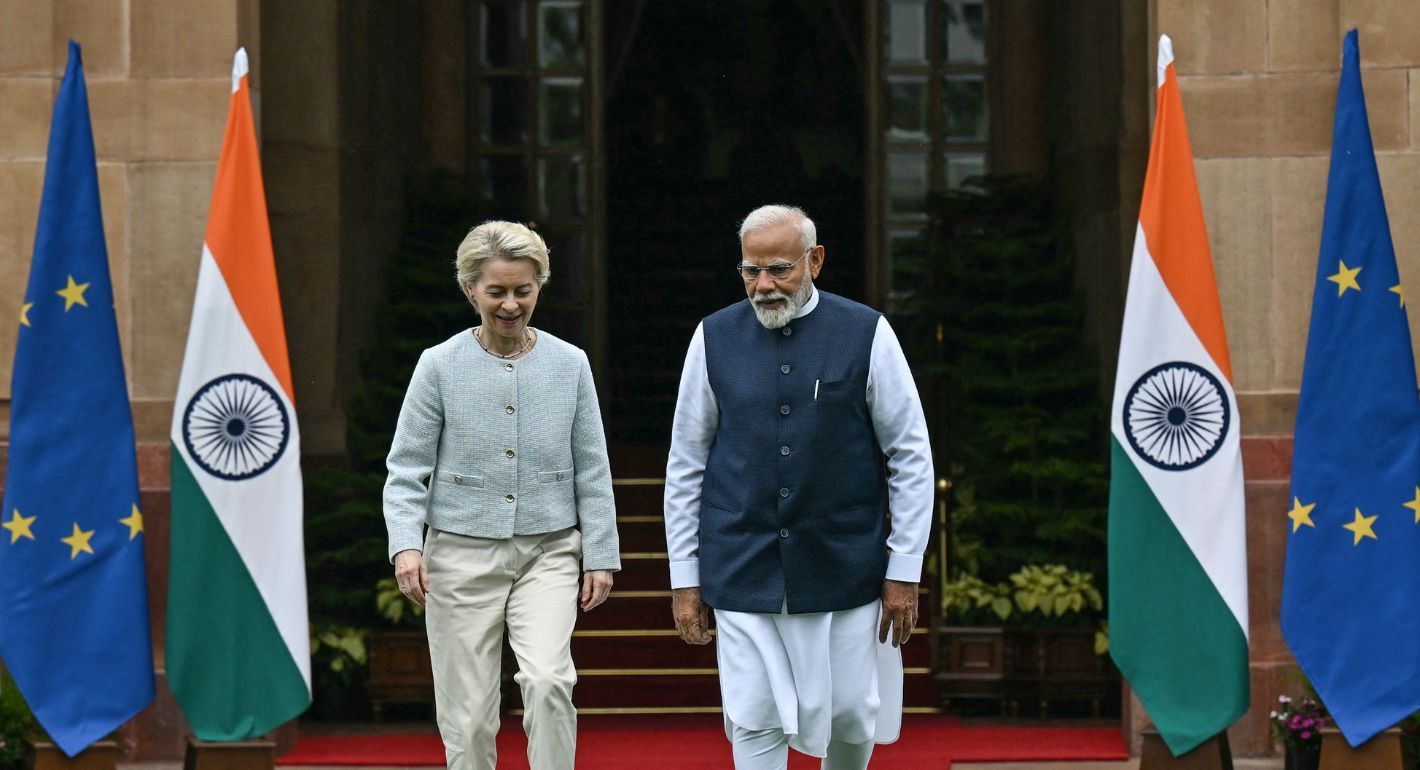
This article argues that the geopolitical circumstances have never been more conducive, not merely for the early conclusion of the free trade agreement (FTA) between India and the EU, but also for crafting a substantive and comprehensive strategic partnership.
Mohan Kumar