

Commentary
Tatiana Stanovaya
{
  "authors": [
    "Tatiana Stanovaya"
  ],
  "type": "commentary",
  "blog": "Carnegie Politika",
  "centerAffiliationAll": "",
  "centers": [
    "Carnegie Endowment for International Peace",
    "Carnegie Russia Eurasia Center"
  ],
  "englishNewsletterAll": "",
  "nonEnglishNewsletterAll": "",
  "primaryCenter": "Carnegie Russia Eurasia Center",
  "programAffiliation": "",
  "regions": [
    "Russia"
  ],
  "topics": [
    "Domestic Politics",
    "Political Reform",
    "Security"
  ]
}
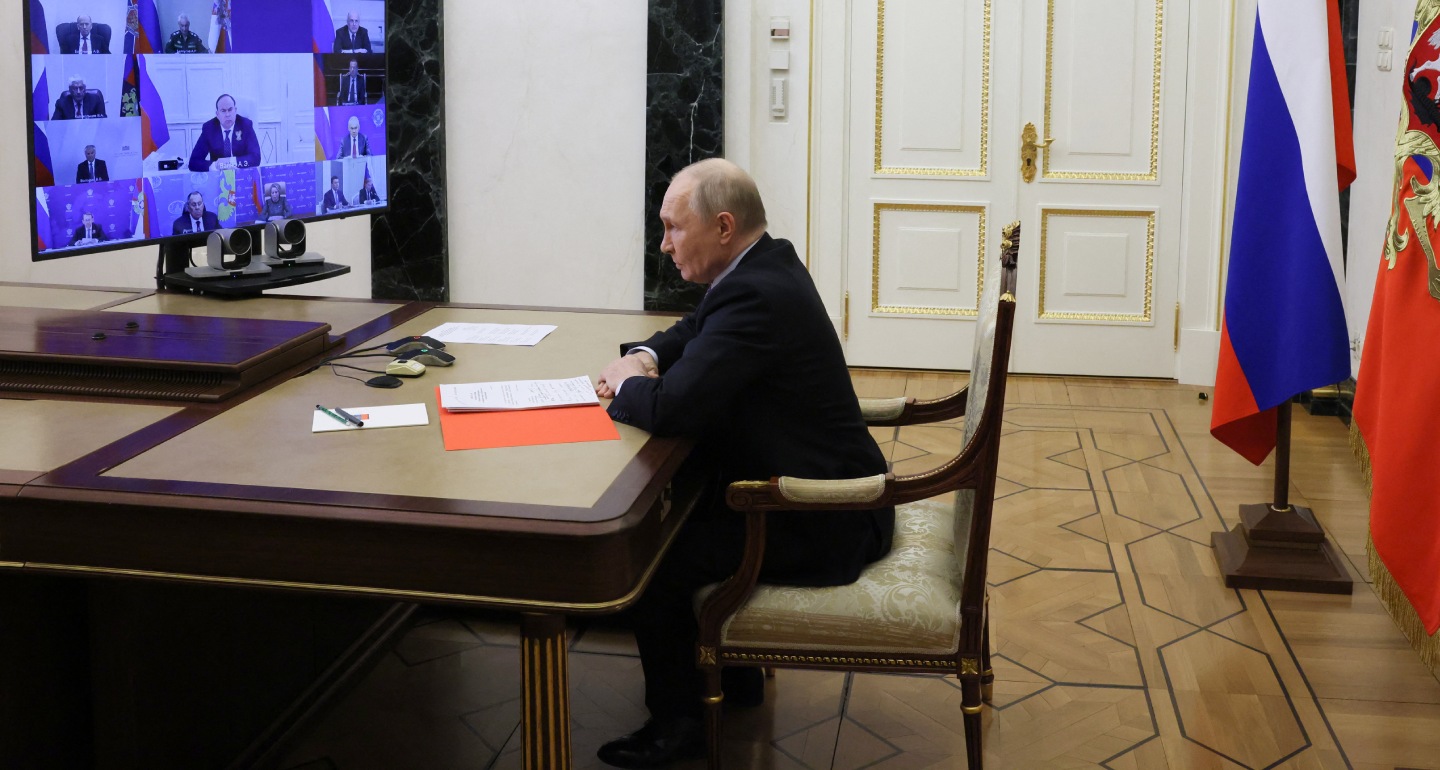
Source: Getty
Two divergent trends—Putin’s hardline vision of how to prosecute the war in Ukraine, and a growing desire for change in Russia—could tear the regime apart.
Russia’s war on Ukraine is entering a new phase. That does not mean the situation will change overnight, but the chances of escalation and the conflict spreading are growing.
The most significant new development has been a shift in Russian President Vladimir Putin’s domestic political position. Hopes that Putin would make concessions in the face of mounting problems have been shown to be misplaced. Instead, the situation increasingly resembles a seized bolt: applying more force will not make the mechanism work, but will only increase the strain on the surrounding structure. In other words, domestic pressures will not change Putin’s mind; they only increase the chances of cracks appearing in the entire system.
One crack to appear recently—arguably the deepest for many years—was billionaire Andrey Melnichenko’s interview with The Economist and his accompanying essay. For the first time since the arrest of oil tycoon Mikhail Khodorkovsky in 2003, a representative of Russian business has publicly laid out a political vision for Russia’s future—and it didn’t include war, hostility with the West, or authoritarianism. Melnichenko did this in the most dangerous way possible for the regime: with Putin’s approval.
Melnichenko has apparently succeeded in portraying himself to the Kremlin not as an opponent of the system, but as someone who can help to realize its goals. The Russian leader was informed in advance about the pieces in The Economist, but seemingly underestimated their importance.
In some ways, the current situation resembles the run-up to the 2023 mutiny led by Yevgeny Prigozhin. The Wagner mercenary leader was well-known to Putin and had acted in the president’s interests. But Putin repeatedly ignored the increasing anger in Wagner’s ranks—until it ended up spilling over into rebellion.
Now Putin’s dismissive attitude to big business seems to have led him to believe that Melnichenko’s activities are of marginal significance and largely irrelevant to Russia’s ongoing geopolitical confrontation with the West. However, Melnichenko’s Economist interview and essay—like other events this year—is a symptom of tectonic shifts inside Russia: The elites are beginning to understand that the cat is no longer catching mice.
For Russia’s ruling class, the main issue is not that the war in Ukraine has been raging for four-and-a-half years, but the gulf between the human and economic costs of the fighting and the Kremlin’s goals. It’s hard to find anyone among the elites who believes it will be possible to make Ukraine a “friendly” country—or that such an outcome is even necessary. Until recently, discussions centered on how to claim the spoils of war (like seized territory, forcing neutrality on Kyiv, or limits on the size of the Ukrainian army). Now the focus has shifted to minimizing the colossal damage being inflicted in the pursuit of even a semblance of victory.
If the elites were previously confident that Russia could not be defeated by Ukraine, and would be able to continue the fight for a long time simply out of inertia, now they are increasingly alarmed by the system’s inability to deal with mounting problems. The fundamental issue is a feeling that the Russian leadership has lost its grasp on reality: that Putin’s fixation on subjugating Ukraine has made effective governance significantly harder.
This dynamic is increasingly understood by Russia’s bureaucrats, its security forces (who see it as providing carte blanche to act with impunity), and the business community. Putin’s blind faith in the elite’s patriotism and the patience of the Russian people has led him to rule the country as if it is fully mobilized for war—but the institutions of government are still operating in peacetime mode, and the establishment has not been fully cowed.
As a result, there are two divergent trends in today’s Russia that could end up tearing the regime apart. The first is Putin’s vision of the war, in which escalation breeds escalation, the security forces expand their remit, the government adapts to wartime needs, and dwindling resources are increasingly diverted to the war effort. This presupposes that the regime will default to radicalization, tougher demands, and a willingness to widen the geographical scope of the conflict.
The second is a growing demand for change: for a more realistic assessment of Russia’s geopolitical capabilities, for competent domestic decision-making, and more achievable war goals. It’s hard to predict exactly how this demand will evolve, but there are indicators that it is even shared by pro-Kremlin actors. This is a dangerous sentiment for the regime precisely because it is neither anti-war nor anti-Putin.
Without serious impetus to start substantive peace negotiations, these two trends will increasingly be pitted against one another. And they will both be accelerated by a continuation of the status quo—a war of attrition with no tangible progress, new Western sanctions, a lack of money for development, and the intrusion of absurd government initiatives into everyday life. None of this will make a ceasefire in Ukraine more likely. On the contrary, without domestic political change in Russia (which seems a distant prospect), the fighting is destined to go on for years—and peace negotiations are doomed to fail.
While we are likely to see attempts to initiate change inside Russia, they risk foundering on new waves of repression and a further hardening of the regime. Much will depend on the West, with the specter of a “hostile West” used by regime hawks to argue for escalation.
For the moment, the regime is not facing imminent implosion: It is only approaching a political crossroads. Will it take the path of escalation and radicalization, or one that leads to a process of internal restructuring and a post-Putin world?

Senior Fellow, Carnegie Russia Eurasia Center
Tatiana Stanovaya is a senior fellow at the Carnegie Russia Eurasia Center.
Recent Work
Tatiana Stanovaya
Tatiana Stanovaya
Carnegie does not take institutional positions on public policy issues; the views represented herein are those of the author(s) and do not necessarily reflect the views of Carnegie, its staff, or its trustees.

Japan’s long-term security policy is driven by concerns about China, and there is little appetite for (or interest in) pursuing a confrontation with Moscow.

James D.J. Brown

The truth of the strategic situation is that Europe and Russia are extremely unlikely to be able to “turn the page” on their confrontation within the next two decades.

Arkady Moshes
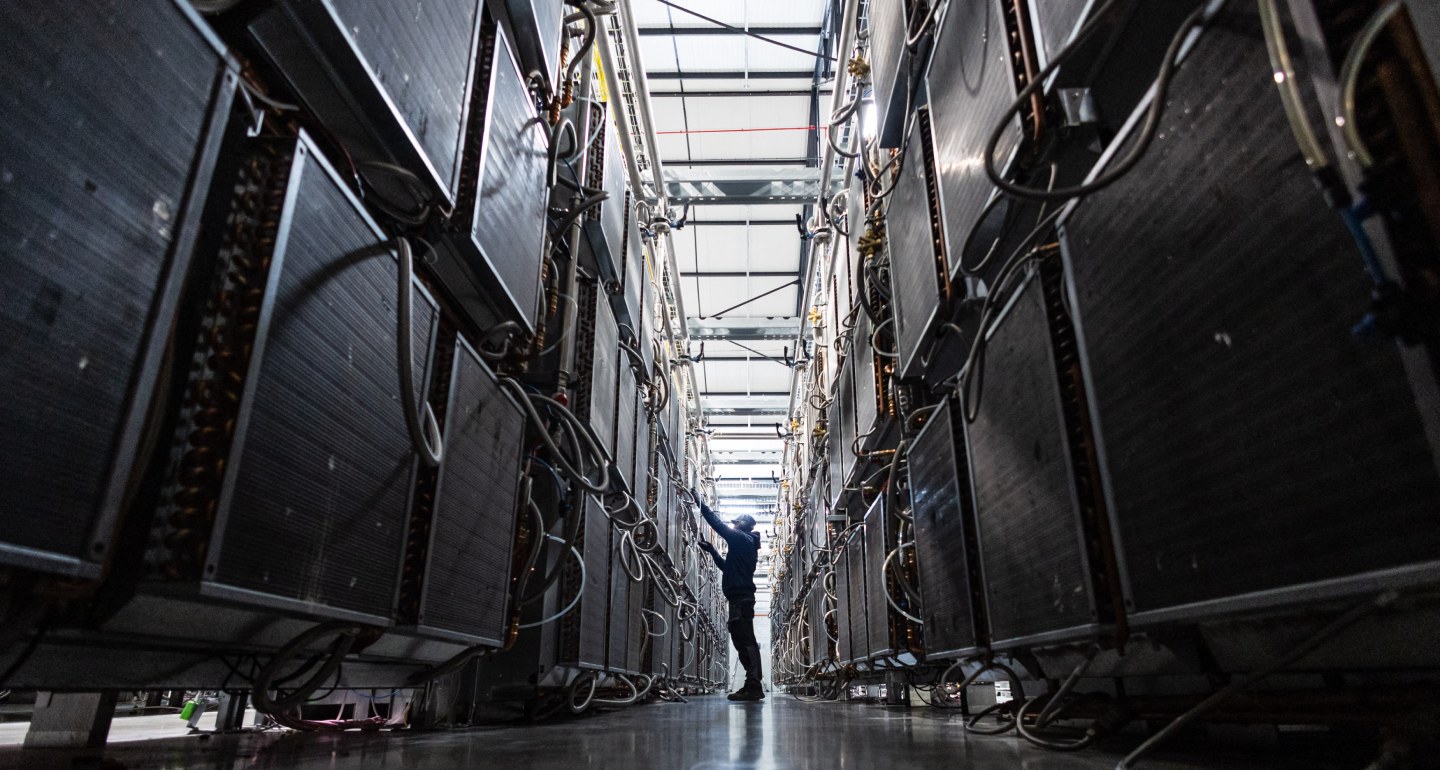
Russia spent years building a “sovereign internet,” concentrating web infrastructure exclusively within Russian territory. Ukrainian drone attacks have shown how vulnerable that approach has left the Russian internet.

Maria Kolomychenko

Putin’s conservative staffing policies and search for ever greater control have cemented parliament’s transformation into a bureaucratic appendage of the executive branch.

Andrey Pertsev

Russia’s AI-driven propaganda campaigns operate in a fragmented, chaotic, and often illogical manner. That’s not necessarily a problem for the Kremlin, though: It’s much easier to mimic genuine public debate that way.

Ilya Klishin