

Paper
Alexandra Prokopenko
{
  "authors": [
    "Alexandra Prokopenko"
  ],
  "type": "commentary",
  "centerAffiliationAll": "",
  "centers": [
    "Carnegie Endowment for International Peace",
    "Carnegie Russia Eurasia Center"
  ],
  "collections": [
    "Inside Russia"
  ],
  "englishNewsletterAll": "",
  "nonEnglishNewsletterAll": "",
  "primaryCenter": "Carnegie Endowment for International Peace",
  "programAffiliation": "",
  "programs": [],
  "projects": [],
  "regions": [],
  "topics": [
    "Economy"
  ]
}
Source: Getty
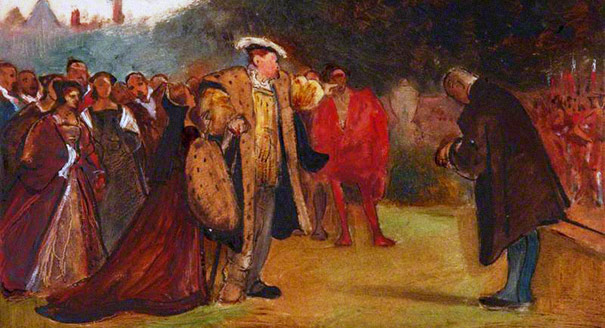
Sanctions have thrust Vladimir Putin’s inner circle into the public domain. In response, the state has lent sanctioned individuals a helping hand. While previously, they would get individual government contracts, the lucky few are now setting their sights on entire industries via the mechanism of public-private partnerships. The president sees state capitalists as patriotic businesspeople, and they realize that sanctions have made Russia the only place where they can make money.
The Democrats’ recent win in the House of Representatives in Washington, the military escalation off the coast of Crimea, and the new revelations about U.S. President Donald Trump’s Kremlin ties all suggest that the U.S. authorities may soon revisit the question of introducing another round of sanctions against Russia. Among possible measures on the table are restrictions on trading new Russian government bonds and on energy projects, in particular the Nord Stream 2 gas pipeline from Russia to Europe. It’s also quite likely that the list of sanctioned Russians will grow.
At an official level, Russia denies that sanctions are impacting its domestic economic policy in any way. But in reality, the external restrictions are increasingly shifting the government’s economic path toward revenue-leasing capitalism: while several years ago, the president’s cronies received certain state monopoly contracts and exclusive deals like the construction of Olympic sites, they are now gaining control over entire industries.
Russian President Vladimir Putin has always been open about the fact that his goal is Russia’s economic independence. The sanctions imposed on Russia in 2014 following the annexation of Crimea have only strengthened his resolve. To maintain this independence amid low oil prices and external restrictions, the Russian government has been forced to shift from spending to saving.
The move to consolidate state spending announced in 2016 is now yielding results, and the treasury is bursting at the seams. The first budget surplus since 2011 was 4.4 times higher than the projected amount: over 2 trillion rubles ($15 billion). Next year’s projected surplus of 1.9 trillion rubles paints the same rosy picture.
Inflation and unemployment are at historic lows, as is the national debt, amounting to only 15 percent of GDP for 2019. The government has announced ambitious plans to develop social and digital infrastructure. In other words, all the necessary conditions are in place for an investment boom of the capital that is supposedly returning to Russia.
But that boom isn’t happening. Foreign investors fear follow-up sanctions, and Russian companies, which according to official state statistics have accumulated about 16 trillion rubles in their bank accounts, are not rushing to invest.
Nor is the government in a hurry to invest money in the domestic economy. First Deputy Prime Minister Anton Siluanov deposits all surplus oil and gas export revenues in the National Wealth Fund, whose value may reach 7 percent of GDP next year: the threshold beyond which the law allows it to be spent. But even this spending will most likely be channeled overseas: for instance, Russia is willing to loan Egypt over $3 billion for the construction of a new nuclear power plant.
If reserves are really so huge, why can’t they be at least partly invested in economic development in Russia itself? Some claim that excessive budget spending will drive up inflation. Others say that Russia needs the reserves in case the oil price drops even lower. But what if the answer lies in relations between different sectors of Russia’s ruling elites?
According to the sociologist Georg Simmel, the strength of connections within a group is contingent on the strength of outside pressure. This principle makes it possible to understand the reasons for strong or weak group identities, as well as to study other group characteristics.
Tycoons Igor Sechin, Sergei Chemezov, Gennady Timchenko, and the brothers Arkady and Boris Rotenberg were the first individuals to be impacted by the sanctions imposed on Russia. The U.S. directly cited the close ties between these businessmen and Putin.
The sanctions have put Putin’s inner circle in the public domain and under fairly serious outside pressure. Those Russian businessmen are no longer welcome in Davos, and they aren’t allowed to invest in Europe. Even their Arab and Asian partners are trying to distance themselves from their money for fear of follow-up sanctions. But the stronger the pressure, the closer the ties within the group become.
The state, for its part, has lent the sanctioned individuals a helping hand. State contracts are increasingly awarded to the president’s cronies without any tender being held. The government is aiming at virtually complete import substitution, and Kremlin-connected businessmen happen to be the main beneficiaries of that policy.
Putin has only entrusted important infrastructure projects to patriotic businesspeople close to him. Arkady Rotenberg’s company built the recently opened bridge to Crimea, and has expressed interest in building another to the Far Eastern island of Sakhalin. An enterprise belonging to Rotenberg’s son was awarded the Platon truck toll collection system that sparked protests among truckers last year.
Western sanctions have shown clearly who is close to the president, as well as who is not so close. Businessmen Oleg Deripaska and Viktor Vekselberg, who were added to the sanctions list in 2018, both have direct access to the president, but are not privy to his inner circle, so the support they have received is on completely different terms.
If the government has resolved to help the businesses of those two men, then there are still no official documents to that effect: merely a promise to “work on the issue,” and the offer of loans at market rates. For Deripaska’s Rusal, the 10 billion rubles the government agreed to allocate for aluminum reserve purchases will cover just 17 percent of the company’s monthly exports.
The greater the pressure, the stronger the ties between the members of Putin’s court, and the more pronounced their group identity. In this case, an outsider – for instance, someone from the ranks of regular government bureaucracy – has almost no chance of entering the president’s court. Any individuals in this group must have a shared past with the president.
Besides outside pressure, there are other factors that encourage loyalty and affect group cohesion. Among them are financial resources handed out by the government, or the president’s attention. The economic crisis and sanctions have significantly reduced the former, while Putin’s focus on geopolitical issues has curtailed the latter.
As a result, Putin’s courtiers have been forced to carve out institutional status for themselves by becoming government officials or delegating their proxies to these positions. This allows them to gain control over the resource distribution process.
Since this spring, businessmen and transportation and road construction officials have been talking about the possible transfer of the industry regulator under complete control of the president’s courtiers, who have no qualms about talking about how close they are to the head of state and how jealous others are of them.
Distributing state contracts and preferences among the select few kills competition: private business is unable to compete with state-owned companies or businesses that have ties with the president’s inner circle. And if previously, they would get individual government contracts, the lucky few are now setting their sights on entire industries via the mechanism of public-private partnerships. The president sees state capitalists as patriotic businesspeople, while they realize that sanctions have made Russia the only place where they can make money.
Now their interests are multiplied by the chance to play a role in formulating economic policy as decision-makers, not just as lobbyists. Perhaps the reluctance of investors to spend surplus revenues inside the country comes not from the fear of a rainy day or the introduction of new sanctions, but that their money will ultimately end up in the pockets of state capitalists.

Senior Fellow, Carnegie Russia Eurasia Center
Alexandra Prokopenko is a senior fellow at the Carnegie Russia Eurasia Center.
Recent Work
Alexandra Prokopenko
Alexandra Prokopenko
Carnegie India does not take institutional positions on public policy issues; the views represented herein are those of the author(s) and do not necessarily reflect the views of Carnegie, its staff, or its trustees.

On March 10, 2026, India’s Union Cabinet approved amendments to Press Note 3, a regulation that mandated government approval on all foreign direct investment (FDI) from countries sharing a land border with India. This amendment raises questions primarily about whether its stated benefits will materialize and if the risks have been adequately weighed. This piece will address the same.

Konark Bhandari

This piece examines India’s response to U.S. sanctions and tariffs, specifically assessing the immediate market consequences, such as alterations in import costs, and the broader strategic implications for India’s energy security and foreign policy orientation.

Vrinda Sahai

This paper examines the evolution of India-China economic ties from 2005 to 2025. It explores the impact of global events, bilateral political ties, and domestic policies on distinct spheres of the economic relationship.

Santosh Pai
The India-U.S. relationship currently appears buffeted between three “Ts”—TRUST, Tariffs, and Trump.
Arun K. Singh
This article argues that the geopolitical circumstances have never been more conducive, not merely for the early conclusion of the free trade agreement (FTA) between India and the EU, but also for crafting a substantive and comprehensive strategic partnership.
Mohan Kumar