

Article
Dalia Ghanem
{
  "authors": [
    "Dalia Ghanem"
  ],
  "type": "legacyinthemedia",
  "centerAffiliationAll": "dc",
  "centers": [
    "Carnegie Endowment for International Peace",
    "Malcolm H. Kerr Carnegie Middle East Center"
  ],
  "collections": [
    "Arab Spring 2.0"
  ],
  "englishNewsletterAll": "menaTransitions",
  "nonEnglishNewsletterAll": "",
  "primaryCenter": "Malcolm H. Kerr Carnegie Middle East Center",
  "programAffiliation": "MEP",
  "programs": [
    "Middle East"
  ],
  "projects": [],
  "regions": [
    "Maghreb",
    "North Africa",
    "Algeria"
  ],
  "topics": [
    "Political Reform"
  ]
}
Source: Getty
It is the disdain of the regime that gives the Algerians the strength to say enough is enough.
Source: Middle East Eye
On Sunday night, Abdelghani Zaalane, the campaign manager of Algerian President Abdelaziz Bouteflika, submitted the 82-year-old's official candidacy for a fifth term. Zaalane also declared the willingness of the president to step down after one year if he wins the presidential elections.
This announcement was supposed to appease those thousands of Algerians who have taken to the streets since 22 February to protest against the prospect of the ailing president, who flew to Switzerland a week ago for "routine medical checks", serving another five years.
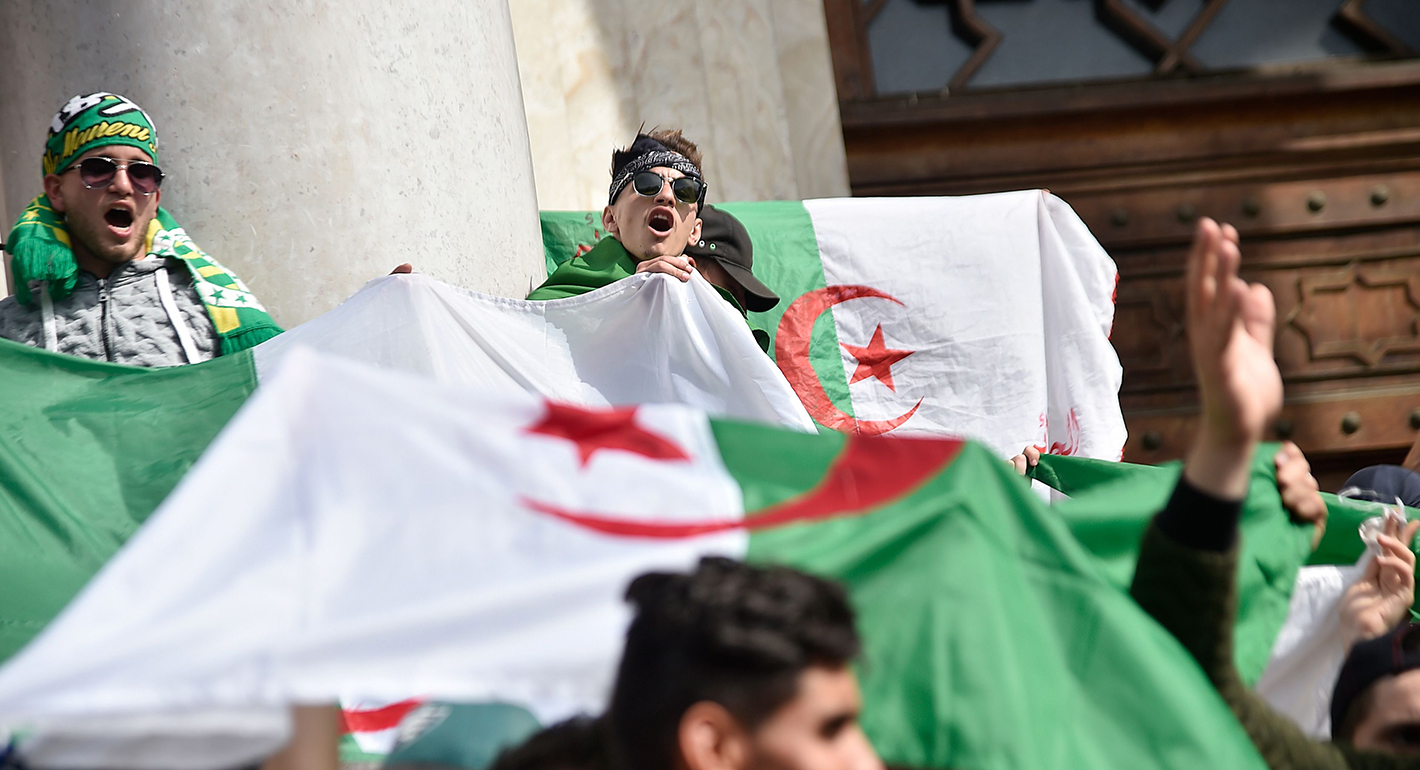
A few minutes after Zaalane’s announcement, thousands of Algerians protesters took to the streets once again to declare their rejection of this unconvincing concession.These demonstrations are a unique sequence of events that we have not seen in the north African country since the 1990s. I have observed and participated in the protests, and the tension, the determination and the anger of Algerians are palpable.
Bouteflika has been in power since 1999, and while recognising the achievements of his tenure in office, Algerians are angry and fed up of being taken for "half people" or "half citizen" by the authorities.
They are tired and ashamed of being represented by a president who has been debilitated by a long-standing illness, unable to walk and address his people for six years, let alone govern.
In essence, millions of Algerians see this fifth term as nonsensical and offensive. As explained to me by many in a humorous tone – for which Algerians are well known – "we refuse to be governed by a frame," in reference to the framed photographs of president Bouteflika that officials have been placing at important events because of his inability to be present in person.
While the grievances of Algerians are numerous, their demands are - for now - focused and clear: no fifth term for Bouteflika and the departure of his brothers, clan, patrons and supporters from power.
This, however, might change over time.
Protesters were chanting “Bouteflika out", "Bouteflika mekech el khamsa" [Bouteflika, there will be no fifth term], and "ni Bouteflika, ni Said" [We neither want Bouteflika, nor Said], in reference to his brother who is believed to be governing the country.
They also chanted "El Jazair jamhuriya machi memlaka" [Algeria is a republic, not a monarchy].
Algerians, old and young, still remember the black decade in the 1990s, and they are aware of the dangers of violence.
As a result, during all demonstrations, they reiterated their calls for peaceful protests. For instance, protesters insisted on chanting "silmiya, silmiya" [peaceful] each time they encountered the police barricade, they also chanted "cha’ab, churta, khawa khawa" [People and the police are brothers] or "y a la police, madirich el I’ib" [You! Police do not shame yourself].
The demonstrators were highly civilized, did not use violence, with many participants bringing rubbish bags with them and collecting the bottles that protesters were carrying.
When passing next to the burns hospital, hôpital des brulés, in avenue Pasteur, demonstrators stopped chanting in order not to bother the patients, and they behaved the same way when passing next to a funeral in Telemly, central Algiers.
They insisted on not provoking the police no matter what. Even if some violence took place at the end of the day, this was the exception, rather than the rule.
The determination of Algerians is as strong as their exasperation, and it is hard to imagine them blinking first. Their mobilisation throughout the territory, across generations and classes, is substantial.
During the protests, I saw the youth, middle-aged and even the elderly in their wheelchairs. This is the call of the people of all ages, all classes, and all regions. If the protests remain focused, well-organised, mobilised and their demands are clear, this might change and become a successful social movement.
To mutate, demands need first to remain clear with one defined ambition, namely expelling Bouteflika, his clans and his supporters from power.
Second, they need to maintain the mobilisation of diverse actors in the social spectrum, as they have done so far, such as the students, lawyers, teachers, unemployed, etc.
Third, their approach and strategy must remain peaceful, civil and good-natured to persuade more Algerians to join them and ensure that those protesting now stay behind the movement.
Any violence might alienate the people participating and those who still have to be convinced, and will make it difficult for the protesters to gain support nationally and maintain a good image internationally.
As for the regime, it is no longer capable of buying social peace as it did in 2012 when Algeria had sizeable foreign exchange reserves, ranking eighth in the world.
Since mid-2014, there has been a drop in oil prices, with foreign exchange reserves shrinking from $194bn in 2013 to $96bn in 2019. The stabilisation fund has been consumed and overall economic growth, already low in 2014, is now at 2.3 percent.
The budget deficit is at 9.2 percent of GDP, the state is heavily indebted, and inflation has reached five percent.
The regime is trying not to lose face. The different statements of Prime Minister Ahmed Ouyahia and Bouteflika’s former campaign director, Abdelmalek Sellal, bear witness to this. Sellal said before being sacked this week, while the streets were boiling against the fifth term: "Bouteflika is more popular [now] than in 2014."
The proposal of Bouteflika's new campaign director to give him one year to step down after he wins the presidential elections is ridiculous and shows that the leadership is weak and incoherent.
The multiplication of far-fetched declarations will not be enough to calm the anger of Algerians. It is precisely the contempt of the regime that gave birth to their mobilisation.
It is the disdain of the regime and the disgust it provokes that gives the Algerians the strength to say enough, no more.
This article was originally published in the Middle East Eye.
Former Senior Resident Scholar, Malcolm H. Kerr Carnegie Middle East Center
Dalia Ghanem was a senior resident scholar at the Malcolm H. Kerr Carnegie Middle East Center in Beirut, where her research focuses on Algeria’s political, economic, social, and security developments. Her research also examines political violence, radicalization, civil-military relationships, transborder dynamics, and gender.
Recent Work
Dalia Ghanem


Frances Z. Brown, Judy Dempsey, Dalia Ghanem, …
Carnegie India does not take institutional positions on public policy issues; the views represented herein are those of the author(s) and do not necessarily reflect the views of Carnegie, its staff, or its trustees.
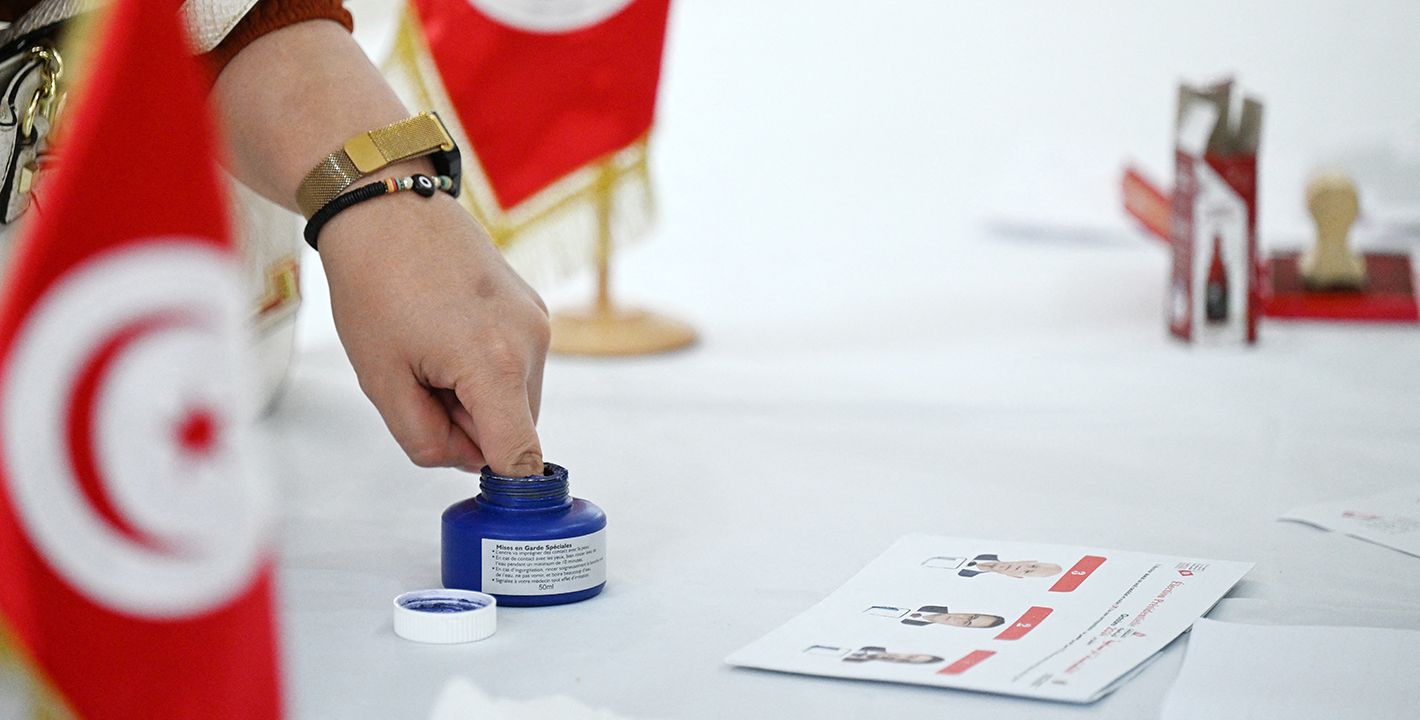
President Kais Saied has won a second term in office, but his country is facing a host of problems that necessitate urgent reforms, above all preventing the possibility of a financial meltdown.
Ishac Diwan, Hachemi Alaya, Hamza Meddeb
As India’s economy recovers from the coronavirus pandemic, Indian businesses need efficient financial structures to regain their ground. Key reforms to India’s Insolvency and Bankruptcy Code could fill these gaps.

Anirudh Burman
Access to cross-border data is an integral piece of the law enforcement puzzle. India is well placed to lead the discussions on international data agreements subject to undertaking necessary surveillance reforms.
Smriti Parsheera, Prateek Jha
After the coronavirus pandemic wanes, how will China’s reorientation of the Belt and Road Initiative to address global health concerns influence its relationships with South Asian countries?


Deep Pal, Rahul Bhatia
Early in the outbreak, government researchers forecast several high-risk scenarios that were downplayed or ignored in public messaging.
Gautam I. Menon