

Q&A
Paul Haenle, Philippe Le Corre
{
  "authors": [
    "Philippe Le Corre"
  ],
  "type": "legacyinthemedia",
  "centerAffiliationAll": "dc",
  "centers": [
    "Carnegie Endowment for International Peace",
    "Carnegie Europe"
  ],
  "collections": [],
  "englishNewsletterAll": "asia",
  "nonEnglishNewsletterAll": "",
  "primaryCenter": "Carnegie Endowment for International Peace",
  "programAffiliation": "AP",
  "programs": [
    "Asia",
    "Europe"
  ],
  "projects": [],
  "regions": [
    "North America",
    "United States",
    "East Asia",
    "China",
    "Western Europe",
    "Asia",
    "Europe",
    "Iran"
  ],
  "topics": [
    "Economy",
    "Trade",
    "Foreign Policy"
  ]
}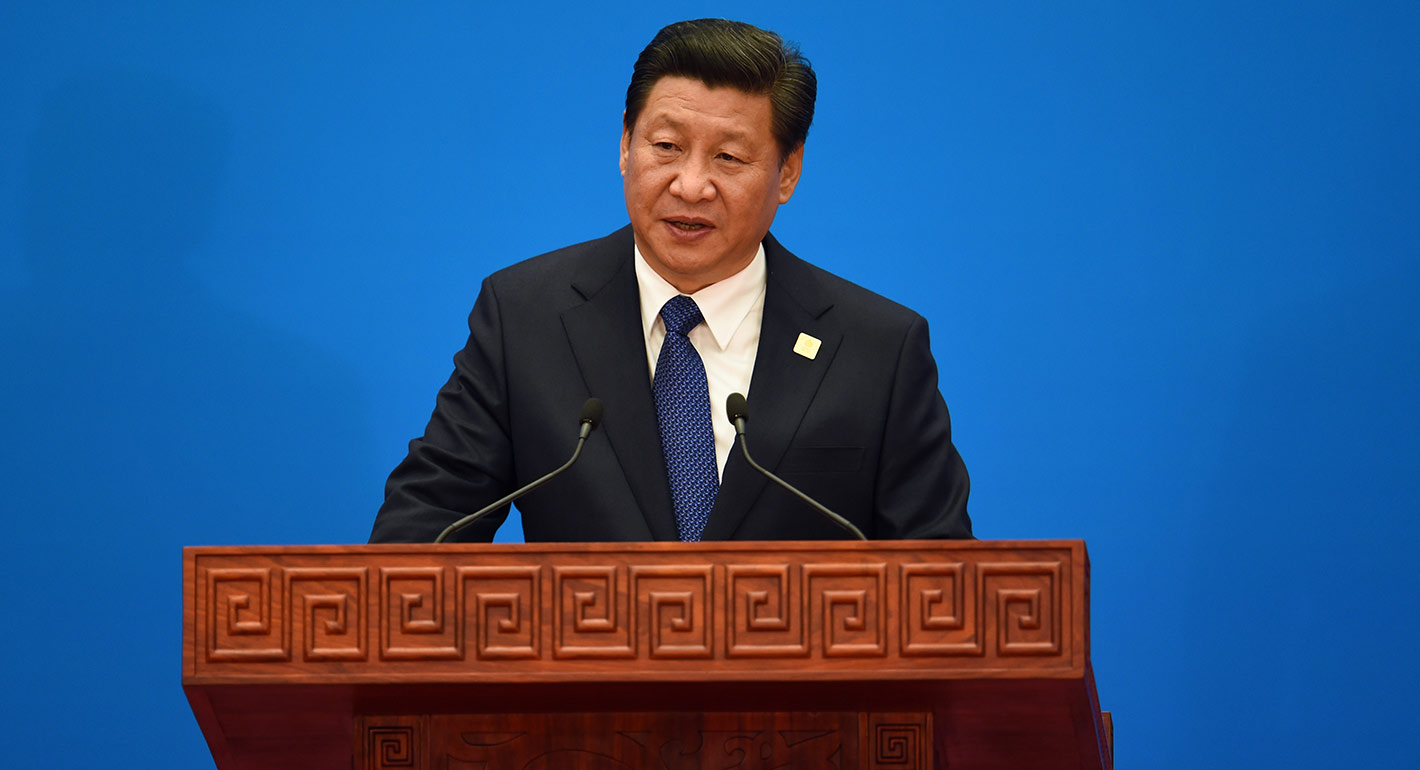
Source: Getty
The bottom line is that bridging to G7 nations such as Italy and France and getting global recognition for the BRI are now top Chinese priorities. China wants to be seen as the new champion of multilateralism.
Source: Euractiv
The agenda includes a possible meeting with Donald Trump at Mar-a-Lago and a forum of his signature “Belt and Road” (BRI) in Beijing, where he hopes to host a large number of foreign heads of state and government.
Yet Xi’s upcoming trip to Europe is perhaps the most intriguing of all. The two countries chosen by Beijing, Italy and France, are both founding members of the European Union; they’re also G7 and NATO members, fairly large economies, and strong allies of the United States. This sets them apart from nations in Eastern or Southern Europe, considered as easy targets for “predatory” China.
Still, as China knows too well, the political and economic realities of Paris and Rome could not be further apart.
Italy is in the middle of a deep recession, run by a complex coalition of populist, headline-grabbing political parties. Rome recently attracted media attention as one of its ruling factions, the Five Star movement, succeeded in getting the government to sign on to Beijing’s Belt and Road Initiative (BRI).
Although the decision has brought a lot of confusion and could backfire, with possible setbacks from other Western powers, President Xi is expected to finalize a BRI Memorandum of Understanding during his official visit on March 22-23.
Beijing also sees Italy as a priority for its Maritime Silk Road, considered vital to China’s ever-growing wealth maritime strategy, including greater access to Northern European markets. After acquiring a 51% state in the Greek port of Piraeus in 2016, China has bought positions in the ports of Venice and Genoa and is expected to strike a similar deal with the city of Trieste. Italy ranks number three in the EU when it comes to Chinese investment. Meanwhile, Rome runs a €16 billion trade deficit with Beijing.
France, on the other hand, is the current chair of the G7 and is run by the highest-profile leader in Europe. Although France was the first major Western nation to recognize the People’s Republic of China diplomatically in 1964, the bilateral relationship has had occasional setbacks. France hosted student leaders of the 1989 Tiananmen Square movement and then proceeded with arm sales to Taiwan in the 1990s, raising Beijing’s ire.
This will be Jinping’s second trip to France as president: in 2014, he made a state visit to celebrate the fiftieth anniversary of diplomatic relations between the two countries. But since his election in 2017, President Emmanuel Macron has adopted a new, less diplomatic rhetoric toward Beijing, especially compared to Rome’s recent approach.
While visiting China in 2018, Macron he suggested that the BRI should not be a “one way road.” Paris has also expressed strong views on freedom of navigation in the South China Sea (which China considers most of it as part of his sovereign territory) and has been pushing for a more restrictive policy vis a vis foreign direct investments (FDI).
Under French (and German) influence, the European Union has just finalized a much-needed EU-wide FDI screening mechanism, giving individual member states a legal framework that they could adopt voluntarily, allowing them to review cases on national security grounds, as well as economic and competition aspects.
Despite all this, with regard to its image and global positioning, China needs France. Both countries are permanent members of the UN Security Council and exert some international influence. France is a key player in Europe. In fields such as technology (including 5G) and the BRI, Beijing has been trying to counter-balance Washington’s hawkish discourse by gathering support across the Atlantic.
For example, four years ago, China received support from the UK, Germany, France, and Italy when these countries decided to join the China-backed Asian Infrastructure Investment Bank– against Washington’s view.
China has also tried to rally Eastern and Central European countries through the 16+1 mechanism (including 11 EU member states), a group that meets once a year in the presence of the Chinese prime minister, but with limited concrete results.
The bottom line is that bridging to G7 nations such as Italy and France and getting global recognition for the BRI are now top Chinese priorities. There is little doubt Xi will try to rally support in Paris. Although Macron is highly unlikely to attend the BRI forum in Beijing in April, discussions have been taking place in Paris—as in Rome—about the initiative.
Because Macron appears the most vocal proponent of globalization in Europe, China also wants to be seen as the new champion of multilateralism, and will do its utmost to engage France in particular on subjects such as climate, peacekeeping operations, and global governance.
On the other hand, the French government –like its Italian counterpart- has expressed interest in more Chinese investments, imports and joint-ventures, as well as a better market access in China. Chances that a “win-win” compromise will be found are running high.
Across the Atlantic, perceptions could not be more different within a hawkish U.S. administration generally opposed to a compromise with Beijing.
Former Nonresident Senior Fellow, Europe Program
Philippe Le Corre was a nonresident senior fellow in the Europe Program at the Carnegie Endowment for International Peace.
Recent Work

Paul Haenle, Philippe Le Corre

Erik Brattberg, Philippe Le Corre, Paul Stronski, …
Carnegie India does not take institutional positions on public policy issues; the views represented herein are those of the author(s) and do not necessarily reflect the views of Carnegie, its staff, or its trustees.

How is AI reshaping space security, creating governance challenges, and where does international diplomacy stand today?


Tejas Bharadwaj, Almudena Azcárate Ortega

After the chill in ties between 2020 and 2024 that brought India–China relations to their lowest point in several decades, the two countries have engaged each other afresh. This paper argues that there are predominantly four imperatives guiding India’s approach to China, and they exist in an order of priority.

Saheb Singh Chadha

This piece argues that India’s central challenge is not managing a single flashpoint but resolving the underlying tension between expansion and institutional coherency of the BRICS grouping.

Vrinda Sahai
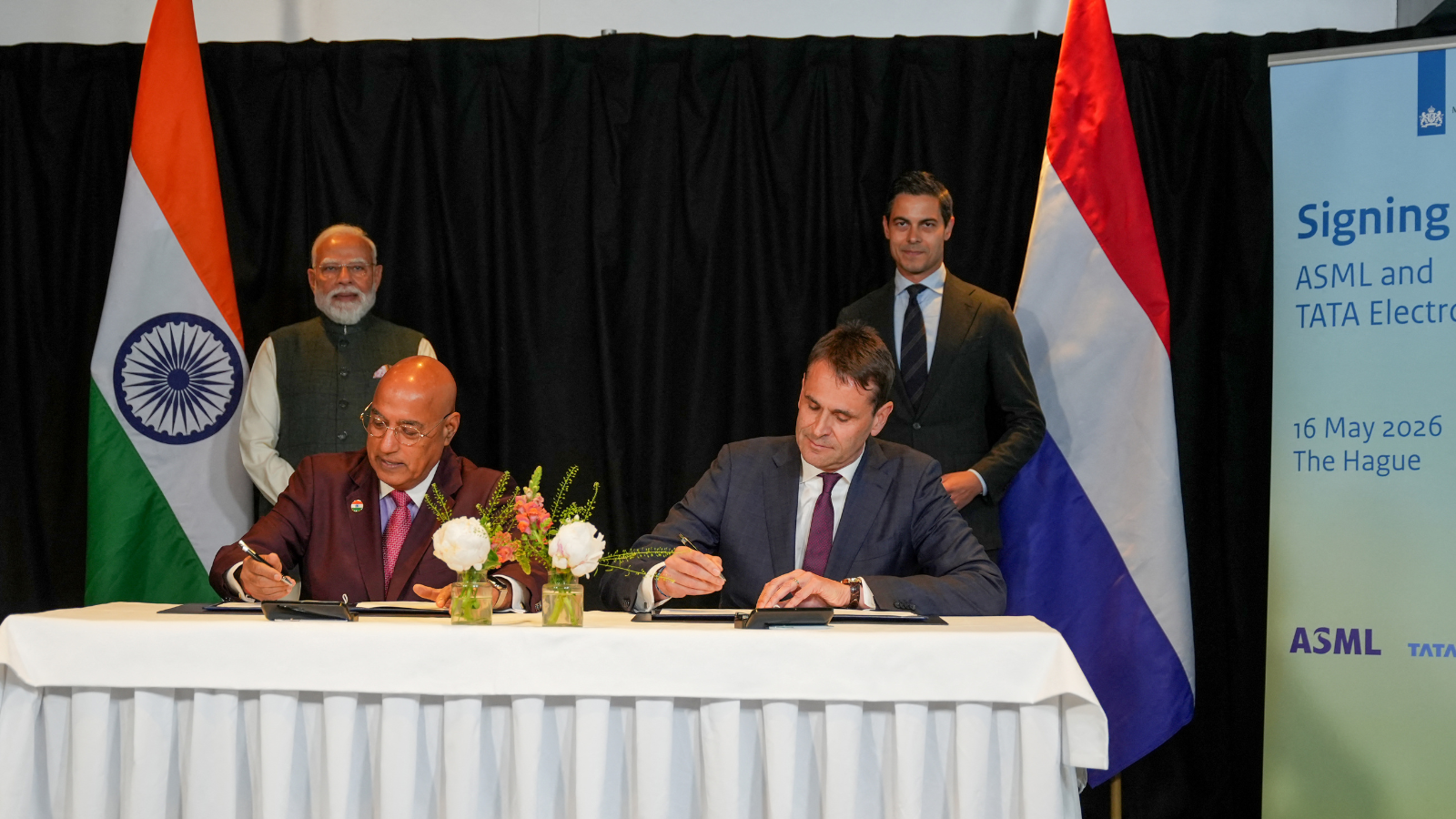
The ASML MoU with Tata Electronics is an indicator of how far the Indian semiconductor ecosystem has come. This ecosystem has been years in the making and represents real commercial logic.

Konark Bhandari

A partnership between India, a country of subcontinental size, and Africa, a continent of fifty-four countries, may seem asymmetric until one notes that both are home to nearly the same number of people—1.4 billion. This essay spells out the existing challenges to the partnership, its optimal potential, and the possible pathways to realize it over the next quarter-century.

Rajiv Bhatia