

Commentary
Judy Dempsey
{
  "authors": [
    "Judy Dempsey"
  ],
  "type": "legacyinthemedia",
  "centerAffiliationAll": "",
  "centers": [
    "Carnegie Endowment for International Peace",
    "Carnegie Europe"
  ],
  "collections": [],
  "englishNewsletterAll": "",
  "nonEnglishNewsletterAll": "",
  "primaryCenter": "Carnegie Europe",
  "programAffiliation": "",
  "programs": [],
  "projects": [],
  "regions": [
    "Europe",
    "North America",
    "United States",
    "Eastern Europe",
    "Western Europe"
  ],
  "topics": [
    "Foreign Policy",
    "EU",
    "Security"
  ]
}
Source: Getty
It is becoming increasingly clear that the alliance today is ill-prepared to deal with myriad complex threats.
Source: Washington Post
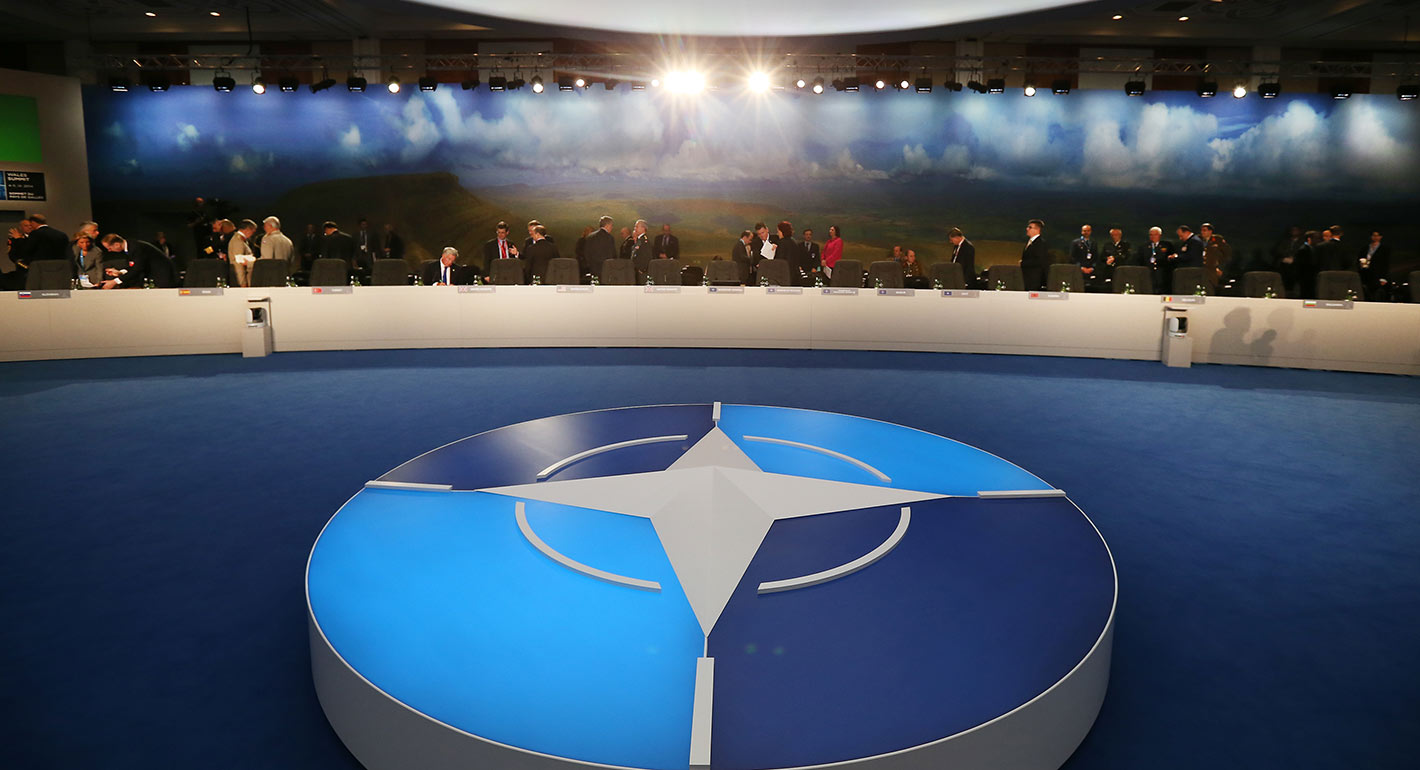
NATO is marking its 70th anniversary this week. But its leaders don’t seem to be living in the present.
The alliance does have something big to boast about. It protected Western Europe during the Cold War, and after the fall of the Berlin Wall in 1989, it eventually opened its doors to all the former Warsaw Pact countries in East Central Europe. Georgia, Ukraine and North Macedonia are queuing to join. NATO must be doing something right to remain such a powerful attraction.
But it is becoming increasingly clear that the alliance today is ill-prepared to deal with myriad complex threats. NATO’s political leaders refuse to counter the real threat facing the transatlantic alliance: lack of a strategy to deal with Russia’s and China’s increasing military and political power. The reason is NATO’s flawed culture. Here’s why that culture is flawed.
NATO ambassadors and their bosses don’t like admitting mistakes. No organization likes doing this. But it is high time that NATO came clean over Afghanistan, over its disastrous intervention in Libya, over why it has had has a mission in Kosovo since 1999. Those interventions were not strategically driven. Strategy is something that NATO as an alliance does not do.
Individual countries such as France, Britain and the United States have a reflex for strategic analysis. That analysis combines soft power with hard power. That culture cannot be “exported” to other member states, particularly Germany, which is still deeply embedded in a pacifist culture and continues to take the U.S. security guarantee for granted. Without a common, strategic outlook, NATO will be unable to counter the Russian and Chinese threats.
NATO doesn’t debate. Yes, there are numerous committees, numerous meetings, numerous ministerial meetings. But to what avail? All these gatherings duck, if not muzzle, political discussions. There have been no internal debates about Iran, about post-war Syria, about China, about the future status of the South China Sea — to name just some of the big geostrategic challenges NATO should be talking about.
One NATO diplomat told me such political discussions cannot be raised inside the organization. “If we put any of these issues on the agenda there’s the automatic assumption that NATO is being asked to think about a military role,” he said. If political discussions (barring inviting experts to give a briefing) are shunned, how on Earth is NATO going to think and act strategically? How is NATO going to react if, one day, President Trump asks the alliance for support in the South China Sea. Imagine NATO saying “no.” Trump could easily seize the chance to pull the plug on America’s financial contribution.
Just to add to the cultural deficit, NATO allies do not share intelligence. The U.S., British, Canadian and French delegations wouldn’t dare promote a more open NATO. The allies don’t trust each other to share sensitive information. Several delegations from the former communist bloc continue to have close Russian connections. The result is that NATO is an alliance of different capabilities and knowledge. This hinders a common strategic culture.
Nor does NATO communicate effectively with the outside world. It holds terrific events and workshops, and its officials write worthy articles that keep justifying the alliance. But these are for the cognoscenti, the wonks and the committed.
NATO needs to get out to cities and towns, to universities and schools, to local political parties and to companies that make military equipment. And it had better do these things soon, given growing anti-Americanism in Germany. It is abetted by the country’s pacifist culture and the ever-present sentiment among the governing Social Democrats to give President Vladimir Putin the benefit of the doubt. The Social Democrats and generally the German public now blame Trump, not Putin, for pulling out of the Intermediate-Range Nuclear Forces treaty.
But if Germany and NATO praise the virtues of multilateralism and arms control, why haven’t they put the future of the INF treaty on NATO’s agenda? This is yet another issue not discussed inside NATO, even though its members know the INF was vital for their security. German Chancellor Angela Merkel’s silence confirms her reluctance to rock her center-right coalition. Her silence confirms one other trend affecting the alliance.
With few exceptions, Europe’s leaders do not talk about NATO, apart from attending the ritualistic summits. The leaders are out of sync with the work NATO’s ambassadors and defense ministers try to do and the problems NATO as a collective organization faces.
The fact that NATO cannot call snap military exercises because the roads and bridges, ferries and harbors are ill-equipped to provide such facilities shows the lack of urgency by leaders.
Europe is vulnerable even on its own turf to Russian aggression. NATO is struggling to deal with Russia’s disinformation campaigns, its cyberattacks, its deception and destabilization methods. Leaders need to begin working together with the defense ministries and their NATO colleagues. They used to do it during the Cold War when the strategy was clear. Its high time to put strategy back on the agenda.
This article was originally published in the Washington Post.

Nonresident Senior Fellow, Carnegie Europe
Judy Dempsey is a nonresident senior fellow at Carnegie Europe
Recent Work
Judy Dempsey
Judy Dempsey
Carnegie India does not take institutional positions on public policy issues; the views represented herein are those of the author(s) and do not necessarily reflect the views of Carnegie, its staff, or its trustees.

In any defense establishment, change is an ongoing process. However, despite the best of intentions, existing bureaucracies, bound by habit and years of socialization, have their limits in implementing transformative change.

Anit Mukherjee

How is AI reshaping space security, creating governance challenges, and where does international diplomacy stand today?


Tejas Bharadwaj, Almudena Azcárate Ortega

After the chill in ties between 2020 and 2024 that brought India–China relations to their lowest point in several decades, the two countries have engaged each other afresh. This paper argues that there are predominantly four imperatives guiding India’s approach to China, and they exist in an order of priority.

Saheb Singh Chadha

This piece argues that India’s central challenge is not managing a single flashpoint but resolving the underlying tension between expansion and institutional coherency of the BRICS grouping.

Vrinda Sahai
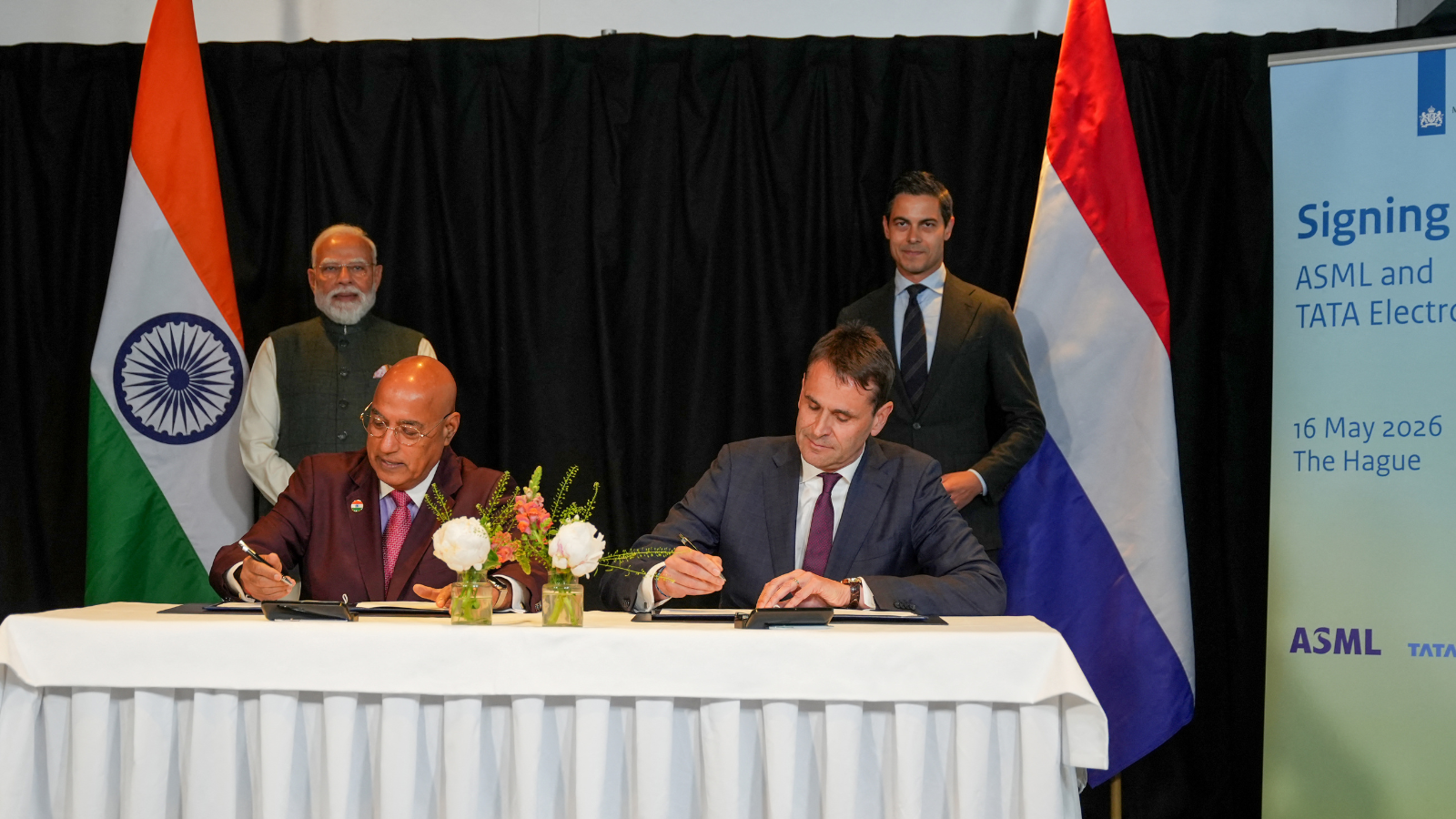
The ASML MoU with Tata Electronics is an indicator of how far the Indian semiconductor ecosystem has come. This ecosystem has been years in the making and represents real commercial logic.

Konark Bhandari