

Commentary
James Schwemlein
{
  "authors": [
    "James Schwemlein"
  ],
  "type": "other",
  "centerAffiliationAll": "dc",
  "centers": [
    "Carnegie Endowment for International Peace"
  ],
  "collections": [],
  "englishNewsletterAll": "ctw",
  "nonEnglishNewsletterAll": "",
  "primaryCenter": "Carnegie Endowment for International Peace",
  "programAffiliation": "SAP",
  "programs": [
    "South Asia"
  ],
  "projects": [],
  "regions": [
    "South Asia",
    "Pakistan",
    "East Asia",
    "China"
  ],
  "topics": [
    "Economy",
    "Security"
  ]
}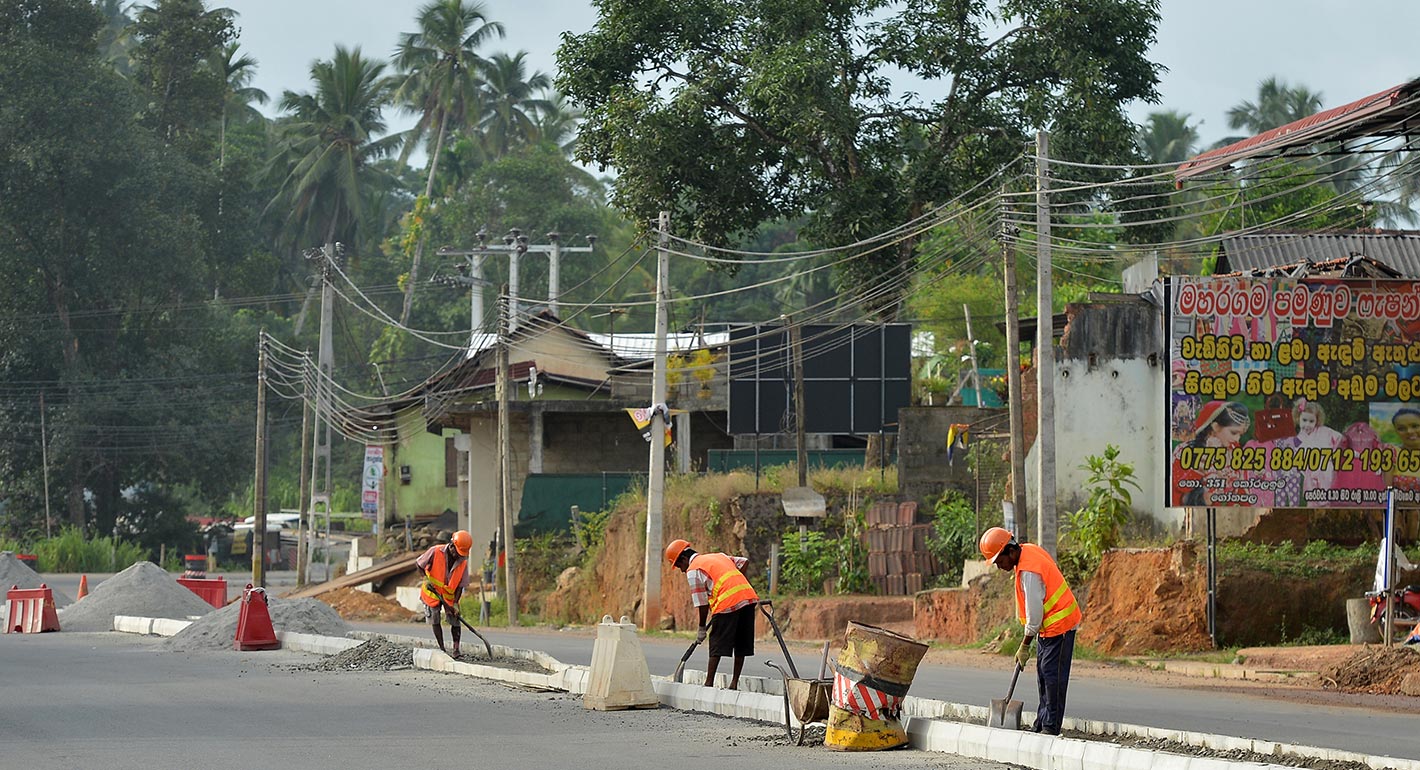
Source: Getty
BRI recipient states undergoing democratic transitions are asserting greater influence over the direction of China’s efforts. This is likely to continue as long as China’s flawed business model remains unchanged.
Source: Asian Affairs
Much ink has been spilled about China’s Belt & Road Initiative (BRI), President Xi Jinping’s grand vision for leveraging China’s growing wealth to expand economic, political, and military influence. The initiative is typically defined as encompassing projects in some 65 countries across three continents, and in sum it represents the greatest directed investment in history with an estimated value of over $1 trillion over the lifetime of the initiative.1 But five years in, Xi’s “project of the century” is facing turbulence – from indications that China’s economy is slowing, routine construction and project management delays, and most interestingly efforts on the part of recipient countries to assert greater control over the direction of China’s efforts.
Much attention has been paid to the notion of local challenges to China’s BRI. But this commentary is misdirected. At this point, the issue is not an expansion of authoritarianism or the proliferation of a “China model.”2 Nor is it that local “pushback” marks emerging “resistance” to China’s effort, or indeed to China’s rise to great power status. Rather, what has been referred to as “pushback” or “resistance” should be understood narrowly as tactical efforts to amend, renegotiate, or cancel contracts or initiatives previously agreed and announced by Beijing and its local governmental partners. These signs need to be understood in more localized terms than they are typically applied. It is a mistake to confuse local efforts to assert greater influence or control over Chinese investments as a rebuke against China’s rise to global power status. Individual states may choose to curtail or alter Chinese investment plans, but China will remain a large, potentially dominant, actor in most Asian markets, despite tactical challenges against some of its individual programmes.3
This article posits that incidents where recipient states have attempt to assert greater influence share a common characteristic–democracy. Or, to be more precise, partial or flawed democracy.
1. https://www.fbicgroup.com/sites/default/files/B&R_Initiative_65_Countries_and_ Beyond.pdf (accessed 14 March 2019).
2. https://foreignpolicy.com/2018/05/16/on-chinas-new-silk-road-democracy-pays-atoll/ (accessed 14 March 2019).
3. https://www.foreignaffairs.com/articles/china/2018-10-24/why-democracies-areturning-against-belt-and-road (accessed 14 March 2019).

Former Nonresident Scholar, South Asia Program
James Schwemlein was a nonresident scholar in the South Asia Program at the Carnegie Endowment for International Peace.
Recent Work
James Schwemlein
James Schwemlein

In any defense establishment, change is an ongoing process. However, despite the best of intentions, existing bureaucracies, bound by habit and years of socialization, have their limits in implementing transformative change.

Anit Mukherjee

After the chill in ties between 2020 and 2024 that brought India–China relations to their lowest point in several decades, the two countries have engaged each other afresh. This paper argues that there are predominantly four imperatives guiding India’s approach to China, and they exist in an order of priority.

Saheb Singh Chadha

This piece argues that India’s central challenge is not managing a single flashpoint but resolving the underlying tension between expansion and institutional coherency of the BRICS grouping.

Vrinda Sahai

On March 10, 2026, India’s Union Cabinet approved amendments to Press Note 3, a regulation that mandated government approval on all foreign direct investment (FDI) from countries sharing a land border with India. This amendment raises questions primarily about whether its stated benefits will materialize and if the risks have been adequately weighed. This piece will address the same.

Konark Bhandari

This piece argues that the present Indian strategy, based on opportunistic diversification and utilization of limited strategic reserves, remains inadequate when confronting supply disruptions. It evaluates India’s options in the short, medium, and long terms.
Vrinda Sahai