
• Research
  • About
  • Experts
Carnegie India logoCarnegie lettermark logo
{
  "authors": [
    "Richard Sokolsky",
    "Steven Simon"
  ],
  "type": "legacyinthemedia",
  "centerAffiliationAll": "",
  "centers": [
    "Carnegie Endowment for International Peace",
    "Malcolm H. Kerr Carnegie Middle East Center"
  ],
  "collections": [],
  "englishNewsletterAll": "",
  "nonEnglishNewsletterAll": "",
  "primaryCenter": "Carnegie Endowment for International Peace",
  "programAffiliation": "",
  "programs": [],
  "projects": [],
  "regions": [
    "North America",
    "United States",
    "Middle East",
    "Iran"
  ],
  "topics": [
    "Political Reform",
    "Security",
    "Foreign Policy"
  ]
}

Source: Getty

In The Media

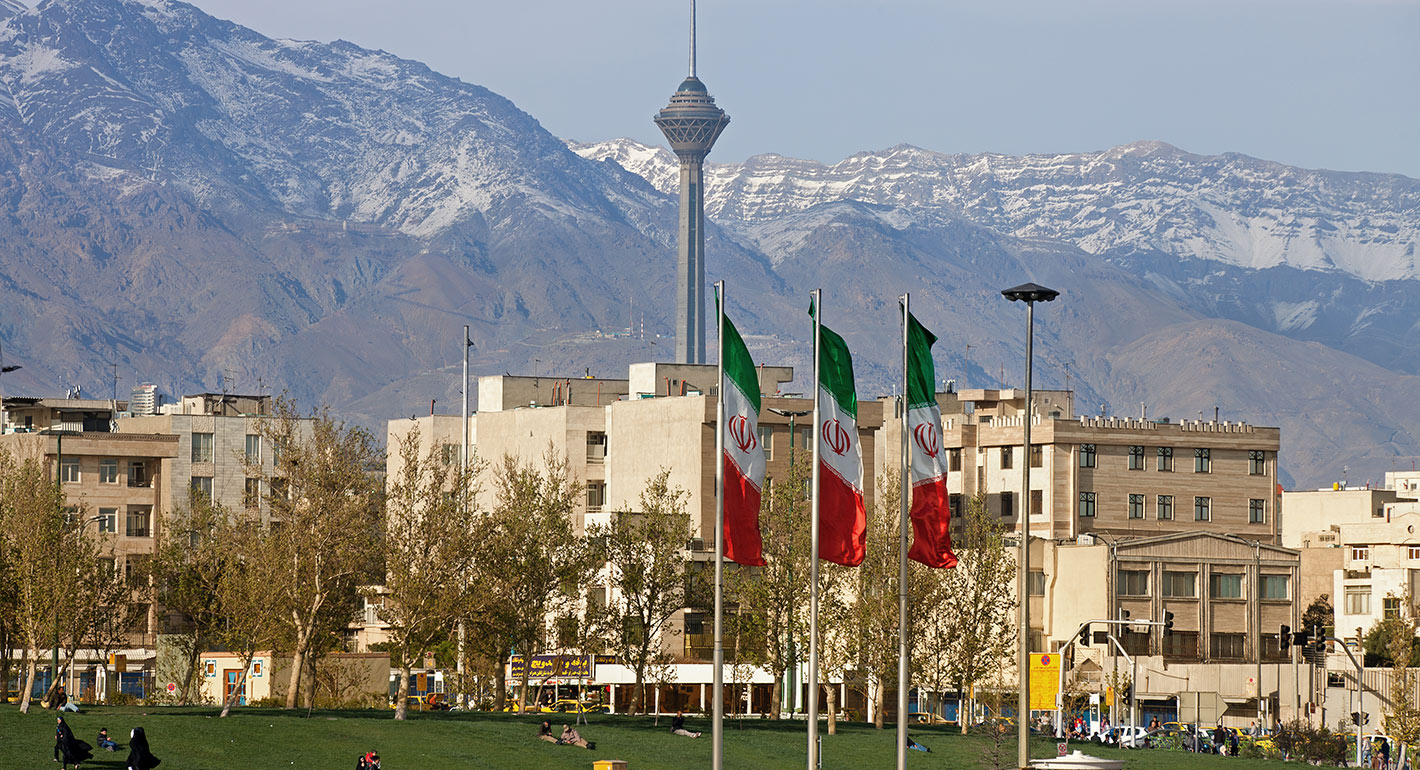
How to Prevent an Accidental War With Iran

There is one thing that the war avoiders and the warmongers should be able to agree on: the need to prevent an accidental or unintended conflict between the United States and Iran.

Link Copied
By Richard Sokolsky and Steven Simon
Published on May 21, 2019

Source: Foreign Policy

White House spin notwithstanding, it has become increasingly clear in recent days that the Trump administration is divided over the objectives of its Iran policy and the role that military threats or force should play in achieving them. The national security advisor and secretary of state seem to be spoiling for a fight and baiting Tehran into taking an action that would provide a pretext for a military strike. But the president keeps saying he wants to talk to the Iranians and get them back to the negotiating table to cut a better nuclear deal and to force Iranian concessions on its regional behavior and ballistic missile program. The secretary of defense and chairman of the Joint Chiefs of Staff, meanwhile, seem worried that the United States is on a path toward war with Iran and skeptical that additional U.S. deployments to the Persian Gulf are warranted.

As with most foreign-policy issues, it’s hard to know exactly what the policy is and who’s in charge. It is possible, of course, that all the chest-thumping and force movements within the past week are designed to either deter Iranian provocations or pressure the country into capitulating to U.S. demands.

Whatever the administration actually wants, there is one thing that the war avoiders and the warmongers should be able to agree on: the need to prevent an accidental or unintended conflict between the United States and Iran. But the administration’s actions are increasing rather than lowering the risks that the two countries will stumble into a conflict as a result of a miscalculation, misunderstanding, or miscommunication. And that is extremely dangerous since Iran and the United States have no channels for direct and regular communication or mechanisms to defuse a crisis or control escalation once an incident occurs....

Read Full Text

This article was originally published in Foreign Policy.

About the Authors

Richard Sokolsky

Nonresident Senior Fellow, Russia and Eurasia Program

Richard Sokolsky is a nonresident senior fellow in Carnegie’s Russia and Eurasia Program. His work focuses on U.S. policy toward Russia in the wake of the Ukraine crisis.

Steven Simon

Steven Simon is visiting professor of history at Amherst College. He served on the NSC and in the State Department in five administrations and is co-author of "The Age of Sacred Terror."

Authors

Richard Sokolsky
Nonresident Senior Fellow, Russia and Eurasia Program
Richard Sokolsky
Steven Simon

Steven Simon is visiting professor of history at Amherst College. He served on the NSC and in the State Department in five administrations and is co-author of "The Age of Sacred Terror."

Political ReformSecurityForeign PolicyNorth AmericaUnited StatesMiddle EastIran

Carnegie India does not take institutional positions on public policy issues; the views represented herein are those of the author(s) and do not necessarily reflect the views of Carnegie, its staff, or its trustees.

More Work from Carnegie India

  • Commentary
    India Signs the Pax Silica—A Counter to Pax Sinica?

    On the last day of the India AI Impact Summit, India signed Pax Silica, a U.S.-led declaration seemingly focused on semiconductors. While India’s accession to the same was not entirely unforeseen, becoming a signatory nation this quickly was not on the cards either.

      Konark Bhandari

  • Commentary
    The Impact of U.S. Sanctions and Tariffs on India’s Russian Oil Imports

    This piece examines India’s response to U.S. sanctions and tariffs, specifically assessing the immediate market consequences, such as alterations in import costs, and the broader strategic implications for India’s energy security and foreign policy orientation.

      Vrinda Sahai

  • Article
    Military Lessons from Operation Sindoor

    The India-Pakistan conflict that played out between May 6 and May 10, 2025, offers several military lessons. This article presents key takeaways from Operation Sindoor and breaks down how India’s preparations shaped the outcome and what more is needed to strengthen future readiness.

      Dinakar Peri

  • Book
    India and the Sovereignty Principle: The Disaggregation Imperative

    This book offers a comprehensive analysis of India's evolving relationship with sovereignty in a complex global order. Moving beyond conventional narratives, it examines how the sovereignty principle shapes India's behavior across four critical domains—from traditional military power to contemporary data governance.

      Rudra Chaudhuri, Nabarun Roy

  • Commentary
    NISAR Soars While India-U.S. Tariff Tensions Simmer

    On July 30, 2025, the United States announced 25 percent tariffs on Indian goods. While diplomatic tensions simmered on the trade front, a cosmic calm prevailed at the Sriharikota launch range. Officials from NASA and ISRO were preparing to launch an engineering marvel into space—the NASA-ISRO Synthetic Aperture Radar (NISAR), marking a significant milestone in the India-U.S. bilateral partnership.

      Tejas Bharadwaj

Get more news and analysis from
Carnegie India
Carnegie India logo, white
Unit C-4, 5, 6, EdenparkShaheed Jeet Singh MargNew Delhi – 110016, IndiaPhone: 011-40078687
  • Research
  • About
  • Experts
  • Projects
  • Events
  • Contact
  • Careers
  • Privacy
  • For Media
Get more news and analysis from
Carnegie India
© 2026 Carnegie Endowment for International Peace. All rights reserved.






