In 2013, General Valery Gerasimov, Russia’s chief of the General Staff, published an article in a relatively obscure Russian military policy journal. In it, he outlined his observations on a new, whole-of-government style of warfare—one that blurs the line between war and peace. It would come to be known in the West as the Gerasimov doctrine.
A year later, Russia annexed the Crimean Peninsula, deployed “little green men” to eastern Ukraine, and launched a massive worldwide disinformation campaign.
Since then, this so-called hybrid warfare—the use of proxies, disinformation, and other measures short of war—has dominated discussion of Russia’s newly assertive posture on the world stage. These tactics have been classified as a distinct, special form of warfare. Russia has used them in the Middle East, in the United States, and in Europe. This has reinforced the perception that Russian foreign policy is entering a new chapter of bold and risky adventurism, guided by the Gerasimov doctrine.
But this perception is incorrect.
The Gerasimov doctrine does not drive Russian foreign policy. The military has never been the architect of Russian or even Soviet national security policy. It has always been its implementer.
What’s more, Russian foreign policy has been on this course for over two decades. The major shift in Russian foreign policy did not occur in 2013 with the publication of Gerasimov’s article. Nor did it occur in 2014 with Russia’s annexation of Crimea. It occurred in 1996, when Yevgeny Primakov, then the director of Russia’s foreign intelligence service, was elevated to the post of foreign minister.
Up to that point, post-Soviet Russia had largely sought accommodation and integration with the West. But Primakov put forward the argument that a unipolar world dominated by the United States was unacceptable to Russia. He envisioned a multipolar world managed by a concert of major powers, with Russia as an indispensable actor with a vote and veto on key issues. Securing Russia’s primacy in the post-Soviet space and opposing NATO enlargement were also crucial to Primakov’s vision.
In this context, the so-called Gerasimov doctrine is better understood as just one manifestation of the Primakov doctrine in action. Rather than an overarching philosophy, it is an operational concept adapted to the strategic environment in which Russia has found itself.
The West’s preoccupation with the Gerasimov doctrine and Russia’s hybrid warfare also obscures the role of Russia’s military power in its foreign and national security policies. It risks creating the impression that hybrid tactics can exist separately from Russia’s military capabilities. Hard power underpins hybrid warfare. Although hybrid tactics can be used when the direct application of military power would be too risky or costly, Russia’s hard power capabilities are always looming in the background.
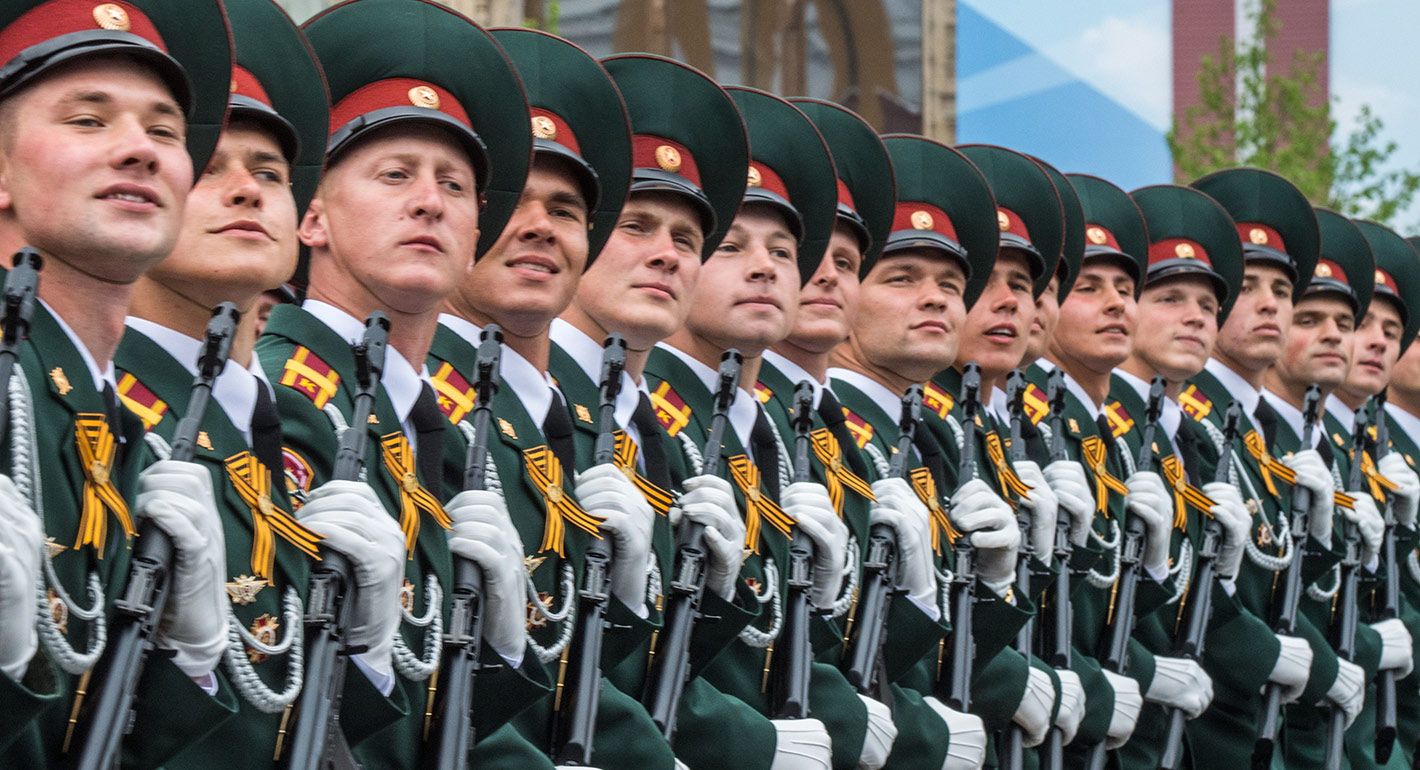
In Ukraine, where Russia’s gray zone operations were heralded as the Kremlin’s new way of waging war, traditional hard power ultimately proved decisive. The Russian military had undergone large-scale reforms in response to major shortcomings that were evident during the 2008 war with Georgia. Smaller, nimbler, and with upgraded capabilities, the new-look Russian military focused on asserting and protecting Russia’s so-called sphere of interest around its periphery, in line with the Primakov doctrine. The reformed military was critical to Russia’s seizure of Crimea and its operations in eastern Ukraine. Today, hard power helps the Kremlin keep the pressure on Kyiv.
Nuclear weapons also play a critical role in enabling Russian foreign policy. They are the ultimate guarantor of Russia’s independence and sovereignty, and the foundation of Moscow’s vision for its national security. Yet Russia has not used its nuclear insurance to pursue unduly risky behavior on the world stage. Instead, its nuclear capabilities are designed to ensure that other powers—like the United States—do not pursue such endeavors against Russia.
Indeed, the broader tendency to see Russia and its military as reckless is misguided. The record of the past two decades shows that the Kremlin has carefully implemented the Primakov doctrine to avoid undue risks.
For instance, Russia opposed the 2003 U.S.-led invasion of Iraq. Yet it lacked the economic and military capabilities, as well as the self-confidence, to forcefully push back against the United States. Russian leaders therefore resorted to limited forms of hybrid warfare—such as sharing intelligence with the Iraqi regime, reportedly providing equipment to the Iraqi military, and launching a propaganda campaign to rally international opposition to the invasion.
The war with Georgia in 2008 was a low-risk, high-payoff operation for Moscow. Russia relied on cyber attacks, disinformation, and the use of proxies in the run-up to the war. But it was hard power that reestablished Russia’s primacy in the former Soviet space and showed that the Kremlin would go to war for that goal.
In Europe, Russia’s military posture since 2014 has reflected the view that confrontation with the West is the new normal. Russia has engaged in a broad range of activities that rely critically on hard power—such as deploying nuclear-capable Iskander missiles to Kaliningrad, conducting extensive military exercises, harassing NATO aircraft over the Baltic and Black Seas, and violating Baltic airspace.
These maneuvers have been widely perceived in the West as reckless. But they are, in fact, deliberate actions, specifically calibrated to Russia’s sense of its own vulnerability. They are intended to demonstrate Russia’s military power, undermine the credibility of the NATO Article V security guarantee, and unnerve the Western public. When it comes to NATO, Russia is realistic about its own limitations and aims to deny NATO its advantages in size, funding, and technology. Without the backing of hard power, Moscow’s hybrid activities in Europe would not be nearly as effective.
In Syria, Russia’s intervention was also a calculated risk, rather than the result of rash ambition. Moscow’s gains there far exceeded the operation’s risks. Defying Western predictions of overextension, Russia achieved a decisive outcome in its first major military operation beyond its periphery, stood up to the United States, and reasserted itself as a major power. It was a clear demonstration of the Primakov doctrine in action.
For all of the noise and commotion around Russia’s hybrid warfare capabilities, it is essential to recognize that these tactics are not emblematic of a new foreign policy doctrine. They are an extension of Primakov’s vision for Russia’s role in the world. There is little indication at present that the Kremlin is prepared to act on a more muscular set of ambitions.
From this perspective, Russia’s activities in Venezuela, the Central African Republic, and Libya say more about Russia’s knack for seizing opportunities than about a new sense of adventurism. The risks for Russia in these regions so far appear modest and calculated, though the benefits have yet to be realized. Rather than panicking about Russian footprints across the globe, Western analysts should strive for a clear assessment of Moscow’s ambitions, capabilities, and propensity for risk.