

Q&A
Darshana M. Baruah, Satyendra Prasad, Denghua Zhang
{
  "authors": [
    "Darshana M. Baruah"
  ],
  "type": "legacyinthemedia",
  "centerAffiliationAll": "dc",
  "centers": [
    "Carnegie Endowment for International Peace",
    "Carnegie India"
  ],
  "collections": [],
  "englishNewsletterAll": "ctw",
  "nonEnglishNewsletterAll": "",
  "primaryCenter": "Carnegie India",
  "programAffiliation": "SAP",
  "programs": [
    "South Asia"
  ],
  "projects": [
    "Security Studies",
    "Indian Ocean Initiative"
  ],
  "regions": [
    "South Asia",
    "India",
    "Indo-Pacific"
  ],
  "topics": [
    "Foreign Policy"
  ]
}
Source: Getty
Extending New Delhi’s network of maritime initiatives to Madagascar and Comoros would only strengthen India’s own outlined priorities and interests in the region.
Source: Economic Times
Despite the recent high level visits to the region - Vice President Venkaiah Naidu to Comoros in October 2019, President Ram Nath Kovind visited Madagascar in March 2018- the western Indian Ocean continues to remain at the periphery of India’s strategic calculations.It is also a blindspot for the Indian Navy with limited presence and engagements despite the region marked as a primary area of interest in its 2015 maritime security strategy. Interestingly, it is not just Delhi but most of its partners - except France (traditional power) and now increasingly China (new rising power)- have overlooked the importance of this region.
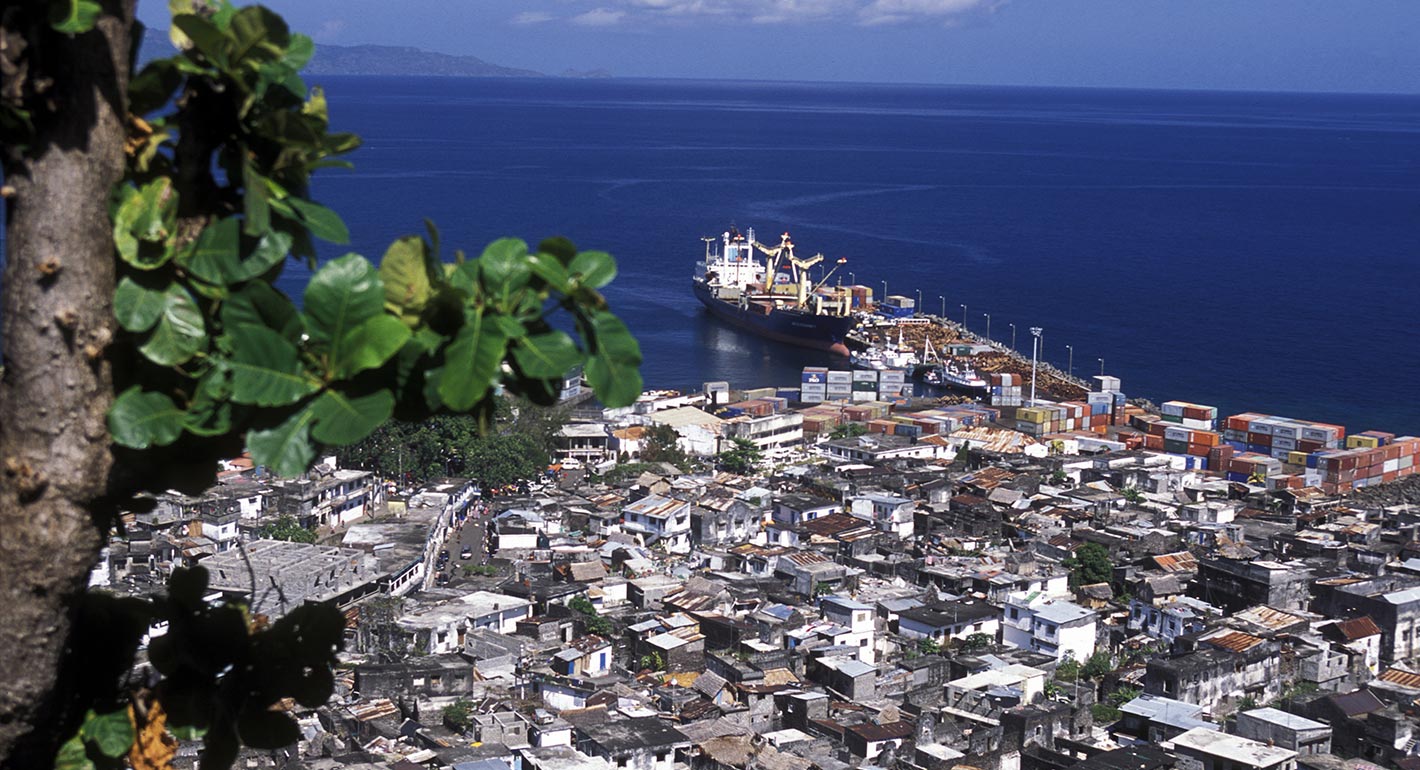
The Western Indian Ocean (WIO) is a strategic sub-theatre of the Indian Ocean linking the Southeastern coast of Africa to the wider Indian Ocean and beyond. It is home to one of the key chokepoints in the Indian Ocean- the Mozambique Channel. While Comoros sits at the northern mouth of the Mozambique Channel, Madagascar borders the channel to its west. While the channel lost its significance post the opening of the Suez Canal, the recent hostilities near the Strait of Hormuz brought the channel back into focus as the original route for bigger commercial vessels (especially for oil tankers). Additionally, the growing importance of Africa in Indo-Pacific engagements combined with potential natural gas reserves in the Mozambique Channel will only continue to raise the significance of this region in wider maritime security. Keeping in mind the importance of geography for maritime power projection and naval dominance, there is little doubt about the rising significance of the islands in a new geo-political environment in the Indian Ocean. For India, engagements with this region will become critical as the Navy begins to strengthen its presence under its mission based deployments. Engagements with the region, especially with the islands- given their geo-strategic location- could become key in supporting Indian naval presence as well as furthering Delhi’s Indian Ocean engagement.
However, the foreign policy architects in New Delhi has failed to realise the geo-strategic importance of this region. The Indian Ocean Region (IOR) division in the Ministry of External Affairs (MEA) created under Modi led government in its first term is tasked with coordination of India’s engagements with the Indian Ocean islands and the region at large. However, Delhi left behind a critical sub-region- the Western Indian Ocean and the islands of Madagascar and Comoros while formulating an Indian Ocean vision. Its failure to include Madagascar and Comoros, the other two sovereign islands in the Indian Ocean reflects the lack of an actual coherent strategy for the Indian Ocean at large. Instead of perceiving the reality of Madagascar and Comoros as island nations, the MEA perceives the islands through a continental perspective with coordination through the East and South Africa division along with other continental African states. On the other hand, the neighbouring islands of Mauritius and Seychelles are part of the IOR division and are perceived as maritime neighbours. All four islands (Mauritius, Seychelles, Madagascar and Comoros) are members of the Indian Ocean Commission and the African Union, i.e. they belong to the same geographic location.
There is no doubt that the political and economic environment in Madagascar and Comoros differ from its neighbouring Indian Ocean islands. The islands of the Mozambique Channel have suffered from long drawn internal political crisis leading to serious economic issues. However, as with most nations across the Indo-Pacific, Madagascar and Comoros too are waking up to the importance of maritime security in great power politics. There is a renewed enthusiasm within Madagascar’s political class in rebranding its foreign policy engagements through the maritime lens. The newly elected government of President Andre Rajaolina seems to send one message out- it is time the Malagasy people turn to the ocean to solve both its economic issues as well claim its position as an island nation in a geo-strategic location. Similar sentiments exist in Comoros.
Building on its key location, the island nations are looking towards its blue economy potential and strengthening its maritime capabilities. While France has been the dominant player in the region and a traditional partner for collaborations, the islands are enthusiastically looking East, toward Asia, to help build its maritime role. Whether it be training for its officers, building ports, acquiring new assets or enhancing its capabilities to monitor its coastal waters, Madagascar and Comoros are enthusiastic in building a maritime relationship with Asian countries. The islands nations are keen to expand its partnerships beyond European nations and are particularly looking to India and China as the new rising powers in the Indian Ocean region. Along with India and China, the islands are keen to strengthen their relationship with Japan, Australia and the US. However, China appears to be the only new actor responding to the islands interests in extending collaborations through military training, infrastructure construction and financial assistance among other initiatives.
As Madagascar and Comoros look East to build its maritime capabilities, India should play an active role in building the maritime capacities of the islands. Delhi has already begun significant new initiatives with the neighbouring islands of the IOR. It must now look beyond Seychelles and extend these initiatives to Madagascar and Comoros integrating the Indian Ocean region as one theatre in its policy engagements. For example, first, India must extend its Coastal Surveillance Radar Network to these islands under its capacity building efforts as well as maritime domain awareness collaborations.
Second, as India continues to deploy its P-8i to Seychelles and neighbouring islands, it must sign a similar agreement with Madagascar and Comoros to help patrol and monitor the waters around the island’s significant Exclusive Economic Zone.
Third, Delhi must consider placing a defence attache in one of the islands in the Mozambique Channel to monitor and understand security developments in the region.
Finally, Delhi must respond to the interests of the islands in having an Indian presence in the region through the Indian Ocean Commission (IOC). Despite the IOR being the Indian Navy’s primary area of responsibility, Delhi has no formal engagement with this regional institution whereas China holds an observer status.
Extending Delhi’s network of maritime initiatives to Madagascar and Comoros would only strengthen India’s own outlined priorities and interests in the region. In the Indian Ocean, Delhi must be able to understand its own advantages and significance of geography as it continues to place greater importance in the affairs of the region.
This article was originally published in the Economic Times.

Former Nonresident Scholar, South Asia Program
Darshana M. Baruah was a nonresident scholar with the South Asia Program at the Carnegie Endowment for International Peace where she directs the Indian Ocean Initiative.
Recent Work

Darshana M. Baruah, Satyendra Prasad, Denghua Zhang
Darshana M. Baruah
Carnegie India does not take institutional positions on public policy issues; the views represented herein are those of the author(s) and do not necessarily reflect the views of Carnegie, its staff, or its trustees.

In any defense establishment, change is an ongoing process. However, despite the best of intentions, existing bureaucracies, bound by habit and years of socialization, have their limits in implementing transformative change.

Anit Mukherjee
As AI grows more sophisticated, as the supply chains that power it become more contested, and as access to frontier models becomes geopolitically charged, India must begin to ask a different set of questions. Not what applications it can build on someone else’s infrastructure but what the world needs.

Konark Bhandari

The Indian Ocean Region hosts one of the densest concentrations of subsea cables in the world. Yet, despite accounting for a significant share of global internet traffic, India’s participation remains limited.

Charukeshi Bhatt

How is AI reshaping space security, creating governance challenges, and where does international diplomacy stand today?


Tejas Bharadwaj, Almudena Azcárate Ortega

After the chill in ties between 2020 and 2024 that brought India–China relations to their lowest point in several decades, the two countries have engaged each other afresh. This paper argues that there are predominantly four imperatives guiding India’s approach to China, and they exist in an order of priority.

Saheb Singh Chadha