

Q&A
Dara Massicot, Aaron David Miller, Andrew S. Weiss
{
  "authors": [
    "Aaron David Miller"
  ],
  "type": "commentary",
  "centerAffiliationAll": "",
  "centers": [
    "Carnegie Endowment for International Peace",
    "Malcolm H. Kerr Carnegie Middle East Center"
  ],
  "collections": [],
  "englishNewsletterAll": "",
  "nonEnglishNewsletterAll": "",
  "primaryCenter": "Carnegie Endowment for International Peace",
  "programAffiliation": "",
  "programs": [],
  "projects": [],
  "regions": [
    "North America",
    "United States",
    "Middle East",
    "Israel",
    "Palestine",
    "Levant"
  ],
  "topics": [
    "Political Reform",
    "Foreign Policy"
  ]
}
Source: Getty
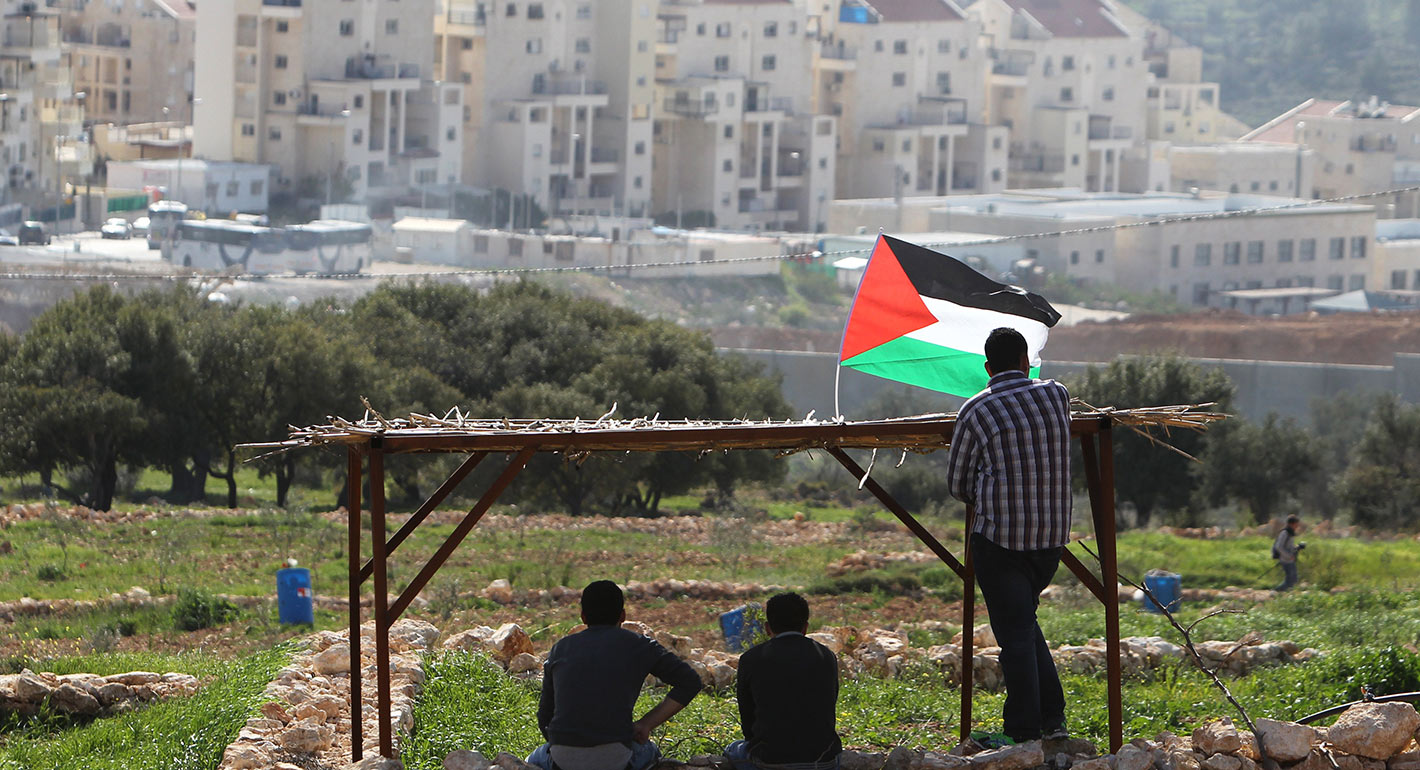
In a bombshell announcement, the United States has said that Israeli settlements are no longer inconsistent with International law. What are the likely consequences?
U.S. Secretary of State Mike Pompeo announced on Monday, November 18, 2019, that the United States will no longer view Israeli settlements on the West Bank (and presumably East Jerusalem and the Golan Heights) as inconsistent with international law.
Pompeo referred specifically to the fact that President Donald Trump’s administration was reversing former president Barack Obama’s approach to the issue, tethering its position to the Reagan administration’s formulation in 1981 that settlements were “not illegal.” But Pompeo failed to point out that Reagan’s rhetoric on settlements was very tough, calling for a settlements freeze.
The reasons for the precise timing of this statement are unclear. Domestic politics are always at top of Trump’s agenda. And legalizing Israeli settlements will play well with his pro-Israeli constituencies, especially evangelicals. Senior Trump administration officials, particularly U.S. Ambassador David Friedman, a longtime advocate of settlements and of Israeli Prime Minister Benjamin Netanyahu, have been pushing for a change in policy since the beginning of Trump’s presidency. And there is little doubt that an embattled Netanyahu, who is fighting for his political survival, will view this move as a potential lifeline. That said, it’s difficult to see precisely how this will redeem him—given that he is likely to face indictment on charges ranging from bribery to fraud.
Some might dismiss this latest U.S. move as symbolic, and without many practical implications. After all, the Trump administration has been actively acquiescing to Israeli settlement activity, if not encouraging it. And since the onset of Arab-Israeli negotiations in the 1990s, with the rare exception, previous U.S. administrations have studiously avoided the legal issue and confined themselves to rhetorical objections.
Nonetheless, the decision must be seen within the context of Trump’s seeming determination to reframe U.S. policy toward the Israeli-Palestinian conflict. First, he downgraded the importance of statehood and the Palestinian refugee issue. Then he declared Jerusalem the capital of the state of Israel, period—with little regard for the deep Palestinian connection to, and relationship with, the city. Now, he has greenlighted and validated the one behavior on the part of Israel—settlement activity—that has most undermined the chances of a political settlement.
Despite Pompeo’s efforts to suggest that the change won’t prejudge the ultimate status of the West Bank, it will. The U.S. policy change will also further alienate Palestinians, whose buy-in Israelis will need if any solution to the Israeli-Palestinian conflict is ever to be possible. What’s more, it could spark violence. Indeed, the Department of State issued a travel warning after Pompeo’s announcement cautioning U.S. citizens about that possibility.

Senior Fellow, American Statecraft Program
Aaron David Miller is a senior fellow at the Carnegie Endowment for International Peace, focusing on U.S. foreign policy.
Recent Work


Dara Massicot, Aaron David Miller, Andrew S. Weiss


Sophia Besch, Eric Ciaramella, Steve Feldstein, …
Carnegie India does not take institutional positions on public policy issues; the views represented herein are those of the author(s) and do not necessarily reflect the views of Carnegie, its staff, or its trustees.

How is AI reshaping space security, creating governance challenges, and where does international diplomacy stand today?


Tejas Bharadwaj, Almudena Azcárate Ortega

After the chill in ties between 2020 and 2024 that brought India–China relations to their lowest point in several decades, the two countries have engaged each other afresh. This paper argues that there are predominantly four imperatives guiding India’s approach to China, and they exist in an order of priority.

Saheb Singh Chadha

This piece argues that India’s central challenge is not managing a single flashpoint but resolving the underlying tension between expansion and institutional coherency of the BRICS grouping.

Vrinda Sahai

A partnership between India, a country of subcontinental size, and Africa, a continent of fifty-four countries, may seem asymmetric until one notes that both are home to nearly the same number of people—1.4 billion. This essay spells out the existing challenges to the partnership, its optimal potential, and the possible pathways to realize it over the next quarter-century.

Rajiv Bhatia

The U.S.–India semiconductor cooperation story is well-stocked with top-level strategic intent. What remains unresolved, however, are some underlying challenges that will determine whether the cooperation actually functions. Three such friction points stand out.

Shruti Mittal