

Other
François Godement, Ashley J. Tellis
{
  "authors": [
    "François Godement"
  ],
  "type": "legacyinthemedia",
  "centerAffiliationAll": "dc",
  "centers": [
    "Carnegie Endowment for International Peace"
  ],
  "collections": [],
  "englishNewsletterAll": "asia",
  "nonEnglishNewsletterAll": "",
  "primaryCenter": "Carnegie Endowment for International Peace",
  "programAffiliation": "AP",
  "programs": [
    "Asia"
  ],
  "projects": [],
  "regions": [
    "North America",
    "United States"
  ],
  "topics": [
    "Economy"
  ]
}
Source: Getty
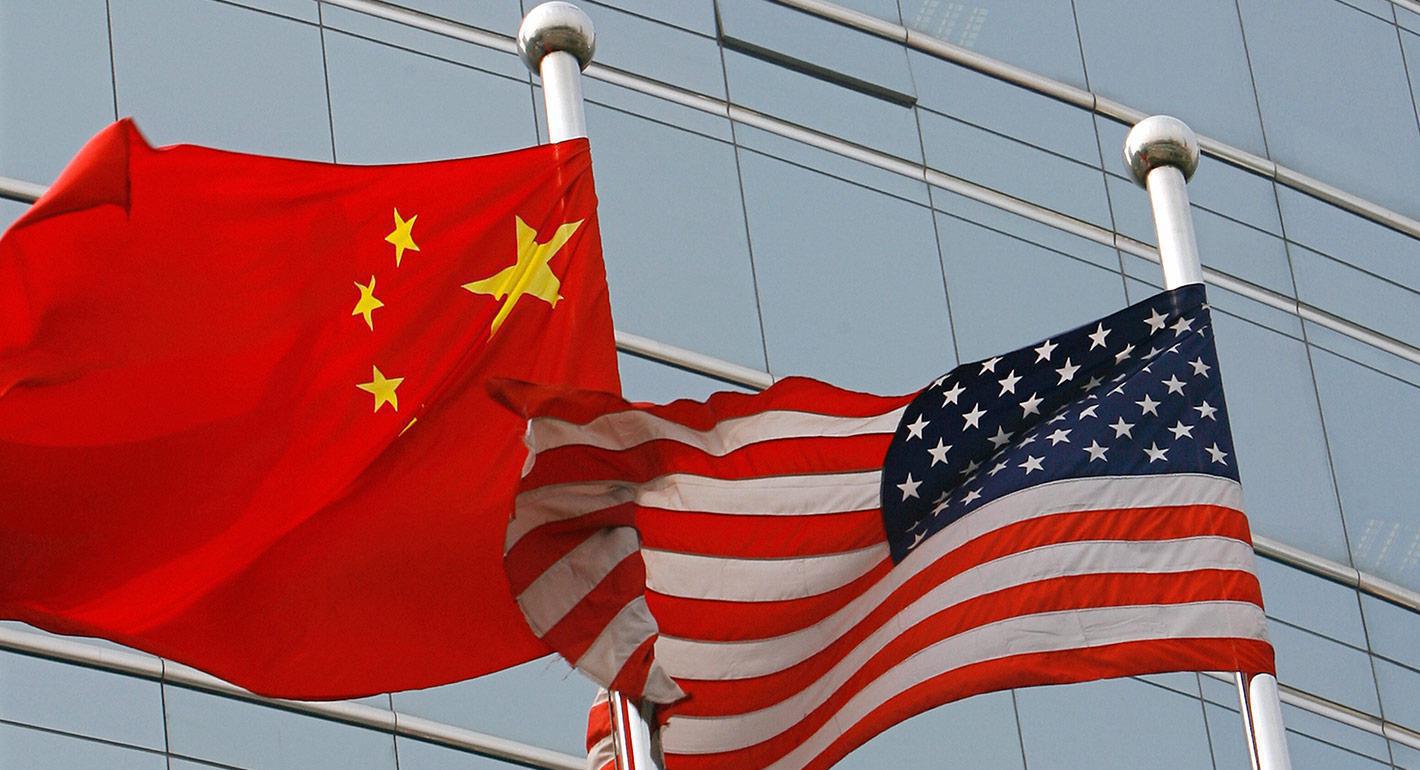
The trade “war” between the United States and China is a misnomer for several reasons.
Source: Institut Montaigne
The trade "war" between the United States and China is a misnomer for several reasons. One is of course that only real wars, not trade conflicts, kill people. Morally, the abuse of this term in advanced societies merely reflects the fact they haven’t experienced actual war on their turf for decades, if ever. In China, its growing use is essentially a propaganda prop.
The second reason is that direct trade flows between China and the US, as impressive as they seem, are minuscule relative to GDP: 1% of US GDP for American exports to China, 3,6 % of China’s GDP for exports to the United States (it was 7% a decade ago). Assuming the tariff increases diminish but do not wipe out these trade flows, their immediate impact is of course lower. This, however, does not consider the psychological impact on consumers and investors, or the sector-specific targeting that can be harmful to long-term development, especially for China. Within this targeting, the denial of some tech inputs, or the ban on public purchases of critical equipment is beyond our present scope, which is on the tariff issue.
Coincidentally, China launched a massive domestic stimulus program in December 2018 that will last throughout the first half of 2019. This boost to the economy – perhaps USD 320 billion of new infrastructure projects, and USD 300 billion worth of tax cuts (including VAT rebates for sectors that were hit by tariff increases), was accompanied with claims that China was immune from the effects of trade sanctions, before trade talks were held again. Also, deals were made with selected foreign companies, and there was a further opening to foreign investments in some key sectors, such as finance and automobile. BASF, Exxon, Tesla, BMW, and on a smaller scale Allianz, AXA and BNP were allowed to increase their participation up to 100 % in their joint ventures. During this period, the three main measures – managed import reductions, stimulus to the economy, selected concessions to foreign partners – could give the impression of a China that made the United States suffer the consequences of its own trade tariffs, remained on a strong growth path and was also flexible and ready to reform the economic structure. But on its own terms and schedule.
This article was originally published by Institut Montaigne.

Former Nonresident Senior Fellow, Asia Program
Godement, an expert on Chinese and East Asian strategic and international affairs, was a nonresident senior fellow in the Asia Program at the Carnegie Endowment for International Peace.
Recent Work
François Godement, Ashley J. Tellis

François Godement, Abigaël Vasselier
Carnegie India does not take institutional positions on public policy issues; the views represented herein are those of the author(s) and do not necessarily reflect the views of Carnegie, its staff, or its trustees.

How is AI reshaping space security, creating governance challenges, and where does international diplomacy stand today?


Tejas Bharadwaj, Almudena Azcárate Ortega

The U.S.–India semiconductor cooperation story is well-stocked with top-level strategic intent. What remains unresolved, however, are some underlying challenges that will determine whether the cooperation actually functions. Three such friction points stand out.

Shruti Mittal

On March 10, 2026, India’s Union Cabinet approved amendments to Press Note 3, a regulation that mandated government approval on all foreign direct investment (FDI) from countries sharing a land border with India. This amendment raises questions primarily about whether its stated benefits will materialize and if the risks have been adequately weighed. This piece will address the same.

Konark Bhandari
India and the United States are close to concluding a Reciprocal Defense Procurement Agreement (RDPA) that will allow firms from the two countries to sell to each other’s defense establishments more easily. While this may not remedy the specific grievances both sides may have regarding larger bilateral issues, an RDPA could restore some momentum, following the trade deal announcement.
Konark Bhandari

On the last day of the India AI Impact Summit, India signed Pax Silica, a U.S.-led declaration seemingly focused on semiconductors. While India’s accession to the same was not entirely unforeseen, becoming a signatory nation this quickly was not on the cards either.
Konark Bhandari