

Commentary
Andrei Kolesnikov
{
  "authors": [
    "Andrei Kolesnikov"
  ],
  "type": "legacyinthemedia",
  "centerAffiliationAll": "",
  "centers": [
    "Carnegie Endowment for International Peace",
    "Carnegie Russia Eurasia Center"
  ],
  "collections": [],
  "englishNewsletterAll": "",
  "nonEnglishNewsletterAll": "",
  "primaryCenter": "Carnegie Endowment for International Peace",
  "programAffiliation": "",
  "programs": [],
  "projects": [],
  "regions": [
    "Russia"
  ],
  "topics": [
    "Political Reform"
  ]
}
Source: Getty
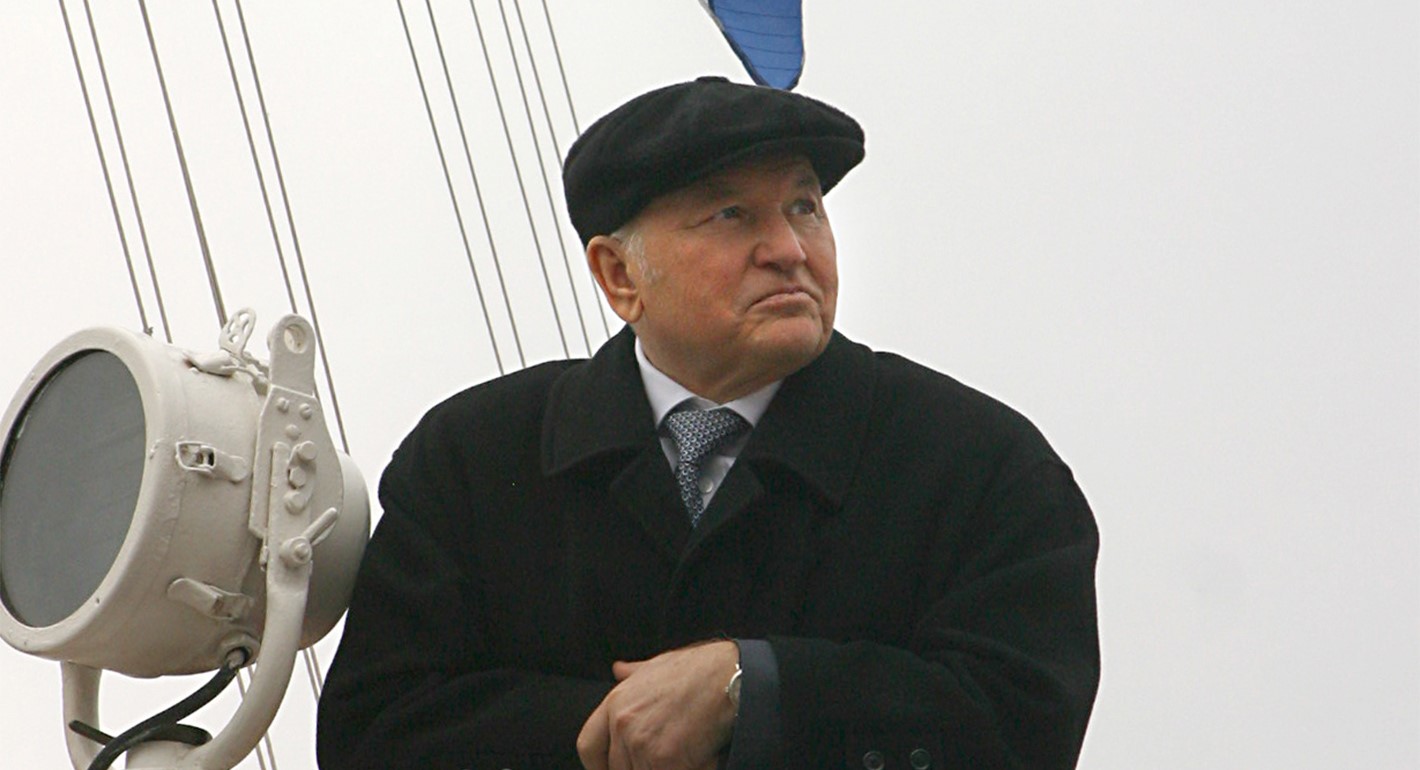
Although former Moscow Mayor Yury Luzhkov was actually the first senior official to demand the return of Crimea, he remains best known for his signature cap and businesslike approach to managing the capital.
Source: Moscow Times
Yury Luzhkov served 18 years as Moscow mayor, but was in office for 20 years if his time as chairman of the Moscow City Executive Committee is taken into account. The motley assortment of high-rise buildings erected under his watch remains a testament to his lack of refinement, but also to his staying power: he was reappointed once and then won three consecutive elections.
Who doesn’t remember the image of the big boss in a brand-name cap, making the rounds of the city’s construction sites and inspiring confidence?
Another feature of Luzhkov was that he always sued those who offended him, and always won — thanks to the Moscow justice system that he kept in his back pocket.
Luzhkov described his wife, Russia’s richest woman Elena Baturina, as a “talented entrepreneur.” That phrase became famous, as everyone knew she received billions in state construction contracts in the capital.
As mayor, Luzhkov was a standard Soviet engineer with all the nuance of a concrete construction block: a “homo sovieticus” in a new setting who became the symbol of Russia’s new “crony capitalism” and a pioneer and champion of state capitalism. In the capital, he outmaneuvered his eternal opponent, Anatoly Chubais, and rejected the federal model of privatization. Moscow became his personal state, burdened with federal authority.
Luzhkov always supported those in power — but only when he felt that they already had or would gradually gain a firm grip on power. He supported Boris Yeltsin. He helped defend the White House in 1991. He sided with the president in 1993. In 1995, he was part of the Our Home — Russia project of the ruling authorities. He lent his support to Boris Yeltsin in the 1996 presidential elections, but when Yeltsin began losing his grip on power, Luzhkov switched to the camp of former Prime Minister Yevgeny Primakov — which is to say that he essentially sided with himself.
They formed the political party Fatherland-All Russia in 1999 and challenged Vladimir Putin’s authority with a run in the Duma. Yeltsin and Primakov lost after oligarchs supported Putin through the television channels they owned, ending Luzhkov's wider ambitions.
Luzhkov wanted to personally function as a government — and not only of Moscow.
Towards the end of his career, Luzhkov suddenly became a fervent Stalinist: he adorned Moscow with portraits of the Soviet strongman for the 65th anniversary of Victory Day. But Luzhkov was less like Stalin than he was Nikita Khrushchev — in height, in some of his actions and mannerisms, contradictory actions and statements and political severity.
He was ruthless towards his opponents and remained unbending to the end. There was a very ugly incident when he and his mayoral predecessor Gavriil Popov wrote a vile article about the deceased Yegor Gaidar. Revenge is a dish best served cold — but they took it too far.
Luzhkov’s habit of uncompromisingly crushing opponents whom he considered weaker than himself eventually backfired on him: by letting it be known that he considered Vladimir Putin the real power behind the presidency, he underestimated the considerable powers wielded by the nominal president, Dmitry Medvedev. In his conflict with Luzhkov, Medvedev actually did comport himself like a head of state, summarily dismissing him and basing the action on an uncomplimentary “loss of confidence” in the mayor.
Luzhkov received the news of his dismissal from an unremarkable and faceless courier. Nobody stood up for the once-powerful mayor: no senior officials, much less ordinary Muscovites uttered a word on his behalf.
The Russian people accepted his firing without question, knowing that in an authoritarian state, the rules of the game are cut-throat. Former Speaker of the Duma Boris Gryzlov unexpectedly summed it up perfectly when he said that Luzhkov had simply forgotten his place in the system of authority.
His dismissal was not personal or the result of a conflict of ideologies. Luzhkov had tried to strong-arm Medvedev the way he did all opponents, forgetting that this man was not weaker, but stronger than himself.
The system, like some soulless artificial intelligence program, mercilessly and unfeelingly tossed Luzhkov aside, despite the fact that he was one of its founders. It has long been said that no one is irreplaceable. Luzhkov discovered that the hard way.
He spent his last years engaged in business. He would farm in Kaliningrad, and, probably, felt very organic doing that. He appeared briefly in the Austrian town of Kitzbuhel, as well as in Latvia, from which he was also expelled, and then in London, where he moved for personal and political reasons.
Shortly before his death, Luzhkov attended a meeting commemorating the 90th anniversary of Primakov’s birth, delivering a 20-minute speech about the man. This was his last public appearance, an almost touching demonstration of political fidelity — and a farewell.
Former Senior Fellow, Carnegie Russia Eurasia Center
Kolesnikov was a senior fellow at the Carnegie Russia Eurasia Center.
Recent Work
Andrei Kolesnikov
Andrei Kolesnikov
Carnegie India does not take institutional positions on public policy issues; the views represented herein are those of the author(s) and do not necessarily reflect the views of Carnegie, its staff, or its trustees.

This piece argues that India’s central challenge is not managing a single flashpoint but resolving the underlying tension between expansion and institutional coherency of the BRICS grouping.

Vrinda Sahai
As India’s economy recovers from the coronavirus pandemic, Indian businesses need efficient financial structures to regain their ground. Key reforms to India’s Insolvency and Bankruptcy Code could fill these gaps.

Anirudh Burman
Access to cross-border data is an integral piece of the law enforcement puzzle. India is well placed to lead the discussions on international data agreements subject to undertaking necessary surveillance reforms.
Smriti Parsheera, Prateek Jha
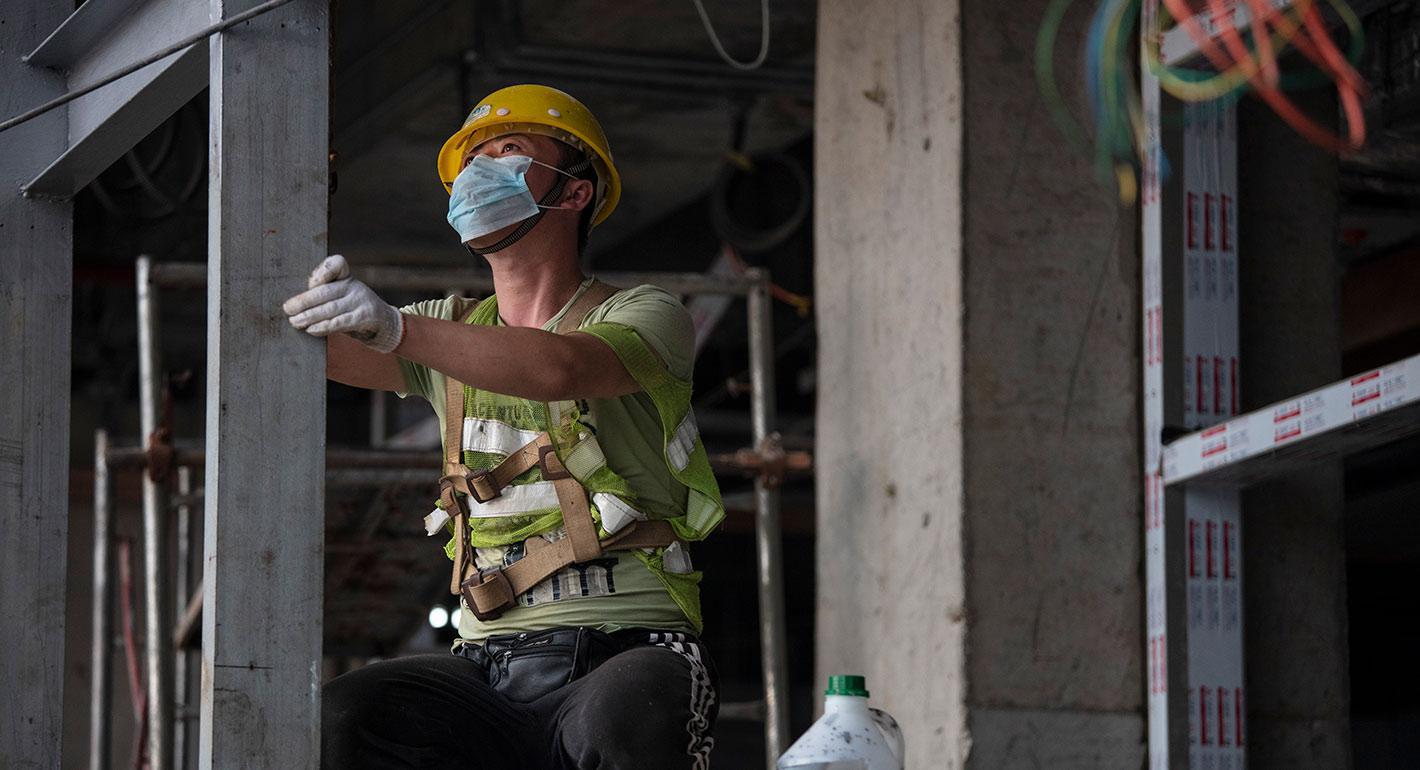
After the coronavirus pandemic wanes, how will China’s reorientation of the Belt and Road Initiative to address global health concerns influence its relationships with South Asian countries?
Deep Pal, Rahul Bhatia
Early in the outbreak, government researchers forecast several high-risk scenarios that were downplayed or ignored in public messaging.
Gautam I. Menon