

Q&A
Dara Massicot, Aaron David Miller, Andrew S. Weiss
{
  "authors": [
    "Aaron David Miller"
  ],
  "type": "legacyinthemedia",
  "centerAffiliationAll": "",
  "centers": [
    "Carnegie Endowment for International Peace"
  ],
  "collections": [],
  "englishNewsletterAll": "",
  "nonEnglishNewsletterAll": "",
  "primaryCenter": "Carnegie Endowment for International Peace",
  "programAffiliation": "",
  "programs": [],
  "projects": [],
  "regions": [
    "North America",
    "United States"
  ],
  "topics": [
    "Political Reform"
  ]
}
Source: Getty
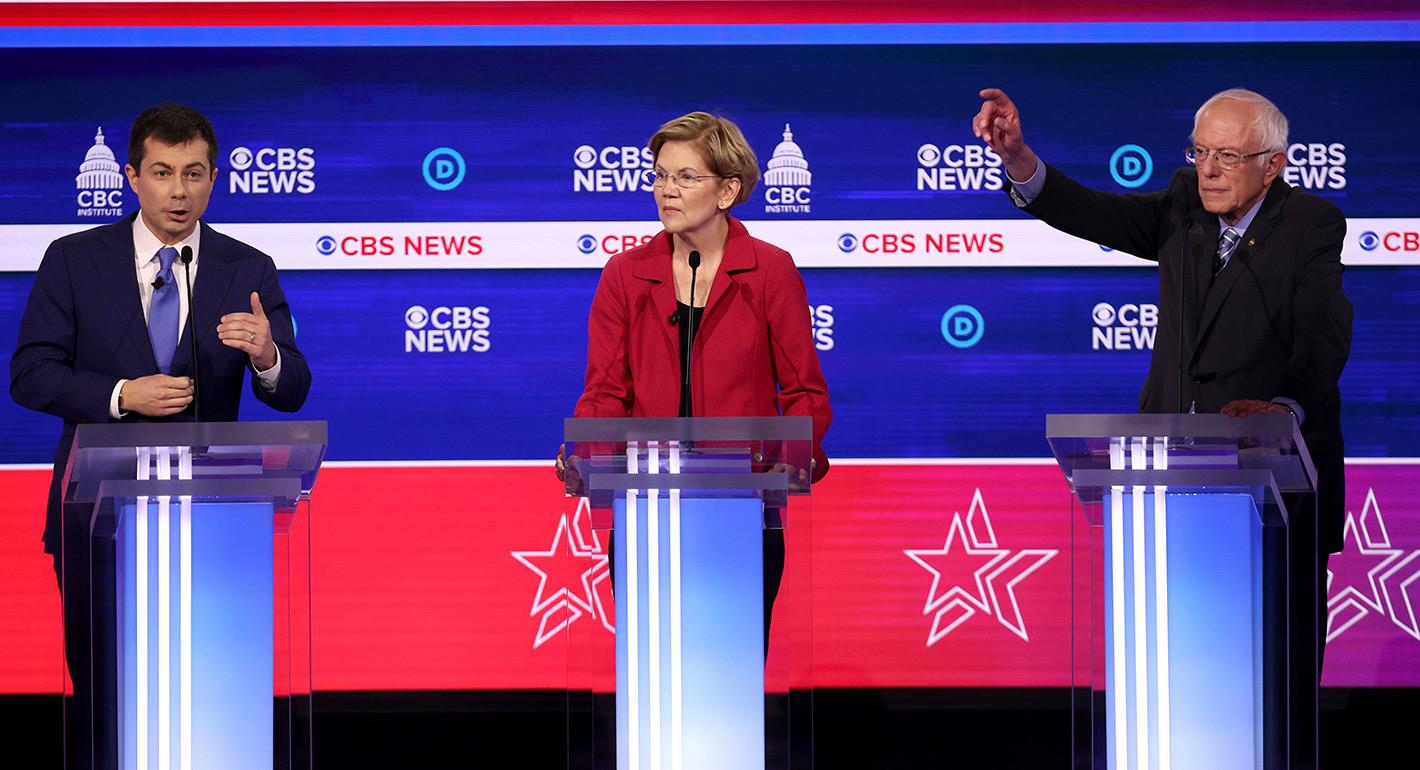
The Democratic primary debate in South Carolina answered several key questions that may have a bearing on the elections to come.
Source: CNN
Before Tuesday's debate -- best described as a political circus with the moderators all but losing control -- I identified four main questions that needed to be answered. And to the extent these contests matter now that Americans are actually voting, they may have a bearing on what is to come.
The first is a simple matter of arithmetic -- mainly subtraction. Now that there are actual votes and delegates distributed, how do the candidates who do not have a particularly good night and who lagged behind in Iowa, New Hampshire and Nevada justify staying in race? Tom Steyer and Mike Bloomberg have deep pockets and can ride it out even though their road may lead nowhere. But what about Amy Klobuchar and Elizabeth Warren, and even Pete Buttigieg? They all had strong performances, but will they have any momentum coming out of South Carolina and into Super Tuesday?
Second, what kind of night did Bloomberg have? Not bad compared to his last performance. He did make a compelling point on the logic of electability and scored points on his record in New York City. (Nonetheless, Warren came for him a second time.) But Bloomberg just doesn't project empathy, his rhetorical skills are terrible, he has no sense of humor and his efforts to bond and relate on a personal level largely fall flat.
Third, did Joe Biden have the much-needed debate of his life? Not exactly. But his interventions were strong and confident. He projected strength, experience and comfort being on the debate stage in a way we have not seen before.
Fourth, and perhaps most important, was Bernie Sanders hurt? He was hammered -- and was hit hard especially by Buttigieg and Warren. But he survived. The attacks on Bloomberg deflected much of the heat. Where Sanders disappointed was his failure to explain what his democratic socialism really means -- and to separate it from his past positive comments on Cuba and Nicaragua.

Senior Fellow, American Statecraft Program
Aaron David Miller is a senior fellow at the Carnegie Endowment for International Peace, focusing on U.S. foreign policy.
Recent Work


Dara Massicot, Aaron David Miller, Andrew S. Weiss



Sophia Besch, Eric Ciaramella, Steve Feldstein, …
Carnegie India does not take institutional positions on public policy issues; the views represented herein are those of the author(s) and do not necessarily reflect the views of Carnegie, its staff, or its trustees.

How is AI reshaping space security, creating governance challenges, and where does international diplomacy stand today?


Tejas Bharadwaj, Almudena Azcárate Ortega

The U.S.–India semiconductor cooperation story is well-stocked with top-level strategic intent. What remains unresolved, however, are some underlying challenges that will determine whether the cooperation actually functions. Three such friction points stand out.

Shruti Mittal

India and the United States are close to concluding a Reciprocal Defense Procurement Agreement (RDPA) that will allow firms from the two countries to sell to each other’s defense establishments more easily. While this may not remedy the specific grievances both sides may have regarding larger bilateral issues, an RDPA could restore some momentum, following the trade deal announcement.

Konark Bhandari

On the last day of the India AI Impact Summit, India signed Pax Silica, a U.S.-led declaration seemingly focused on semiconductors. While India’s accession to the same was not entirely unforeseen, becoming a signatory nation this quickly was not on the cards either.
Konark Bhandari

This piece examines India’s response to U.S. sanctions and tariffs, specifically assessing the immediate market consequences, such as alterations in import costs, and the broader strategic implications for India’s energy security and foreign policy orientation.

Vrinda Sahai