Source: apolitical
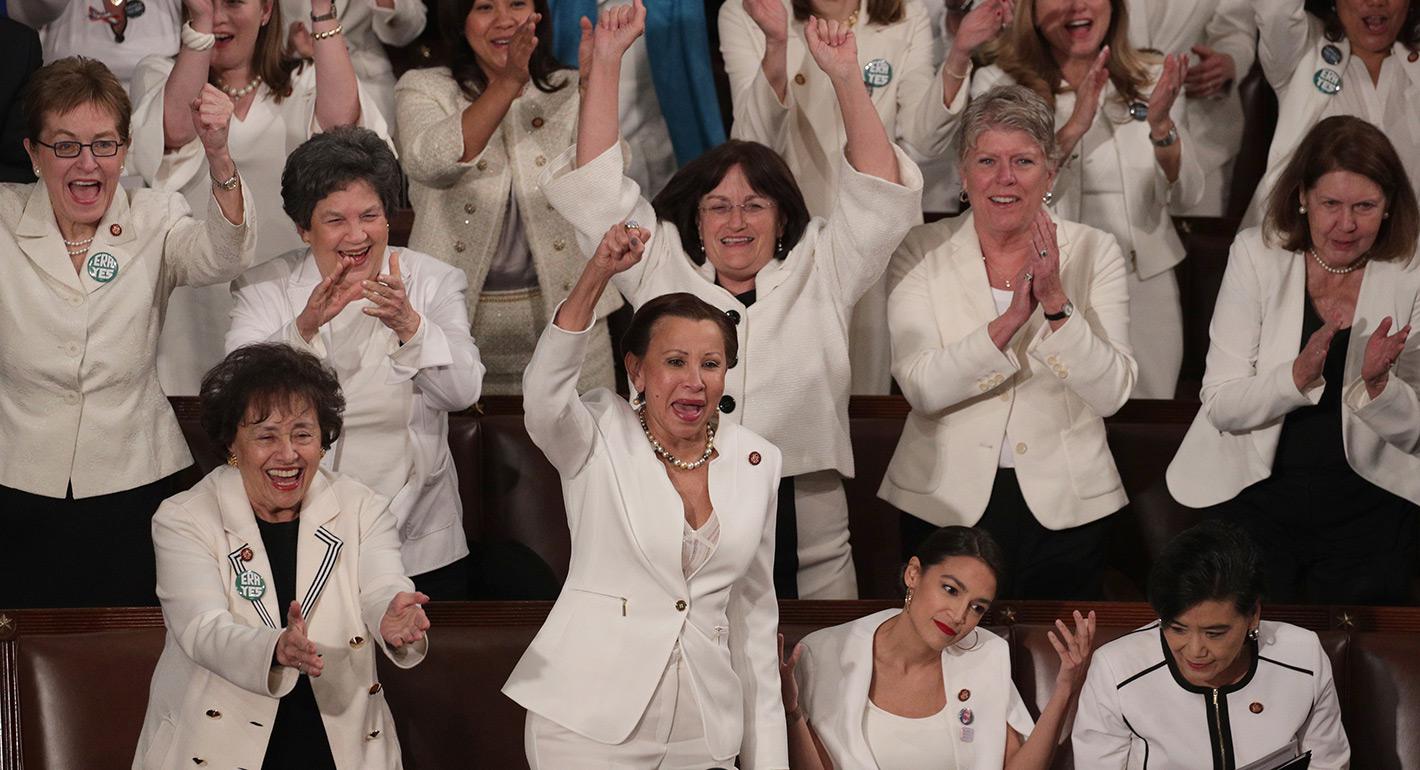
The year 2020 marks the twenty-fifth anniversary of the Beijing Declaration and Platform for Action, the first global blueprint for advancing women’s empowerment and gender equality around the world. This anniversary is a natural moment to assess progress and remaining challenges in this domain. A critical element of such an assessment is a look at women’s political participation.
Women’s political participation is not only a human right, but also key for sustainable development and a thriving democracy. Put simply, full and equitable participation of women in public life is essential to building strong and peaceful democracies.
Many countries have made some progress. The global average of women in national parliaments has more than doubled since 1995, from 11.3% in 1995 to 24.4% today. Yet the overall pace of change has been slow. According to the World Economic Forum, at the current rate of change, the gender gap in politics will not be closed this century.
The inconvenient truth is that political parties are a central part of the problem. For many women, they are the gateway into formal politics, as they recruit and select candidates for political office. Yet at the National Democratic Institute (NDI), a non-profit based in Washington DC that seeks to support democracy around the world, we’ve found that parties are often patriarchal political organisations that are hostile to women’s advancement. Established parties tend to be resistant to change, as male party leaders benefit from an unequal status quo.
The inconvenient truth is that political parties are a central part of the problem
In this light, it is tempting to ask if the emergence of new political parties can open the door for women’s equal participation. While new parties can emerge at any point in the lifecycle of a democracy, they are especially likely to form during political transitions — for example, a transition from civil conflict to peace or from dictatorship to multiparty democracy.
Women are often at the frontlines of the political movements driving such openings, as could be seen most recently in Sudan. When does their activism lead to meaningful representation in the new parties forged during those transitions? In other words, what explains whether these newly formed parties make room for women members as leaders?
A seat at the top table
In a new joint study between NDI and the Carnegie Endowment, we tackle precisely this question.
We focus on parties that emerge from armed movements, social movements, and dominant parties that splinter, such as the African National Congress (ANC) in South Africa, Ennahda in Tunisia, and the Mouvement pour le Peuple et le Progrès (MPP) in Burkina Faso.
Our study asks: how did the origins of these parties as well as the transition context in which they formed shape the opportunities for women’s participation and leadership?
Even in parties that have made relative progress with respect to gender inclusion, women felt that men continued to be seen as “natural leaders,” and male officials framed women as less electable than men
Our research revealed that these processes of party formation can offer opportunities to increase women’s political participation. However, the mere fact that women had been involved in a political movement before it became a party did not guarantee them a seat at the top table.
Across the various countries, it was women’s mobilisation for gender equality commitments before and during the transition that was critical to ensure parties supported women’s participation.
In some cases, this mobilisation had already begun before any formal party formation process: in South Africa, for example, women in the ANC had been pressing for a greater say in the movement’s decision-making throughout the 1980s.
Elsewhere, it was primarily women in civil society who pushed for political representation during the transition process, thereby forcing party leaders to make specific commitments. Following the 2011 uprising in Tunisia, for example, women’s groups coordinated quickly to press for women’s inclusion in the formal transitional institutions. This in turn ensured that feminist lawyers had a say in designing gender-sensitive electoral rules for the country’s constitutional assembly. In several cases, coalition-building between feminist party members, legislators, and civic activists was particularly effective at getting newly formed parties to agree to gender quotas and other gender equality commitments.
In contrast, where female party members failed to coalesce around a joint reform agenda and women’s groups lacked a strong base in civil society, as in Burkina Faso, it was much harder for them to put pressure on party leaders to promote women’s advancement.
Difficult women
However, while women’s joint advocacy in countries like South Africa, Bolivia, Tunisia, and Nepal helped institutionalise either party-level or legislative gender quotas and ensured that some women were promoted into leadership roles, discriminatory gender norms and practices persisted within parties.
Recurring challenges included sexual harassment and intimidation, a lack of party support for childcare and campaigning, the demotion of activist and therefore “difficult” women, as well as women being pushed to deputy positions and low places on candidate lists. Even in parties that have made relative progress with respect to gender inclusion, women felt that men continued to be seen as “natural leaders,” and male officials framed women as less electable than men.
Our research points to lessons for advocates, assistance providers, and policymakers that seek to strengthen political parties through increased women’s participation, particularly during political transitions. Two struck us most forcibly. First, international actors can help ensure that women’s rights activists are at the transition table, by insisting on the importance of women’s inclusion and resisting the idea that gender equality can “come later”.
Second, without sustained investments in feminist organisations, leaders and movements, political parties — newly formed or long-established — are unlikely to overcome their masculine and patriarchal wellsprings. International actors can support women’s coalition-building, taking care not to allow the race for resources to foster competition and fragmentation among women’s groups.
Moving further along the path to greater women’s political participation will require renewed ideas and energy. Major political transitions are potential opportunities for positive change. Our research sheds some initial light on the dynamics of gender inclusion in political party formation in such transitions. Much more research and action will be needed to open this door further.
This article was originally published by APoltical.