

Other
Michael D. Swaine
{
  "authors": [
    "Michael D. Swaine"
  ],
  "type": "other",
  "centerAffiliationAll": "dc",
  "centers": [
    "Carnegie Endowment for International Peace"
  ],
  "collections": [
    "Coronavirus"
  ],
  "englishNewsletterAll": "asia",
  "nonEnglishNewsletterAll": "",
  "primaryCenter": "Carnegie Endowment for International Peace",
  "programAffiliation": "AP",
  "programs": [
    "Asia"
  ],
  "projects": [],
  "regions": [
    "East Asia",
    "China"
  ],
  "topics": [
    "Political Reform"
  ]
}
Source: Getty
The Chinese handling of the COVID-19 crisis clearly shows both the strengths and weaknesses of Beijing’s crisis management system. While the system remains excessively bureaucratic and consensus-driven, it also has standard, thorough, and well-organized crisis management practices that, once set in motion, in general operate very effectively.
Source: China Leadership Monitor
Available open sources indicate that in their domestic handling of the COVID-19 virus, the central Chinese authorities generally followed, ultimately to good effect, established crisis management processes and procedures as well as post-SARS regulations for dealing with a health emergency. A major exception to this record occurred with regard to the initial reporting on the virus by both local and central authorities, where the pre-existing network reporting system was not utilized early enough and both local and initial central expert teams sent to Wuhan failed to detect the seriousness of the outbreak. Once the top leadership clearly recognized the gravity of the situation, it moved with at times ruthless efficiency to combat the virus. Although Xi Jinping and other senior officials subsequently acknowledged that mistakes were made, the center only punished local officials, in an apparent attempt to deflect blame from the top, as was also the case during the SARS epidemic. Available open sources provide no clear proof that the more extreme charge of a deliberate cover-up of a known deadly and highly contagious outbreak is accurate. However, they do indicate that the Chinese system remains excessively bureaucratic and consensus-driven, often prizing political criteria over expert-based information and reflexively suppressing unauthorized communications.
This is the first of two essays analyzing the COVID-19 outbreak as a case study in a certain type of Chinese crisis management, i.e., an unconventional, prolonged health threat of domestic origins with broad ramifications for Chinese security and PRC regime legitimacy both at home and abroad. The current essay (Part One) focuses on domestic management of the health dimensions of the crisis, with, for reasons of length, far less attention to the economic dimensions. The second essay (Part Two), to appear in the next issue of CLM, focuses on the international dimensions of China’s crisis management efforts, in particular the deepening dispute with the United States.
The analysis covers the period from early/mid-December 2019, when the virus was probably first detected in Wuhan, to mid-April 2020, when it had been largely brought under control within China, at least for the time being. Throughout, the focus is on the perceptions and actions of the central party and government leaderships in managing the crisis, albeit often through interactions with local officials.
This article was originally published in the China Leadership Monitor.

Former Senior Fellow, Asia Program
Swaine was a senior fellow at the Carnegie Endowment for International Peace and one of the most prominent American analysts in Chinese security studies.
Recent Work
Michael D. Swaine
Michael D. Swaine
Carnegie India does not take institutional positions on public policy issues; the views represented herein are those of the author(s) and do not necessarily reflect the views of Carnegie, its staff, or its trustees.

After the chill in ties between 2020 and 2024 that brought India–China relations to their lowest point in several decades, the two countries have engaged each other afresh. This paper argues that there are predominantly four imperatives guiding India’s approach to China, and they exist in an order of priority.

Saheb Singh Chadha

This piece argues that India’s central challenge is not managing a single flashpoint but resolving the underlying tension between expansion and institutional coherency of the BRICS grouping.

Vrinda Sahai
This paper examines the evolution of India-China economic ties from 2005 to 2025. It explores the impact of global events, bilateral political ties, and domestic policies on distinct spheres of the economic relationship.

Santosh Pai
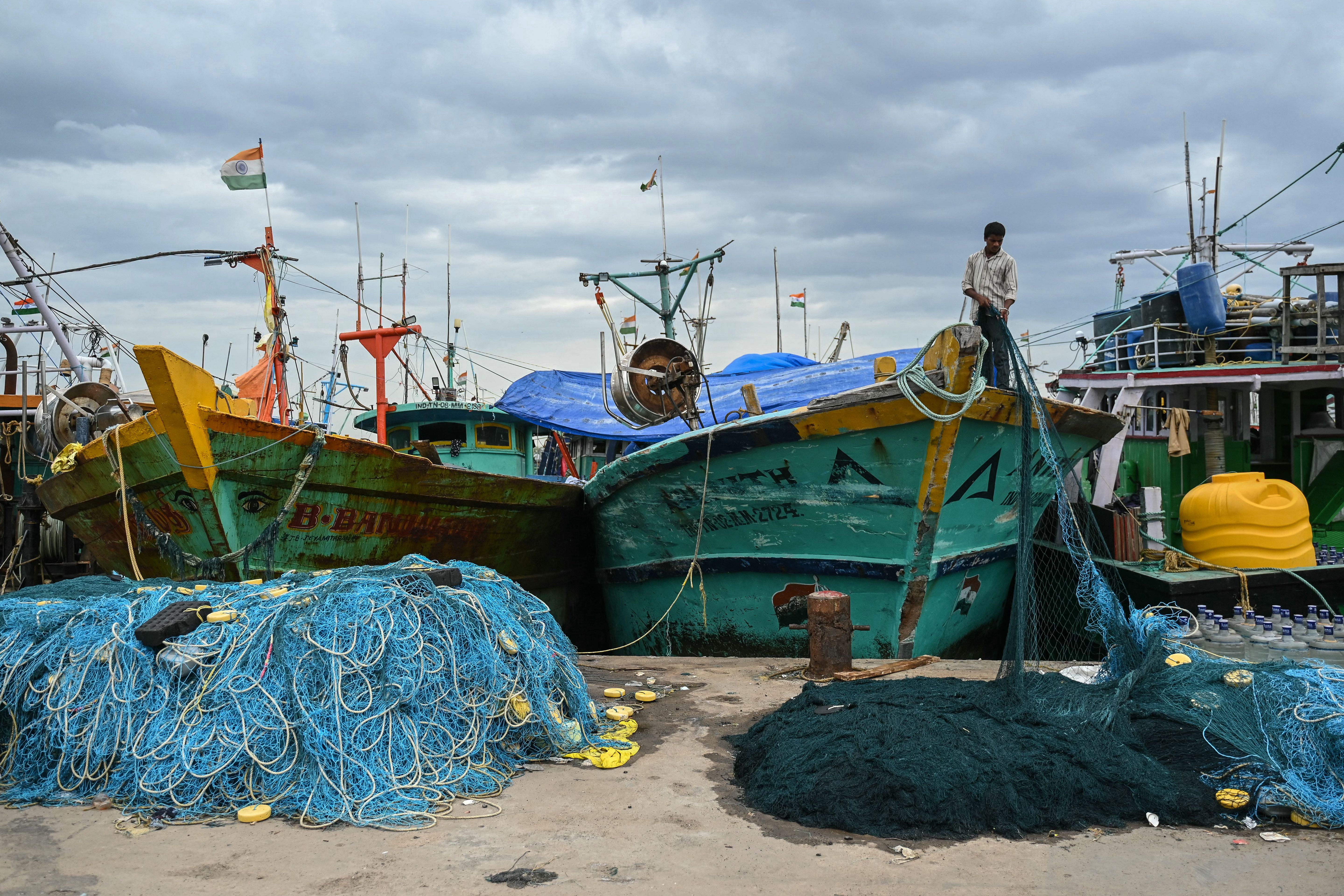
This article examines the scale and impact of Chinese IUU fishing operations globally and identifies the nature of the challenge posed by IUU fishing in the Indian Ocean Region (IOR). It also investigates why existing maritime law and international frameworks have struggled to address this growing threat.


Ajay Kumar, Charukeshi Bhatt

This compendium brings together three essays by scholars who participated in Carnegie India's Security Studies Dialogue in 2024, each examining a different aspect of China’s policies. Drawing on their expertise and research, the authors offer fresh perspectives on key geopolitical challenges.



Vijay Gokhale, Suyash Desai, Amit Kumar, …