

Research
- +4
Milan Vaishnav, Rahul Verma, Rukmini S., …
{
  "authors": [
    "Christophe Jaffrelot"
  ],
  "type": "other",
  "centerAffiliationAll": "dc",
  "centers": [
    "Carnegie Endowment for International Peace"
  ],
  "collections": [],
  "englishNewsletterAll": "ctw",
  "nonEnglishNewsletterAll": "",
  "primaryCenter": "Carnegie Endowment for International Peace",
  "programAffiliation": "SAP",
  "programs": [
    "South Asia"
  ],
  "projects": [],
  "regions": [
    "South Asia",
    "India"
  ],
  "topics": [
    "Economy"
  ]
}
Source: Getty
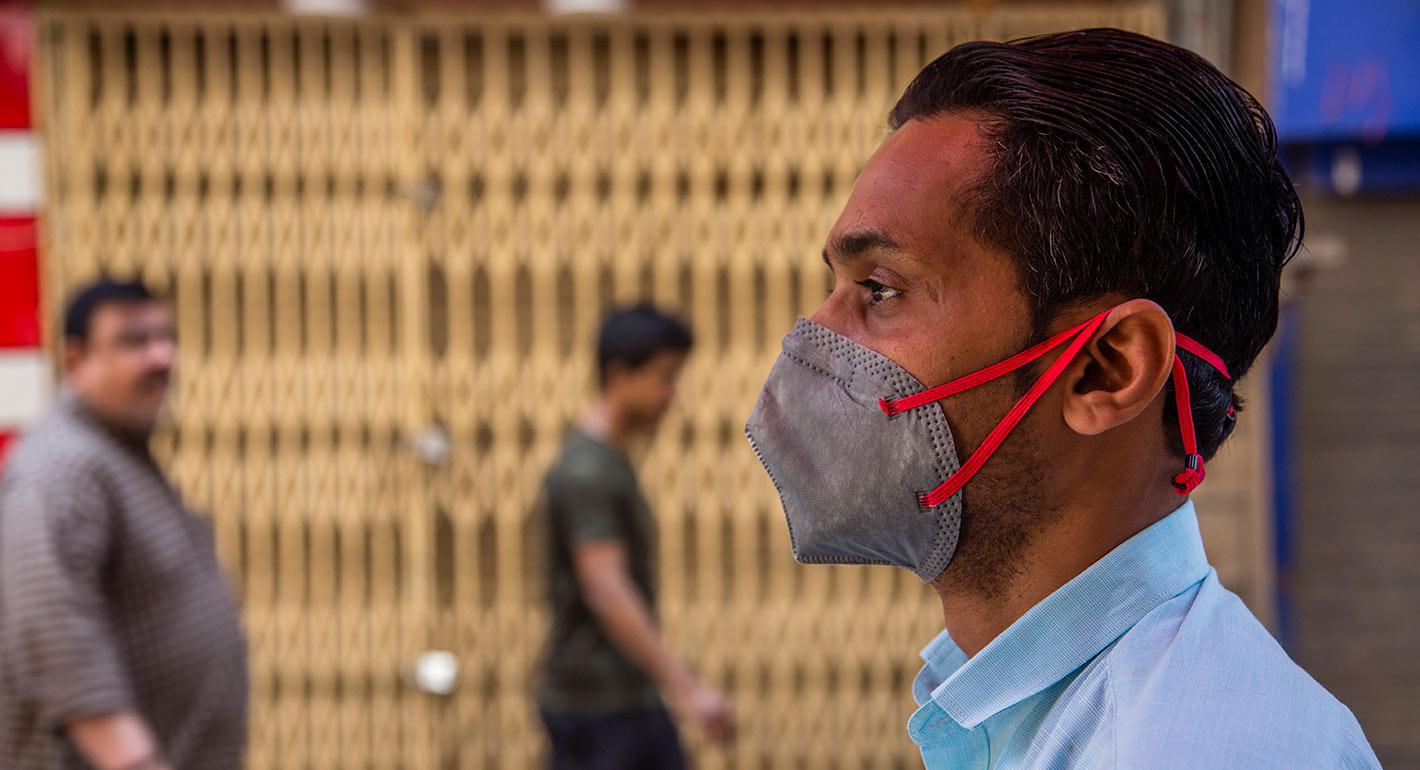
The Indian economy that is facing the COVID-related crisis today was already badly affected by an under reported slowdown for more than one year.
Source: Institut Montaigne
The Indian economy that is facing the COVID-related crisis today was already badly affected by an under reported slowdown for more than one year. This state of things complicates the government’s response - that is not, today, proportionate to the challenge.1
It was just yesterday that the IMF was congratulating India for being a driving force of the global economy, with growth rates flirting with 8% in 2016. The economic slowdown that hit the country in 2017-2019 divided this rate by almost two – as the growth rate for the fiscal year 2019-2020 as been only 4.2% according to the Indian government, after a steady decline, month after month (the growth rate of the last quarter, from January to March 2020, was only 3.1%). This decline, that came as a surprise, deserves examination, going beyond explanations focused on the artificial inflation of Indian performance by the authorities.2 The issue of transparency with the manipulation of figures adds to problems linked with the non-publication of certain statistics, including unemployment and consumption figures. Yet, this still does not explain the signs of an economic and social crisis that appeared in 2019.
Using the most reliable data available, we will first try to assess the extent of the 2017-19 slowdown and its social and fiscal consequences before looking at the impact of the COVID-related crisis and the remedies implemented by the authorities since March 2020.
This policy brief was originally published by the Institut Montaigne.
1 I am grateful to Sreenivasan Subramanian, Bruno Dorin and Eve Colson-Sihra for their comments on an earlier version of this brief.
2 Indeed, by the very admission of Arvind Subramanian, the former Chief Economic Advisor of the Modi government who resigned in 2018, the real growth rate of the economy has been amplified by two and a half percentage points since 2015, the year in which the government adopted a new method of calculating GNP. If Subramanian is correct, India's growth rate in 2019 has been between 2 and 3% according to the old method of calculation.
Former Nonresident Scholar, South Asia Program
Jaffrelot’s core research focuses on theories of nationalism and democracy, mobilization of the lower castes and Dalits (ex-untouchables) in India, the Hindu nationalist movement, and ethnic conflicts in Pakistan.
Recent Work

Milan Vaishnav, Rahul Verma, Rukmini S., …
Christophe Jaffrelot
Carnegie India does not take institutional positions on public policy issues; the views represented herein are those of the author(s) and do not necessarily reflect the views of Carnegie, its staff, or its trustees.

In any defense establishment, change is an ongoing process. However, despite the best of intentions, existing bureaucracies, bound by habit and years of socialization, have their limits in implementing transformative change.

Anit Mukherjee

As AI grows more sophisticated, as the supply chains that power it become more contested, and as access to frontier models becomes geopolitically charged, India must begin to ask a different set of questions. Not what applications it can build on someone else’s infrastructure but what the world needs.

Konark Bhandari

The Indian Ocean Region hosts one of the densest concentrations of subsea cables in the world. Yet, despite accounting for a significant share of global internet traffic, India’s participation remains limited.

Charukeshi Bhatt

How is AI reshaping space security, creating governance challenges, and where does international diplomacy stand today?


Tejas Bharadwaj, Almudena Azcárate Ortega

After the chill in ties between 2020 and 2024 that brought India–China relations to their lowest point in several decades, the two countries have engaged each other afresh. This paper argues that there are predominantly four imperatives guiding India’s approach to China, and they exist in an order of priority.

Saheb Singh Chadha