

Q&A
Dara Massicot, Aaron David Miller, Andrew S. Weiss
{
  "authors": [
    "Aaron David Miller"
  ],
  "type": "legacyinthemedia",
  "centerAffiliationAll": "",
  "centers": [
    "Carnegie Endowment for International Peace"
  ],
  "collections": [],
  "englishNewsletterAll": "",
  "nonEnglishNewsletterAll": "",
  "primaryCenter": "Carnegie Endowment for International Peace",
  "programAffiliation": "",
  "programs": [],
  "projects": [],
  "regions": [
    "Middle East",
    "Israel",
    "Palestine",
    "United Arab Emirates"
  ],
  "topics": [
    "Security",
    "Foreign Policy"
  ]
}
Source: Getty
Israel’s plans to annex parts of the West Bank may have been temporarily suspended, but anyone who believes the world is any closer to a negotiation, let alone an agreement to end the Israeli-Palestinian conflict, is mistaken.
Source: CNN
In a broken, angry, dysfunctional Middle East, most matters associated with Arab-Israeli peace rarely turn out well. In fact, for a Trump administration that has demonstrated an uncanny clumsiness and obtuseness, this has been a region where American ideas go to die. The formal statement today announcing normalization of relations between Israel and the United Arab Emirates (UAE) may prove to be something of an exception.
For three parties -- Israel, the UAE and the US -- it's a rare coincidence of interests and a clear win. For another, the Palestinians, it's a stunning loss and a clear reflection of how much the region has changed at their expense. Indeed, Palestinian Authority President Mahmoud Abbas quickly called it "aggression on the Palestinian people" and "a betrayal of Jerusalem."
Israel's plans to annex parts of the West Bank may have been temporarily suspended, but anyone who believes we are any closer to a negotiation -- let alone an agreement to end the Israeli-Palestinian conflict -- ought to lie down and wait quietly until the feeling passes.
In a way, today's headline of normalization of relations between Israel and the UAE is part and parcel of a trend line that has been building for some time now: a surprise warming of relations between Israel and Arab states in the Gulf, during the Trump presidency.
Three significant factors have driven it.
The rise of Iran, and of Sunni jihadists spewing terror across the region, has created a narrow but important coincidence of interests between Israel and the Gulf states. Increasing exhaustion and frustration with the longstanding Palestinian cause has led Arab states to feel a bit more freedom to pursue their own interests, in spite of it.
But behind it all lay a White House enamored of Arab money for arms sales and investment in the US and eager to marshal the Arabs in the service of its anti-Iranian and pro-Israeli agenda. Indeed, in an effort to court the Gulf Arabs, Trump and his Middle East envoy son-in-law Jared Kushner have established close personal relations with senior officials in Saudi Arabia and the UAE, and its ambassador here in Washington. And Arab nations, sensing opportunities with an autocrat-friendly US president, have been only too happy to follow.
It was no coincidence that last month, two marked Emirati aircraft landed at Ben-Gurion airport carrying Covid-19 supplies for the Palestinian Authority, which rejected them, asserting this was a cover for normalizing relations between the UAE and Israel, as The Times of Israel reported.
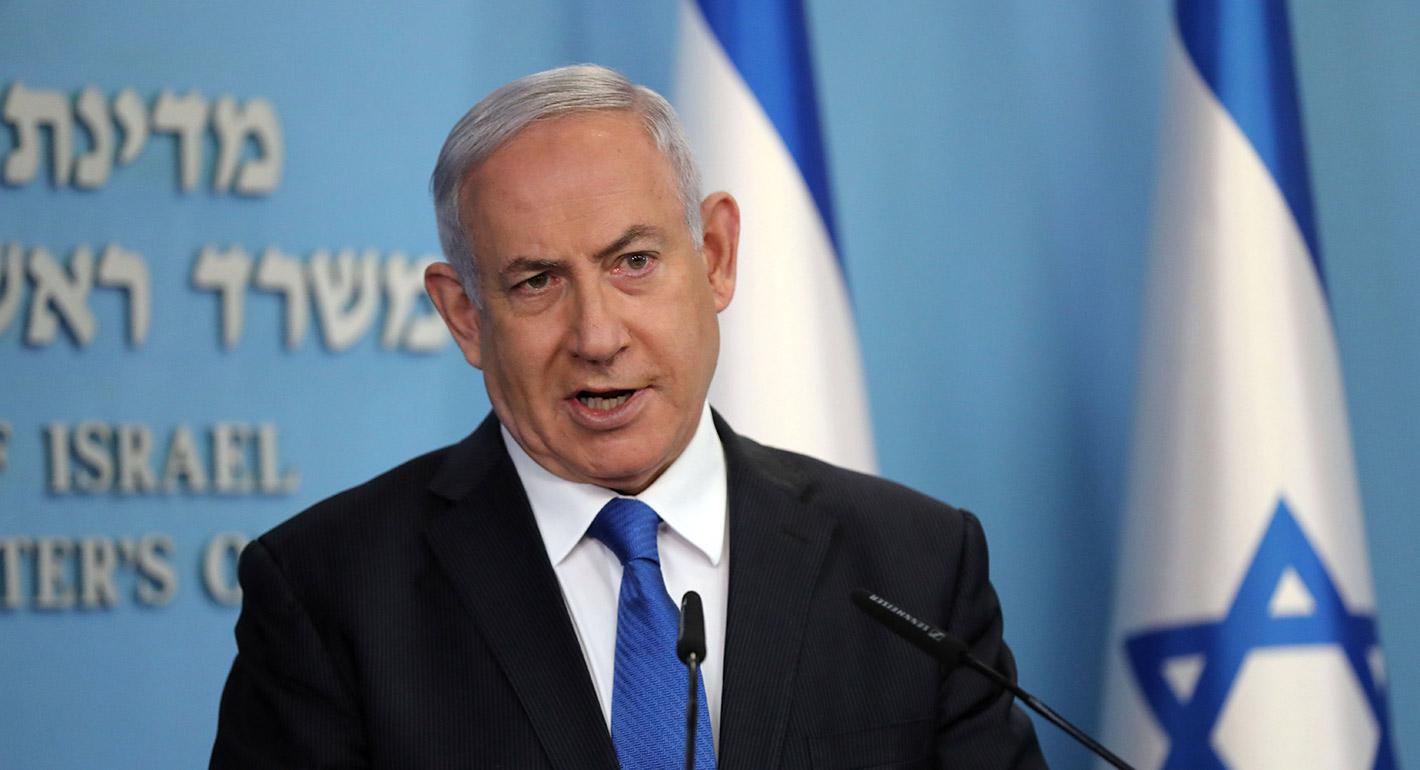
For Israeli Prime Minister Benjamin Netanyahu, this announcement couldn't have come at a better time. With Covid-19 resurgent, Israel in recession with record levels of unemployment, and facing trial, Netanyahu needed a boost.
He also needed a way out of the annexation trap he had clumsily managed to set for himself. He had repeatedly promised his base, and the world, that Israel would annex parts of the West Bank, but he found himself unprepared for it, six weeks past the July 1 date after which he could have initiated the plans, in the middle of a surging pandemic, pressed by his right wing to make good on his commitment but without a green light from the Trump administration.
The announcement today extricates the Prime Minister from this conundrum, and he can tell his right wing he's only suspending annexation -- as called for in the trilateral announcement. Moreover, he can claim credit for a genuinely unprecedented event -- the first normalization of relations between Israel and a Gulf state. Indeed, should Saudi Arabia follow suit (a truly major development) or even Oman or Bahrain, it would validate Netanyahu's campaign to expand Israel's relations in the region even while settlement activity continues in the West Bank and Jerusalem.
The UAE may encounter some blowback in the region for its decision. But the UAE is trying to preempt that by presenting itself as the party that blocked Israel's annexation of the West Bank. As the country's ambassador to the US wrote in a statement today, "It immediately stops annexation and the potential of violent escalation. It maintains the viability of a two-state solution as endorsed by the Arab League and international community."
For the Trump administration, too, the deal wasn't a minute too late in coming.
To its credit, the administration has assiduously cultivated the Gulf states on the issue of Israel, though its failure to restrain Saudi Arabia in Yemen and refusal to impose any cost on the Crown Prince for the killing of Khashoggi has damaged US interests. The administration is clearly overselling the announcement. National Security Adviser Robert C. O'Brien has called for Trump to be nominated for a Nobel Peace Prize for this and his other Middle East policies.
Still, the announcement is good news for the President and credits him with another first with respect to Israel, from a stream of bad ones. It defuses the issue of annexation for the time being and credits the President with a rare example of successful diplomacy.
The big loser in all of this is the Palestinians. One might take heart in the fact that at least for the time being, annexation is not imminent. But the decision of a Gulf state to normalize relations with Israel is a stunning blow to the Palestinian issue and a clear reflection of how much the region and Arab priorities have changed.
Indeed, that Israel has had so much success expanding its ties in Africa, Asia, Latin America and in the Middle East on the watch of an Israeli Prime Minister who has no intention of taking the Palestinian issue seriously reflects not only Palestinian weakness; but it seems many Arab states may feel they can untether themselves from the Palestinian cause. The Arab world cannot and will not abandon that cause entirely, but today's announcement makes stunningly clear that for many Arab states, they will no longer allow their interest to suffer on account of it.

Senior Fellow, American Statecraft Program
Aaron David Miller is a senior fellow at the Carnegie Endowment for International Peace, focusing on U.S. foreign policy.
Recent Work


Dara Massicot, Aaron David Miller, Andrew S. Weiss



Sophia Besch, Eric Ciaramella, Steve Feldstein, …
Carnegie India does not take institutional positions on public policy issues; the views represented herein are those of the author(s) and do not necessarily reflect the views of Carnegie, its staff, or its trustees.

In any defense establishment, change is an ongoing process. However, despite the best of intentions, existing bureaucracies, bound by habit and years of socialization, have their limits in implementing transformative change.

Anit Mukherjee

After the chill in ties between 2020 and 2024 that brought India–China relations to their lowest point in several decades, the two countries have engaged each other afresh. This paper argues that there are predominantly four imperatives guiding India’s approach to China, and they exist in an order of priority.

Saheb Singh Chadha

This piece argues that India’s central challenge is not managing a single flashpoint but resolving the underlying tension between expansion and institutional coherency of the BRICS grouping.

Vrinda Sahai

A partnership between India, a country of subcontinental size, and Africa, a continent of fifty-four countries, may seem asymmetric until one notes that both are home to nearly the same number of people—1.4 billion. This essay spells out the existing challenges to the partnership, its optimal potential, and the possible pathways to realize it over the next quarter-century.

Rajiv Bhatia

The India–EU Free Trade Agreement (FTA) is shaping up to be one of the most consequential trade negotiations, both economically and strategically. But, what’s in the agreement, what’s missing, and what will determine its success in the years ahead
Vrinda Sahai, Nicolas Köhler-Suzuki