

Commentary
Peter Kellner
{
  "authors": [
    "Peter Kellner"
  ],
  "type": "legacyinthemedia",
  "centerAffiliationAll": "",
  "centers": [
    "Carnegie Endowment for International Peace",
    "Carnegie Europe"
  ],
  "collections": [],
  "englishNewsletterAll": "",
  "nonEnglishNewsletterAll": "",
  "primaryCenter": "Carnegie Europe",
  "programAffiliation": "",
  "programs": [],
  "projects": [],
  "regions": [
    "North America",
    "United States"
  ],
  "topics": [
    "Political Reform"
  ]
}
Source: Getty
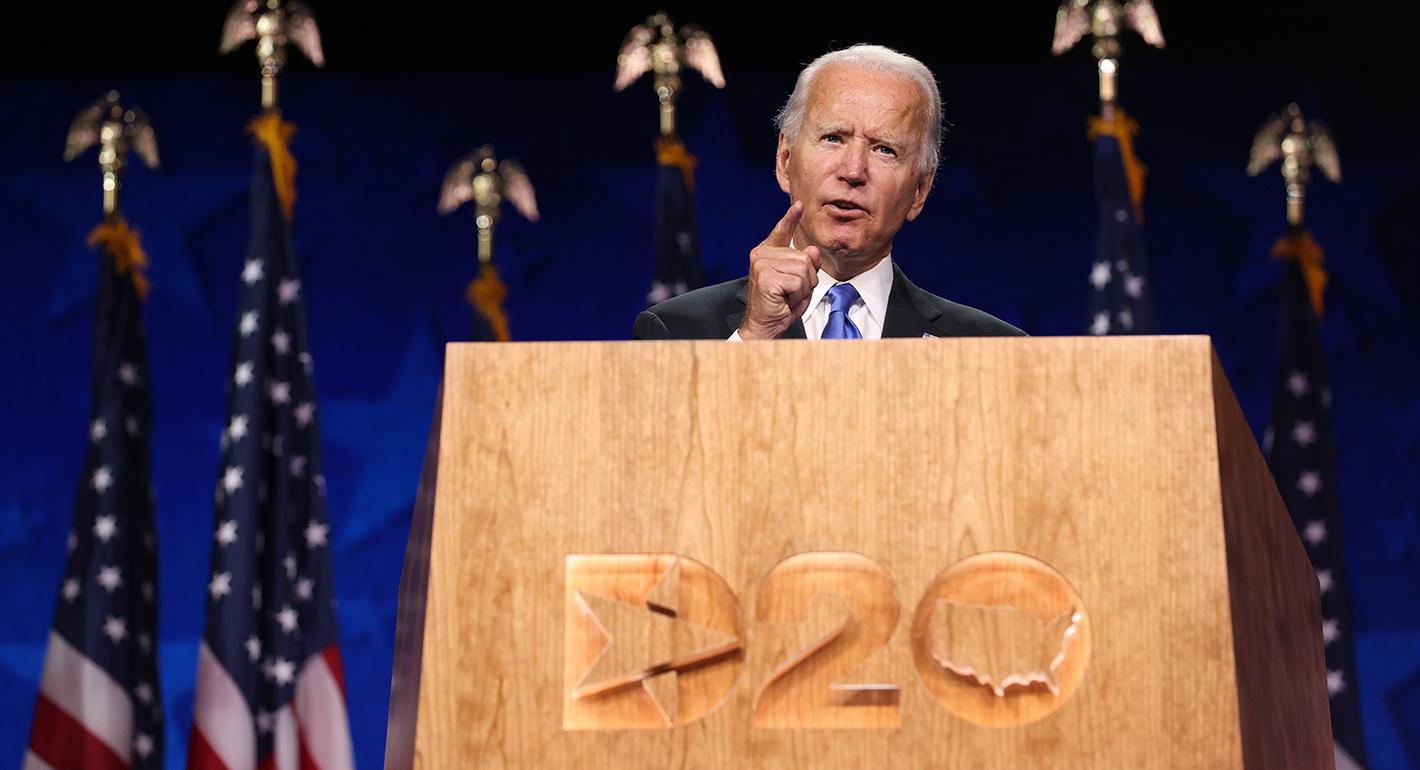
Ignore the scares. Unless the polls are badly wrong, a victory for Democratic candidate Joe Biden will be known on election night.
Source: TheArticle
Here is some good news for those who fear a messy, long-drawn out battle after next Tuesday to determine who will be America’s president. Unless the contest proves a great deal closer than the polls now indicate, we shall know by the end of election night who has won.
That ought to be an obvious, non-controversial point to make. But there have been plenty of lurid accounts of how Donald Trump might declare victory on the basis of on-the-day voting, and leave Joe Biden struggling to play catch-up as mail-in votes are counted in the days afterwards. My point is not that Trump won’t try to pull a fast one — he might very well do so — but that the television networks will have plenty of evidence to shut him up.Let’s set out the problem, before discussing the solution. A minority of states do not open, let alone count, mail-in votes until election day. There will be so many of these votes that most of them may not be counted until the days following the election. Polls, and early data from states that know the party affiliation of the mail-in voters, tell us that they include many more Democrats than Republicans. Republicans, far more than Democrats, prefer to vote on the day.
What is more, three of the states that leave the opening of mail-in votes until election day just happen to be Pennsylvania, Michigan and Wisconsin: the three traditionally Democrat states that Trump won narrowly last time to give him the presidency. They will almost certainly report Trump leading Biden in on-the-day votes counted next Tuesday night.

Former Nonresident Scholar, Carnegie Europe
Kellner was a nonresident scholar at Carnegie Europe, where his research focused on Brexit, populism, and electoral democracy.
Recent Work
Peter Kellner
Peter Kellner
Carnegie India does not take institutional positions on public policy issues; the views represented herein are those of the author(s) and do not necessarily reflect the views of Carnegie, its staff, or its trustees.

How is AI reshaping space security, creating governance challenges, and where does international diplomacy stand today?


Tejas Bharadwaj, Almudena Azcárate Ortega

The U.S.–India semiconductor cooperation story is well-stocked with top-level strategic intent. What remains unresolved, however, are some underlying challenges that will determine whether the cooperation actually functions. Three such friction points stand out.

Shruti Mittal

India and the United States are close to concluding a Reciprocal Defense Procurement Agreement (RDPA) that will allow firms from the two countries to sell to each other’s defense establishments more easily. While this may not remedy the specific grievances both sides may have regarding larger bilateral issues, an RDPA could restore some momentum, following the trade deal announcement.

Konark Bhandari

On the last day of the India AI Impact Summit, India signed Pax Silica, a U.S.-led declaration seemingly focused on semiconductors. While India’s accession to the same was not entirely unforeseen, becoming a signatory nation this quickly was not on the cards either.
Konark Bhandari

This piece examines India’s response to U.S. sanctions and tariffs, specifically assessing the immediate market consequences, such as alterations in import costs, and the broader strategic implications for India’s energy security and foreign policy orientation.

Vrinda Sahai