

Paper
George Perkovich
{
  "authors": [
    "George Perkovich"
  ],
  "type": "commentary",
  "centerAffiliationAll": "dc",
  "centers": [
    "Carnegie Endowment for International Peace"
  ],
  "collections": [],
  "englishNewsletterAll": "ctw",
  "nonEnglishNewsletterAll": "",
  "primaryCenter": "Carnegie Endowment for International Peace",
  "programAffiliation": "NPP",
  "programs": [
    "Nuclear Policy"
  ],
  "projects": [],
  "regions": [],
  "topics": [
    "Nuclear Policy",
    "Arms Control"
  ]
}
Source: Getty
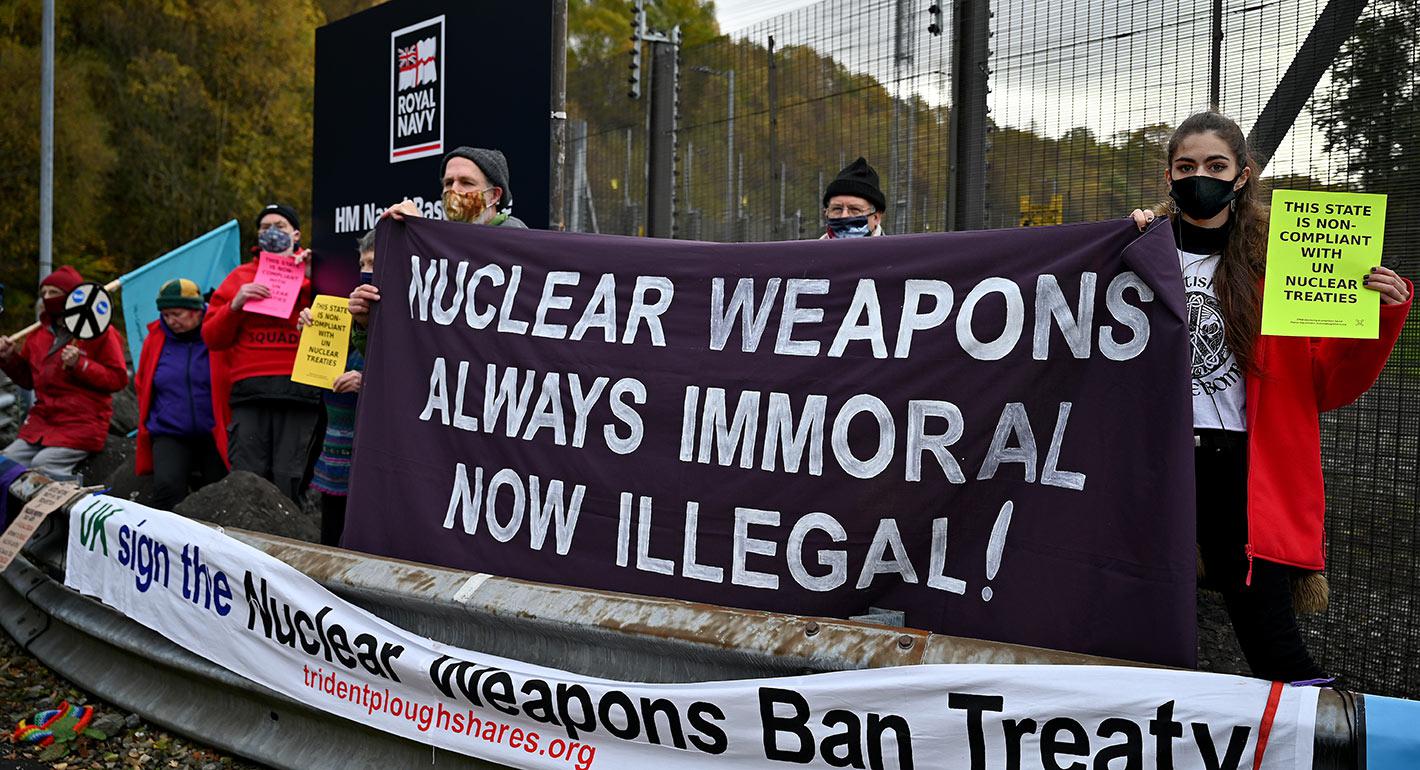
The UN Treaty on the Prohibition of Nuclear Weapons will neither rid the world of nuclear weapons nor leave it more vulnerable to war, despite the hopes and fears of its staunchest proponents and opponents.
Now that fifty countries have ratified the UN Treaty on the Prohibition of Nuclear Weapons (TPNW), it will enter into force in January 2021.
The treaty proclaims that signatories will “never under any circumstances develop, test, produce, manufacture, or otherwise acquire, possess or stockpile nuclear weapons or other nuclear explosive devices.” Allies are specifically prohibited from stationing or deploying nuclear weapons from other states.
Here’s the rub: since the 1950s, at least five NATO states have hosted U.S. nuclear weapons on their territory as part of the alliance’s collective security strategy. Many fear—and some hope—that public and parliamentary support for the treaty will drive Germany, the Netherlands, and perhaps others to quit hosting these weapons.
The German government has committed to update the aircraft necessary to deliver U.S.-supplied nuclear bombs, if called upon. But if the Social Democratic Party and the Green Party gain power and Germany joins the prohibition treaty, the country’s nuclear deterrent role would seem to be precluded. All of this could create a crisis in and around NATO, while leaving Russia unbothered in building up its regional nuclear forces.
Supporters of the prohibition treaty are not crazy. They have good reasons. The 122 countries that adopted the treaty in 2017 were already legally committed not to acquire nuclear weapons, as they had signed the fifty-year-old Nuclear Non-Proliferation Treaty.
None of them face threats of aggression from the United States, Russia, China, or other countries that nuclear weapons would plausibly deter. Yet, all could suffer great harm from someone else’s nuclear war—especially one involving the still excessively destructive U.S. and Russian arsenals.
Harm could come through radioactive fallout, global economic meltdown, refugee floods, and perhaps nuclear winter, beyond other effects of the destruction inflicted on the belligerents’ territories.
TPNW supporters represent more than half of the world’s population and are understandably frustrated that the nuclear weapon states have not fulfilled their legal obligations and political commitments to pursue nuclear disarmament. If the weapon states pose a threat and are not living up to promises to remove it, then why not support a treaty to ban these weapons?
A cynical answer is that the TPNW will do little good. The nine governments that wield nuclear weapons will not sign it. Nor have any security allies of nuclear-armed states, including all members of NATO, Japan, and South Korea, for example. In other words, the treaty will not change any country’s reliance on or possession of nuclear weapons.
While that is true, both supporters and critics of the treaty have reason to heed Hippocrates’s injunction to “first do no harm.” The importance of this injunction is especially great in NATO Europe and the United States.
In several NATO states, significant numbers of citizens and civil society organizations and their political representatives strongly support the TPNW. This includes the Netherlands and Germany, which are among the five states that host U.S. nuclear bombs as part of NATO’s nuclear-sharing arrangement.
These governments now wrestle with how to reconcile strong domestic support for the TPNW with growing concerns about security threats from Russia. If TPNW proponents become politically strong enough to prevail upon their governments to break with the NATO consensus and sign and ratify the treaty, the alliance would then face a major crisis. Such a crisis would come as Russia continues to add to its nuclear arsenal and repertoire of coercion and interference in the internal affairs of NATO countries.
While advocates of the TPNW no doubt wish to encourage Russia to reduce its nuclear force, too, the Kremlin has thus far been immune to external or internal advocacy about the benefits of the TPNW and regional nuclear disarmament.
Thus, the Hippocratic question is whether and how champions of the TPNW could avoid the harm of rewarding Russian intransigence and penalizing NATO states’ adherence to democratic norms of free association and lobbying. No one may intend to give Russia such an advantage, but this does little to guarantee that this will not be the result.
Here, the United States, the United Kingdom and France—as nuclear weapon states—have vital roles to play. If they do not openly respect the concerns that motivate support for the TPNW, and instead direct critical ire at those who do, they will harden rather than weaken the resolve of TPNW supporters. The United States and France are particularly guilty of this.
A much wiser course, building on opportunities that a new administration in Washington may offer, would be to reinvigorate efforts to stop the incipient qualitative and quantitative arms race between Russia and the United States and NATO. Countering Russia’s agenda and the frustration of disarmament advocates by offering fair proposals for arms reduction and confidence building will do much less harm and more good than criticizing the TPNW will.
The challenges of devising balanced, security-enhancing arrangements to limit or reduce emerging new nuclear and non-nuclear offensive and defensive technologies that may undermine stability are unprecedented. But Europe, Russia, and the United States have plenty of people and organizations that are up to the task. The imperative now is to direct political energy in this direction.

Japan Chair for a World Without Nuclear Weapons, Senior Fellow
George Perkovich is the Japan Chair for a World Without Nuclear Weapons and a senior fellow in the Carnegie Endowment for International Peace’s Nuclear Policy Program. He works primarily on nuclear deterrence, nonproliferation, and disarmament issues.
Recent Work
George Perkovich
George Perkovich
Carnegie India does not take institutional positions on public policy issues; the views represented herein are those of the author(s) and do not necessarily reflect the views of Carnegie, its staff, or its trustees.
Asia’s two largest nuclear powers have never threatened each other with nuclear weapons. How much will the recent deadly border clashes between China and India change the security landscape?


Toby Dalton, Tong Zhao, Rukmani Gupta
In the course of one morning in Singapore, U.S. President Donald Trump and the North Korean leader Kim Jong-un have begun to loosen a deeply entrenched and hostile relationship.
C. Raja Mohan
U.S. President Donald Trump’s decision to pull out of the Iran nuclear deal appears to have put regime change at the very center of the new American power play against Tehran.
C. Raja Mohan
The South Asian stalemate is likely to endure even as South and North Korea appear poised to turn the page.
C. Raja Mohan
While the Trump administration’s efforts to get tough on Pakistan face challenges and potential dangers, the change in stance signals a new political will to pursue previously untried measures which offer some hope of success.
C. Raja Mohan