

Other
- +8
Saskia Brechenmacher, Rudra Chaudhuri, Ryan Crocker, …
{
  "authors": [
    "Ryan Crocker"
  ],
  "type": "legacyinthemedia",
  "centerAffiliationAll": "dc",
  "centers": [
    "Carnegie Endowment for International Peace"
  ],
  "collections": [],
  "englishNewsletterAll": "americanStatecraft",
  "nonEnglishNewsletterAll": "",
  "primaryCenter": "Carnegie Endowment for International Peace",
  "programAffiliation": "ASP",
  "programs": [
    "American Statecraft"
  ],
  "projects": [],
  "regions": [
    "North America",
    "United States"
  ],
  "topics": [
    "Foreign Policy",
    "Global Governance"
  ]
}
Source: Getty
Foreign policy looks far different up close than it does from a congressional hearing room or think-tank auditorium.
Source: Atlantic
In an association that has spanned a number of years, I think I made Joe Biden really angry just once. It was in 2008. Biden was the chair of the Senate Foreign Relations Committee. I was a senior United States Foreign Service officer then serving as the ambassador to Iraq. A reporter asked me about a plan, first put forward by Biden and the foreign-policy analyst Leslie Gelb in 2006, that would grant significant autonomy to each of Iraq’s three major demographic groups. Many were calling it “soft partition”; supporters preferred “advanced federalism.” I said something to the effect that Iraq didn’t need any more sweeping political-reform plans, much less a partition plan, designed by the U.S. or anyone else.
A day or so later, one of Biden’s staffers called to say that I would be getting a letter from the senator, but that I shouldn’t take it too seriously. The letter did come. It was short and pithy: I was twisting Biden’s words; he had never called for partition. He stopped short of telling me what I could do with my criticism, but I inferred it. The epilogue: Neither of us referred to the incident again, and I never heard him mention advanced federalism to any Iraqi official. (Iraq was already a federal state.)
The episode illustrates some important points. First, externally imposed solutions to complex problems almost never work. One need only look at the ill-conceived and sloppily executed British partition of India and Pakistan, a policy that not only killed more than 1 million people at the time but also fostered enduring sectarian tensions and instability between two countries that are now nuclear powers. Second, when similarly sweeping solutions are proposed today, they almost always emanate from Washington, not from the field.
Foreign policy looks far different up close than it does from a congressional hearing room or think-tank auditorium. And although I disagreed with Biden over the concept of soft partition, I have otherwise observed, through tough field experience over the years, his unusual commitment to getting the facts right...
Nonresident Senior Fellow
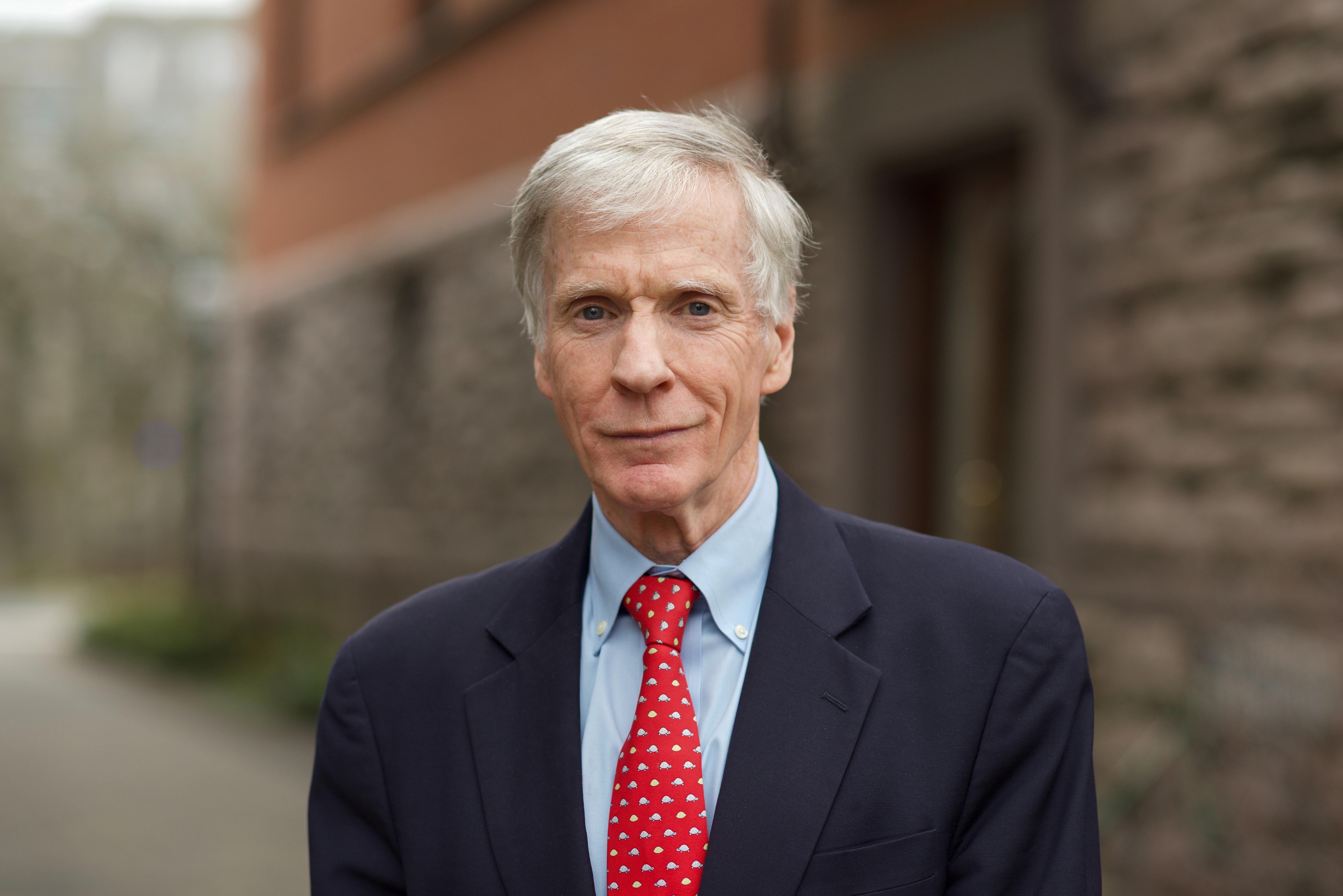
Ryan Crocker is a nonresident senior fellow at the Carnegie Endowment for International Peace.
Recent Work


Saskia Brechenmacher, Rudra Chaudhuri, Ryan Crocker, …
Ryan Crocker
Carnegie India does not take institutional positions on public policy issues; the views represented herein are those of the author(s) and do not necessarily reflect the views of Carnegie, its staff, or its trustees.

How is AI reshaping space security, creating governance challenges, and where does international diplomacy stand today?


Tejas Bharadwaj, Almudena Azcárate Ortega

After the chill in ties between 2020 and 2024 that brought India–China relations to their lowest point in several decades, the two countries have engaged each other afresh. This paper argues that there are predominantly four imperatives guiding India’s approach to China, and they exist in an order of priority.

Saheb Singh Chadha

This piece argues that India’s central challenge is not managing a single flashpoint but resolving the underlying tension between expansion and institutional coherency of the BRICS grouping.

Vrinda Sahai

A partnership between India, a country of subcontinental size, and Africa, a continent of fifty-four countries, may seem asymmetric until one notes that both are home to nearly the same number of people—1.4 billion. This essay spells out the existing challenges to the partnership, its optimal potential, and the possible pathways to realize it over the next quarter-century.

Rajiv Bhatia

The U.S.–India semiconductor cooperation story is well-stocked with top-level strategic intent. What remains unresolved, however, are some underlying challenges that will determine whether the cooperation actually functions. Three such friction points stand out.

Shruti Mittal