

Paper
Noah Gordon, Liana Schmitter-Emerson
{
  "authors": [
    "Noah Gordon"
  ],
  "type": "commentary",
  "centerAffiliationAll": "dc",
  "centers": [
    "Carnegie Endowment for International Peace"
  ],
  "collections": [],
  "englishNewsletterAll": "ctw",
  "nonEnglishNewsletterAll": "",
  "primaryCenter": "Carnegie Endowment for International Peace",
  "programAffiliation": "SCP",
  "programs": [
    "Sustainability, Climate, and Geopolitics",
    "Europe"
  ],
  "projects": [],
  "regions": [
    "Russia",
    "Eastern Europe",
    "Ukraine",
    "Western Europe",
    "United Kingdom",
    "France",
    "Germany",
    "North America",
    "Iran"
  ],
  "topics": [
    "Economy",
    "Trade",
    "Climate Change",
    "Security",
    "Military"
  ]
}
Source: Getty
The proposal’s structure aims to minimize price spikes but doesn’t address reduced consumption.
On Wednesday, European Commission President Ursula von der Leyen proposed a complete import ban on all Russian oil as part of the EU’s latest sanctions package, declaring that Russian President Vladimir Putin “must pay a high price for his brutal aggression.” Though Russia’s oil sales to the EU are the immediate target of the sanctions, one key provision in the draft text could impair Russia’s ability to sell oil worldwide.
The motivation for the ban is to stop Europeans from paying high prices for Russian energy and to close off the Russian petrostate’s most important market for its most important export. The EU has spent more than $20 billion on Russian oil since the invasion of Ukraine, and those earnings are crucial for the Russian state, making up about 40 percent of its federal budget. Russia’s oil exports are typically worth more than twice as much as its gas exports, and the EU is the destination for nearly half of its oil exports.
All twenty-seven EU member states must now agree to these sanctions, which would not take effect until around the end of the year, and several Central European member states have raised concerns about the impacts on their economies. Landlocked Slovakia and the Czech Republic are asking for more time to implement the sanctions than the proposed one-year exemption for vulnerable member states—two or three extra years in the case of the Czechs. Hungary, which has close ties to Russia and is also looking for leverage in its rule-of-law dispute with the commission in Brussels, expressed the strongest opposition. However, these objections are unlikely to derail the EU’s plans now that major member states such as Germany are behind an embargo. French energy minister Barbara Pompili said on Thursday she expected the EU to reach a consensus on the ban by the end of the week.
Von der Leyen claimed the proposed transition period would “minimize collateral damage” to the EU and its global partners. This is true for the EU itself, at least: EU importers now have more time to strike deals with alternative suppliers, or to agree to cooperate with each other to replace Russian supply, as Germany and Poland have. And announcing an immediate ban would have sent global oil prices up by more than the $5 per barrel they jumped on the May 4 news. However, with OPEC+ resisting calls to ratchet up production to help keep prices in check, there will certainly be some collateral damage.
Russia, too, can take advantage of the transition period, which gives it time to build more oil storage and find other customers. India, for instance, has increased its (relatively small) purchases of Russian oil since the invasion of Ukraine, although it would be impossible to reroute all of Russia’s Europe-bound exports to Asia because of the lack of sufficient pipeline and tanker capacity.
In addition, the EU’s desire to both cut Russia revenues and minimize collateral damage to third countries is contradictory. Minimizing damage means avoiding a major increase in the global oil price, but that is possible only if most of the Russian oil makes it to global markets despite the EU embargo. In this scenario, wherein Russia’s oil exports decline only slightly and the price of oil increases somewhat, the sanctions would not achieve their objective of starving the Russian state of oil revenue. This is why some economists preferred a punitive EU tariff on Russian oil, which would immediately reduce Russia’s oil rent.
With their focus on the supply of oil, the EU and its member states have neglected the demand side of the equation. France, Italy, Poland, and Sweden are among the countries that have reduced taxes on road fuel since the invasion of Ukraine, driving demand for oil just as it becomes scarce and expensive. Too many of the European governments that trumpeted the European Green Deal are subsidizing fossil fuel consumption for everyone rather than targeting aid to the most vulnerable citizens, and initiatives like Germany’s discount public transport ticket remain underutilized. The European Commission should really be making policy to reduce oil consumption amid an energy (and climate) crisis, not simply releasing infographics and putting the issue on the back burner.
Although high fuel and commodity prices have sent Russia’s current account surplus to its highest level in decades, it is already having to sell its oil at a hefty discount to the global benchmark. And even before this EU announcement, Russia’s economy ministry was projecting a 17 percent decline in oil production in 2022. That figure, and the discounts demanded by China and others to take Russian oil, will now surely increase further. An EU embargo could theoretically have a similar effect to a tariff, but instead of Russia cutting prices to Europe in order to stay competitive in the face of a tariff, Moscow would have to slash rates to attract non-European buyers who are taking on risk to purchase a toxic product.
But this is a where a crucial part of the embargo plan comes in. Buried in the draft legal text and absent from von der Leyen’s speech is a proposal to target Russia’s ability to sell oil all over the world. Any shipping or insurance company controlled by EU nationals or companies would be forbidden from facilitating the transport of Russian oil. Since 95 percent of liability insurance for oil tankers is covered by European law, and more than 60 percent of Russian oil is carried on Greek tankers, these measures would cause major turmoil in global oil trade.
Over the next few days, the action will be in Brussels, where European officials finalize embargo plans and negotiate exemptions. By the end of the year, the EU embargo will become a major topic around the world, especially if the EU (and its G7 partners) implement plans to obstruct Russian imports to third countries in a manner reminiscent of U.S. sanctions on Iranian and Venezuelan oil. As Russia escalates its war, the costs escalate as well—for both the Putin regime itself and the people around the world who buy the goods Russia sells.

Former Fellow, Sustainability, Climate, and Geopolitics Program and Fellow, Europe Program
Noah J. Gordon was a fellow in the Sustainability, Climate, and Geopolitics Program at the Carnegie Endowment for International Peace in Washington, DC.
Recent Work
Noah Gordon, Liana Schmitter-Emerson



Sophia Besch, Eric Ciaramella, Steve Feldstein, …
Carnegie India does not take institutional positions on public policy issues; the views represented herein are those of the author(s) and do not necessarily reflect the views of Carnegie, its staff, or its trustees.

In any defense establishment, change is an ongoing process. However, despite the best of intentions, existing bureaucracies, bound by habit and years of socialization, have their limits in implementing transformative change.

Anit Mukherjee

After the chill in ties between 2020 and 2024 that brought India–China relations to their lowest point in several decades, the two countries have engaged each other afresh. This paper argues that there are predominantly four imperatives guiding India’s approach to China, and they exist in an order of priority.

Saheb Singh Chadha

This piece argues that India’s central challenge is not managing a single flashpoint but resolving the underlying tension between expansion and institutional coherency of the BRICS grouping.

Vrinda Sahai

On March 10, 2026, India’s Union Cabinet approved amendments to Press Note 3, a regulation that mandated government approval on all foreign direct investment (FDI) from countries sharing a land border with India. This amendment raises questions primarily about whether its stated benefits will materialize and if the risks have been adequately weighed. This piece will address the same.

Konark Bhandari
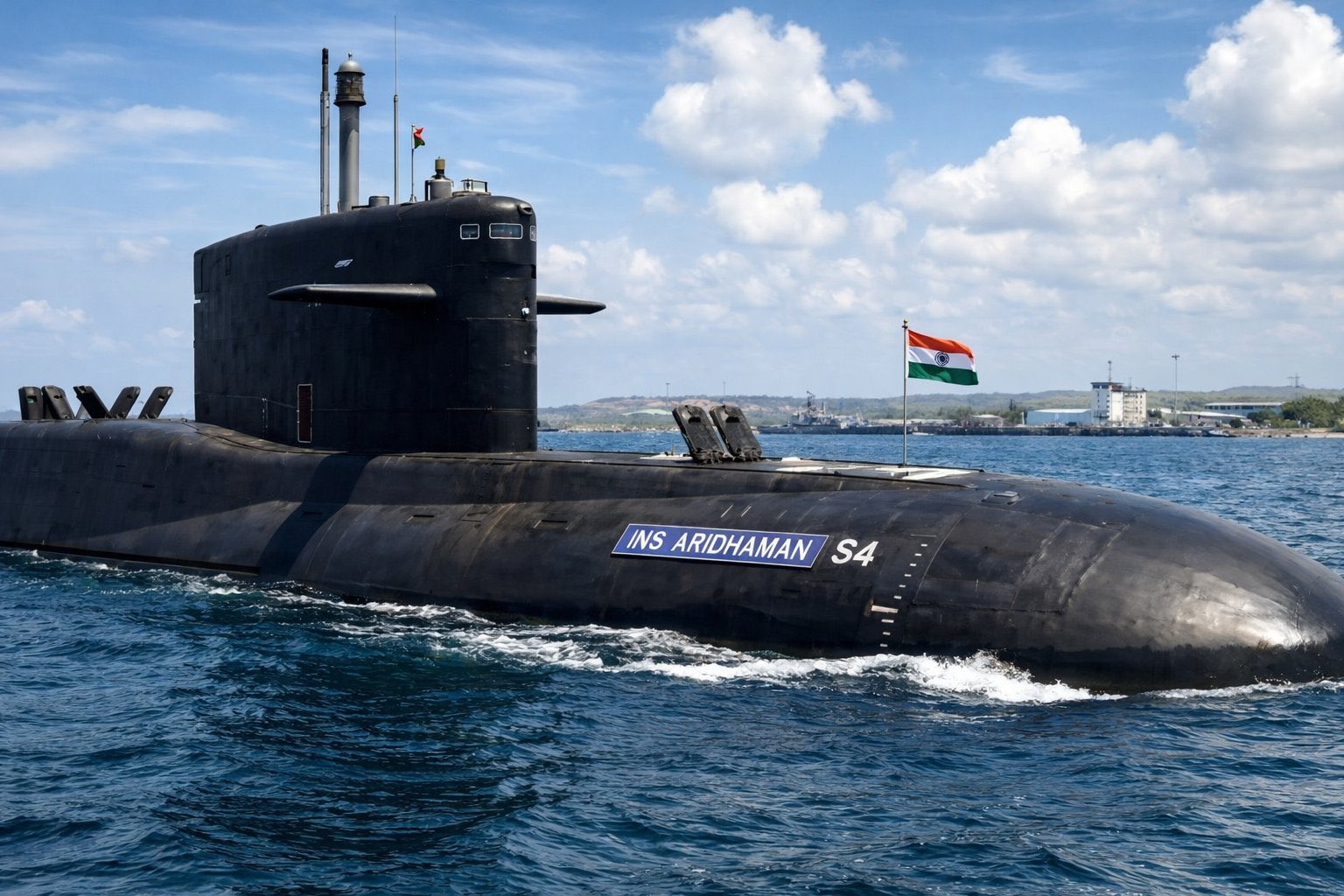
The induction of INS Aridhaman, which features several technological enhancements, now gives India the third nuclear ballistic missile submarine to ensure continuous at-sea deterrent.

Dinakar Peri