

Q&A
Dara Massicot, Aaron David Miller, Andrew S. Weiss
{
  "authors": [
    "Aaron David Miller"
  ],
  "type": "commentary",
  "centerAffiliationAll": "dc",
  "centers": [
    "Carnegie Endowment for International Peace"
  ],
  "collections": [],
  "englishNewsletterAll": "americanStatecraft",
  "nonEnglishNewsletterAll": "",
  "primaryCenter": "Carnegie Endowment for International Peace",
  "programAffiliation": "ASP",
  "programs": [
    "American Statecraft"
  ],
  "projects": [],
  "regions": [
    "United States",
    "Afghanistan"
  ],
  "topics": [
    "Security",
    "Foreign Policy"
  ]
}
Source: Getty
It was a victory for Biden, but the jihadi threat to United States is not nearly as acute as the challenges that ail the nation internally.
Saturday’s U.S. drone strike that killed al-Qaeda leader Ayman al-Zawahiri in Kabul, Afghanistan, carries important political and symbolic implications for President Joe Biden’s administration and substantive ramifications for U.S. counterterrorism strategy. Here are some key takeaways.
In the chaotic withdrawal from Afghanistan last August, critics charged that the United States would not be able to operate effectively without on-the-ground intelligence, including the deployment of special forces, however limited, to act against terror assets. The U.S. intelligence community warned that a failing Afghan state shaped by the Taliban’s own relationships with terror groups would allow the groups’ presence to grow. And within a year, the number of operatives of both the self-proclaimed Islamic State in Khorasan (IS-K) and the smaller al-Qaeda organization had doubled.
The precision strike against Zawahiri, ensconced in a safe house in Kabul, was a master class in intelligence and operational capacity and an affirmation that U.S. intelligence could still be effective in Afghanistan. The intelligence community had been tracking Zawahiri for months, establishing a pattern of his routine and activity much like the period leading up to the strike on Osama bin Laden in May 2011. And it managed to carry out an operation that reportedly caused no civilian deaths or injuries. The strike was a counter-argument to those who believed a permanent presence on the ground was essential to what President Joe Biden had declared in August 2021 was the only U.S. vital interest in Afghanistan: preventing a terror attack on the homeland. Indeed, Saturday’s strike was a much needed corrective to the failed U.S. drone strike a year earlier against IS-K that killed ten Afghan civilians.
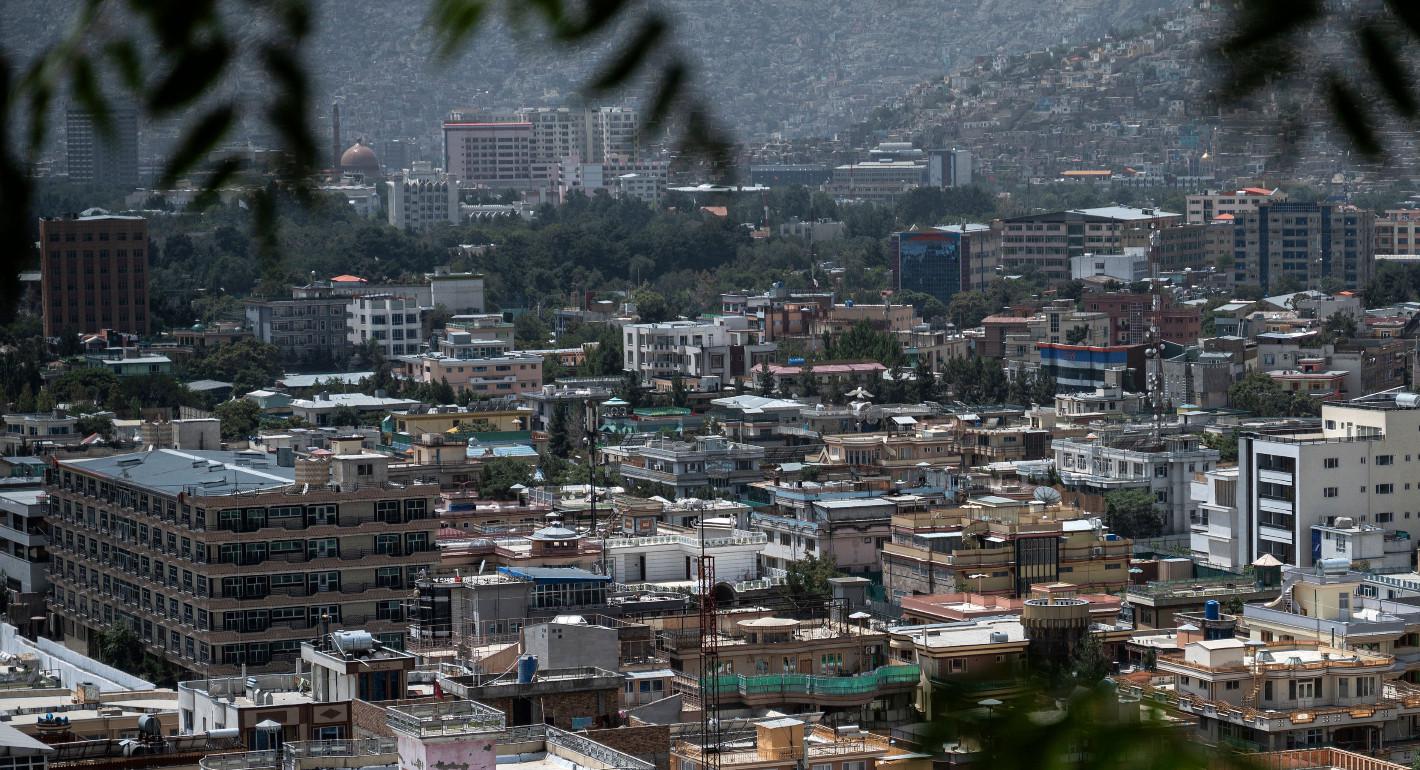
Whether the strike against Zawahiri is part of a trend line of stepped-up U.S. counter-terrorism activity remains to be seen. After all, Saturday’s strike was the first significant operation in Afghanistan since the U.S. withdrawal. And the Zawahiri’s presence in Afghanistan—in a Kabul neighborhood where Taliban officials also resided—reflected the challenge of al-Qaeda’s presence in the country. It’s one thing to plan an operation to eliminate a high-profile target and another to track, infiltrate, and destroy an active cell involved in carrying out specific terrorist operations without an on-the-ground presence and an intelligence network.
It should have come as little surprise that ties between the Taliban and al-Qaeda remain strong. Historical connections run deep, and senior Taliban officials—especially Sirajuddin Haqqani, Afghanistan’s acting interior minister and a U.S.-designated terrorist—have close ties with al-Qaeda leaders. The 2020 Doha agreement commits the Taliban leadership to preventing terrorist activity against the United States from its soil, but attacks by the Pakistani Taliban in Pakistan have increased. And IS-K—a key Taliban adversary with as many as 4,000 members—continues to operate.
The strike against Zawahiri seems all the more impressive in view of the fact that the withdrawal had reportedly weakened U.S. cooperation with partners on the ground, undermined a sustainable foundation to collect intelligence, and eliminated in-country bases of operation. There’s much that we don’t know about how the CIA pulled off this operation, and perhaps its assets in Afghanistan are stronger than believed. In any event, the Taliban is already reeling from international pressure and isolation, and it will face greater pressure to act against remaining al-Qaeda assts. It’s doubtful that it will. Still, the threat to the United States from al-Qaeda in Afghanistan—or even IS-K—is not nearly acute as the challenges that ail the nation internally.
Zawahiri never had the charisma and leadership skills of bin Laden. Reportedly in ill health and in hiding for more than a decade, Zawahiri clearly was not the day-to-day tactician and manager of al-Qaeda operations. More likely, his real significance lay in his ability to keep al-Qaeda’s brand and image intact after bin Laden’s death. Bin Laden might well be satisfied in what al-Qaeda has accomplished in the past decade: while it may not have regained its operational effectiveness after September 11, 2001, it has spread far and wide into local affiliates throughout the Middle East and Africa. Groups such as Hurras al-Din in Syria, al-Shabab in Somalia, and al-Qaeda in the Arabian Peninsula in Yemen are far more capable of carrying out operations against U.S. interests in the areas in which they operate, and they’re perhaps a longer-term threat to planning operations against the United States than al-Qaeda in Afghanistan. Indeed, the most likely threat against U.S. interests emanate from ISIS-K in Afghanistan.
As for successors to Zawahiri, it’s not entirely clear. A number of established al-Qaeda senior leaders in Africa and Iran could serve in the role, though it’s possible a struggle might ensue and a new, younger face could emerge. To keep itself viable and demonstrate continuity, al-Qaeda will likely announce the new leader soon.
Presidential fortunes ebb and flow, and lately, Biden has had some good news. His alliance management of the war in Ukraine has been as adept as any since the administration of President George H.W. Bush’s handling of the first Gulf War. At home, legislation on gun safety, drug prices, and climate change has improved his image. While Americans more often than not want as little to do with foreign policy as possible, the announcement of the Zawahiri strike will help somewhat counter the chaotic images of the U.S. withdrawal from Afghanistan.
Much of the president’s remarks announcing the strike on Monday centered on fostering the image of a strong president determined to protect Americans and deliver justice to those who have harmed them. Biden’s moving words sought to mark the 9/11 attacks, remember the lost, grieve with the living, honor the troops, and never give up or abandon the effort to protect Americans. It was one of the few moments of the Biden presidency, aside from statements issued in the wake of mass shootings, that the president could speak to the nation as commander in chief seemingly above the political fray. If the past is any guide, Biden is likely to get scant credit in the November midterms.
Killing Zawahiri won’t eliminate the threat from jihadi groups, but it does strengthen the argument that the presence of U.S. forces and bases on the ground, which comes at a severe cost, may well be the best way to guarantee maximum protection of the United States but not necessarily the only way. Since September 11, with one potential exception, there has not been a successful attack organized, directed, and carried out by a foreign terror organization. And while the threat from these jihadi groups demands a robust counterterrorism strategy, the United States can’t allow itself to be guided by a one-dimensional approach to homeland security. The core threats to the United States, including the coronavirus pandemic and climate change, have taken a far greater toll on U.S. security, prosperity, and human suffering than jihadi threats.
And none of this even begins to address an increasingly polarized nation, a dysfunctional political system, and the rise of white nationalist extremist groups and militias—all of which pose a much greater danger to America’s stability, democracy, security, and prosperity than any threat from al-Qaeda or other groups. As vigilant as Washington must be to confront the threats and challenges from abroad, we need to look inward to see where the far greater danger lies.

Senior Fellow, American Statecraft Program
Aaron David Miller is a senior fellow at the Carnegie Endowment for International Peace, focusing on U.S. foreign policy.
Recent Work


Dara Massicot, Aaron David Miller, Andrew S. Weiss


Sophia Besch, Eric Ciaramella, Steve Feldstein, …
Carnegie India does not take institutional positions on public policy issues; the views represented herein are those of the author(s) and do not necessarily reflect the views of Carnegie, its staff, or its trustees.

In any defense establishment, change is an ongoing process. However, despite the best of intentions, existing bureaucracies, bound by habit and years of socialization, have their limits in implementing transformative change.

Anit Mukherjee

How is AI reshaping space security, creating governance challenges, and where does international diplomacy stand today?


Tejas Bharadwaj, Almudena Azcárate Ortega

After the chill in ties between 2020 and 2024 that brought India–China relations to their lowest point in several decades, the two countries have engaged each other afresh. This paper argues that there are predominantly four imperatives guiding India’s approach to China, and they exist in an order of priority.

Saheb Singh Chadha

This piece argues that India’s central challenge is not managing a single flashpoint but resolving the underlying tension between expansion and institutional coherency of the BRICS grouping.

Vrinda Sahai

A partnership between India, a country of subcontinental size, and Africa, a continent of fifty-four countries, may seem asymmetric until one notes that both are home to nearly the same number of people—1.4 billion. This essay spells out the existing challenges to the partnership, its optimal potential, and the possible pathways to realize it over the next quarter-century.

Rajiv Bhatia