

Report
- +4
Christopher S. Chivvis, Jennifer Kavanagh, Sahil Lauji, …
{
  "authors": [
    "Jennifer Kavanagh"
  ],
  "type": "commentary",
  "centerAffiliationAll": "dc",
  "centers": [
    "Carnegie Endowment for International Peace"
  ],
  "collections": [
    "Renewing American Statecraft"
  ],
  "englishNewsletterAll": "americanStatecraft",
  "nonEnglishNewsletterAll": "",
  "primaryCenter": "Carnegie Endowment for International Peace",
  "programAffiliation": "ASP",
  "programs": [
    "American Statecraft"
  ],
  "projects": [],
  "regions": [
    "North America",
    "United States"
  ],
  "topics": [
    "Security",
    "Military"
  ]
}
Source: Getty
It responds to an increasingly challenging security environment not by growing the DOD’s responsibilities, but by refining and focusing its commitments.
Across presidential administrations and regardless of the political party in power, the U.S. Department of Defense has continuously resisted shedding legacy commitments, tending to expand its role over time. At first glance, the recently released 2022 National Defense Strategy (NDS) is no different: it makes few real choices and even adds priorities, such as the Arctic and climate, to the DOD’s docket.
But a closer read suggests that this NDS begins to break from that habitual pattern, responding to an increasingly challenging security environment not by growing the DOD’s responsibilities, but by refining and focusing its commitments. It reveals several areas where the DOD signals an explicit intention to concentrate its own investments more narrowly on top priorities while delegating other responsibilities to interagency, private sector, and foreign partners—a tactic known as burden sharing. Though subtle, these changes are significant steps in the right direction in three key ways.
First, the 2022 NDS commits not just to cooperate with allies and partners, but to put them in the driver’s seat on issues of self-defense and regional security, freeing up U.S. forces for more important security demands. The desire to improve the integration of allies and partners with the U.S. military is a perennial one for the DOD, appearing in the 2018 NDS and other strategic planning documents. But this NDS moves beyond previous statements, defining specific areas where the DOD will expect more participation from allies and partners and placing itself in a supporting role.
For example, when talking about the Indo-Pacific theater, the updated NDS commits to “augment” South Korean self-defense capabilities and to support Taiwan’s own asymmetric self-defense concept but does not assert a leadership role in either case. In the Middle East, the NDS pledges that the DOD will support regional coalitions to advance maritime security and counter violent extremists but does not define a central role for the U.S. military in these areas. And in Africa, the updated strategy promotes a “by, with, and through” approach that puts partners in front, leading operations, with the U.S. military in a facilitating role. In each of these examples, the NDS appropriately expects some self-sufficiency from allies and partners, even if the United States remains interested.
The degree of burden sharing with allies and partners suggested by the 2022 NDS remains modest, but even a small increase in the DOD’s willingness to delegate responsibility would be an improvement over the status quo. It would allow the DOD to better focus resources against the most challenging threats where it has unique capabilities, reducing the risk of U.S. overextension and capitalizing on the comparative advantages of partners. In addition, any increase in burden sharing would also suggest a shift in the DOD’s mindset from one where the U.S. military acts as the universal security guarantor to one where the United States adopts a more balanced role as supporter, mobilizer, and facilitator in many contexts.
While a strategy that encourages partners to lead has distinct advantages, it will come with some loss of control over operational planning and execution. This may cause discomfort initially within the DOD. Much will also depend on how far DOD leaders are willing to go in actual implementation. The strategy commits to addressing specific barriers to deeper collaboration, including sharing of intelligence and technology. However, to successfully make the move toward burden sharing, the DOD will need to change its “do everything” culture, which is based on assumptions about U.S. primacy.
The second shift in the 2022 NDS is the introduction of “campaigning” as a replacement for 2018’s “competition below the threshold of armed conflict.” Both concepts describe activities that the U.S. military conducts daily in the contested space between peacetime and armed conflict—sometimes called the gray zone—to create an environment favorable to the United States and to disrupt adversary activities. The difference between them is one of scope.
Competition lacked clear boundaries and resulted in the U.S. military sometimes taking on responsibilities for which it was ill-prepared, such as diplomatic, humanitarian, or development activities. The concept of campaigning relies on burden sharing with other U.S. government agencies, allowing the U.S. military to be more effective by expending its resources on a smaller set of tasks that have a higher rate of return. The 2022 NDS describes campaigning as focused only on the “most consequential” adversary activities and where the DOD has clear proficiencies, such as security cooperation, cyber operations, or military exercises.
The DOD’s move from competition to campaigning smartly prioritizes depth of investment over breadth, relying on interagency partners to lead where the DOD steps back. Any advance made in deepening interagency coordination in this gray zone space will allow the DOD to focus its energy where it is strongest and do more of those activities where it has advantages to protect U.S. security interests. To be effective in focusing the DOD’s commitments, however, the concept of campaigning needs more detail on the boundaries between DOD and interagency responsibilities to prevent redundancies.
Finally, the 2022 NDS repeatedly calls for more cooperation between the DOD and the private sector. The DOD has been hesitant to depend too heavily on the private sector due to concerns about security and reliability. But the new strategy appears to shed some of these concerns and acknowledge that relying solely on DOD labs for innovation and DOD-owned infrastructure in cyber and space is self-limiting and unsustainable from a resource perspective. More burden sharing with the private sector can allow the DOD to access and integrate new technology more quickly and cheaply and to apply research and development resources where it has unmatched competencies, both essential for competition with capable adversaries like China.
The 2022 NDS proposes several types of DOD-to-private sector collaboration, including direct partnerships aimed at filling capability gaps, cooperation to enable more agile innovation, and greater use of commercial off-the-shelf products. It mentions a range of areas that may be ripe for greater burden sharing, including the defense industrial base, the commercial space industry, artificial intelligence, and sustainable energy. Finally, it considers the private sector as a training ground to build a better DOD workforce in technical fields such as engineering and cyber.
The shift toward more integration with the private sector articulated in this NDS is not unqualified. The DOD will continue to do much capability development in-house. But it is a notable change that could positively influence the pace, trajectory, and success of the DOD’s modernization efforts. To truly capitalize on greater integration with the private sector, it will need to ensure its bureaucracy does not stifle the private sector’s dynamism.
The 2022 NDS still assigns the DOD an expansive role and long list of priorities. Movement toward a defense strategy that more narrowly focuses the DOD’s role and mission will take considerable time. One might wish for more, but these three changes could have meaningful implications for the types of responsibilities the DOD takes on, how it works with allies and partners, and how rapidly it modernizes over the coming years.

Former Senior Fellow, American Statecraft Program
Jennifer Kavanagh was a senior fellow in the American Statecraft Program at the Carnegie Endowment for International Peace.
Recent Work

Christopher S. Chivvis, Jennifer Kavanagh, Sahil Lauji, …

Jennifer Kavanagh, Mariano-Florentino (Tino) Cuéllar
Carnegie India does not take institutional positions on public policy issues; the views represented herein are those of the author(s) and do not necessarily reflect the views of Carnegie, its staff, or its trustees.

In any defense establishment, change is an ongoing process. However, despite the best of intentions, existing bureaucracies, bound by habit and years of socialization, have their limits in implementing transformative change.

Anit Mukherjee

How is AI reshaping space security, creating governance challenges, and where does international diplomacy stand today?


Tejas Bharadwaj, Almudena Azcárate Ortega

After the chill in ties between 2020 and 2024 that brought India–China relations to their lowest point in several decades, the two countries have engaged each other afresh. This paper argues that there are predominantly four imperatives guiding India’s approach to China, and they exist in an order of priority.

Saheb Singh Chadha

The U.S.–India semiconductor cooperation story is well-stocked with top-level strategic intent. What remains unresolved, however, are some underlying challenges that will determine whether the cooperation actually functions. Three such friction points stand out.

Shruti Mittal
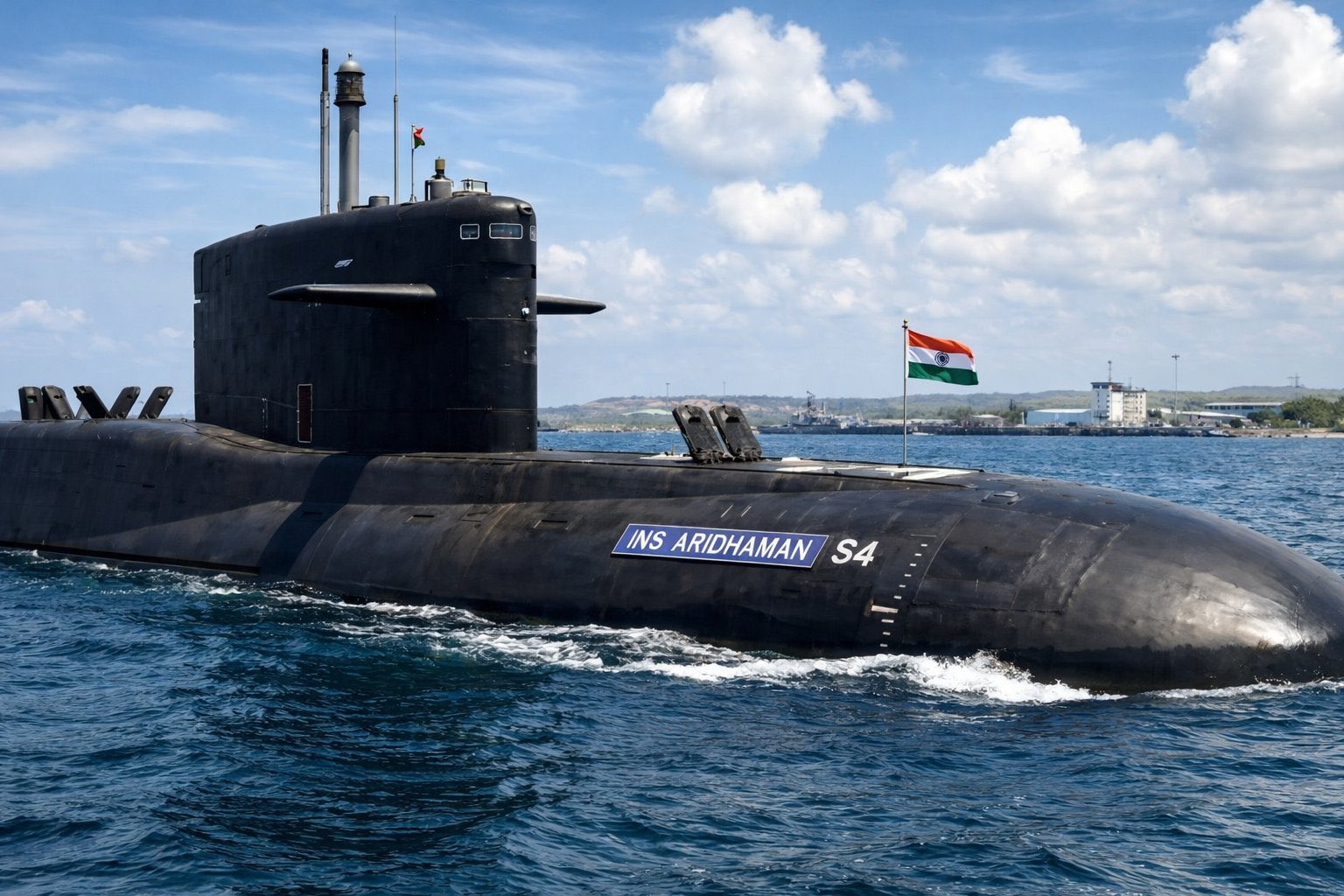
The induction of INS Aridhaman, which features several technological enhancements, now gives India the third nuclear ballistic missile submarine to ensure continuous at-sea deterrent.

Dinakar Peri