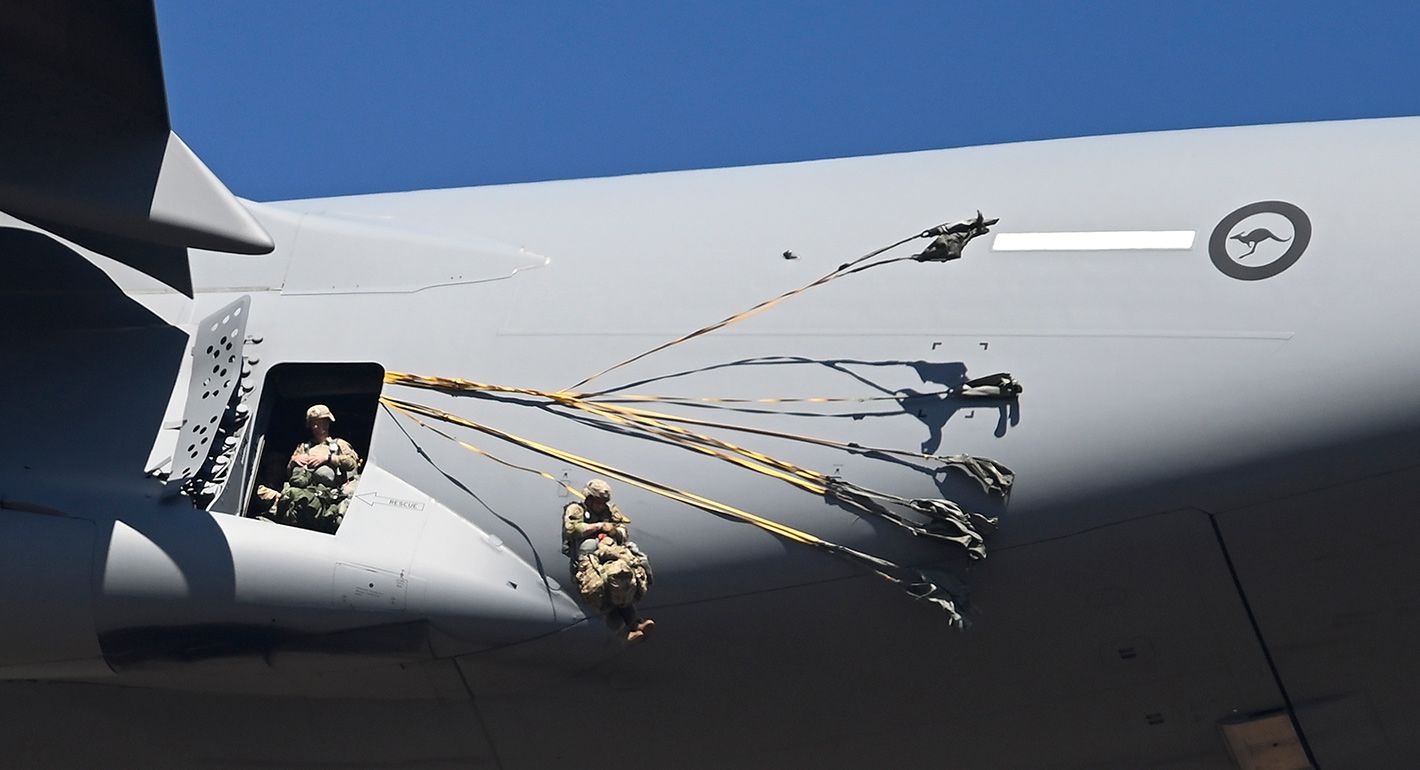
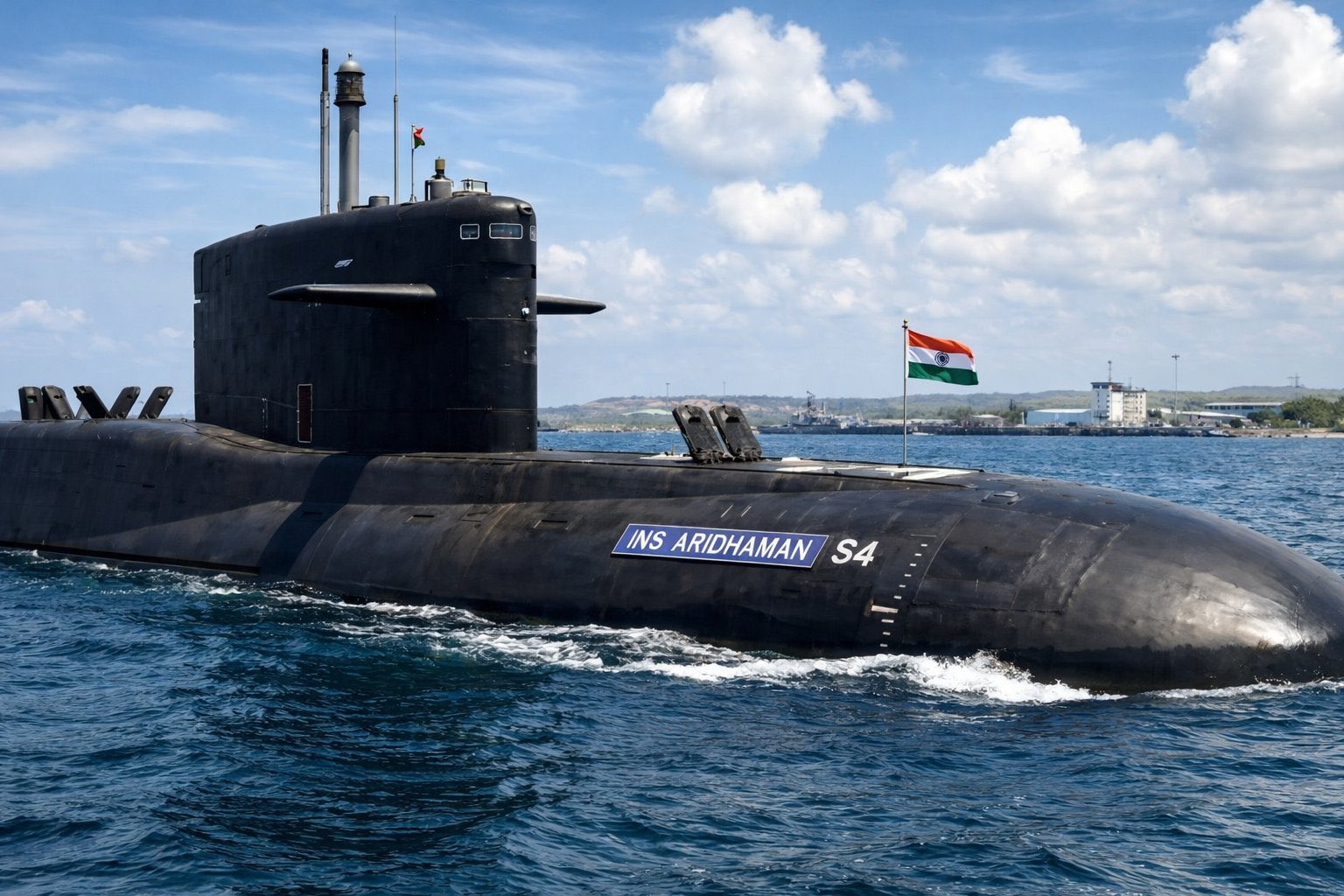
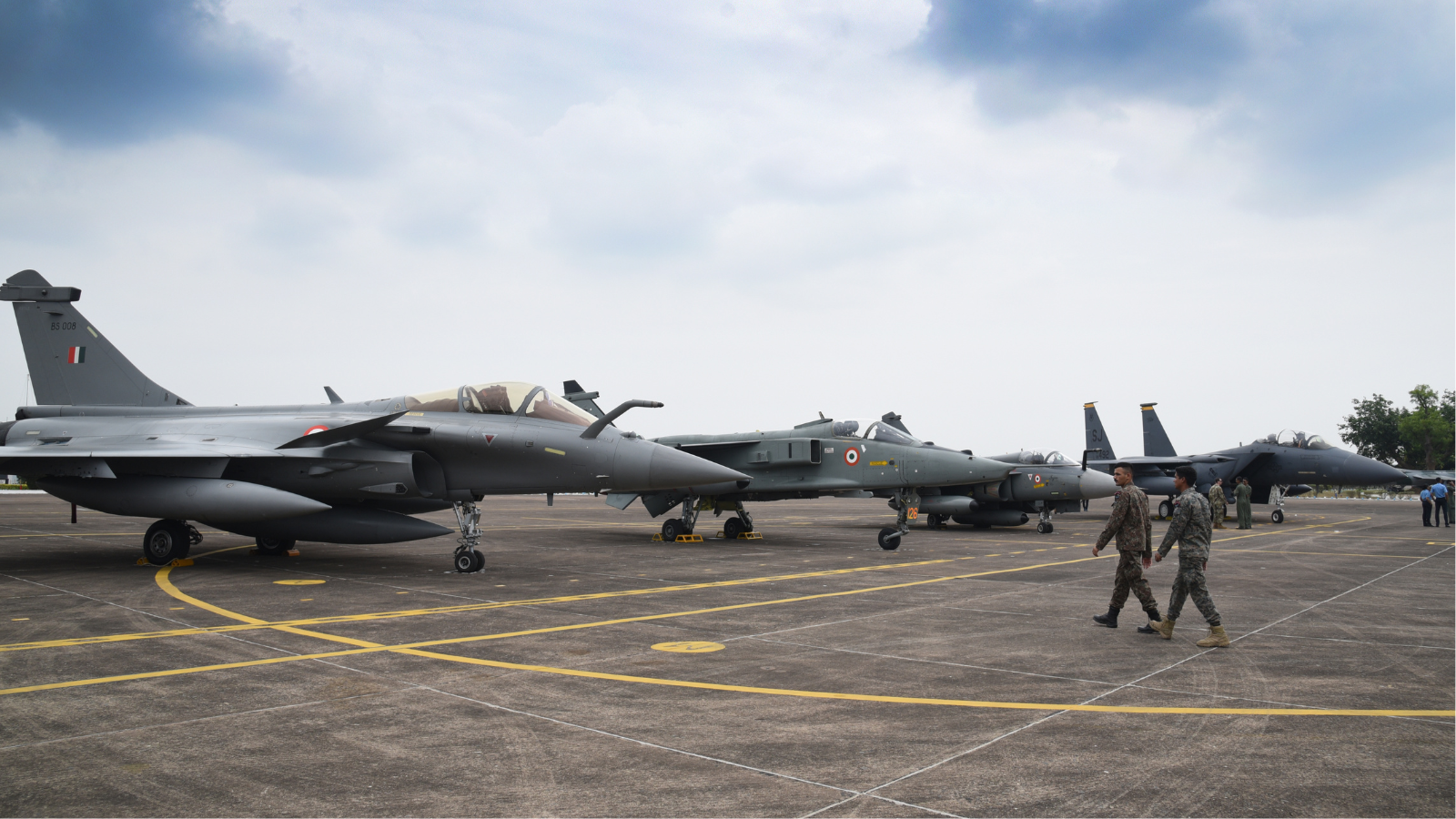
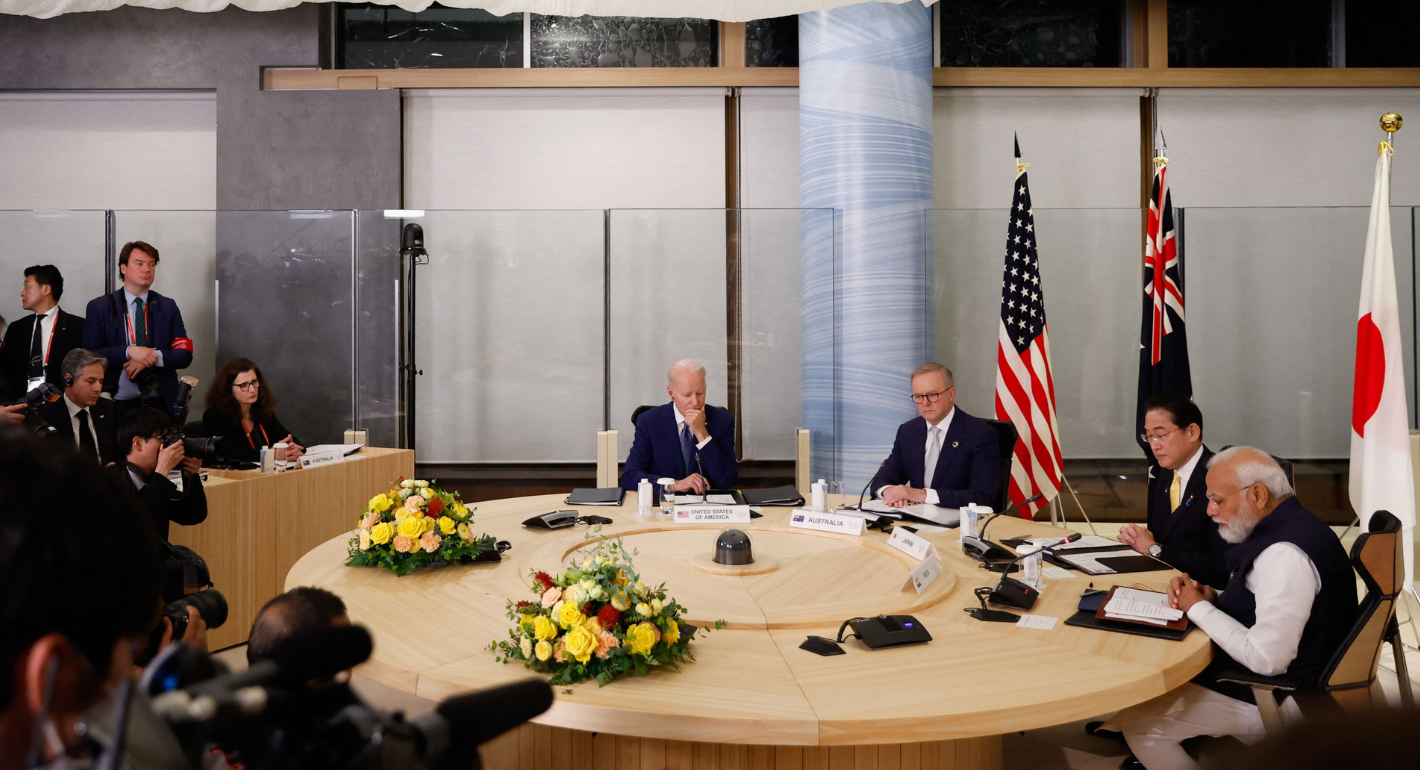
Force posture cooperation between the United States and Australia has seen infrastructure investments and deployments of U.S. forces to Australia that have been unprecedented since the Second World War. These new investments include: space radars, fuel storages, prepositioning of U.S. Army stockpiles, expansion of air bases, and increased rotations of U.S. submarines. This level of investment indicates that Australia is emerging as a southern anchor for U.S. long-range operations against China. This is well complemented by Australia’s own 2024 National Defence Strategy (NDS), which embraces deterrence and improves the Australian Defence Forces’ (ADF) denial capabilities to counter China in Australia’s approaches.
Except, neither the 2023 Defence Strategic Review nor the 2024 NDS describes the intent or direction of Australia’s defense policy as complementary to that of the United States in this way. Australia’s rather vague concept of deterrence is linked to denial in its own approaches rather than multilateral or alliance-level deterrence of conflict in the region. Recent statements of the annual two-plus-two Australia-United States Ministerial Consultations (AUSMIN) summits have even dropped references to multilateral deterrence. Indeed, unlike NATO or the U.S.-Japan alliance, Australia and the United States never refer to their joint decisions or posture as being of “the Alliance.” The idea that the U.S.-Australia alliance expresses a collective identity or community committed to joint action—and, hence, one that should develop shared strategic concepts, plans, and understandings as a basis for closer integration—remains alien to Canberra’s approach to cooperation with Washington. For all the practical—and in reality, still limited—cooperation and enthusiasm about cooperation between two supposedly closely aligned allies, Australia’s own policy does not articulate a strategic concept for force posture cooperation, let alone a shared concept for escalation or the management of escalation stemming from the role of U.S. long-range forces operating out of Australia.
To strengthen the deterrent effect of the U.S.-Australia alliance, the next U.S. administration should seek pragmatic steps that work with, rather than against, this grain of Australia’s current policy realities. Both allies should focus on how their cooperation can contribute to support horizontal escalation in case of a major crisis over Taiwan, and how their defense forces would operate in Australia in the lead-up to and early stages of a conflict.
In particular, the following strategic challenges present opportunities for deepening cooperation between both allies:
The emphasis on littoral operations in Australia’s NDS shows that it is worried about Chinese military activities in the island states of the Southwest Pacific—not least after repeated scares that the Solomon Islands might allow a Chinese presence in the very same areas that saw the battles of Guadalcanal and the Coral Sea in WWII. For the United States, these islands matter because they sit astride the main sea lines of communication from Hawaii to North Australia, and from Australia to Guam and Palau. Both countries have an interest in it being the ADF’s role to provide force protection for U.S. convoys in Australia’s approaches, which raises a host of questions about the timing, scope, command, and purpose of Australian operations that both allies can only tackle together.
With the growth in Chinese bomber, and especially, guided missile submarine (SSGN) capabilities, the West Coast of the United States and Australia’s Southeast and Southwest will stop being safe rear areas, and could come under increasing threat, especially from mines and cruise missiles. While the United States still maintains homeland defense fighter squadrons, Australia does not. Its recent defense policy statements almost exclusively envisage conflict in its northern approaches, but the air force and ground-based air defense are almost certainly too few in number to simultaneously defend the homeland and conduct forward operations. Concepts, capabilities, and forces for defending Pacific ports and sea lines well beyond even the second island chain in the Southern Hemisphere is a shared problem that will require cooperation between the United States and Australia, but also New Zealand and France’s forces in New Caledonia and Polynesia.
European countries in general are increasingly signaling their concerns about Indo-Pacific security through expanding regional deployments, such as the fifty European fighter aircraft and helicopters—in addition to naval forces—that participated in regional exercises in 2024. While Europe’s military power in the Indo-Pacific remains marginal, it can contribute significant economic and defense industrial capacity to multilateral deterrence and defense, especially in a protracted war. Australia and the United States thus share an interest in helping Europe signal its concern through continued military operations in the region, including in crisis situations. Working with the United Kingdom and European member states through the European Air Transport Command to exercise the creation of an air bridge between Europe and Australia solely based on allied bases and tanker aircraft would be an important step to leverage this interest in crisis management and deterrence.
Many of these challenges could be tackled through the development of Graduated Response Plans (GRP): Akin to the GRP developed by NATO after 2014, these would focus on identifying operational and political decision points while developing realistic plans for the movement of forces and preparation for a crisis—while explicitly excluding questions of war strategy and aims that remain politically too difficult to address at the present time.
Achieving closer alignment of U.S. and Australian defense efforts is crucial for multilateral deterrence in the Indo-Pacific, and progress remains possible despite the clear difference in strategic focus and outlook. In the next phase of U.S.-Australia force posture cooperation, success should not just be measured by increased U.S. activity in Australia. Rather, it should be judged by whether it leads to greater cohesiveness between U.S. and Australian force postures, and to the extent which it facilitates the contribution by third-party countries to multilateral deterrence. Although the 2023 DSR and 2024 NDS had little to say on the alliance’s implications for Australia’s national defense effort, the new direction they set for the ADF has opened the door for greater alignment between both allies’ defense preparations. The United States and Australia should grasp this opportunity for the next phase of their force posture cooperation.