

Other
Anders Aslund

REQUIRED IMAGE
According to official statistics, output plunged in almost all Soviet-type countries toward the end of communism. In the first year of transition, the plunges turned even more dramatic, continuing for years. The analysis and conclusions in this paper contrast sharply with the conventional view.
Source: Carnegie
Summary
According to official statistics, output plunged in almost all Soviet-type countries toward the end of communism. In the first year of transition, the plunges turned even more dramatic, continuing for years. The total registered declines in GDP range from 13 percent in the Czech Republic from 1989 to 1992 to 77 percent in Georgia from 1989 to 1994. The analysis and conclusions in this paper contrast sharply with the conventional view.
This paper shows that both communist and post-communist statistics are deeply flawed. First, everywhere the decline in output has been much smaller than perceived, and a few countries grew immediately rather than contracted. Second, the Soviet economy was in far worse shape than generally understood. Third, even after revising the official statistics, the differences between failures and successes remain vast—and the correlation between structural reform and economic performance becomes much stronger. Fourth, flawed statistics misled policy makers in post-communist transformation, inciting them to adopt inefficient gradual reforms, which reinforced rent-seeking and prolonged stagnation. And fifth, economic welfare has diminished far less than output.

Former Senior Associate, Director, Russian and Eurasian Program
Recent Work
Anders Aslund
Anders Aslund
Carnegie India does not take institutional positions on public policy issues; the views represented herein are those of the author(s) and do not necessarily reflect the views of Carnegie, its staff, or its trustees.

On March 10, 2026, India’s Union Cabinet approved amendments to Press Note 3, a regulation that mandated government approval on all foreign direct investment (FDI) from countries sharing a land border with India. This amendment raises questions primarily about whether its stated benefits will materialize and if the risks have been adequately weighed. This piece will address the same.

Konark Bhandari

This piece examines India’s response to U.S. sanctions and tariffs, specifically assessing the immediate market consequences, such as alterations in import costs, and the broader strategic implications for India’s energy security and foreign policy orientation.

Vrinda Sahai

This paper examines the evolution of India-China economic ties from 2005 to 2025. It explores the impact of global events, bilateral political ties, and domestic policies on distinct spheres of the economic relationship.

Santosh Pai

The India-U.S. relationship currently appears buffeted between three “Ts”—TRUST, Tariffs, and Trump.

Arun K. Singh
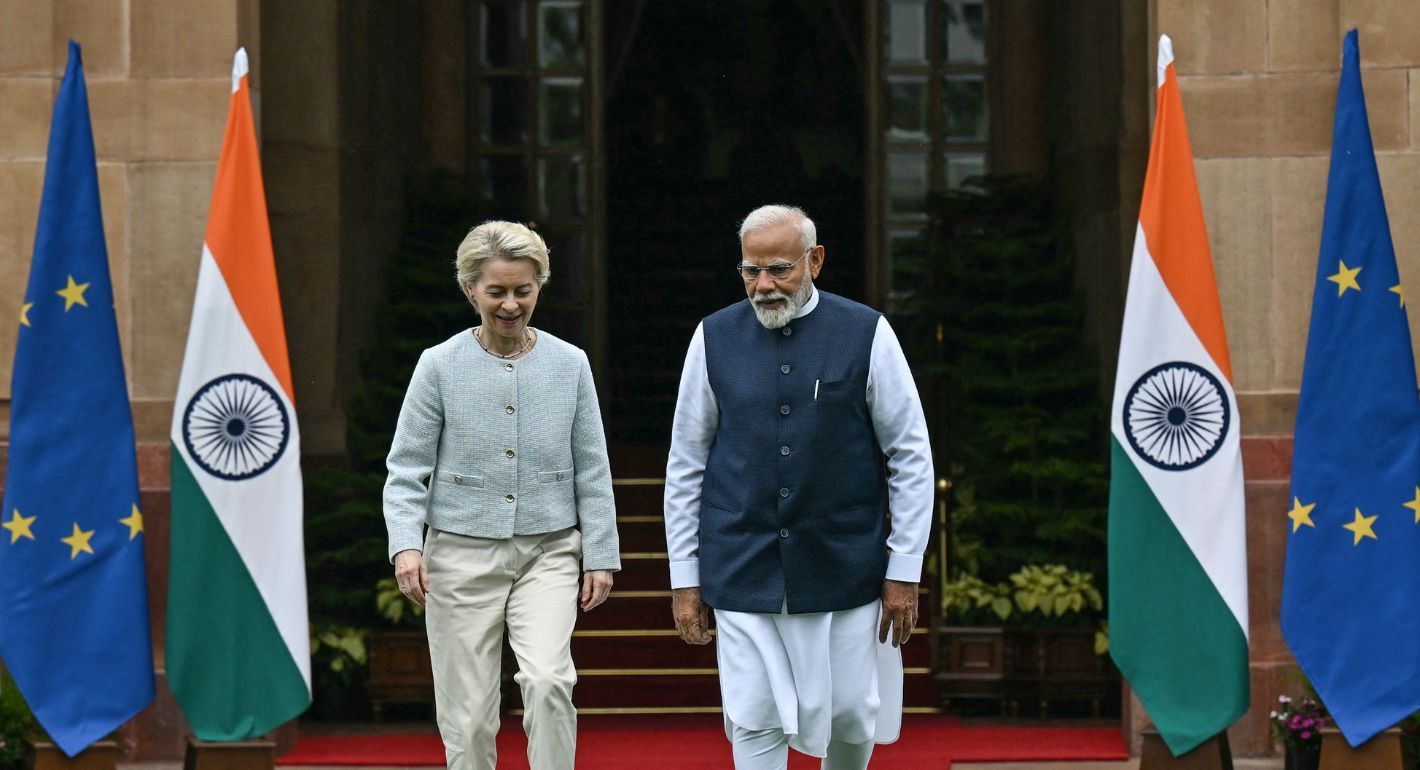
This article argues that the geopolitical circumstances have never been more conducive, not merely for the early conclusion of the free trade agreement (FTA) between India and the EU, but also for crafting a substantive and comprehensive strategic partnership.

Mohan Kumar