

Commentary
How is AI reshaping space security, creating governance challenges, and where does international diplomacy stand today?
Tejas Bharadwaj, Almudena Azcárate Ortega

REQUIRED IMAGE
A major reason why the United States was so unprepared for the terrorist attacks of September 11 is that national threat assessments produced over the past few years have consistently pointed policy-makers in the wrong direction. Partisan political agendas distorted these assessments, and fundamentally misled and misdirected national security resources.
Source: Carnegie
A major reason why the United States was so unprepared for the terrorist attacks of September 11 is that national threat assessments produced over the past few years have consistently pointed policy-makers in the wrong direction. Partisan political agendas distorted these assessments, and fundamentally misled and misdirected national security resources.
During the 1990s, conservative activists and politicians relentlessly attacked existing threat estimates for understating the threat of missile attacks. Michael Dobbs documents the assault in his article "How Politics Helped Redefine the Threat" in The Washington Post of January 14. Congressionally mandated panels produced the two most widely known counter assessments-both chaired by Donald Rumsfeld. The first in 1998, Report of the Commission to Assess the Ballistic Missile Threat to the United States, warned of an urgent threat of attack by ballistic missiles that could be fielded by a hostile state "with little or no warning." The second, in January 2001, Report of the Commission to Assess United States National Security Space Management and Organization, warned just as ominously that we risked a "Pearl Harbor" in space unless we immediately launched an expansive effort to deploy new generations of sensors, satellites and weapons in space.
Together with the 1999 Cox Committee report on alleged Chinese nuclear espionage, these reports fortified the conservative national security vision and heavily influenced political debate, current threat assessments and budgets.
Accordingly, until September 11 the administration's top national security priority had been the deployment of a national missile defense system. Budgeted at $8 billion per year, it is by far the single most expensive weapons program in the budget. Last year, by comparison, $1.7 billion was allocated for combating weapons of mass destruction terrorism.
Senior officials made it their top agenda item in meetings with Russia, China and the allies. Just months before September 11, five cabinet members, including National Security Advisor Condoleezza Rice, traveled to Moscow solely to press for abrogation of the Anti-Ballistic Missile Treaty. As Maureen Dowd wrote in The New York Times on September 5, "Why can George W. Bush think of nothing but a missile shield? Our president is caught in the grip of an obsession worthy of literature."
It is fair to ask whether the September attacks could have been prevented if senior officials and summit meetings had addressed cooperative efforts to defend against terrorism rather than missiles.
Ignored Warnings
Experts have warned of the real dangers for years. The number one conclusion of the Commission on National Security/21st Century, chaired by former senators Gary Hart and Warren Rudman in September 1999 was: "The United States will become increasingly vulnerable to hostile attack on the American homeland, and U.S. military superiority will not entirely protect us." Similarly, the Advisory Panel to Assess Domestic Response Capabilities for Terrorism Involving Weapons of Mass Destruction urged a "national strategy to address the threat of domestic terrorism-conventional, cyber, chemical, biological, radiological and nuclear-from the perspective of deterrence, prevention, preparedness and response."
In January 2001, a special commission chaired by Howard Baker and Lloyd Cutler urged the administration to triple the money spent on securing and eliminating Russia's nuclear weapons and materials. Cutler said, "Our principal conclusions are that the most urgent unmet national security threat for the United States today is the danger that weapons of mass destruction or weapons-usable material in Russia could be stolen and sold to terrorists or hostile nation-states, and used against American troops abroad, or citizens at home."
These concerns were noted in some official threat assessments. In February 2001, Director of the Defense Intelligence Agency Admiral Thomas Wilson told Congress that over the next 12 to 24 months, he feared "a major terrorist attack against United States interests, either here or abroad, perhaps with a weapon designed to produce mass casualties." But the prediction was lost in a long list of other congressional concerns.
These clashing threat assessments often provoked debate between Democrats in Congress and the Republican administration. Chairman of the Senate Armed Services Committee Carl Levin summed up the divide in one such exchange:
"I'm also concerned that we may not be putting enough emphasis on countering the most likely threats to our national security and to the security of our forces deployed around the world, those asymmetric threats, like terrorist attacks on the USS Cole, on our barracks and our embassies around the world, on the World Trade Center, including possible attacks with weapons of mass destruction and cyberthreats to our national security establishment and even to our economic infrastructure."
Deputy Secretary of Defense Paul Wolfowitz defended his assessments and budgets, "But when I think about it, what is different about the two [terrorism and missile defense] is, number one, we have some capability against the terrorist threat today….We have no ability to protect ourselves against ballistic missiles."
These priorities were dead wrong. Congressional inquiries would serve a valuable purpose by examining and eliminating the politicization of threat assessments that left America unprepared for the worst attacks it suffered in decades.
Joseph Cirincione directs the Non-Proliferation Project. This is adapted from a longer article, "Defending America," in the current issue of the Georgetown Journal of International Affairs.
Additional Resources:
Carnegie India does not take institutional positions on public policy issues; the views represented herein are those of the author(s) and do not necessarily reflect the views of Carnegie, its staff, or its trustees.

How is AI reshaping space security, creating governance challenges, and where does international diplomacy stand today?


Tejas Bharadwaj, Almudena Azcárate Ortega

The U.S.–India semiconductor cooperation story is well-stocked with top-level strategic intent. What remains unresolved, however, are some underlying challenges that will determine whether the cooperation actually functions. Three such friction points stand out.

Shruti Mittal
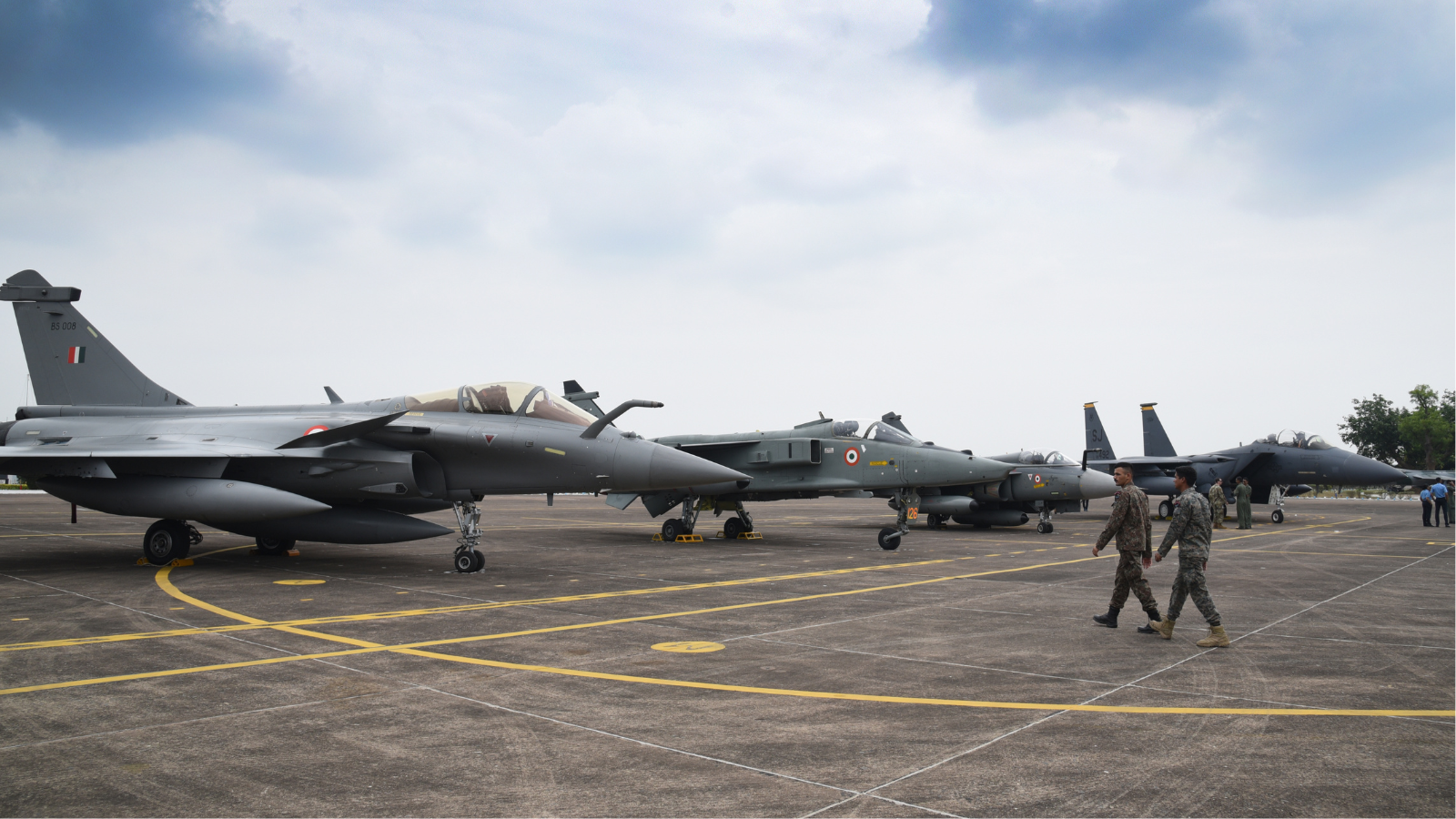
India and the United States are close to concluding a Reciprocal Defense Procurement Agreement (RDPA) that will allow firms from the two countries to sell to each other’s defense establishments more easily. While this may not remedy the specific grievances both sides may have regarding larger bilateral issues, an RDPA could restore some momentum, following the trade deal announcement.

Konark Bhandari

On the last day of the India AI Impact Summit, India signed Pax Silica, a U.S.-led declaration seemingly focused on semiconductors. While India’s accession to the same was not entirely unforeseen, becoming a signatory nation this quickly was not on the cards either.
Konark Bhandari

This piece examines India’s response to U.S. sanctions and tariffs, specifically assessing the immediate market consequences, such as alterations in import costs, and the broader strategic implications for India’s energy security and foreign policy orientation.

Vrinda Sahai