

Commentary
How is AI reshaping space security, creating governance challenges, and where does international diplomacy stand today?
Tejas Bharadwaj, Almudena Azcárate Ortega

REQUIRED IMAGE
One year ago this December 19, Libya announced it was abandoning its nuclear weapon and missile programs after over two decades of trying to build a bomb. Since then, Libya has permitted international officials to inspect 10 previously undisclosed nuclear sites and to remove and destroy all key components of its programs. Libya is a model for how to end a nation’s nuclear weapon program by changing regime behavior rather than by changing the regime.
One year ago this December 19, Libya announced it was abandoning its nuclear weapon and missile programs after over two decades of trying to build a bomb. Since then, Libya has permitted international officials to inspect 10 previously undisclosed nuclear sites and to remove and destroy all key components of its programs. Libya is a model for how to end a nation’s nuclear weapon program by changing regime behavior rather than by changing the regime.
U.S. efforts to end Libya’s weapon programs spanned four presidential administrations. For thirty years, Libya’s mercurial leader, Col. Muammar Qadhafi, had ambitions to become the leader of the Arab world and to raise Libya’s prestige among Islamic and other Third World countries. As part of that effort, Qadhafi sought to obtain nuclear and chemical arms and remained defiant on non-proliferation and arms control issues, especially those related to Israel’s nuclear capability.
These pursuits, and Qadhafi’s support for terrorist groups in the 1970s and 1980s, led to the United Nations and individual countries imposing economic sanctions on Libya. The UN imposed sanctions in 1992 in response to the downing of an airliner over Lockerbie in Scotland in 1988. Some U.S. sanctions were already in place by then, having been imposed in 1986 by President Ronald Reagan. More U.S. sanctions followed in 1992 and 1996.
Decades of sanctions finally had their impact. In the late 1990’s Libya approached the second Clinton administration with hopes of ending international isolation. The Clinton administration made Libyan cooperation in the Lockerbie bombing case a prerequisite to normalizing U.S.-Libya relations. Libya turned over two intelligence officers implicated in the Pan Am 103 attack and the United Nations suspended its sanctions in 1999. The U.S. sanctions remained in place. U.S. officials made clear that Libya would have to address concerns over its weapons programs before U.S. sanctions would be lifted. These discussions continued in the Bush administration.
In March 2003, shortly before the Iraq War began, Musa Kussa, President Qaddafi’s chief of intelligence approached British M16 officials seeking to conclude negotiations for the end of its unconventional weapon programs in exchange for normalization of ties. Some officials and experts link Libya’s decision to President Bush’s national security strategy and the invasion of Iraq. The presence of 250,000 U.S. forces in the region undoubtedly had an impact, but it does not seem that President Qaddafi feared an U.S. invasion of Tripoli. More likely, Qaddafi had concluded that he needed Western contracts and markets more than he needed chemical or nuclear weapons. Whether by design or by chance, the U.S. and the UK struck the right combination of force and diplomacy. Prime Minister Tony Blair seems to have been a decisive influence on President Bush, overcoming opposition from the US Department of Defense to any "deals with dictators." Former State Department official Flynt Leverett, who was involved in these negotiations, notes, "The lesson is incontrovertible: to persuade a rogue regime to get out of the terrorism business and give up its weapons of mass destruction, we must not apply pressure but also make clear the potential benefits of cooperation."
Libya’s Compliance, Qaddafi’s Complaint
Over the past year, British, US and IAEA officials visited 10 previously secret facilities and removed 55,000 pounds of documents and components for Libya’s nuclear and missile programs, including uranium hexaflouride, centrifuge parts, and guidance devices for long-range missiles. The United States also removed Scud-C missiles and their launchers, as well as more than 15 kilograms of fresh highly enriched uranium. Libya destroyed 3,000 chemical munitions, consolidated and secured their stocks of chemical weapons agents and precursors for destruction, and joined the Chemical Weapons Convention. IAEA and U.S. officials have verified that Libya’s disarmament was transparent and almost complete.
In return, the United States lifted all remaining sanctions on Libya in September 2004. President Bush lifted the travel ban on Libya and unfroze all Libyan assets (amounting to $1 billion). Washington and Tripoli have resumed diplomatic ties, although the process of restoring full relations (including an embassy) has slowed down. However, in November 2004, Qadhafi, voiced his disappointment that Libya had not been properly recompensed. This, he noted provided little incentive for countries like Iran and North Korea to dismantle their nuclear programs. He said he needed more security guarantees from the United States, Europe and Japan, as well as "civilian-use technology in return for abandoning military technology". The world now has two very different models for how to eliminate a threatening nation’s nuclear and missile capabilities. The Iraq model of regime change has been enormously costly, chaotic and uncertain. The Libyan model of changing regime behavior has been efficient, effective and almost cost-free. Officials should not stop their efforts now. A little more investment in the transformation of Libya could pay dividends throughout the region for decades to come.
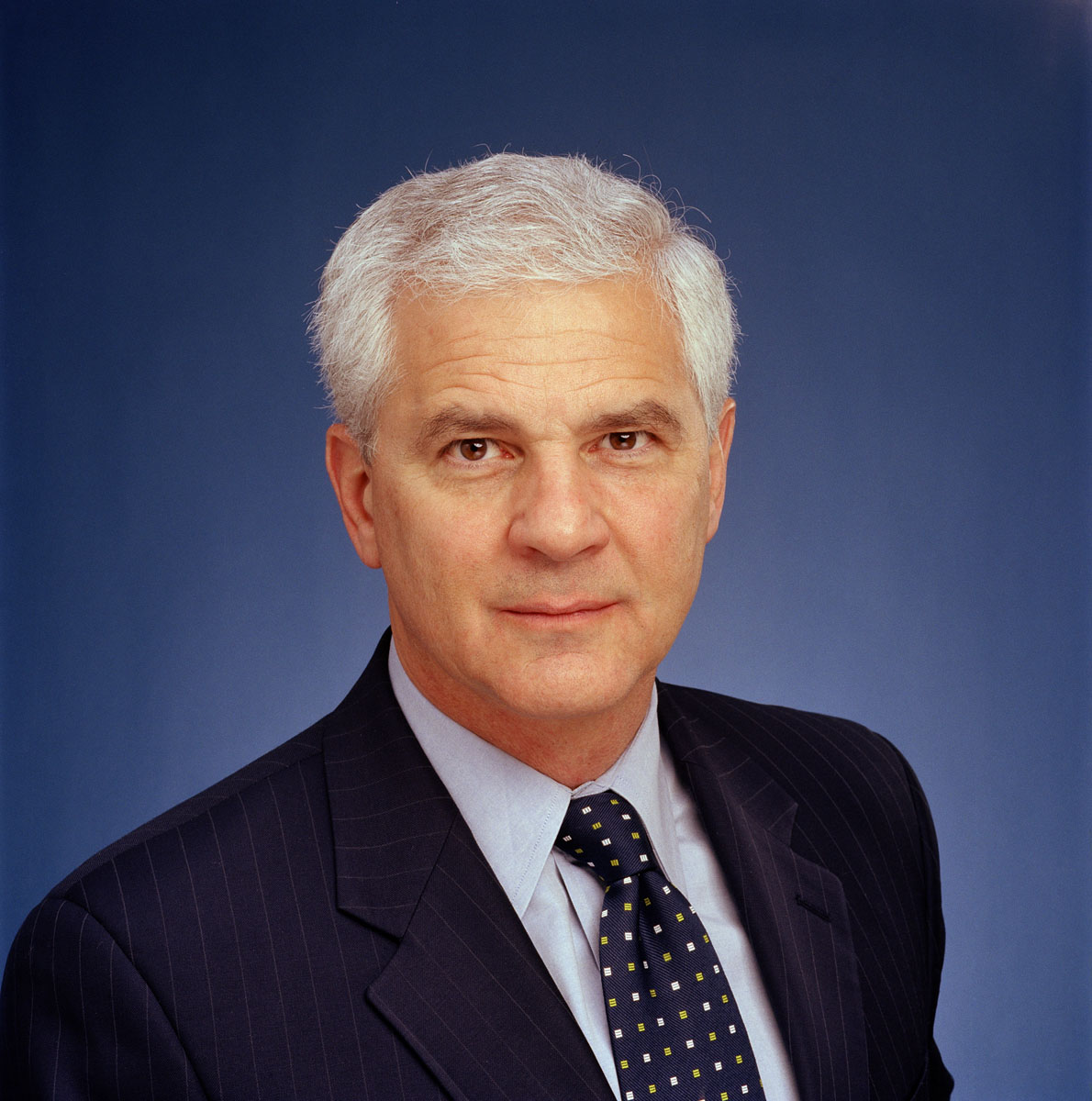
Former Senior Associate, Director for NonProliferation
Revati Prasad
Carnegie India does not take institutional positions on public policy issues; the views represented herein are those of the author(s) and do not necessarily reflect the views of Carnegie, its staff, or its trustees.

How is AI reshaping space security, creating governance challenges, and where does international diplomacy stand today?


Tejas Bharadwaj, Almudena Azcárate Ortega

After the chill in ties between 2020 and 2024 that brought India–China relations to their lowest point in several decades, the two countries have engaged each other afresh. This paper argues that there are predominantly four imperatives guiding India’s approach to China, and they exist in an order of priority.

Saheb Singh Chadha

This piece argues that India’s central challenge is not managing a single flashpoint but resolving the underlying tension between expansion and institutional coherency of the BRICS grouping.

Vrinda Sahai

A partnership between India, a country of subcontinental size, and Africa, a continent of fifty-four countries, may seem asymmetric until one notes that both are home to nearly the same number of people—1.4 billion. This essay spells out the existing challenges to the partnership, its optimal potential, and the possible pathways to realize it over the next quarter-century.

Rajiv Bhatia

The U.S.–India semiconductor cooperation story is well-stocked with top-level strategic intent. What remains unresolved, however, are some underlying challenges that will determine whether the cooperation actually functions. Three such friction points stand out.

Shruti Mittal