

Commentary
How is AI reshaping space security, creating governance challenges, and where does international diplomacy stand today?
Tejas Bharadwaj, Almudena Azcárate Ortega

REQUIRED IMAGE
The staggering 19-kiloton magnitude of the Trinity explosion surpassed even the expectations of Los Alamos Director J. Robert Oppenheimer. Sixty years ago this week, Los Alamos scientists tested the first nuclear weapon at the Trinity Site near Alamogordo, New Mexico. The test, which General Leslie Groves described as "a blinding flash of light," was a milestone of the Manhattan Project, the first large-scale effort to build a nuclear bomb. The unqualified military and scientific achievement of the Trinity test led to the devastating bombings of Hiroshima and Nagasaki, cementing the decisive U.S. victory over Japan in World War II. Trinity brought to fruition the complex, multi-pronged effort to organize fissile materials production, perfect bomb designs, assemble the fissile materials in weapons, and stage the first successful test of an implosion-type weapon. (Read More)
The staggering 19-kiloton magnitude of the Trinity explosion surpassed even the expectations of Los Alamos Director J. Robert Oppenheimer. Sixty years ago this week, Los Alamos scientists tested the first nuclear weapon at the Trinity Site near Alamogordo, New Mexico. The test, which General Leslie Groves described as “a blinding flash of light,” was a milestone of the Manhattan Project, the first large-scale effort to build a nuclear bomb. The unqualified military and scientific achievement of the Trinity test led to the devastating bombings of Hiroshima and Nagasaki, cementing the decisive U.S. victory over Japan in World War II. Trinity brought to fruition the complex, multi-pronged effort to organize fissile materials production, perfect bomb designs, assemble the fissile materials in weapons, and stage the first successful test of an implosion-type weapon.
What started as a small scientific effort to evaluate the military application of nuclear fission rapidly grew into one of the most expensive projects during World War II. The Manhattan Project established three different labs: Oak Ridge, Hanford, and Los Alamos. Oak Ridge and Hanford produced the first major stockpiles of fission materials that were sent to Los Alamos to be assembled into weapons. The gaseous diffusion plants and electromagnetic separation facilities at Oak Ridge produced fissionable uranium at two different sites, K-25 and Y-12. Oak Ridge also had a pilot-scale plutonium production facility, but it was at Hanford laboratory where nuclear reactors would separate plutonium on large enough scales to be sent to Los Alamos to build the bombs.
Los Alamos scientists, led by Oppenheimer, were working on two different bomb designs: a simple gun-type uranium bomb and an implosion-type plutonium bomb. The team was confident, even without testing, that the uranium bomb would work. A gun-type nuclear weapon involves two subcritical parts of uranium. When one uranium part is shot into the other, the rapid combining of the two creates a critical mass, leading to a chain reaction and a nuclear explosion. The scientists assembled the gun-type weapon with uranium from Oak Ridge. This previously untested weapon, known as "Little Boy," was dropped on Hiroshima, Japan on August 6, 1945, devastating the city.
The second bomb design had variables that could not be determined without a test. The implosion-type design involves conventional explosions surrounding the mass of plutonium. The supersonic shockwaves produced by the conventional explosions create an inward force great enough compress the plutonium to critical mass, setting off a nuclear chain reaction. Los Alamos scientists feared that if the conventional weapons did not detonate uniformly, critical mass would not be achieved, and the weapon would become a "dud." Trinity was the first test of the implosion design. The scientists hoisted the assembled weapon, which they nicknamed "Gadget", atop a 100-foot tower. The weapon consisted of a plutonium core weighing 6.1 kilograms, roughly the size of an orange. At 5:29:45a.m., the bomb exploded, yielding a 19-kiloton blast. This was the type of weapon that the U.S. dropped on Nagasaki, Japan three days after Hiroshima.
The devastation caused by both Hiroshima and Nagasaki was on a comparable scale, but the process for developing the gun-type weapon was simpler. The inherent complexity of the implosion-type bomb design makes it a more difficult process to replicate. On the other hand, gun-type weapons are easier to assemble, making them more attractive to first-users. Today, a terrorist organization would be more likely to employ this uranium design. This is why so many experts and officials call for the acceleration of government programs to eliminate and secure all stockpiles of highly-enriched uranium before terrorists can get their hands on them.
For more information on nuclear weapons designs, see Chapter 3 of the new Carnegie study, Deadly Arsenals: Nuclear, Biological, and Chemical Threats. Click here for ordering information.
For more information on securing nuclear materials, see Chapter 4 of the March 2005 Carnegie Report, Universal Compliance: A Strategy for Nuclear Security. To download the full pdf of the report, click here.
Caterina Dutto
Former Research Assistant
Carnegie India does not take institutional positions on public policy issues; the views represented herein are those of the author(s) and do not necessarily reflect the views of Carnegie, its staff, or its trustees.

How is AI reshaping space security, creating governance challenges, and where does international diplomacy stand today?


Tejas Bharadwaj, Almudena Azcárate Ortega

The U.S.–India semiconductor cooperation story is well-stocked with top-level strategic intent. What remains unresolved, however, are some underlying challenges that will determine whether the cooperation actually functions. Three such friction points stand out.

Shruti Mittal
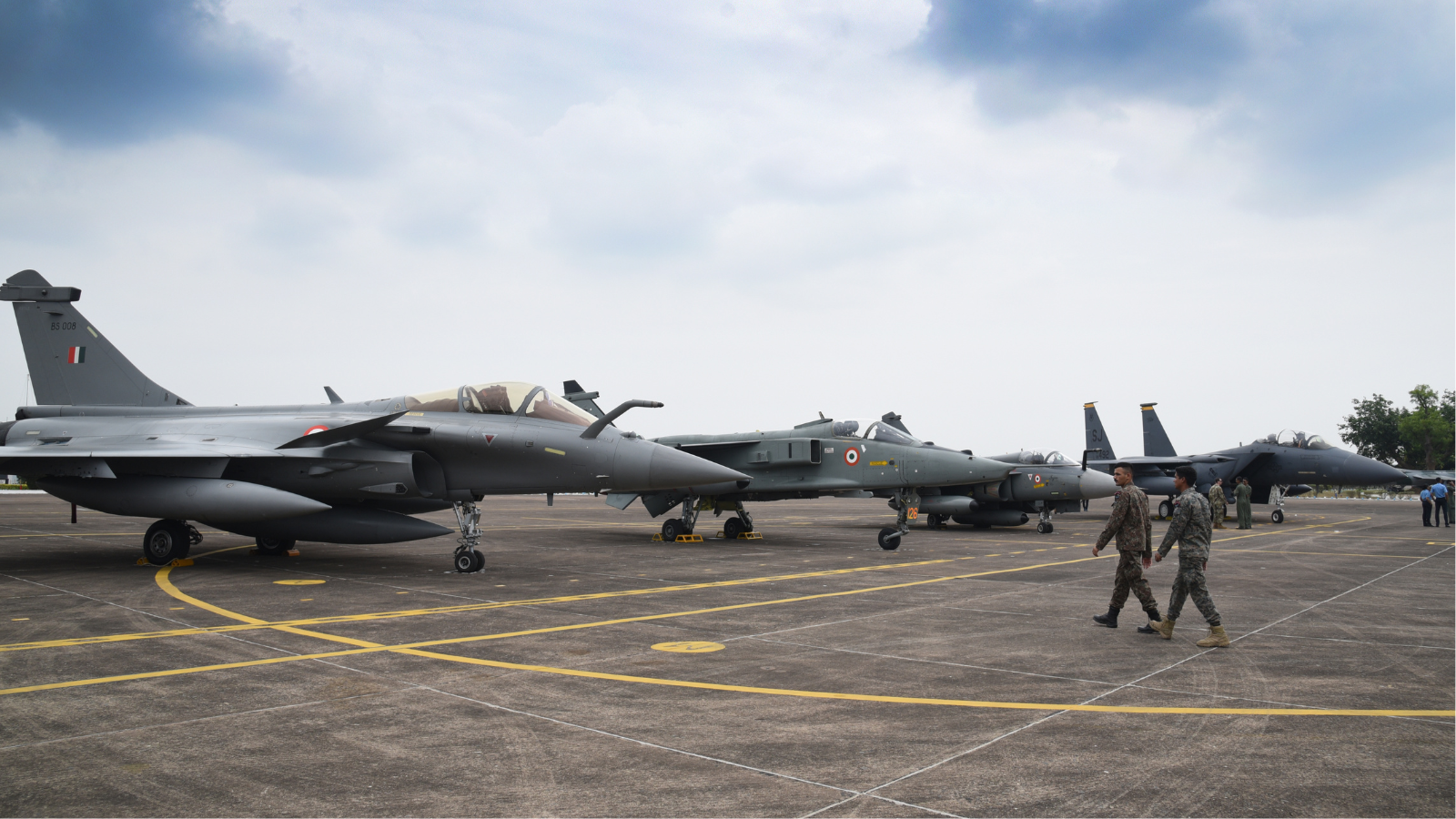
India and the United States are close to concluding a Reciprocal Defense Procurement Agreement (RDPA) that will allow firms from the two countries to sell to each other’s defense establishments more easily. While this may not remedy the specific grievances both sides may have regarding larger bilateral issues, an RDPA could restore some momentum, following the trade deal announcement.

Konark Bhandari
On the last day of the India AI Impact Summit, India signed Pax Silica, a U.S.-led declaration seemingly focused on semiconductors. While India’s accession to the same was not entirely unforeseen, becoming a signatory nation this quickly was not on the cards either.
Konark Bhandari

This piece examines India’s response to U.S. sanctions and tariffs, specifically assessing the immediate market consequences, such as alterations in import costs, and the broader strategic implications for India’s energy security and foreign policy orientation.

Vrinda Sahai