

Paper
George Perkovich

REQUIRED IMAGE
Rather than being primarily composed of a shadowy subversive network of international terrorists, most of the central players in the A.Q. Khan proliferation network were well-to-do Anglo-Saxons. They were clever and exploited voids in national and international export control laws to sell their wares. Greed was their central motivation.
Pulitzer-prize winning journalist, Steve Coll traveled to Europe and South Africa to interview key technology providers in the A.Q. Khan network. His fascinating article in the August 7 & 14 issue of The New Yorker corrects some convenient-but-self-deluding assumptions that many in the West make regarding the Khan network and proliferation in general.
Rather than being primarily composed of a shadowy subversive network of international terrorists, most of the central players in the Khan proliferation network were well-to-do Anglo-Saxons. They were clever and exploited voids in national and international export control laws and ambiguities of dual-use technology, to sell their wares for use in Pakistan, Libya, Iran and other countries. Greed was their central motivation.
But what’s most poignant is their banality and the ease with which they use inequities between nuclear ‘haves’ and ‘have nots’ to rationalize their greedy actions. While it is tempting to dismiss these cynical justifications it also possible to explore them for clues into the current difficulties in strengthening enforcement of nonproliferation rules.
Conventional wisdom – produced by analysts and officials who happen to live in countries with nuclear weapons -- holds that security interests drive acquisition of nuclear weapons. A prominent corollary is that American or Russian or French nuclear arsenals do not cause Pakistan, North Korea, Iran and others to seek the bomb. This is largely incorrect – there are causal links between the five original nuclear powers and most subsequent proliferators.
Yet, whether right or wrong, the causality argument misses the key point today: the inequity of the nuclear order corrupts efforts to rally the world to enforce its rules. The current imbalanced nuclear environment reduces the impetus for governments and individuals to fully invest in nonproliferation. Whatever motivates new actors to seek nuclear weapons, we need to motivate everyone else to bear some of the economic and political costs of cooperation to enforce nonproliferation rules, whether through toughening export controls, joining the Proliferation Security Initiative, imposing sanctions, and even authorizing use of force. The lack of commitment by the “haves” to end nuclear double standards undermines the commitment of others to enforce them. The continued high value that the U.S., Russia, China, France, India, Pakistan and Israel put on nuclear arsenals provides a ready excuse for others to break the rules or shun the burdens of enforcing them. Reluctance to enforce is not justified, and even less so can rationalizations of proliferation be tolerated. But those who want to prevent proliferation and enforce a rule-based international security system must confront the hazards of nuclear inequity in order to rally support internationally for their cause.
There is some good news, however, lying beneath the lame attempts to justify complicity with proliferation. Even greedy and unscrupulous nuclear weapon proliferators feel a need to morally justify their actions. The ex ante rationalizations of nuclear proliferators reveals that there exists a vague notion of a moral principle that most people – even proliferators – think should guide the nuclear order. This principle is based on a single, equitable standard: either no one should have nuclear weapons, or, if some have them, then the opportunity to develop them should be open to all. This sense of fairness and equity is enshrined in the Nuclear Nonproliferation Treaty, which favors eventual elimination of all nuclear arsenals. But the principle has been ignored in practice recently. Unless and until there is a greater commitment to nuclear equity, or an effective campaign to convince people that the discriminatory nuclear order is in everyone’s best interest because it improves everyone’s security and is therefore fair, it will be increasingly difficult to enforce nonproliferation norms and rules.
The following passages from Coll’s article illustrate these points. Again, the flawed characters of the men profiled by Coll cannot be excused. The point is to learn larger lessons from them.
Daniel Geiges is a sixty-eight year old Swiss engineer who has lived in South Africa since 1969. Among other things, he is alleged to have participated in the illicit supply to the Libyan nuclear weapon project.
“Look, for me it was in the first place a job which I’d been taught to do…I was three years away from retirement, and rocking the boat at that stage was simply not an option.” He told Coll he felt he “‘had basically two options.’ He could ‘do it to my best ability, and within the given parameters, or I run to the authorities with a slim chance of making a fool of myself if it turns out that the whole thing could be legalized.’ If he became a whistle-blower, he thought, he would likely have to ‘[lose] a job and accept cuts in my retirement benefits – and become a pariah which no other employer would touch.’”
Two years into manufacturing for the illicit deal, Geiges realized the customers must be Middle Eastern. Then he justified his action in the following way, according to Coll’s account, highlighting the limited capacity of P-1 centrifuges. “‘On the basis of five grams per hour, if you run the cascade for three hundred and sixty-five days, twenty-four hours a day, you’ll end up with just under twenty-four kilograms of material.”
“‘“Right,’” I [Coll] said. “‘One bomb.’”
“‘“Ja,’” he agreed.”
“‘Maybe all you need, depending on what you want,’” I [Coll] said.”
“‘Ja, but on that basis it would have taken about two hundred years to catch up with the Israelis.’”
Peter Griffin is another central supplier in the Khan network. A British citizen, the retired Griffin now lives in France. He was a long-time supplier to Pakistan’s nuclear program and the Khan network.
Griffin recalled a conversation with British customs investigators who wondered why he would do something as immoral and dangerous as help Pakistan acquire the bomb. Griffin told Coll, “‘And I said, ‘Well, so what?’ I said, ‘I believe that if everybody’s got a big stick that’s more security for the world than only a couple of people having big sticks.’”
Coll ends his story with a Griffin soliloquy on proliferation. “‘The view I held then, and I hold now – is that the intention of the five, six, seven, eight, whoever got nuclear technology, they want to keep it for themselves, so they can become the Arabs of the future. When the oil runs out, they hold the resources for world energy, and they will then sell it to those countries, if they want to – if they don’t want to, they won’t sell it. So I think it is a dog-in-the-manger attitude to protect future income for the oil companies when oil runs out.’ In the meantime, he [Griffin] said, it behooved oil-producing countries like Iran to use their income to develop nuclear technology.”
In March, 2005 in Tehran, Akbar Hashemi Rafsanjani used almost the exact same words to explain why Iran must have the full nuclear fuel cycle even though it has large oil and natural gas reserves. Rafsanjani, of course, like Geiges and Griffin, also invoked the double standard of big power silence on Israel’s nuclear arsenal.
It is natural for people to marshal inequities to justify actions they would undertake anyway for greed or power, but another dangerous application of this moral call may come in the form of inaction. If the belief that the current system is unfair continues to spread, actors in many countries will short-sell their political and resource investments in strengthening compliance with nonproliferation rules. Such justifications should not impede enforcement of international rules and security interests. Yet, enforcement takes international cooperation, which in turn is often a political challenge. As a political matter, then, enforcement requires attention to the problems posed by inequities so that future proliferators or lax enforcers may not shroud themselves in moral principle when they evade international law.

Japan Chair for a World Without Nuclear Weapons, Senior Fellow
George Perkovich is the Japan Chair for a World Without Nuclear Weapons and a senior fellow in the Carnegie Endowment for International Peace’s Nuclear Policy Program. He works primarily on nuclear deterrence, nonproliferation, and disarmament issues, and is leading a study on nuclear signaling in the 21st century.
Recent Work
George Perkovich
George Perkovich
Carnegie India does not take institutional positions on public policy issues; the views represented herein are those of the author(s) and do not necessarily reflect the views of Carnegie, its staff, or its trustees.
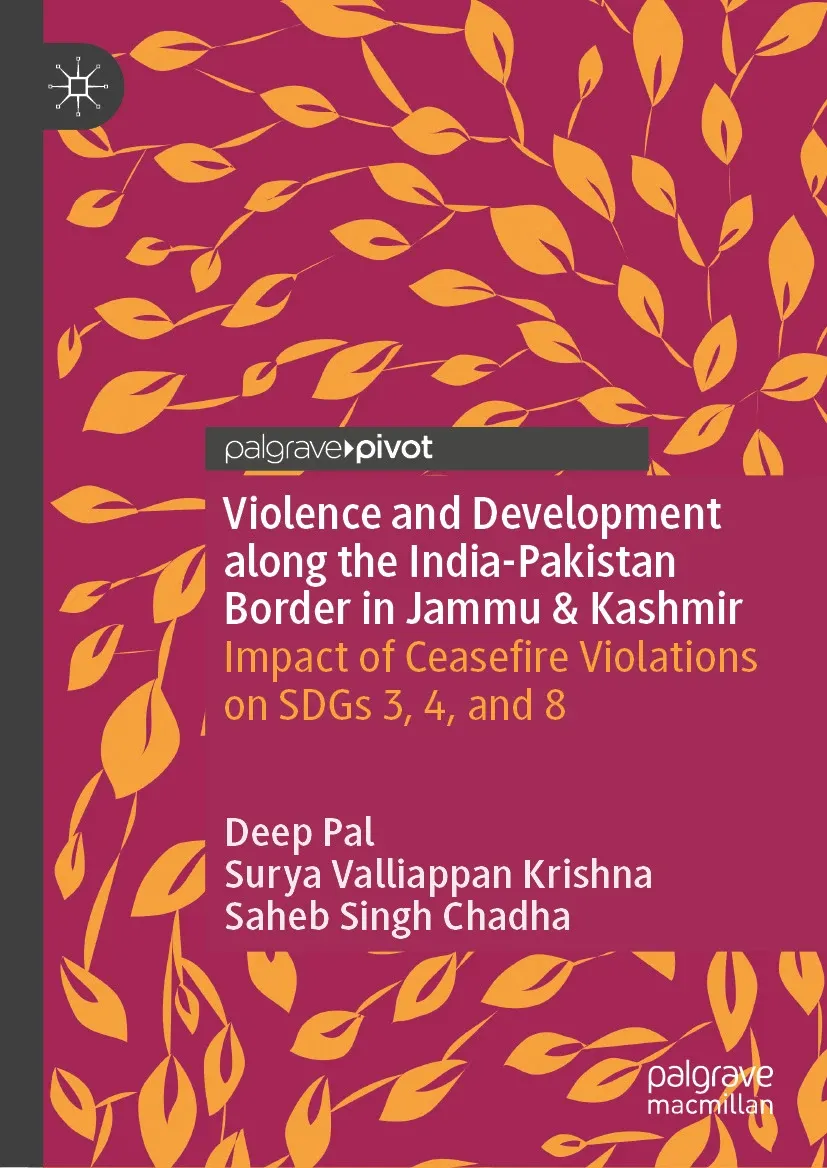
This book examines the impact of cross-border violence on communities living along the Line of Control and the International Border in Jammu and Kashmir, India.


Deep Pal, Surya Valliappan Krishna, Saheb Singh Chadha
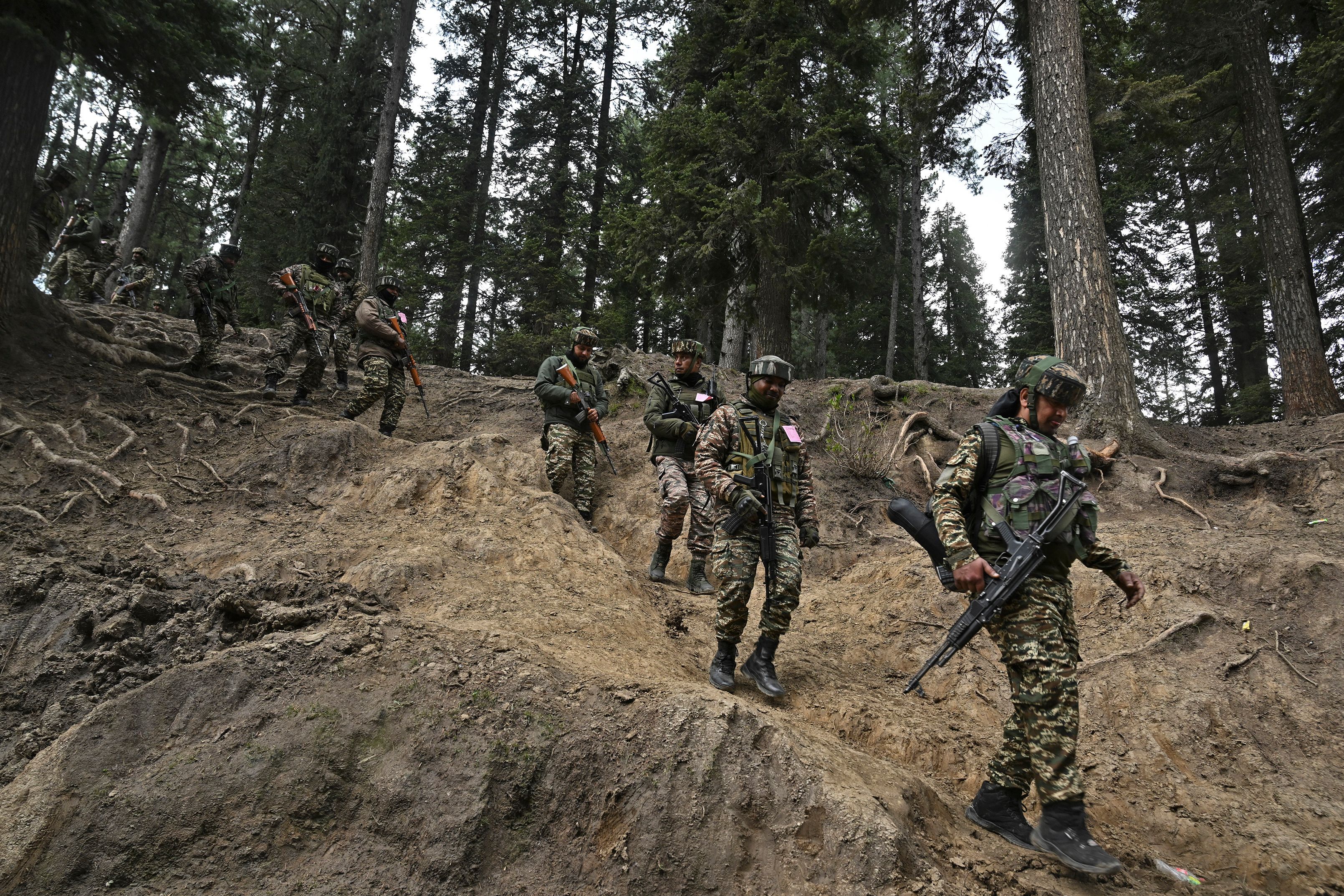
On May 7, 2025, between 1:05 and 1:30 a.m. (IST), airstrikes carried out by the Indian Air Force hit nine locations inside Pakistan and Pakistan occupied Kashmir (PoK). It was codenamed Operation Sindoor.

Rudra Chaudhuri
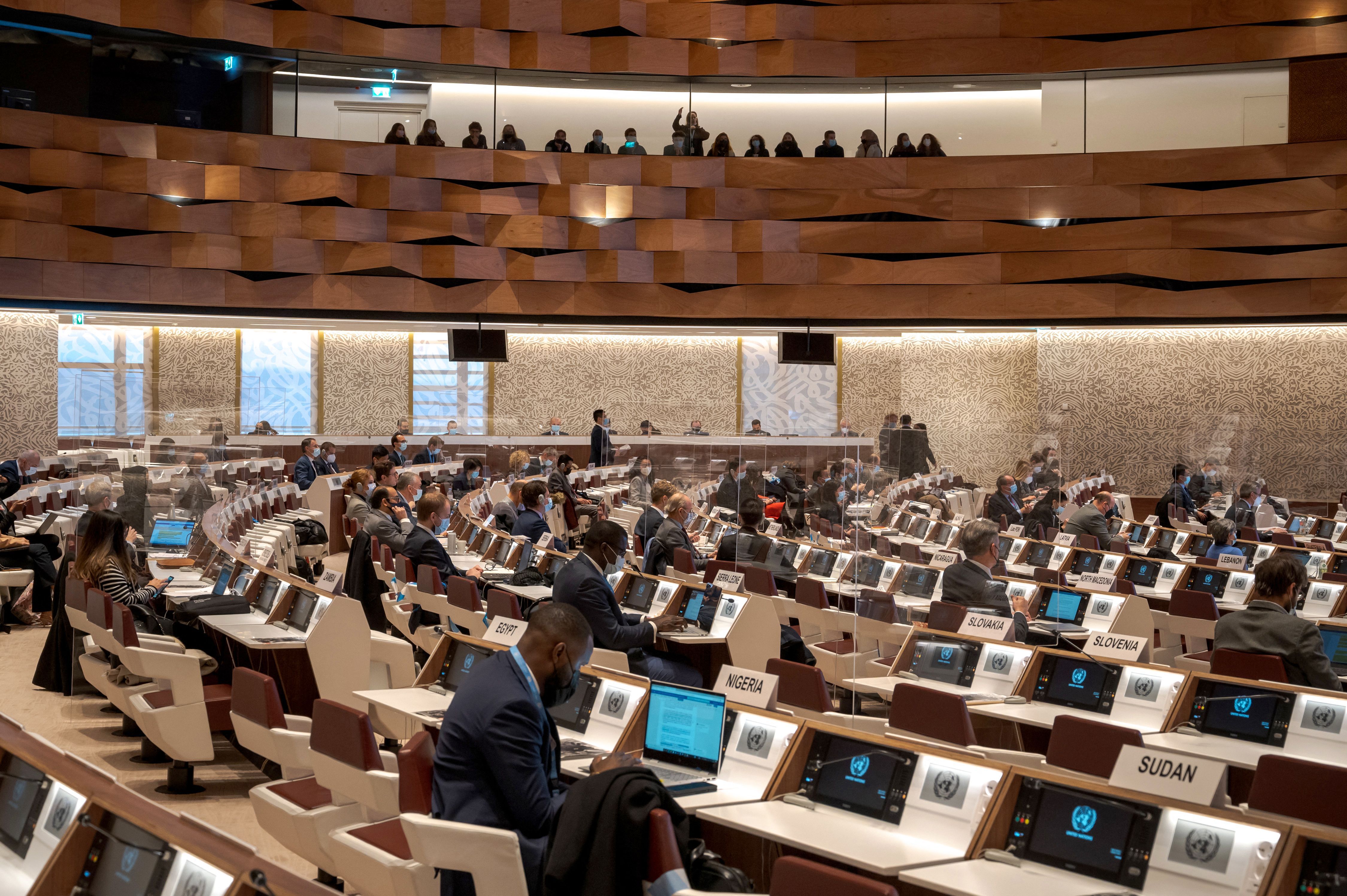
This article explores the global debate on lethal autonomous weapons systems (LAWS), highlighting the convergences, complexities, and differences within and beyond the UN Group of Governmental Experts (GGE) on LAWS. It further examines India’s key position at the GGE and the probable reasons behind them.


Charukeshi Bhatt, Tejas Bharadwaj

This essay is the first of a three-part series that will seek to understand the considerations for building compute capacity and the different pathways to accessing compute in India. This essay delves into the meaning of compute and unpacks the various layers of the compute stack.


Aadya Gupta, Adarsh Ranjan

This piece examines the strategic implications of Bhutan’s diplomatic efforts amid its border dispute with China, highlighting the thin ice it walks on to achieve a resolution without compromising its vital relationships.

Shibani Mehta