

Commentary
How is AI reshaping space security, creating governance challenges, and where does international diplomacy stand today?
Tejas Bharadwaj, Almudena Azcárate Ortega

REQUIRED IMAGE
In this Carnegie Paper, "Illusive Reform: Jordan's Stubborn Stability," Julia Choucair argues that Jordan's stability is best maintained through political reform. She contends that the United States and Europe, for short to medium-term reasons, have shied away from urging Jordan to undertake further reform, which would be in everyone's long-term interests.
Political reform is a priority for United States Middle East policy, and Jordan is often showcased as a model of a moderate pro-American Muslim country that is successfully democratizing. For two decades, the Jordanian monarchy has introduced positive reforms, such as legalizing political parties and modernizing its economy. Yet the impact on democratic change has been limited, with the reforms serving more to stabilize the regime amid severe regional and economic challenges.
Today, deteriorating conditions on Jordan’s borders, a lack of tangible economic success, and an unpopular foreign policy are emboldening an increasingly vocal Islamist opposition movement while simultaneously eroding the regime’s traditional support base. Jordan faces a critical choice: either to promote more meaningful democratic reform, or risk undermining many years of progress by limiting political freedoms.
In this Carnegie Paper, Illusive Reform: Jordan’s Stubborn Stability, Julia Choucair argues that Jordan’s stability is best maintained through political reform. She contends that the United States and Europe, for short to medium-term reasons, have shied away from urging Jordan to undertake further reform, which would be in everyone’s long-term interests.
Choucair urges the U.S. and Europe to press the Jordanian regime-- in both public and private statements and by leveraging economic aid -- to deepen formal and informal channels of communication and representation; and to acknowledge the demands of Jordanian activists by, for example, expanding legislative powers, adopting new press legislation, decreasing regulations on NGOs, and undertaking electoral reform.
Julia Choucair is an associate in the Democracy and Rule of Law Project and serves as deputy editor of Carnegie’s e-monthly, the Arab Reform Bulletin. Her research focuses on political reform trends in the Arab world, with attention to the state of debates over reform in Arab policy circles and the measures Arab states need to take to advance the overall process of reform.
Julia Choucair-Vizoso
Former Editor in Chief, Sada
Julia Choucair Vizoso is editor in chief of the online journal, Sada. Her research interests include Middle Eastern politics, authoritarianism, and identity politics.
Carnegie India does not take institutional positions on public policy issues; the views represented herein are those of the author(s) and do not necessarily reflect the views of Carnegie, its staff, or its trustees.

How is AI reshaping space security, creating governance challenges, and where does international diplomacy stand today?


Tejas Bharadwaj, Almudena Azcárate Ortega

The U.S.–India semiconductor cooperation story is well-stocked with top-level strategic intent. What remains unresolved, however, are some underlying challenges that will determine whether the cooperation actually functions. Three such friction points stand out.

Shruti Mittal
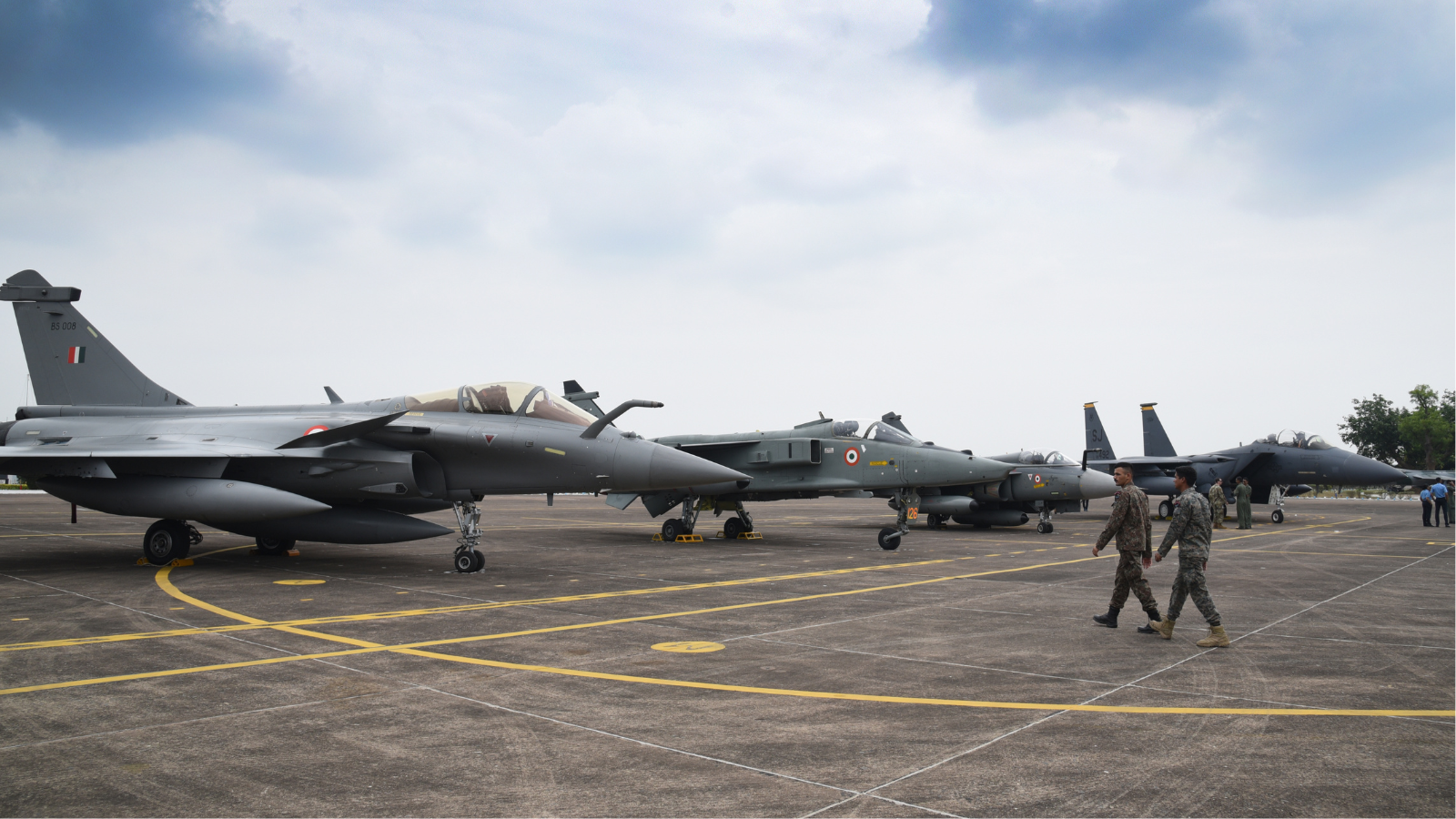
India and the United States are close to concluding a Reciprocal Defense Procurement Agreement (RDPA) that will allow firms from the two countries to sell to each other’s defense establishments more easily. While this may not remedy the specific grievances both sides may have regarding larger bilateral issues, an RDPA could restore some momentum, following the trade deal announcement.

Konark Bhandari

On the last day of the India AI Impact Summit, India signed Pax Silica, a U.S.-led declaration seemingly focused on semiconductors. While India’s accession to the same was not entirely unforeseen, becoming a signatory nation this quickly was not on the cards either.
Konark Bhandari

This piece examines India’s response to U.S. sanctions and tariffs, specifically assessing the immediate market consequences, such as alterations in import costs, and the broader strategic implications for India’s energy security and foreign policy orientation.

Vrinda Sahai