

Commentary
How is AI reshaping space security, creating governance challenges, and where does international diplomacy stand today?
Tejas Bharadwaj, Almudena Azcárate Ortega
Source: Getty
The global economy is still contracting although there are a growing number of signs that the pace of contraction is slowing in many economies.
The Real Economy: Output, GDP, and Inflation
The global economy is still contracting although there are a growing number of “green shoots” of recovery indicating that the pace of contraction is slowing in many economies.
U.S. GDP shrank at an annual rate of 6.1 percent in the first quarter of 2009, mirroring the fourth quarter’s 6.3 percent plunge. However, the composition of the first quarter’s decline was notably different, as inventories declined accounted for 2.8 percent of the drop. This massive inventory drawdown, along with a surprising 2.2 percent rebound in consumer spending, offers a ray of hope for the struggling US economy. Other positive signs emerged as the Conference Board Consumer Confidence Index soared to 39.2 in April from 26.9 in March, initial jobless claims decreased by 14,000 in the week that ended April 25, and the Institute for Supply Management’s factory index rose to 38.4 from 36.3 in March.
Consumer confidence and retail sales showed more positive signs in Europe last week. The Confederation of British Industry's Distributive Trades Survey balance rose to +3 in April from -44 in March, the highest level in more than a year. The U.K’s Purchasing Manager’s Index (PMI) climbed to 42.9 from a revised 39.5 the previous month. Consumer sentiment in the euro-zone rose to 67.2, the first increase since May 2008, up from 64.7 in March. However, unemployment (a lagging indicator) in the euro area jumped to 8.9 percent in March, the highest level in more than three years. Inflation held at 0.6 percent in April, the lowest since 1996. Spain’s economy contracted 1.8 percent in the first three months compared with a 1 percent contraction in the fourth quarter.
Industrial production (IP) reports from Asia show some signs of relief. Japan’s IP rose 1.6 percent in March from February, the first time in six months. South Korea’s IP was up 5.2 percent from February, while Thailand’s IP improved by 2.5 percent in the same period. In another sign of recovery, manufacturing in China further improved at the start of the second quarter as Purchasing Manager’s Index rose to a seasonally adjusted 53.5 in April from 52.4 in March. Yet despite these very encouraging signs that the cycle may be turning, unemployment worsened in Japan as it climbed to 4.8 percent from 4.4 percent in February. Japan’s retail sales fell for a seventh month in March as it slid 3.9 percent from a year earlier, the steepest pace since February 2002.
Economic Policy
Major central banks kept their interest rate on hold last week. The Federal Reserve and the Bank of England have already taken their benchmark interest rates just about as low as they will go — in the U.S, the Fed funds rate is down in a range between zero and 0.25 percent while in Britain the key rate has fallen to 0.5 percent. The Federal Reserve also held off from making any further announcements on whether they would increase purchases of bonds as part of the quantitative easing program. The Bank of Japan kept interest rates unchanged at 0.1 percent last week. Malaysia’s central bank also kept its key interest unchanged at 2 percent, after having cut rates for three consecutive months. However, the Brazilian central bank cut interest rates by 1 percent to 10.25 percent. The European Central Bank also hinted at future cuts, which are expected to lower the interest rate by a quarter point to one percent.
U.S. Congress passed a $3.5 trillion budget outline for 2010.The new budget would set up special funds to pay for sweeping changes in health care, energy and education. The government said the plan would cut the federal deficit—which is projected to total $1.2 trillion in fiscal year 2010—by more than half in five years.
Financial Markets
Concerns that swine flu would spread to other parts of the world weighed on equities at the beginning of last week. However, growing hopes of a global economic recovery helped equities close higher. Global stocks stayed near three-and-a-half-month highs last week. All three major U.S stock indices ended higher for the week. The Dow Jones, the Nasdaq, and the S&P 500 gained 1.7 percent, 1.8 percent and 1.3 percent, respectively.
In global trading, Asian and European equity markets mostly ended the week higher. The UK FTSE 100, the German DAX and the French CAC were up by 2.1 percent, 2 percent and 1.8 percent respectively. The Japanese Nikkei 225 gained 3.1 percent, to close at 8977.4.
The MSCI world equity index ended April with the biggest monthly gain in its 20-year history, up 10.9 Percent. The MSCI Emerging Markets Index climbed 16.3 percent last month.
Global bonds had a mixed performance last week. U.S. Treasury prices slipped, raising the yield on the benchmark 10-year note to 3.18 percent from 2.99 percent a week ago. Japan 10-year bond yields dropped 2.1 percent last week while U.K 10-year yield managed to rise 1.4 percent. The overnight U.S. Libor rate rose to 0.24 percent from 0.21 percent one week ago.
In the foreign exchange market, the dollar weakened as investors ventured back into higher-yielding currencies, a sign of increased confidence. The US dollar ended weaker against the British pound and the euro, closing at $1.49 and $1.33 respectively from $1.48 and $1.32. The dollar gained against the yen, closing at ¥99.1 from ¥97.1.
Carnegie India does not take institutional positions on public policy issues; the views represented herein are those of the author(s) and do not necessarily reflect the views of Carnegie, its staff, or its trustees.

How is AI reshaping space security, creating governance challenges, and where does international diplomacy stand today?


Tejas Bharadwaj, Almudena Azcárate Ortega

The U.S.–India semiconductor cooperation story is well-stocked with top-level strategic intent. What remains unresolved, however, are some underlying challenges that will determine whether the cooperation actually functions. Three such friction points stand out.

Shruti Mittal
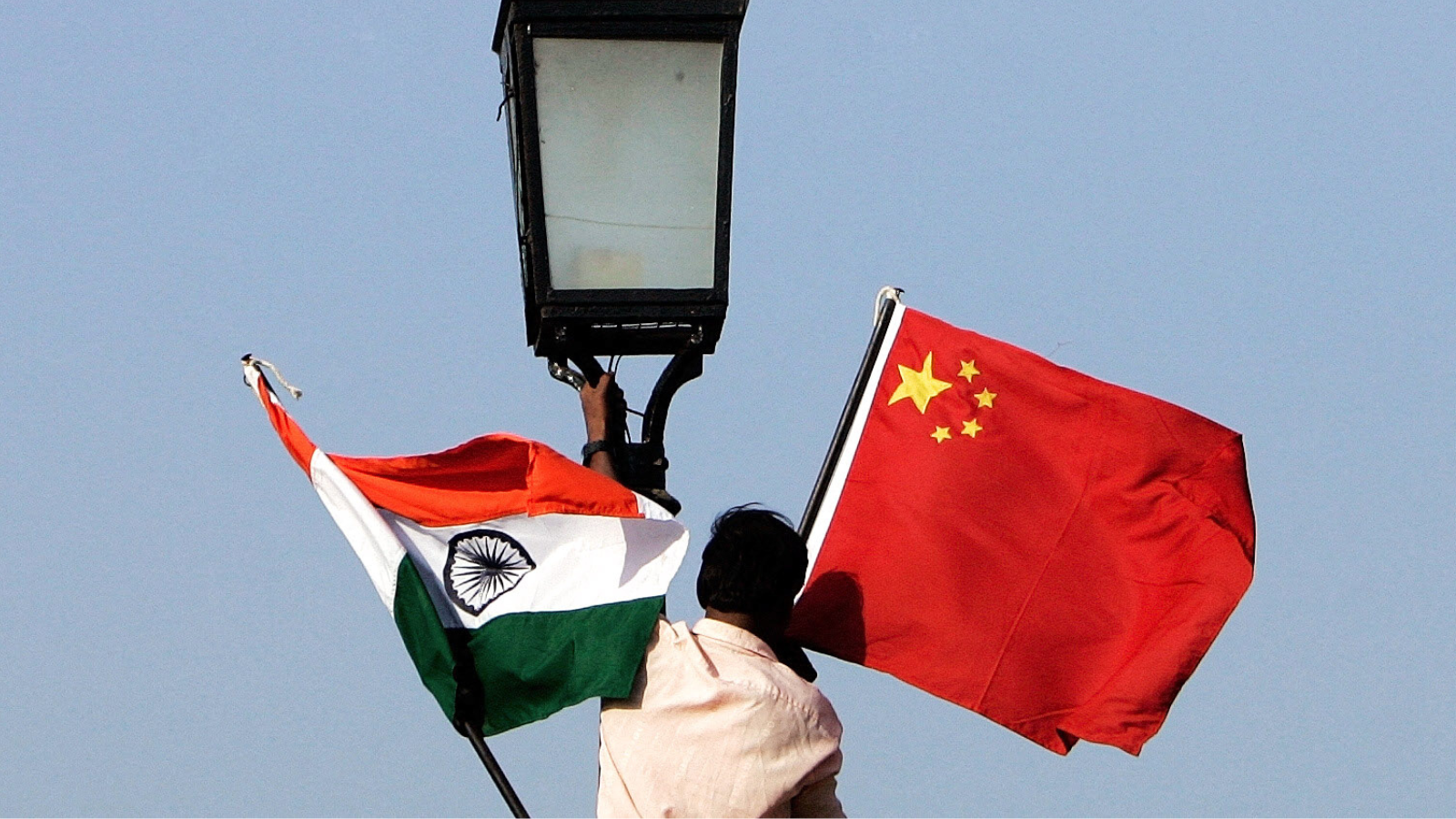
On March 10, 2026, India’s Union Cabinet approved amendments to Press Note 3, a regulation that mandated government approval on all foreign direct investment (FDI) from countries sharing a land border with India. This amendment raises questions primarily about whether its stated benefits will materialize and if the risks have been adequately weighed. This piece will address the same.

Konark Bhandari

India and the United States are close to concluding a Reciprocal Defense Procurement Agreement (RDPA) that will allow firms from the two countries to sell to each other’s defense establishments more easily. While this may not remedy the specific grievances both sides may have regarding larger bilateral issues, an RDPA could restore some momentum, following the trade deal announcement.
Konark Bhandari

On the last day of the India AI Impact Summit, India signed Pax Silica, a U.S.-led declaration seemingly focused on semiconductors. While India’s accession to the same was not entirely unforeseen, becoming a signatory nation this quickly was not on the cards either.
Konark Bhandari