

Commentary
Nathan J. Brown
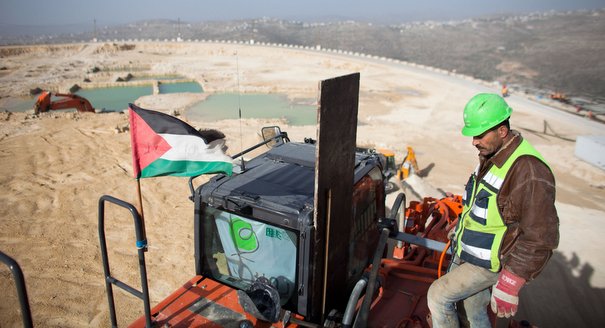
Source: Getty
The international community’s understandable admiration for Palestinian Prime Minister Salam Fayyad and his efforts to rebuild the West Bank obscures a dangerous regression in democracy and human rights.
IMGXYZ5328IMGZYXThe international community’s understandable admiration for Palestinian Prime Minister Salam Fayyad and his efforts to rebuild the West Bank obscures a dangerous regression in democracy and human rights. Just back from the West Bank, Nathan J. Brown contends that the United States is once again confusing support for an admirable individual with that of a sound policy.
“To the extent that Fayyadism is building institutions, it is unmistakably doing so in an authoritarian context,” writes Brown. “There is no reason to associate Fayyad personally with the most egregious aspects of this new authoritarianism, but there is no way his cabinet could have been created or sustained in a more democratic environment.”
“Palestinian authoritarianism in 2010 is different from Palestinian authoritarianism under Arafat—it is less venal and probably less capricious. But it is also more stultifying.”

Nonresident Senior Fellow, Middle East Program
Nathan J. Brown, a professor of political science and international affairs at George Washington University, is a distinguished scholar and author of nine books on Arab politics and governance, as well as editor of five books.
Recent Work
Nathan J. Brown
Nathan J. Brown
Carnegie India does not take institutional positions on public policy issues; the views represented herein are those of the author(s) and do not necessarily reflect the views of Carnegie, its staff, or its trustees.

In any defense establishment, change is an ongoing process. However, despite the best of intentions, existing bureaucracies, bound by habit and years of socialization, have their limits in implementing transformative change.

Anit Mukherjee

After the chill in ties between 2020 and 2024 that brought India–China relations to their lowest point in several decades, the two countries have engaged each other afresh. This paper argues that there are predominantly four imperatives guiding India’s approach to China, and they exist in an order of priority.

Saheb Singh Chadha

This piece argues that India’s central challenge is not managing a single flashpoint but resolving the underlying tension between expansion and institutional coherency of the BRICS grouping.

Vrinda Sahai

A partnership between India, a country of subcontinental size, and Africa, a continent of fifty-four countries, may seem asymmetric until one notes that both are home to nearly the same number of people—1.4 billion. This essay spells out the existing challenges to the partnership, its optimal potential, and the possible pathways to realize it over the next quarter-century.

Rajiv Bhatia

The India–EU Free Trade Agreement (FTA) is shaping up to be one of the most consequential trade negotiations, both economically and strategically. But, what’s in the agreement, what’s missing, and what will determine its success in the years ahead
Vrinda Sahai, Nicolas Köhler-Suzuki