

Commentary
Nathalie Tocci, Jan Techau
Source: Getty
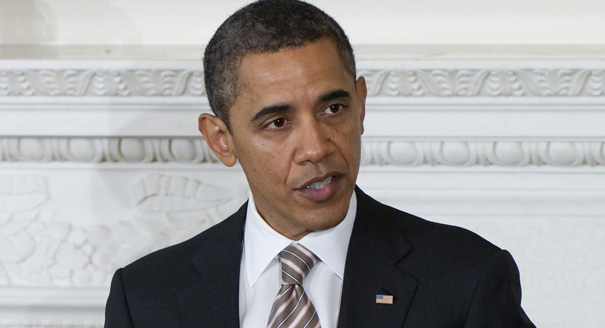
President Obama's visit to Warsaw serves as a geopolitical re-investment in a region that hosts Europe’s most pro-American populace, and which had developed very serious doubts over whether the United States was still the reliable friend and ally they want so much.
President Obama’s visit to Europe aims to accomplish many different things, and so, during his stay in the old world, we are seeing the president slip seamlessly from one carefully managed role to the next as he tours cities and conference rooms.
There is Obama the presidential candidate, searching publicly for his family’s roots in Ireland, following an American political ritual established by President John F. Kennedy. His hope, of course, is to increase his lure amongst many U.S. voters with Irish backgrounds, given that they are still an important constituency in northeastern swing states.
There also is Obama the president at war, trying to limit his country’s involvement in the Libya campaign while closing ranks with his British allies to up the pressure on Qaddafi. And then there is, of course, Obama the leader of the West, feeding the American position (and money) into the G8’s Deauville response to the uprisings of the “Arab Spring.”
The one thing Obama’s visit is not about, however, is Europe. Or is it?
Had it not been for this year’s G8 summit that just happens to fall under the current French G8 presidency, there would not have been a presidential visit to Europe. Still, for Europeans, this visit to four countries in seven days comes as a much-desired splash of attention on Europe. Having received Obama’s election to office with enormous enthusiasm, Europeans had to learn the hard way that their excitement about the new president was not automatically reciprocated. The man in the White House, unlike most of his predecessors, is not a Europe-minded transatlanticist by instinct.
Disappointment about this was most pronounced in Central and Eastern Europe. Here, leaders and people alike deemed themselves in their version of a “special relationship” with Washington, based on America’s support for their liberation and transition to democracy, and the belief that their skepticism of Russia was fundamentally shared in the United States. The U.S.-Polish spat over missile defense, and Obama’s more conciliatory approach to Russia, had therefore made many Eastern Europeans nervous. Many of them see America as their only reliable insurance against their huge, unpredictable, and all-dominating Russian neighbor.
Which is why, even though London and Deauville are the more important political destinations, the presidential visit to Warsaw is the most important symbolic element of Obama’s Europe trip. Not only is it a makeup gesture to Poland, the country that felt snubbed when Obama decided not to attend last year’s funeral of Lech Kaczinsky, the country’s president who tragically died in a plane crash in Russia. It is also a geopolitical re-investment in a region that hosts Europe’s most pro-American populace, and which had developed very serious doubts over whether the United States, under Obama’s leadership, was still the reliable friend and ally they want so much.
Now Obama is not only spending a night in Warsaw, he is also bringing a small but highly meaningful gift to Poland. A squadron of American fighter planes will be temporarily stationed in Poland, beginning in 2013. Given that this will happen under a routine troop rotation scheme within the U.S. forces posture in Europe, this is less of a deal than it might look. But it is exactly the kind of gesture of loyalty and solidarity that Poland, and the region, had been hoping for.
The strength or weakness of any alliance can be measured by how engaged its center is at the fringes. By reassuring the Eastern fringe of the Western Alliance, Obama demonstrated that the region is still of high strategic importance for the United States, NATO’s lead nation. That this exercise in assurance might actually also help U.S. companies gain access to Poland’s precious shale gas resources—a prize they have been eying for some time—comes as a positive side-effect. However, Poland’s request for the much-desired visa waiver status for travel to the United States—Poland is the only Schengen country in the EU that does not enjoy this privilege—is not expected to be high on the meetings’ agendas.
Even for an American president with little transatlantic leanings, Europe remains essential. Europe’s role as foreign policy power might still be underdeveloped, its strategic vision lackluster, and its military capabilities wanting, but, by and large, the transatlantic relationship remains the only functioning and deeply developed transcontinental partnership in the world.
While new players are emerging around the world—diluting North America and Europe’s strength on the global stage—only “the West” regularly brings to the table the combination of meaningful capabilities and a demonstrated sense of responsibility for the bigger picture. The G8 might be replaced by the G20, and the next IMF managing director might come from Asia or Latin America. But it is still essentially “the West” (Europe and America) that produces the principles, ideas, and mechanisms by which global order is sought.
This is the wider geopolitical context of the president’s visit to the old world. Old allies, challenged by an emerging new world order, mend fences and reconfirm their closeness. To some, this might sound like the West’s swan song. But as long as those fabled emerging players demand to be treated equally without being willing to take on a commensurate part of the burden for global stability and development, this song will be the best melody around.

Director, Europe Team, Eurasia Group
Techau is director with Eurasia Group's Europe team, covering Germany and European security from Berlin. Previously, he was director of Carnegie Europe.
Recent Work

Nathalie Tocci, Jan Techau
Jan Techau
Carnegie India does not take institutional positions on public policy issues; the views represented herein are those of the author(s) and do not necessarily reflect the views of Carnegie, its staff, or its trustees.

How is AI reshaping space security, creating governance challenges, and where does international diplomacy stand today?


Tejas Bharadwaj, Almudena Azcárate Ortega

After the chill in ties between 2020 and 2024 that brought India–China relations to their lowest point in several decades, the two countries have engaged each other afresh. This paper argues that there are predominantly four imperatives guiding India’s approach to China, and they exist in an order of priority.

Saheb Singh Chadha

This piece argues that India’s central challenge is not managing a single flashpoint but resolving the underlying tension between expansion and institutional coherency of the BRICS grouping.

Vrinda Sahai
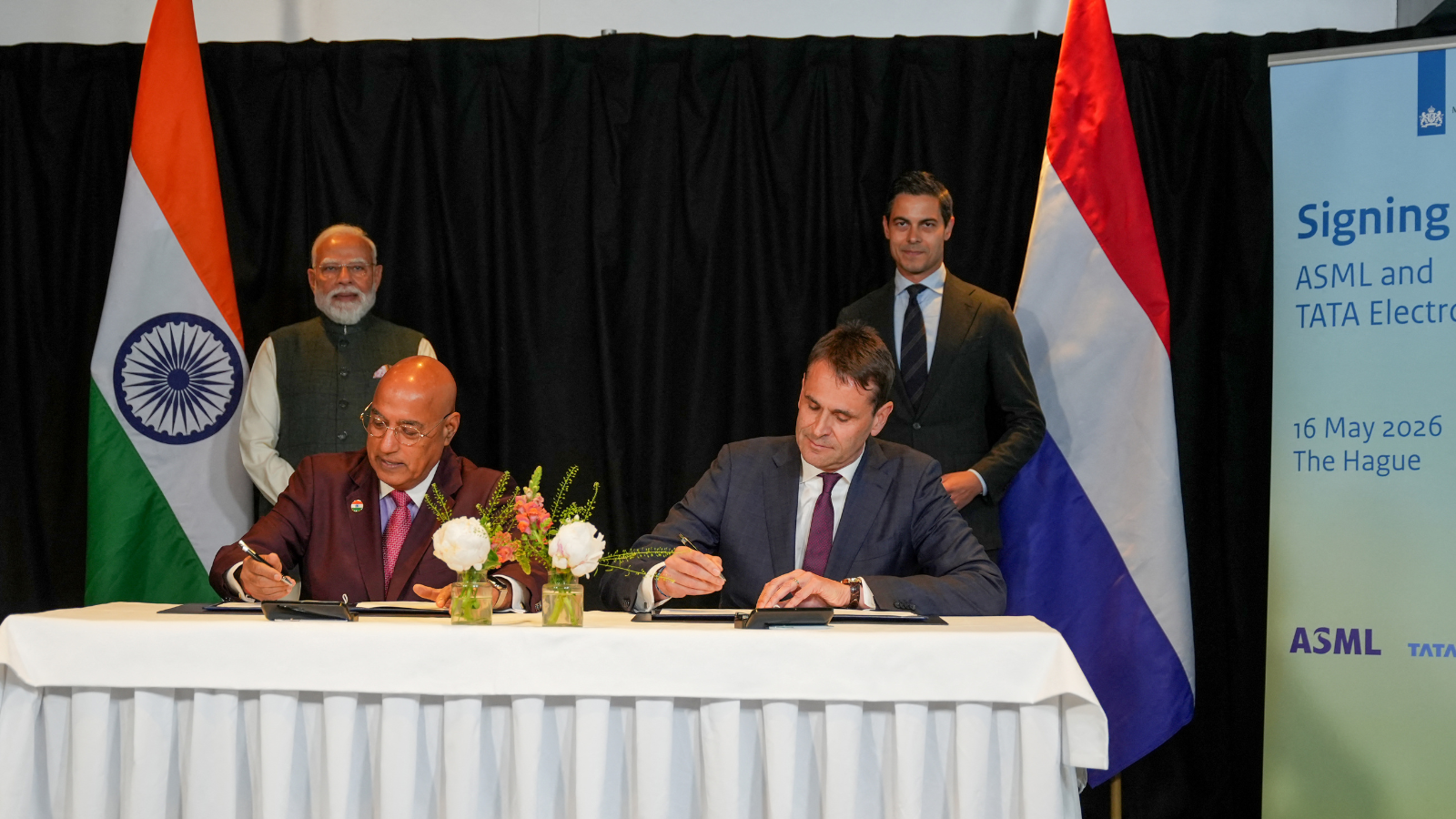
The ASML MoU with Tata Electronics is an indicator of how far the Indian semiconductor ecosystem has come. This ecosystem has been years in the making and represents real commercial logic.

Konark Bhandari

A partnership between India, a country of subcontinental size, and Africa, a continent of fifty-four countries, may seem asymmetric until one notes that both are home to nearly the same number of people—1.4 billion. This essay spells out the existing challenges to the partnership, its optimal potential, and the possible pathways to realize it over the next quarter-century.

Rajiv Bhatia