

Article
This piece argues that India’s central challenge is not managing a single flashpoint but resolving the underlying tension between expansion and institutional coherency of the BRICS grouping.
Vrinda Sahai
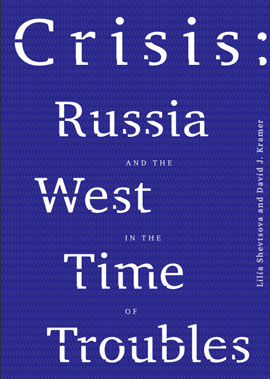
Today, the two predominant political and social models—authoritarianism and liberal democracy—are experiencing simultaneous crises.
Source: Carnegie Moscow Center
This book is a collection of polemical articles published mostly in 2011-2013 in the American Interest, Journal of Democracy, Current History, Diplomaatia, and Yezhednevny Zhurnal. Some of the articles were co-authored with David J. Kramer, the president of Freedom House.The articles reflect on Russia’s current trajectory, its relations with the West, Western thinking about Russian civilization, modern authoritarianism and its Russian and Chinese incarnations, and the use of foreign policy for the preservation of authoritarian regimes. These reflections introduce a broader and more dramatic theme: crisis, as it is experienced by an obsolescent political and social system, and as it is experienced by a system in need of rejuvenation. In essence, these essays present the reader with a snapshot of the historical period in which we live.
The drama inherent in this period lies in the fact that the two predominant political and social models—authoritarianism and liberal democracy—are experiencing simultaneous crises.

Former Senior Associate, Russian Domestic Politics and Political Institutions Program, Moscow Center
Shevtsova chaired the Russian Domestic Politics and Political Institutions Program at the Carnegie Moscow Center, dividing her time between Carnegie’s offices in Washington, DC, and Moscow. She had been with Carnegie since 1995.
David J. Kramer
David J. Kramer served as assistant aecretary of state for democracy, human rights and labor in the George W. Bush administration and is director of European & Eurasian Studies at Florida International University’s Steven J. Green School of International and Public Affairs.
Carnegie India does not take institutional positions on public policy issues; the views represented herein are those of the author(s) and do not necessarily reflect the views of Carnegie, its staff, or its trustees.

This piece argues that India’s central challenge is not managing a single flashpoint but resolving the underlying tension between expansion and institutional coherency of the BRICS grouping.

Vrinda Sahai

The U.S.–India semiconductor cooperation story is well-stocked with top-level strategic intent. What remains unresolved, however, are some underlying challenges that will determine whether the cooperation actually functions. Three such friction points stand out.

Shruti Mittal
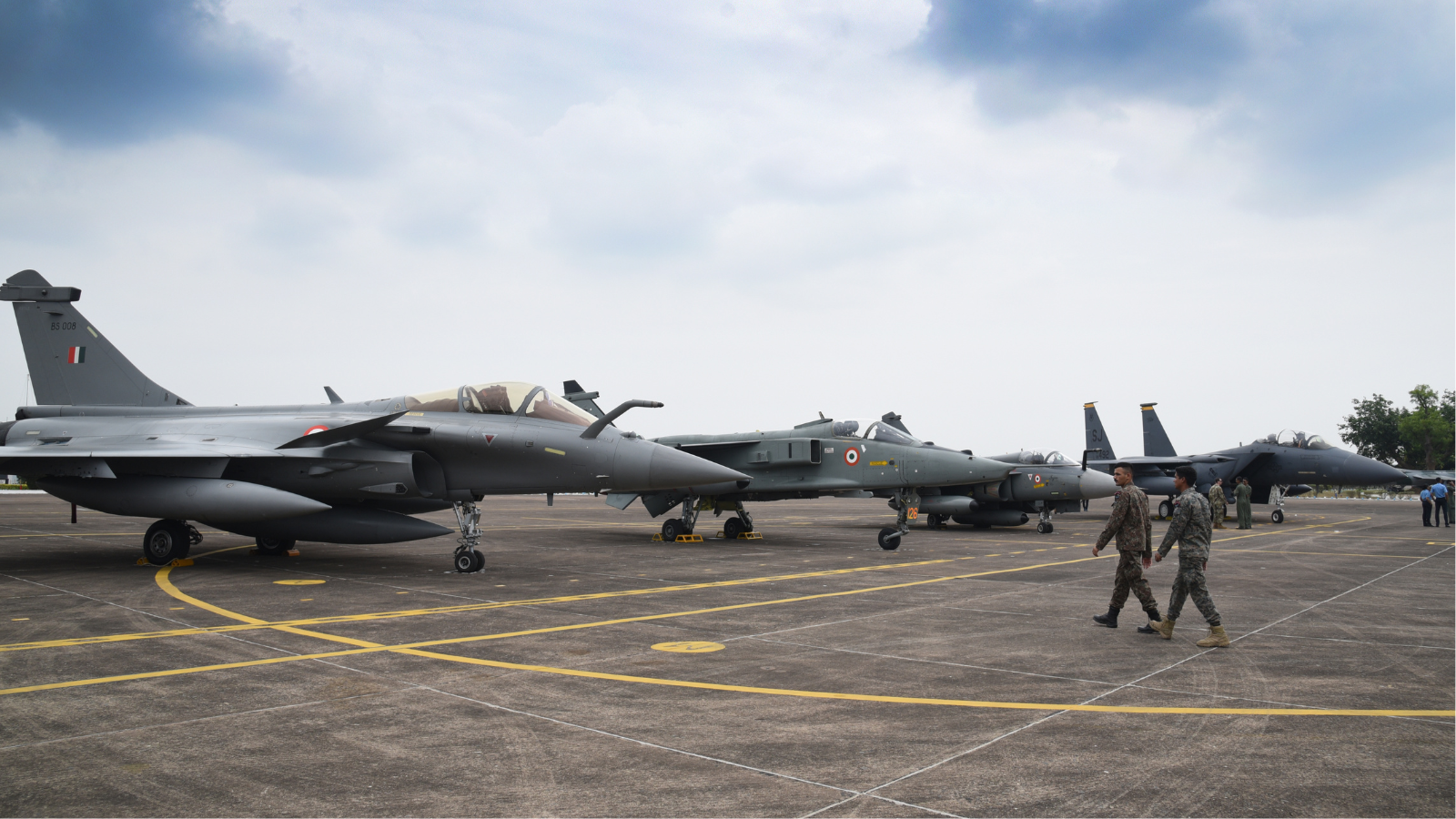
India and the United States are close to concluding a Reciprocal Defense Procurement Agreement (RDPA) that will allow firms from the two countries to sell to each other’s defense establishments more easily. While this may not remedy the specific grievances both sides may have regarding larger bilateral issues, an RDPA could restore some momentum, following the trade deal announcement.

Konark Bhandari

On the last day of the India AI Impact Summit, India signed Pax Silica, a U.S.-led declaration seemingly focused on semiconductors. While India’s accession to the same was not entirely unforeseen, becoming a signatory nation this quickly was not on the cards either.
Konark Bhandari

This piece examines India’s response to U.S. sanctions and tariffs, specifically assessing the immediate market consequences, such as alterations in import costs, and the broader strategic implications for India’s energy security and foreign policy orientation.
Vrinda Sahai