

Article
Frederic Wehrey, Charles H. Johnson
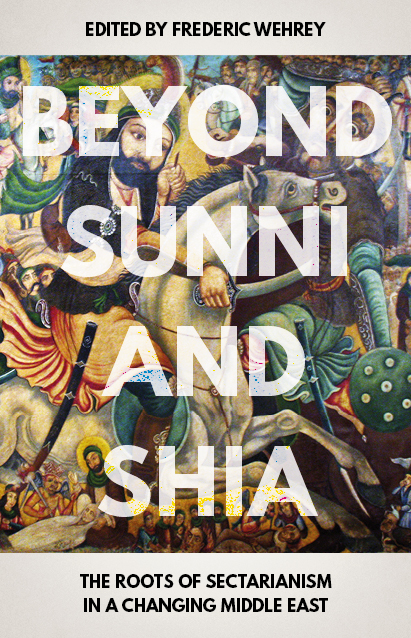
An exploration of the factors behind the spread of sectarian identity politics in the Middle East.
Source: Oxford University Press, 2017
This collection seeks to advance our understanding of intra-Islamic identity conflict in the Middle East. Instead of treating distinctions between and within Sunni and Shia Islam as primordial and immutable, it examines how political economy, geopolitics, domestic governance, social media, non- and sub-state groups, and clerical elites have affected the transformation and diffusion of sectarian identities.
Particular attention is paid to how conflicts over distribution of political and economic power have taken on a sectarian quality, and how a variety of actors have instrumentalised sectarianism. The volume, covering Syria, Iraq, Lebanon, Saudi Arabia and the Gulf, Iran, and Egypt, includes contributors from a broad array of disciplines including political science, history, sociology, and Islamic studies.
Beyond Sunni and Shia draws on extensive fieldwork and primary sources to offer insights that are empirically rich and theoretically grounded, but also accessible for policy audiences and the informed public.
Introduction
Frederic Wehrey
PART I: THE GEOPOLITICS OF SECTARIANISM
PART II: INSTITUTIONAL SOURCES OF SECTARIANISM
PART III: DOCTRINAL AND CLERICAL SOURCES OF SECTARIANISM
This research was made possible through a generous grant from the Henry Luce Foundation.
“This much-needed volume moves beyond primordialist and instrumentalist explanations of the issue of sectarianism. Its fascinating case-studies show not only why it is important to understand the geopolitical, institutional and religious sources of sectarianism in a changing Middle East, but also how it is possible to gain a deep and nuanced understanding of the subject.”
—Morten Valbjørn, Associate Professor, Department of Political Science, Aarhus University
“A contextual but comparative analysis of the geopolitical, institutional, and ideational drivers of sectarianism in the contemporary Middle East. Navigating beyond primordial and instrumental theoretical explanations, Beyond Sunni and Shia offers a multilayered analysis of why sectarianism assumes today such a powerful role in the domestic politics and foreign policies of Middle East states and transnational movements, and what are the prospects of moving beyond sectarianism in the future.”
—Bassel F. Salloukh, Associate Professor of Political Science, Lebanese American University, Beirut

Senior Fellow, Middle East Program
Frederic Wehrey is a senior fellow in the Middle East Program at the Carnegie Endowment for International Peace, where his research focuses on governance, conflict, and security in Libya, North Africa, and the Persian Gulf.
Recent Work
Frederic Wehrey, Charles H. Johnson
Frederic Wehrey, Charles H. Johnson
Carnegie India does not take institutional positions on public policy issues; the views represented herein are those of the author(s) and do not necessarily reflect the views of Carnegie, its staff, or its trustees.

After the chill in ties between 2020 and 2024 that brought India–China relations to their lowest point in several decades, the two countries have engaged each other afresh. This paper argues that there are predominantly four imperatives guiding India’s approach to China, and they exist in an order of priority.

Saheb Singh Chadha

A partnership between India, a country of subcontinental size, and Africa, a continent of fifty-four countries, may seem asymmetric until one notes that both are home to nearly the same number of people—1.4 billion. This essay spells out the existing challenges to the partnership, its optimal potential, and the possible pathways to realize it over the next quarter-century.

Rajiv Bhatia

This piece argues that the present Indian strategy, based on opportunistic diversification and utilization of limited strategic reserves, remains inadequate when confronting supply disruptions. It evaluates India’s options in the short, medium, and long terms.

Vrinda Sahai

This piece examines India’s response to U.S. sanctions and tariffs, specifically assessing the immediate market consequences, such as alterations in import costs, and the broader strategic implications for India’s energy security and foreign policy orientation.
Vrinda Sahai
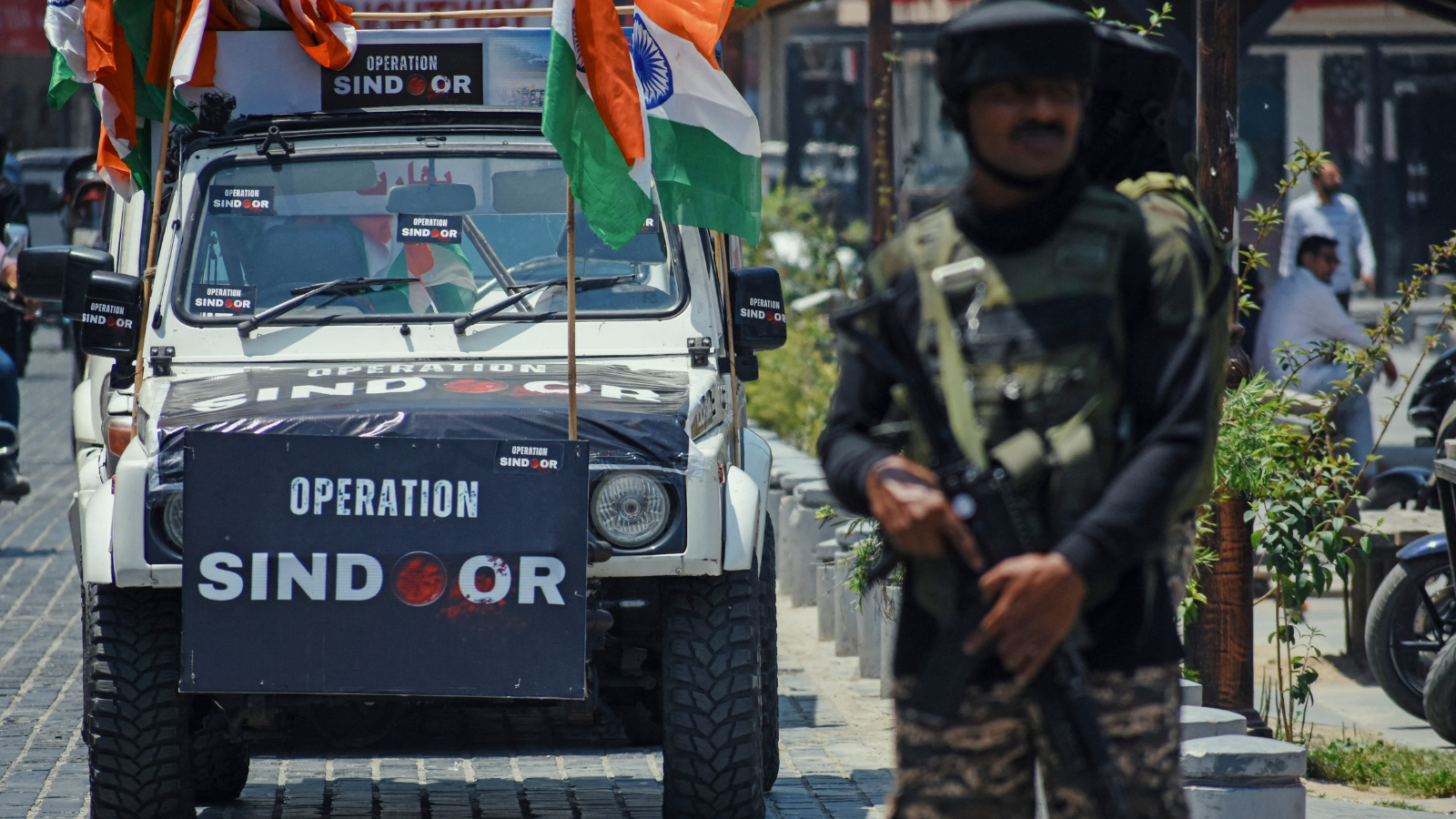
The India-Pakistan conflict that played out between May 6 and May 10, 2025, offers several military lessons. This article presents key takeaways from Operation Sindoor and breaks down how India’s preparations shaped the outcome and what more is needed to strengthen future readiness.

Dinakar Peri