

Commentary
The ASML MoU with Tata Electronics is an indicator of how far the Indian semiconductor ecosystem has come. This ecosystem has been years in the making and represents real commercial logic.
Konark Bhandari
Source: Getty
European democracy support strategy in 2025 prioritized protecting democratic norms within Europe. This signals the start of a structural recalibration of the EU’s approach to democracy support.
This fifth annual review of European democracy support covers one of the most unsettling years in recent memory. The year 2025 saw the United States apparently switch from being an anchor and a reference point for global democracy to being an adverse factor for this agenda. There was extensive focus in Europe throughout the year on the United States’ own democratic erosion as well as the move by the administration of U.S. President Donald Trump to halt most forms of U.S. support for democracy internationally. Key figures in the U.S. administration intervened expressly to support far-right actors in Europe that most would see as a threat to liberal-democratic norms. While this review is not concerned with U.S. policies as such, these momentous and alarming shifts weighed heavily on European strategic calculations in 2025.
Measured against the shock of such an inversion in U.S. policies, changes in European policies were significant but perhaps not as far-reaching as might have been expected or warranted. To some degree, European governments and the institutions of the European Union (EU) sought to strengthen their focus on protecting democracy to offset the Trump administration’s illiberal drift. Yet, European governments were also concerned with bolstering their security and economic interests in this uncertain context, and in some cases, this stance militated against clear-cut investment in democracy support.
This review highlights the prominence of this twin movement in European positions on democracy during 2025. The dichotomy not only fostered new debates about the EU’s geopolitical salience as a democracy defender but also overshadowed many important political developments outside the scope of U.S. policies. The change in Washington’s policies was not the only significant democracy-related dynamic in the year; 2025 also saw an especially high number of mass protests, some of which resulted in positive democratic change. The EU’s responses to these events were positive but not especially decisive or strong. Arguably, concerns over Trump and security distracted democracy supporters from political changes around the world that unfolded separately from politics in the United States. Across different regions and themes, this review detects a degree of enhanced momentum in the EU’s external democracy policies, but no major changes.
The EU’s focus in 2025 was more prominently on defending Europe’s own democracy in the new, more threatening geopolitical context. The union introduced or upgraded many initiatives designed to protect democratic norms across Europe, with the long-awaited European Democracy Shield of particular importance in this regard. The EU moved to correct many shortcomings of its internal democracy-protection policies, although concerns remained about limitations to the new initiatives. Efforts to support democracy within Europe still faced the headwinds of rising support for far-right parties and other challenges.
This review covers policies, strategies, and initiatives of the EU as well as those of its member states and of non-EU European countries active in democracy support: Norway, Switzerland, and the United Kingdom (UK). It covers the calendar year 2025, which closed just prior to momentous events in Venezuela, Iran, and elsewhere. The review presents information on European efforts to defend and strengthen democracy both in Europe and around the world. It starts with a look at the overarching context and new European democracy strategies before examining candidate countries for EU accession. It then details changes in European funding for democracy initiatives globally and in Europe. The review next outlines democracy-related sanctions and conditionality during the year and, finally, the role of democracy initiatives in European security operations.
The year 2025 was marked by Trump’s dramatic return to office, an intensification of conflicts in Ukraine and elsewhere, the mixed fortunes of far-right political parties, and a large number of protests.
The second Trump administration’s policy changes dominated the year, with the U.S. retreat from international democracy support marking a seismic shift for the field. The administration abruptly ceased most democracy funding and dismantled the U.S. Agency for International Development (USAID). It prevented the National Endowment for Democracy (NED) from accessing congressionally appropriated funds, leaving over 2,000 democracy activists and organizations without lifeline support in authoritarian contexts around the world.1 In March, Trump ordered further cuts to pro-democracy government programs, including the Voice of America and Radio Free Europe/Radio Liberty, both of which provide critical news coverage, especially in repressive environments.2 The NED later had its funding restored after taking the administration to court, but its long-term future remained in doubt. In many countries, the Trump administration openly supported autocratic and far-right actors. The administration designated Antifa—a movement that opposes the far right—a domestic terrorist organization.3
The U.S. pivot away from democracy at home and abroad dramatically changed the EU’s place in the world and its internal and external democracy-promotion strategies. The United States is no longer a partner for supporting democracy worldwide and even appears to be directly attacking this agenda. The U.S. National Security Strategy released in December 2025 eschewed traditional commitments to global democracy promotion and yet, remarkably, took aim at what it insisted was a threat to democracy from the EU and mainstream European governments.4 This was a year in which the EU learned it would need not only to act alone more often to support democracy abroad but also to defend against U.S. antidemocratic interventions in Europe. As 2026 began, the U.S. intervention in Venezuela on January 3 further complicated the context for European democracy strategies.
The EU’s long-standing efforts to protect Ukrainian democracy faced more severe difficulties in 2025. The Trump administration’s stance on Russia’s war in Ukraine upended core EU policy assumptions. Trump’s verbal hounding of Ukrainian President Volodymyr Zelensky in his February visit to the White House sent shock waves through European capitals and raised concerns about the U.S. commitment to Ukraine and democracy more broadly. The United States halted intelligence sharing with Ukraine and paused military aid, although it lifted the suspension later.5 As Russia made gains on the ground and the U.S. position fluctuated throughout the year, European governments were challenged to rethink this core part of their efforts to shore up democracy. Increasingly direct Russian threats to European states reinforced the prioritization of security concerns in EU policymaking.
The year 2025 also saw an intensification of other conflict dynamics around the world. Toward the end of the year, violence escalated in Sudan. The two-year civil war has displaced over 14 million people and resulted in 150,000 deaths yet received little international attention.6 Tensions also intensified in South Asia, with a renewed military confrontation between India and Pakistan. These deepening conflict dynamics emphasized the preeminence of security on the international agenda.
Notably, the EU’s equivocal responses to the horrific loss of life in Gaza undercut the bloc’s aim to project itself as a global human rights protector. A United Nations (UN) commission of inquiry found Israeli actions in the Gaza Strip equivalent to genocide.7 What many around the world see as Europe’s complicity in Gaza’s shocking death toll and famine risks undermining EU work on democracy and delegitimizing the EU’s claim to be a rights-based power that defends international law. Several European governments restricted peaceful pro-Palestinian protests at home as the conflict increasingly unsettled the public.
Trends in European elections were mixed in 2025. France experienced a severe crisis of legitimacy and governance that fed public disillusionment with democracy.8 The Alternative for Germany (AfD) made dramatic gains in the German federal election. In Portugal, Chega became the second-biggest political group in the parliament but was left out of the governing coalition. The Law and Justice (PiS) party’s candidate won the presidential election in Poland, while the party of far-right populist Andrej Babiš won the Czech parliamentary vote.
In other cases, the far right lost ground. In May, the candidate of the far-right Alliance for the Union of Romanians (AUR) lost the presidential election in Romania. In November’s Dutch general election, the liberal Democrats 66 (D66) managed to form a coalition after gaining a slim advantage over Geert Wilders’s far-right Party for Freedom (PVV), pushing the latter out of power.9 Mainstream parties maintained a policy of formal exclusion toward most of the far-right groups in the European Parliament, although the conservative European People’s Party (EPP) began to rely on the far right in votes on some issues, like climate change.10
The year saw an especially intense wave of citizen mobilizations through a series of youth-led, social media–driven protests. These took place most notably in Cameroon, Côte d’Ivoire, Indonesia, Madagascar, Morocco, Nepal, Paraguay, Peru, and Tanzania. Protesters’ grievances generally revolved around social inequality, election manipulation, and government corruption. While echoing some of the sentiments of youth-led movements in the 2010s after the 2008 global financial crisis, the movements were amplified by the digital interconnectedness of Gen Z. Some protests managed to topple government administrations, including in Madagascar, Nepal, and, to an extent, Serbia. Others, like in Morocco, secured government reforms aimed at reducing socioeconomic inequality and boosting public services.11 Into 2026, even more dramatic protests rocked the theocratic regime in Iran with unprecedented force.
Despite the dramatic turmoil of global events, 2025 was a year of incremental rather than wholesale change in European global democracy support. The EU did not launch any major new external democracy strategies but did make improvements to its partnerships with other democracies, while several democracy-support initiatives were established at the national level. Within the EU, democracy strategy continued a trend toward protecting democratic norms, especially in the wake of attacks from the United States.
European leaders issued many strong rhetorical commitments to international democracy support in 2025 while also calling for more realpolitik. European Commission President Ursula von der Leyen, for instance, identified democracy as one of four core priorities for the EU yet also advocated a more transactional foreign policy.12 Meanwhile, EU High Representative for Foreign Affairs and Security Policy Kaja Kallas struck a different tone when she framed the world as divided between democracies and autocracies.13 She suggested that the leaders of China, Iran, North Korea, and Russia constituted an “autocratic alliance.”14
There were no new overarching EU democracy strategies in 2025. While there was much comment and debate during the year about the EU assuming a higher profile in leading international democracy support after the U.S. retreat, the union did not respond with any new strategy for the moment. A small number of regional and thematic strategies included democracy-support commitments but usually without much substance or detailed measures. In May, the EU launched its Strategic Approach to the Black Sea with a formal aim of upholding the rule of law and democracy—but again without concrete commitments.15 The commission worked on a digital strategy aimed at broadening and diversifying the EU’s digital alliances with “like-minded partners,” including Canada, India, Japan, and South Korea.16
The EU made significant progress in establishing new partnerships or upgrading existing ones with other democracies, partly in response to the U.S. shift away from democracy support. The EU formalized new strategic partnership agreements with Japan, Norway, and South Korea and entered discussions on several others. The EU also renovated its strategic commitments with India in the New Strategic EU-India Agenda, adopted in October.17 The place and concrete substance of democracy commitments in these partnerships was unclear; the agreements were oriented mainly toward defense and economic issues.
The EU cut its democracy-support capacity for its delegations in Belarus, East Timor, Eritrea, Eswatini, Guinea-Bissau, Haiti, Kuwait, Lesotho, Papua New Guinea, South Sudan, and Trinidad and Tobago. Meanwhile, the union boosted capacity in regional hub delegations for priorities like the Global Gateway infrastructure investment initiative while downsizing the development staff of the commission’s Directorate General for International Partnerships in small delegations. These adjustments reflected geostrategic shifts but were not favorable to implementing democracy initiatives.
In 2025, the EU carried out eight election observation missions, in Bangladesh, Bolivia, Ecuador, Guyana, Honduras, Kosovo, Malawi, and the Philippines, as well as six election follow-up missions, in East Timor, Guatemala, Kenya, Lesotho, the Maldives, and Nigeria (see map 1). Additionally, the EU deployed an election expert mission in Iraq. The EU held thirty-five human rights dialogues and consultations with partner countries; some dialogues remained suspended or frozen (see map 2).
Several national democracy-support initiatives began in 2025. Spain launched a new Foreign Action Strategy, which mentions democracy support, albeit not as a main priority.18 Prime Minister Pedro Sánchez reaffirmed Spain’s commitment to Latin American democracy through a joint initiative on democracy support with Brazil, Chile, Colombia, and Uruguay.19 Spain also presented its Africa Strategy 2025–2028, which highlights planned work on inclusive and democratic societies, the rule of law, anticorruption, and women’s empowerment.20
In May, the Swiss Federal Department of Foreign Affairs presented new guidelines on democracy. These emphasize bilateral and multilateral diplomacy to create the conditions necessary for democracy, including the freedom of expression, free elections, transparency, and the rule of law.21 The Norwegian government presented a white paper outlining its efforts to promote democracy, the rule of law, and human rights in Europe.22 The paper reaffirms Norway’s commitment to democracy while underlining democracy’s importance for security.
In April, Poland launched a Council for Resilience, a joint initiative between the Ministry of Foreign Affairs and civil society organizations (CSOs).23 Designed to combat international disinformation and strengthen democratic resilience at home and abroad, the council was part of Poland’s emphasis on resilience in 2025. Meanwhile, the Czech government updated its Human Rights and Transition Promotion Policy Framework to present democracy, human rights, and the rule of law as core to the Czech Republic’s values and security interests.24 Babiš’s reappointment as prime minister cast doubt on the continuation of this policy, as the new government has been especially hostile in its language toward CSOs. In February, Slovenia adopted a new foreign policy strategy that centers on democracy and the rule of law.25
New democracy-related commitments were more evident in governments’ development strategies than at the level of overarching foreign policy. In June, Sweden unveiled its new humanitarian assistance strategy, which stresses that Swedish support should not “go to activities that counteract the rules-based international order or Swedish interests.”26 Denmark launched a new strategy for cooperation and development, which also highlights democracy and human rights as a priority area, with an emphasis on youth engagement.27 Austria’s new development strategy also formally prioritized an upgraded commitment to democracy support.28
In France, the Ministry for Europe and Foreign Affairs transformed its Democratic Governance Department into a Democracy Support Department, while the French Development Agency Group presented its strategy for 2025–2030 with a cross-cutting priority of citizens, institutions, and democracies.29 Under this, the group committed to increase support for “democratic dynamics.” France also launched a feminist foreign policy for 2025–2030, pledging to increase funding for women-led organizations and host the fourth Feminist Foreign Policy Conference.30 The collapse of the French government in September created uncertainty about foreign policy coherence, with a new strategic review pending.
A new Irish-led democracy-support initiative, CaraDem, was inaugurated in 2025.31 With former Irish ministers among its founders, CaraDem builds on Irish expertise in citizen participation to enhance democratic governance. As the first organization in Ireland dedicated exclusively to democracy support, it is designed to help elevate the country’s profile as a global democracy promoter.
Continuing a trend noted in previous editions of our annual review, European democracy strategy in 2025 tilted farther toward protecting democratic norms within Europe. The attacks on European democracy from the United States reinforced this move and the sense of urgency surrounding it. In her State of the Union address in September, von der Leyen stressed that EU autonomy is crucial to defending democratic freedoms domestically.32 In a speech in June, European Commissioner for Democracy, Justice, the Rule of Law, and Consumer Protection Michael McGrath warned of “creeping authoritarianism” within Europe.33 Perhaps most emphatically, the Council of Europe’s Human Rights Commissioner Michael O’Flaherty pronounced that he had “never seen a more worrying moment” in his lifelong career in the human rights field.34 The tone of institutional messaging throughout the year underscored the perception of democratic erosion in the EU.
Against this backdrop, several notable policy initiatives emerged in 2025. Early in the year, the Polish six-month presidency of the EU Council published a set of conclusions on strengthening the EU’s democratic resilience. The conclusions underlined national and EU-level actions to reinforce the bloc’s capacity to address current challenges to democracy with a comprehensive approach that focused on the crucial role of CSOs.35
As part of the EU’s geopolitical turn, the union launched a preparedness strategy that promises a whole-of-society and whole-of-government approach to global threats.36 Linking resilience to democratic institutions, the strategy stresses that to “maintain vital societal functions,” the bloc “must have appropriate tools to protect democratic governance.”37 A white paper for European defense was also framed in terms of democracy, with the assertion that defense capacities are needed to guard against authoritarian rivals.38 A new internal security strategy called ProtectEU formally aims to “increase the capabilities of EU Member States to protect societies and democracies from online and offline threats from terrorists, criminals, and hostile foreign actors.”39
In November, the EU presented the long-awaited European Democracy Shield, along with a Civil Society Strategy. The shield contains three pillars of action: safeguarding the integrity of the information space; strengthening institutions, elections, and free and independent media; and boosting societal resistance and citizens’ engagement.40 The shield targets foreign information manipulation and interference (FIMI) and disinformation by strengthening the EU’s ability to detect, analyze, and proactively counter threats to democracy. McGrath said the shield was only a first step toward protecting and supporting democracy across Europe and would have to adapt to respond to a continually changing context.41
As part of the shield, the commission will set up a new European Center for Democratic Resilience, bringing together expertise and capacities to help EU member states and neighboring countries monitor and combat information manipulation, and a Media Resilience Program.42 The shield is oriented primarily toward strategic communication and countering disinformation about the EU, rather than standard democracy support as such. For now, the initiative is focused mainly on the voluntary exchange of information about disinformation, although it was broadened from its original design to include more funding for public-interest media and a civic tech hub.
The Civil Society Strategy is the first EU-wide strategy to recognize and support the role of civil society in democracies through EU policy.43 It sets out three objectives: to engage meaningfully with civil society; to support and protect it; and to provide it with sustainable and transparent funding.44 The strategy includes an external aspect, with a commitment to “strengthen engagement with civil society across all policy areas of EU external action.”45
In July, the EU’s voluntary Code of Practice on Disinformation was incorporated into the Digital Services Act (DSA). In a preliminary ruling in October, the commission found social media giants TikTok and Meta in breach of their transparency obligations under the DSA.46 In September the commission fined Google €2.95 billion over abusive practices in advertising, and in December it fined X €120 million, also for a lack of transparency.47 The overriding storyline of the year came from increasingly assertive U.S. attacks on the DSA.
Entering into force in August, the European Media Freedom Act established new rules to defend journalists and press freedom.48 The act sets out to safeguard editorial independence from political, governmental, and private interference, protect journalists, boost transparency, and foster public trust. Still, without real political will from the commission and national governments, the law risks being little more than a rhetorical promise: Several states are not complying, and the act’s application remains largely incomplete.49
The commission’s 2025 rule-of-law report noted member states’ declining rates of implementation of its recommendations.50 Governments showed full implementation or “significant progress” on only 18 percent of the commission’s recommendations. An analysis by Liberties, a network of civil liberties organizations in the EU, showed that 93 percent of the recommendations were repeats from previous years, that there were omissions of important rule-of-law issues in some member states, and that serious problems persisted across EU countries in the areas of judicial independence, media freedom, and high-level corruption.51 The report announced that in its multiannual budget for 2028–2034, the EU would extend and tighten rules to make funding for member states conditional on the rule of law.
In a continuation of EU civil participation initiatives, citizen panels took place throughout 2025 on topics including tackling hatred in societies and the multiannual budget.52 Another initiative was the Young Citizens Assembly on ways to reverse the decline of pollinators, a key EU biodiversity goal.53 Youth participation initiatives expanded in 2025 through a new online debate alongside the publication of a new report on young people’s lives in the EU and a new Eurobarometer survey into young Europeans’ perceptions.54 The online debate built on the previously launched Youth Policy Dialogues, which encourage young people to express their views on EU policy initiatives and contribute to the EU’s political agenda.
Concerns emerged during the year that some other aspects of the EU policy agenda might risk undermining the positive value of these democracy initiatives. Controversially, the European Parliament voted to establish a scrutiny working group on the financing of nongovernmental organizations (NGOs).55 The proposal was pushed by the EPP, the European Conservatives and Reformists, and the Patriots for Europe and reflected these parties’ desire to bear down on some civil society funding. The commission and the European Court of Auditors insisted that EU funding to NGOs is transparent, lawful, and aligned with EU policy objectives. More broadly, some feared that the commission’s drive for regulatory simplification had negative implications for democracy: In the preliminary outcome of an inquiry launched in May 2025, the European Ombudsman was critical that the commission was using processes that evaded democratic scrutiny in its attempt to push this agenda through.56
In February 2025, a new European Commission Directorate General for Enlargement and the Eastern Neighborhood (DG ENEST), headed by Commissioner Marta Kos, replaced the Directorate General for the Neighborhood and Enlargement Negotiations (DG NEAR). This restructuring nominally reflects the EU’s renewed focus on enlargement and the Eastern Neighborhood Policy, including the aim of supporting democratic reforms. Kos called a new wave of EU enlargement by 2030 a “very realistic perspective.”57
Austria, Germany, Italy, and Slovenia called on Kos to develop concrete proposals to simplify accession negotiations.58 The president of the European Council, António Costa, suggested that the procedure to open negotiation clusters—thematic blocks of chapters of EU law—for candidate countries could be moved from unanimity to a qualified-majority vote.59 At the first-ever EU Enlargement Forum in November, Kos called for immediate steps to begin integrating candidate countries into some EU structures.60 The forum raised ideas for new members joining the union without full voting rights; by the end of the year, the commission supported this option, but it was not clear how much backing it commanded among the member states. The EU’s core enlargement methodology once again finished the year unreformed.
In 2025, approximately €304 million was allocated to countries in the EU’s Instrument for Pre-Accession III for support related to the rule of law, fundamental rights, and democracy.61 The European Democracy Shield was extended to EU candidate countries. Kos announced that the commission would develop proposals for stronger rule-of-law safeguards and more effective mechanisms to suspend countries for democratic regression after they have joined the union.62 Still, the EU’s Fit for Enlargement reform package was delayed.
In its fall 2025 report on Ukraine’s progress toward accession, the commission noted that the country had met the conditions required to open clusters 1 (fundamentals), 2 (internal market), and 6 (external relations).63 But Hungary vetoed the opening of accession talks. At the end of the year, the commission suggested having Ukraine take reform steps as if negotiations had been opened, to speed preparations in the hope that Hungary’s veto would at some point be lifted. Ukraine released a comprehensive 520-point rule-of-law road map and parliamentary initiatives aimed at EU integration.64
However, a crisis erupted when Zelensky signed a bill that weakened the independence of Ukraine’s anticorruption bodies.65 The controversial bill triggered a series of protests in July, which resulted in the EU temporarily suspending nearly €1.5 billion in aid and Zelensky eventually removing the measure.66 The commission later released €1.8 billion of support from the Ukraine Facility, leaving around €700 million still suspended, pending implementation of specific reforms.
Several EU countries introduced new democracy-related funding initiatives in Ukraine. Together with Denmark and Lithuania, the EU launched the €14 million Ukraine2EU program to boost the role of civil society in accession.67 The EU increased its support for independent media in Ukraine with a new €10 million funding package.68 Additional support included €47 million from Germany, the EU, and Sweden for CSOs.69 Overall support for democracy measures will depend on general funding levels: At the end of the year, Belgium blocked proposals to use Russian frozen assets in Ukraine, with twenty-four EU member states agreeing to raise €90 billion in zero-interest loans instead. Also in December, the Ukrainian and European response to a U.S. so-called peace plan raised the possibility of Ukraine joining the EU by 2027 in return for concessions to Russia.
Moldova continued reforms and expected the EU to open accession negotiations before the country’s September 2025 parliamentary election, stressing that advancing membership talks would help counter Russian disinformation campaigns.70 However, the EU declined to do so, out of reluctance to move Moldova ahead of Ukraine. Moldovan officials argued this stance violated the EU’s guideline that enlargement be merit based. In July, the first EU-Moldova summit welcomed progress on reforms and reiterated a pledge to provide €1.9 billion in support through 2027.71 Moldovan CSOs received €6 million from the EU delegation to Moldova to monitor reforms related to EU accession and for participatory democracy and civic-engagement mechanisms in the country.72
Achieving a key milestone on its accession path, Moldova completed its screening process—the preparatory stage before formal negotiations—just before the election. The EU also moved to release funds for cybersecurity measures in Moldova, giving the country access to the EU Cybersecurity Reserve. In a direct form of symbolic support, the leaders of France, Germany, and Poland appeared on Chișinău’s National Assembly Square with President Maia Sandu—arguably crossing the line from supporting democracy to backing the party of one particular politician.73 The victory of Sandu’s party in the September election was one of the most positive and impressive cases of democratic resistance in recent years in the face of Russian electoral and other interference and owed much to EU support for resilience measures.74
As the Georgian Dream (GD) government slid in an even more authoritarian direction throughout 2025, Georgia’s EU accession process remained frozen. Indeed, this freeze began to look like a long-term state, akin to the situation with Turkey. Pro-democracy protests continued through the year and were met with violence and repression, as opposition leaders and activists were attacked and imprisoned. Later in the year, a BBC investigation concluded that during the winter 2024–2025 protests in Tbilisi, the government may have used a toxic, World War I–era chemical agent against protesters.75 The EU suspended parts of its visa facilitation agreement for Georgian diplomats and officials and halted over €150 million in aid.76 However, the union did not impose sanctions on GD officials, not least because of opposition from Hungary and Slovakia.
Six EU members—the Baltic states, the Czech Republic, Germany, and Poland—imposed travel bans on Georgian officials but no sanctions beyond these. High-level engagement remained suspended, although there was some technical engagement with certain ministries in 2025, and some infrastructure projects continued during the year. The UK did impose measures on senior GD leaders—although, unlike the United States, not on GD Founder Bidzina Ivanishvili.
Kos floated the possibility of suspending the EU-Georgia free-trade agreement, but this option did not gain the backing of the required majority of member states.77 While presenting the EU’s new enlargement package in November, Kos stated that Georgia was now a candidate “in name only.”78 GD authorities were not invited to the EU Enlargement Forum in November. While reducing its direct support for Georgian authorities, the EU tripled its funding for civil society, independent media, and youth initiatives.79 CSOs were invited to shape EU reporting on Georgia.
Armenia, whose democracy scores remain relatively high despite declining over the last couple of years, began more firmly to seek EU membership in 2025.80 Following a public petition with 60,000 signatures, the country’s parliament passed and the president signed a bill that laid the legal foundation for EU accession, in a historic shift away from reliance on Russia.81
The EU praised Armenia’s democratic reforms and pledged substantial support for civil society, the media, and socioeconomic development.82 During a two-day visit to the country in June, Kallas announced a political agreement on economic development, security, and resilience, funded by a €270 million Resilience and Growth Plan for 2024–2027.83 In early November, the commission delivered its visa liberalization plan to Armenia. The EU agreed on a new Strategic Agenda for the EU-Armenia Partnership, which covers democracy and the rule of law, justice reform, and human rights, among other areas.84 While Kos and Kallas visited the country in December and offered more support, they gave no clear backing for Armenia’s EU membership.
In 2025, the EU’s concerns in the South Caucasus became more geopolitical. The United States became a key player in the region when Armenia and Azerbaijan signed a peace agreement at the White House, mediated by Trump. The EU was keen to build on this achievement to draw the two countries away from Russia. Despite deepening autocratization and repression in Azerbaijan, Baku and the EU resumed talks on a new partnership and cooperation agreement.
Turkey autocratized further in 2025. The arrest of Istanbul Mayor Ekrem İmamoğlu triggered widespread youth-led protests. The EU expressed concerns, and the country’s accession process remained frozen. Nonetheless, the EU and Turkey explored various avenues of new cooperation, including on security, despite the regime’s tighter control over political opposition and civil society. Turkey remained a strategic partner of the EU in the areas of migration, security, trade, human rights, and climate, as European governments were even keener on such cooperation after U.S. policy changes. European leaders such as Germany’s Chancellor Friedrich Merz advocated stronger ties between the EU and Turkey, with the intention to further pave the country’s path toward Europe despite the worsening backsliding.85 Germany and the UK signed arms deals with the increasingly autocratic Turkish government.
In 2025, the EU continued its diplomatic and institutional engagement with the Western Balkans, with numerous leaders touring the region and new commitments made within the EU’s multiyear growth plan.
Montenegro made the most progress toward EU accession in 2025 by provisionally closing the accession negotiation chapter on public procurement in June, following the closure of three other chapters right at the end of 2024.86 The country also joined the EU’s LIFE program for environment and climate action. Major meetings in 2025 included those of the EU-Montenegro Intergovernmental Conference and the Stabilization and Association Parliamentary Committee, where discussions focused on rule-of-law reforms, economic drivers, and the ongoing accession process.87
Albania saw mixed developments in 2025. On the one hand, the country progressed in its accession talks, with the European Council in May approving the opening of eight negotiation chapters in cluster 3 (competitiveness and inclusive growth).88 The EU supported Albania’s efforts to strengthen its democratic institutions, such as the creation of the NGO Group for Election Monitoring to promote transparent and credible elections. Albania also launched a €7.5 million EU-funded project, EU4Digital Justice, to support the rule of law through digital transformation.89
On the other hand, after Prime Minister Edi Rama won a fourth term in office, concerns grew about democratic backsliding. Rama’s new administration tightened control over the media, and political power became increasingly centralized. Nonetheless, in its presentation of the EU’s new enlargement package in November, the commission evaluated Albania’s accession progress as “on track.”90 In December, uncertainty increased as protests erupted over a government corruption case, with Rama seeming to question the judiciary’s independence in adjudicating this.
Bosnia and Herzegovina experienced political turmoil throughout the year. Milorad Dodik, then-president of the country’s Serb-majority entity of Republika Srpska (RS), threatened in early 2025 to withdraw from the 1995 Dayton Agreement.91 The RS administration then introduced a highly restrictive law against NGOs.92 A Bosnian court sentenced Dodik to one year in prison for defying the rulings of the international peace envoy, and the country’s electoral authorities stripped Dodik of his presidency.
Although the European Council had approved opening accession negotiations with Bosnia and Herzegovina in March 2024, progress stalled in 2025 because of the ongoing political crisis. The EU cut its growth plan for the country by €108.5 million due to delays in submitting a harmonized reform agenda.93 After the EU threatened to cut the package further if no reform documents were submitted, the Bosnian government adopted a reform program to access the suspended funds.94 Later in 2025, a Dodik ally won a snap presidential election in RS; opposition parties challenged the result, alleging irregularities and questioning its legitimacy.
Kosovo held a parliamentary election in February, which the EU’s Election Observation Mission evaluated positively.95 However, it took months for a government to form, and protesters organized to express discontent at the blockade. Ethnic tensions continued as a high-profile police raid on properties linked to a rising Kosovo Serb political figure stirred fresh controversy weeks ahead of local elections. Following those elections, the EU started lifting its sanctions on Kosovo in response to possible new measures to improve Kosovo Serb rights.96 However, the EU did not reply to Kosovo’s outstanding request for candidate country status because of the opposition of those member states that refuse to recognize the country’s sovereignty. After a further parliamentary election right at the end of the year strengthened Kosovo’s democratic credentials, the EU’s refusal to grant candidate status seemed increasingly damaging in terms of democratic-reform incentives.
There was little progress for North Macedonia, which faced significant political challenges and increasing public frustration toward the EU accession process. Reports by the European Parliament on Albania, Montenegro, and North Macedonia highlighted concerns about stalled progress on fighting corruption and adopting crucial constitutional amendments.97 Specifically, an amendment to North Macedonia’s constitution to recognize national minorities, especially the Bulgarian minority, is now a primary point of contention between Skopje and Brussels. The commission’s 2025 report on North Macedonia urged the country’s government to adopt this reform, which has become essential for Skopje to move forward in its accession talks and begin the first negotiation cluster.98
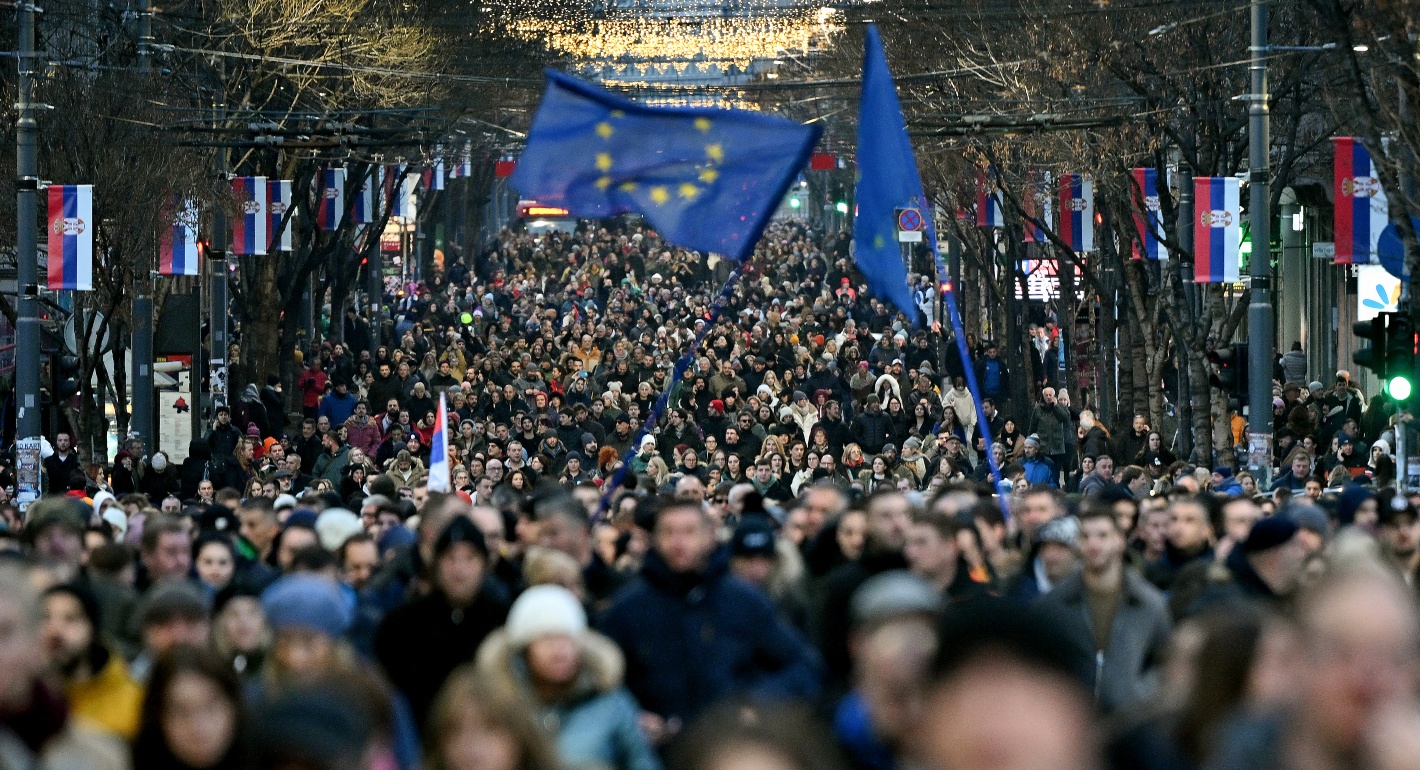
Serbia experienced a year of almost continuous student-led protests, which began in response to the partial collapse of the Novi Sad train station in November 2024 but grew into a broader movement to fight corruption and uphold the rule of law. While Serbian President Aleksandar Vučić and the government continued to insist on their EU aspirations, their actions undermined their rhetoric, with repression against the protesters increasing as the year unfolded. The regime tightened its control over NGOs and independent media.99 EU leaders, for their part, tightened conditionality and pressure and reiterated that if Serbia wanted to move forward with accession, it needed to implement reforms: “The steps are clear. Media freedom, the fight against corruption, and electoral reform,” said Kallas.100 As tensions with the EU deepened, Vučić stayed away from a December summit in Brussels. Still, the protesters did not receive any meaningful EU assistance, and civil society groups called on EU officials to do more to aid democratic reforms in Serbia amid the political crisis.101
The year 2025 was dominated by concerns about the extent to which European funding could compensate for the end of U.S. democracy aid. A significant increase in demand for funding from international partners put the spotlight on European funders. The European Commission and several EU member states stepped up their support to salvage some democracy initiatives hit by the U.S. cuts. Overall, however, European donors could not respond in full to the abrupt U.S. withdrawal, and European donors filled only a handful of gaps.
The commission presented its proposal for the EU’s 2028–2034 budget, and debates began with the member states on this. The commission proposed merging over fifty programs under three main funds—those for regional reforms, European competitiveness, and foreign policy—and giving more funding power to national capitals.102 The proposal included a Global Europe Instrument worth €200 billion, with €100 billion envisaged for the next stage of the Ukraine Facility and €15 billion for crises and unforeseen events. The budget proposal did not include any guaranteed funding for democracy and human rights, ending more than thirty years of such protected funds. There was some indication that the commission wanted to support moments of democratic opportunity through so-called cushion funding and retain some scope to fund civil society initiatives without governmental approval in third countries.103
The EU moved farther toward a new approach to development by focusing more on geostrategic interests and economic gains, rather than democracy support, as exemplified by the growing focus on the Global Gateway. An internal document revealed that the EU wants to extract more value from foreign aid by adding conditions on the transfer of funds that align closely with the EU’s priorities, such as curbing migrant flows.104
In 2025, the EU entered the last two years of its 2020–2027 Multiannual Indicative Program for Human Rights and Democracy, worth €1.5 billion. From this, allocations for human rights and democracy activities in third countries amounted to €248.8 million for 2025–2027 (see table 1), including approximately €84 million for 2025. A further €145.7 million for the year was allocated to supporting CSOs in third countries (see table 2).105
The EU said it was on track to reach its target of allocating 20 percent of its geographic programming to activities that support democratic governance and human rights. However, almost all individual country allocations for 2025–2027 were severely reduced in favor of regional investment envelopes for sub-Saharan Africa, the Asia-Pacific, and Latin America. The reallocations of these funds were meant to bolster a variety of efforts, such as curbing migration, but not supporting democracy.
The EU announced fewer democracy-related initiatives in 2025 than in previous years, as it approached the end of its 2020–2027 programming. Still, some new EU democracy projects were forthcoming during the year. The union launched a €5.5 million call to support civil society, human rights, and democracy in Palestine.106 It also unveiled a call for a cooperation facility and civil society support in the Asia-Pacific in response to youth-led protests in the region; this initiative had an indicative budget of €17.6 million for 2025–2027, with €3.8 million earmarked for civil society support.107 The EU launched a similar support measure for Nepal, with a total envelope of €4 million, out of which €1.5 million was dedicated to civil society support for 2025–2027.108 Further calls for civil society support were opened for Yemen (€4.1 million), South Africa (€3.2 million), Mongolia (€3 million), and Lesotho (€1.4 million).109
EU support for media development continued to be a priority in 2025, with the launch of a €3 million funding call to support exiled Belarusian and Russian journalists.110 Another new project focused on supporting civil society in Uzbekistan, with funding of €2.9 million.111 In neighboring Tajikistan, the EU enhanced its existing partnership agreement, which includes €142 million for 2021–2027.112 The union adopted the Cooperation Facility and Civil Society Support measure for the country, to run until 2027 with the aim to support CSOs and civic space.
The EU was active in sub-Saharan Africa, too. The bloc launched a joint initiative with the UN Development Programme in Namibia to reduce corruption and strengthen accountability.113 It also established Inclusive Lesotho, a multiyear €16 million cooperation program designed to strengthen civic education, voter registration, and transparency in political finance.114 The EU and its partners Mercy Corps, Eve Organization, and the Institute for the Promotion of Civil Society launched the Supporting Civil Society Empowerment in South Sudan project.115 The initiative aims to strengthen the technical and organizational capacities of local CSOs as agents of good governance and development in the country.
Team Europe Democracy (TED), an EU initiative launched in 2021 to promote democracy and human rights worldwide, was set to receive a contribution of €2.8 million from the EU’s 2025 budget, bringing the scheme’s total support to €7.8 million. TED has projects in thirteen countries, offering coordinated support for EU delegations. TED also has seven ongoing action grants for 2025–2026, each with a budget of between €60,000 and €90,000.116 The initiative has so far supported the EU delegations in Colombia, the Democratic Republic of the Congo (DRC), Jordan, Mongolia, Tanzania, and Uganda.117 The EU announced several election observation initiatives through its Foreign Policy Instrument, including a €200 million call for integrated logistical, administrative, financial, and security support for the deployment of various EU election observation missions.118
The European Endowment for Democracy (EED) significantly expanded its support for civil society and independent media across the EU’s neighborhood in response to the crisis of U.S. foreign aid funding. The EED received twice as many applications for support in 2025 as in 2024 and approved 30 percent more grants. The endowment provided more small grants than usual, enabling it to support more organizations. The EED also approved an emergency funding mechanism that allowed it to provide limited funding to reduce the immediate damage caused to civil society and independent media partners by the sudden cut in U.S. funding. Initially, this support focused on providing for the short-term survival of critical institutions within the democracy infrastructure, enabling them to cover basic operating costs. The endowment then extended this funding to emergency requests from larger and more established organizations that do not usually receive EED funds.
The Global Gateway gained more political prominence in 2025 and tilted even more toward big infrastructure projects. Forty-six Global Gateway flagship projects were planned for the year, in the areas of digital, climate and energy, transportation, health, education, and research.119 A second Global Gateway Forum took place in Brussels in October, bringing together high-level representatives of governments, financial institutions, the private sector, and civil society to explore innovative strategies. Twelve heads of state and government and over seventy ministers from Africa, Latin America, and the Caribbean attended the forum, where the EU announced the initiative had achieved its €300 billion target and was expected to mobilize a total of €400 billion by the end of 2027, although it is unclear how much money is new.120
Some examples of governance-related Global Gateway projects announced in 2025 include €17 million in additional support for Bhutan to strengthen good governance and drive the country’s digital transition and a €60 million program for inclusive societies in Latin America and the Caribbean.121 The only EU member state to have a dedicated Global Gateway ambassador, Finland, specifically tied its development policy to the initiative.122
The commission has grown more aware of the criticism that the Global Gateway is not effectively addressing the challenges of democratic erosion. In response, the commission launched a so-called Global Gateway 360 approach, which strives to make the initiative about more than infrastructure by embedding governance aid into projects and linking it with social responsibility. The 360 approach emphasizes activities that improve the enabling environment for investments to be sustainable.123 If pursued in practice, this approach would mean moving toward mainstreaming democracy support through Global Gateway projects.
European donors such as France, Germany, the Netherlands, Norway, and the UK announced development budget cuts as the United States slashed its democracy support. At a smaller scale, a few European donors increased their overall development budgets, with some spillover effects for democracy funding.
Southern European states announced increased funding, albeit of modest scope. Italy’s official development assistance (ODA) was projected to increase by 6.7 percent to reach €6.7 billion in 2025.124 Spain’s ODA had grown by 12 percent in 2024 to exceed €4 billion, a trend that continued for 2025.125 Within Spain’s ODA, the allocation for a rather broadly defined category of democracy and governance stood at 19.7 percent in June 2025, an increase from 16 percent in 2022, with most of this aid going toward initiatives in Latin America, the Sahel, and the Maghreb. Small-scale pilot funds for digital rights and democratic innovation were a notable emerging focus. The Spanish development agency ran a €1.5 million democracy program, calling for submissions in the areas of historical memory and postconflict transitions, with a regional focus on Latin America.126
Romania announced its first ODA increase since 2020, with part of the funding allocated to media support initiatives in Moldova and the Western Balkans as well as the Office of the UN High Commissioner for Human Rights, within an overall budget of 5 million lei (€1.1 million).127 Ireland registered an increase of €35 million compared with previous years, bringing the total Irish Aid budget for 2025 to €810 million.128 Some of this funding will go to CSOs, including €500,000 for organizations in Nepal.129
By contrast, many other European donors announced funding cuts in 2025. Austria decreased its ODA budget, which was projected to fall to €1.2 billion.130 Belgium announced that it would slash its development budget by a quarter over the next five years.131 This will impact funding for multilateral organizations, humanitarian aid, and civil society as Belgium moves toward prioritizing sectors like health.
For the first time since 2018, German development aid was projected to fall below €10 billion, with further reductions planned.132 Proposals by the governing Christian Democratic Union and Christian Social Union (CDU/CSU) to integrate Germany’s development ministry into the foreign ministry reflect ongoing debates about aligning development, foreign, and security policies. The Foreign Office announced an internal restructuring aimed at increasing the office’s “effectiveness in the areas of security policy, the international order and economic development and security.”133 The reform will dissolve a unit in charge of stabilization and humanitarian and peace affairs, which has been running since the 2000s, and replace it with a new emphasis on security policy, while cutting hundreds of jobs at the ministry. Meanwhile, Germany is moving away from traditional humanitarian deployments toward longer-term partnerships that fund local actors and strengthen state systems.
France’s 2025 budget included sharp aid cuts, reducing the ODA budget by about €2.3 billion from 2024 levels.134 Core bilateral grants, NGO partnerships, and humanitarian envelopes—the main channels for democracy aid—were the most affected. Among French priorities, electoral integrity, digital governance, and support for civic participation remain, but the funding squeeze means fewer projects on the ground, raising concerns over France’s position as a democracy and development donor.
The Netherlands announced a complete overhaul of its development policy toward a more pronounced focus on national interests.135 Historically, the country has been a champion of democracy support and a significant donor, but this move marks a shift away from this stance. The Dutch government decided to cut development aid by €2.4 billion from 2027. When announcing the policy, then-minister of foreign trade and development aid Reinette Klever declared that “all programs we finance must directly contribute to our own interests: trade, security, and less migration.” The Matra and Shiraka programs, which support the rule of law and democracy in the EU’s Eastern Partnership region and the Middle East and North Africa, will have their budgets halved in the next three years. It remains unclear whether the change in Dutch government in fall 2025 will halt these reductions.
The UK announced its own funding reductions early in the year, cutting aid spending from the equivalent of 0.5 percent of gross national income (GNI) to 0.3 percent in 2027 and pivoting instead toward upgraded defense spending.136 While some elements of democracy support remained relatively unaffected for now, such as funding for the Westminster Foundation for Democracy (WFD), democracy aid suffered farther-reaching cuts than other areas of development assistance. Still, the UK Foreign, Commonwealth, and Development Office (FCDO) upgraded several notable democracy-related projects in 2025, including a Ukraine Governance Reform Program.137 The WFD received a total of £11.2 million (€12.9 million) in the 2024–2025 financial year, and the FCDO made a £700,000 (€806,000) contribution to the EED in 2024–2025 to support democracy in the Western Balkans.138
Finland saw a very slight decrease in its development cooperation budget in 2025. Out of a budget of €1.1 billion, €98 million was dedicated to supporting civil society through partnerships with CSOs.139 However, in 2024, the Finnish Ministry for Foreign Affairs had decided to discontinue project funding for communication and global education as well as grants for peace organizations.140 Many of the effects of these cuts became visible only in 2025. In addition, state subsidies for civil society activities related to foreign and security policy and international commitments were already under threat of termination for 2025, although the subsidies were eventually awarded.141 The Finnish government also announced the closure of its embassies in Afghanistan, Myanmar, and Pakistan because of “changes in the countries’ political situation and their limited commercial and economic relations with Finland.”142
The Norwegian ODA budget fell markedly, although Norway maintained significant support for democracy, with 1 billion kroner (€85 million) going to CSOs in the Global South through its agency Norad.143 Denmark allocated the equivalent of 0.7 percent of its GNI to development cooperation in 2025 and allotted 257.5 million kroner (€34 million) to its Democracy, Human Rights, and Good Governance program.144 Sweden maintained a similar level of overall funding as in 2024, although this is set to fall in 2026. Democracy and support for human rights remained Swedish aid priorities, with a human rights and democracy budget of around €76 million a year. Unlike other donors that moved away from pursuing gender equality and inclusion as a thematic focus, Sweden maintained this priority in 2025, including by launching a three-year Strategy for Gender Equality and Women’s and Girls’ Freedom and Empowerment with a €70.9 million budget.145
Baltic and Central European states continued to offer very limited democracy funding. Lithuania’s ODA had totaled €179 million in 2024, accounting for the equivalent of 0.24 percent of the country’s gross national product, a 12.9 percent decrease from 2023 and below its 0.33 percent target for 2030.146 Lithuania’s focus remained on Ukraine and the Eastern Partnership region. In terms of democracy support, Vilnius provided €720,000 over 2021–2025 to co-finance the EU4Youth program, which covers Armenia, Azerbaijan, Belarus, Georgia, Moldova, and Ukraine. Lithuania also contributed €88,600 to counter disinformation in the Eastern Partnership region, but not all these funds were disbursed in 2025.147
Other Baltic states decreased their development budgets to invest more in defense. While Latvia cut its overall ODA budget, it also launched a new development cooperation brand, LATDEV, with total funding of €1.2 million, of which €700,000 was earmarked for projects in Ukraine.148 Latvia’s development aid included a special focus on projects that support civil society and independent media in Belarus and Georgia. Estonia’s ODA, like Lithuania’s, focused strongly on support for Ukraine.149
In the Czech Republic, the main democracy-support funding instrument, the 2025 Transition Promotion Program, had a budget of €4 million.150 There are also bilateral cooperation programs for 2024–2030 with Bosnia and Herzegovina, Cambodia, Ethiopia, Moldova, and Zambia. The Czech Republic spearheaded efforts to fundraise for the Prague-based Radio Free Europe.151 As a result of Czech diplomacy, the EU offered €5.5 million to the broadcaster via the EED, and Sweden donated around €2 million.152 Poland’s ODA in 2025 was guided by the foreign ministry’s development cooperation plan, with Ukraine remaining the top priority.153 Poland also supported political refugees from Belarus and independent media in the country as part of its broader democracy-support initiatives.
As in previous years, the EU continued to fund initiatives that support democracy inside Europe, and this funding gained weight relative to external EU democracy aid.
The Citizens, Equality, Rights, and Values (CERV) program had a total budget of €224.8 million for 2025.154 This sum included indicative allocations of €39.2 million to promote equality and rights; €89.7 million to encourage citizens’ engagement and participation in the democratic life of the union; €27.3 million to support the Daphne strand, which focuses on preventing and combating gender-based violence; and €68.6 million to protect and promote union values.155
Early in the year, there were concerns that CERV would no longer continue under the EU’s next multiyear budget. However, the budget proposal indicated that funding for internal democracy issues would remain under a new instrument called AgoraEU—a contrast to the disappearance of a fund for external democracy support. This would merge CERV with other instruments, like Creative Europe and the media funding stream, for a total indicative budget of €7.6 billion. The budget proposal noted that around €3.1 billion would be dedicated to the AgoraEU strand on democracy, citizens, equality, rights, and values, representing a more than twofold increase from the original budget of €1.6 billion.156 While the headline figures represent significantly bigger commitments, negotiations have only just begun.
Meanwhile, financing for justice and the rule of law within Europe was available through the union’s Justice Program for a total value of €41.8 million for 2025.157 The multiyear budget proposal indicated an increase in this area, to €798 million from the previously earmarked €305 million. Creative Europe MEDIA had €190 million for supporting the media sector’s development and resilience in 2025; much of this was not related to democracy, but the program supported projects on media pluralism and access to reliable information and fact-checking.158 The EU also launched a €5 million call for proposals to strengthen the European Fact-Checking Network as well as two calls, together worth nearly €5 million, to boost media literacy and resilience against disinformation through FIMI detection and fact-checking.159
In response to the funding cuts to U.S. civil society projects across Europe, the European Economic Area (EEA) and Norway Grants increased their support from €200 million to over €300 million for organizations that promote human rights, democracy, and good governance in fifteen EU countries.160
Overall in 2025, the EU imposed sanctions on 354 individuals and 388 entities, a total of 742 additions across all sanctions regimes—not all of these related directly to democracy.161 Five years on from its introduction in 2020, the EU’s global human rights sanctions regime (GHRSR) continued to be used sparingly and apparently ad hoc—as previous editions of this annual review reported. The EU added only nineteen individuals and entities to this regime in 2025. The union declined to impose measures against many rights abusers that the sanctions regime could have targeted.162 There was no progress in 2025 toward an EU anticorruption sanctions regime.
The UK’s global human rights sanctions regime also added nineteen individuals and ten entities in 2025; at the end of the year, this regime applied to a total of 134 individuals and thirty entities, while the country’s anticorruption regime covered sixty-four individuals and one entity.
The most pointed and high-profile debates about sanctions in 2025 related to Israel. The EU undertook a review of Israel’s compliance with human rights and democratic principles under the country’s Association Agreement with the bloc, yet no decision to suspend the accord followed from this. EU member states could not agree even to the commission’s extremely modest proposal to suspend Israel from Horizon Europe research projects. When von der Leyen proposed considering sanctions in September, there was no consensus among member states in support of the move.
Some countries took partial measures against Israel individually. On August 8, Germany decided to stop arms sales to Israel that could be used in Gaza.163 The UK added new sanctions targeting three individuals, two illegal settler outposts, and two organizations that support violence against Palestinian communities in the West Bank as well as two Israeli ministers for extremist violence against Palestinians.164 The debates on Israel were about the violence rather than democracy as such; yet the EU’s reluctance to censure Israel increasingly weakened the credibility of EU democracy aims elsewhere.
The EU updated several sanctions packages during the year, either by including new entities or by extending the duration of existing ones. The union added three individuals and one entity to its sanctions framework for Guatemala for undermining democracy and the rule of law.165 The EU extended its sanctions against twenty-one people and three entities in Nicaragua for another year. The bloc called for the restoration of fundamental freedoms in the country, including the right to dissent, and the release of political prisoners as well as the defense of human rights, democracy, and the rule of law.166
For Venezuela, the EU added fifteen individuals to its listings, bringing the total number of people sanctioned to sixty-nine, including members of the National Electoral Council of Venezuela, the judiciary, and the security forces.167 After the United States removed then-president Nicolás Maduro in January 2026, the EU and the member states retained their sanctions on the country while beginning a reassessment of their approach toward it.
Similarly, the EU imposed restrictive measures on seven more individuals and two entities under its Iran sanctions framework.168 Later in the year, so-called snapback sanctions on several individuals and multiple sectors in Iran were triggered in response to Tehran’s nuclear proliferation activities in breach of the 2015 Joint Comprehensive Plan of Action.169 In early January 2026, Kallas proposed additional sanctions on Iran in response to the regime’s brutal crackdown on protesters, which caused several thousand deaths.170 The EU added nine individuals and one entity to the sanctions framework that covers the DRC, bringing the total numbers listed to thirty-two individuals and two entities.171 The union also renewed its sanctions on Guinea until later in 2026.172
Closer to home, the EU denounced the 2025 presidential election in Belarus as a “sham” and announced plans to impose further restrictive measures against the Belarusian regime, with twenty-five individuals and seven entities sanctioned for subverting democracy.173 The union also imposed sanctions for Minsk’s support for Russia’s war in Ukraine. EU sanctions on Belarus targeted a total of thirty-one individuals and forty-six entities at the end of 2025.174 Still, it was the United States’ reengagement with the regime, its lifting of some trade restrictions, and its pursuit of potash purchases, rather than EU sanctions, that convinced Belarusian President Alexander Lukashenko to release over fifty political prisoners.175
Russia continued to be the most sanctioned country under the EU sanctions framework. In 2025, the union approved three rounds of measures against the country for its 2022 invasion of Ukraine. The EU also pursued sanctions that target repression within Russia, with restrictive measures on twenty-eight individuals “for serious violations of human rights, the repression of democratic opposition, and activities seriously undermining the rule of law.”176 And the EU added three Russian individuals responsible for a series of cyber attacks against Estonia to the bloc’s cyber sanctions framework.177
The EU and individual countries made sparing use of conditionality and aid reductions in 2025, but some notable developments did occur.
In Palestine, the EU moved to attach democratic conditions on aid to the Palestinian Authority. President Mahmoud Abbas promised elections and democratic reforms in exchange for a French-Saudi initiative on a Palestinian state, a plan that would not allow Hamas to stand in elections.178 While formally strict political conditionality was attached to new aid, with reconstruction so urgent and the EU having failed to prevent wholesale destruction in Gaza, many feel it may be too late for this democracy element to have much impact. Funds under the EU’s PEGASE mechanism in support of the Palestinian people continue to flow for day-to-day expenses. Germany, Luxembourg, Slovenia, and Spain committed a total of more than €82 million to the Palestinian Authority, bringing the amount pledged in 2025 to over €88 million.179 European leverage over and support for local Palestinian democracy offered little to offset the U.S. proposal for a Board of Peace to oversee Gaza’s transitional administration, a plan that most Palestinians saw as a threat to democratic self-determination.
In Rwanda, several European donors—most notably, Germany and the UK—reduced or suspended their development aid. This move was not strictly due to the country’s ever-tighter authoritarianism but rather a response to its role in the conflict in the neighboring DRC.180 Rwanda itself also decided to suspend its development cooperation program with Belgium after accusing it of taking sides against Rwanda in the conflict.181 The EU imposed sanctions, and the bloc’s foreign ministers agreed to suspend defense cooperation with Kigali and review an agreement on minerals access.182 After a peace agreement was signed in June 2025, the DRC accused the EU of double standards and demanded stronger action and sanctions.183 Meanwhile, the EU froze good-governance aid to Zimbabwe after the country’s government introduced a controversial NGO law that restricted civic actions and freedoms, although humanitarian, agricultural, and some sectoral support remained.184
In a case of positive conditionality, as Syria moved forward after the December 2024 ouster of former president Bashar al-Assad, both the EU and the UK agreed to begin easing sanctions on the country.185 The EU lifted some sanctions in February and May 2025. At the same time, the union added new sanctions on people associated with the former Assad regime and those responsible for human rights violations.186 The EU moved but lagged behind the United States in easing sanctions; the visit by Syria’s president to the White House in November widened this gap between Washington and Brussels. In December, the UK imposed new measures on individuals involved in violent assaults in coastal areas of Syria earlier in the year. Despite embryonic support from the United States and the EU, it remained unclear whether Syria’s new government would genuinely follow through on its commitments to democracy.
As in previous years, the instances of EU democratic conditionality, pressure, and sanctions were far outnumbered by cases in which the union chose not to adopt critical measures against autocratization—and, indeed, offered nondemocratic regimes new cooperation and funding.
In April, Egypt joined the Horizon Europe research program despite restrictions on academic freedom in the country.187 EU cooperation with the autocratic Egyptian regime deepened during 2025, including at an EU-Egypt summit in October. The EU announced a €4 billion macrofinancial assistance program for the Egyptian government.188 Kallas and European Commissioner for the Mediterranean Dubravka Šuica traveled to the Gulf in December, and plans advanced for a new strategic partnership agreement between the EU and Saudi Arabia.
The EU prepared a package of new support for backsliding Jordan, which was eventually made concrete during a visit by von der Leyen and Costa in the first week of January 2026. In Tunisia, the EU continued to release new economic support largely linked to migration, while the country further autocratized.189 The EU moved farther away from backing Western Sahara’s democratic self-determination in favor of cooperation with authoritarian Morocco. European countries such as France, Portugal, Spain, and the UK tilted toward stronger support for Morocco’s autonomy plan; Belgium was set to follow suit. After Turkey, Morocco is the largest recipient of EU cash for migration controls.
The EU announced plans for further migration deals with Côte d’Ivoire, Gambia, Mauritania, Nigeria, Senegal, and the junta-led countries in the Sahel, despite autocratic trends in all of these states.190 In Tanzania, the EU paused most aid after the arrest of opposition leaders, heavy manipulation of elections, and a violent government crackdown on protesters, but by year’s end, the union had not formally adopted any punitive measures against the autocratizing regime.191 The EU did not impose sanctions after the Ivorian government effectively stole the 2025 presidential election and President Alassane Ouattara began a fourth term; indeed, EU aid continued and France recognized the new administration.192
The EU did not respond officially to the military coup in Madagascar, which took place amid youth-led protests; the French government evacuated the ousted president. In contrast, the African Union (AU) suspended Madagascar. When a military coup took place in Guinea-Bissau, where the military seized power after arresting then-president Umaro Sissoco Embaló, the EU issued a statement calling for a swift return to the constitutional order and the resumption of the electoral process but adopted no further measures.193
In April, an EU–Central Asia summit took place, at which the union promised funding and cooperation on transportation, digital connectivity, critical raw materials, security, and energy with the region’s highly autocratic regimes. The EU was willing to sign a trade deal with Mercosur despite Paraguay’s introduction of a highly repressive NGO law and multiple democracy concerns with President Javier Milei in Argentina; the accord was delayed only because of European fears about agricultural imports.
The EU signed the abovementioned New Strategic Agenda with India despite continued democratic backsliding in the country. The EU stayed back from protests in Nepal that ousted the government, although it did later provide €1 million of support to civil society, citing the Gen Z–led demonstrations as a motivation to strengthen the civil society sector.194 The union concluded negotiations on a Comprehensive Economic Partnership Agreement and an Investment Protection Agreement with Indonesia just after a series of violent government crackdowns on youth protests.195 The EU similarly did not adopt measures in response to government repression of protests in the Philippines; this absence of action was despite the EU’s observation of the 2025 general election and ongoing debate within the bloc about the possible removal of favorable trading arrangements under the EU’s Generalized Scheme of Preferences Plus (GSP+).
In China, violations of human rights and democratic principles continued without EU measures in response. In January, the union issued a statement on the appeal verdict of human rights lawyer Yu Wensheng, urging Beijing to release him, his wife, and other detained human rights defenders; however, no measures went beyond this.196 In April, China lifted sanctions against members of the European Parliament that had been imposed in 2021.197 In July, the EU-China summit was shortened amid tensions over Chinese support for Russia, with no focus on democracy or human rights. In fact, the EU sought cooperation with Beijing throughout the year, framing strategic autonomy as a new turn to China to offset the effects of Trump’s economic policies. The UK offered little beyond rhetorical condemnation when democracy campaigner Jimmy Lai was convicted in Hong Kong, even though he is a UK citizen. London declined to classify China as a national security threat despite pressure from the UK Parliament’s Intelligence and Security Committee to do so, amid a rising number of spying cases, cyber attacks, and instances of intimidation of politicians.
Finally, a report by the European Central Bank criticized the EU for trading increasingly with nondemocracies, calling into question the union’s commitment to sustainable trade policy goals that respect democratic, human, and social rights.198 The EU tightened GSP conditionality on migration control—with trade preferences now set to be withdrawn if a beneficiary country does not cooperate with the EU on the readmission of its nationals—but not on democracy.199 The union did not invoke GSP+ conditionality, despite clear democratic backsliding from some of the countries that benefit from the trade partnership. Two countries—Pakistan and Sri Lanka—are currently under scrutiny, although the EU had not taken any formal action by the end of 2025.
As mentioned, the EU’s focus on democratic conditionality in 2025 was tougher within the union than externally, although still mixed overall. Hungary continued to pose significant challenges for EU democracy support. The Sovereignty Protection Office, a Hungarian government body, targeted independent media and CSOs throughout the year. Hungary also withdrew from the International Criminal Court, against the position of the EU.200 Still, the June 2025 Budapest Pride parade went ahead despite a ban and became what was possibly the largest single demonstration in post-1989 Hungary.201 Additionally, a proposed and highly criticized transparency law, which would have banned organizations and individuals critical of the government from accepting foreign—and, eventually, domestic—funding, was in the end postponed.
On rule-of-law sanctions, Budapest unsuccessfully attempted to unfreeze some suspended EU funds in 2025.202 At year’s end, €18 billion remained suspended in relation to rule-of-law concerns. There was no movement on deploying the EU’s Article 7 procedure to suspend Hungary’s voting rights in the EU Council; the process has been stuck in its initial stage since 2018. The commission moved to offer Hungary a loan for defense equipment, reportedly in return for the Hungarian government lifting its veto on a loan agreement for Ukraine.203
As Slovakia’s government continued to erode democracy, the commission started infringement proceedings against it for contravening the principle of the primacy of EU law.204 In October, the Party of European Socialists officially expelled Slovakia’s left-wing Smer party, ending twenty years of membership.205 At the close of 2025, Smer sought to join the Patriots for Europe but was ultimately unsuccessfully because of an “ideological divide.”206 After the Slovak government passed a restrictive NGO law that it had paused at the EU’s behest in 2024, the union issued warnings about possible infringement proceedings but, by the end of the year, was still to take action.207 In December, the commission held back a small amount of funding to Bulgaria as protests there ousted the corruption-rocked government.
Poland continued to suffer from the rule-of-law fallout of the previous government’s judicial overhaul. While the commission released all EU funds for the country, the European Court of Justice (ECJ) upheld a previous €320 million fine.208 Poland’s deputy justice minister claimed that together with daily fines, PiS’s reforms had cost Polish taxpayers a total of €710 million.209 The ECJ also ruled in September that the Polish Supreme Court’s Chamber of Extraordinary Control and Public Affairs, a body established by PiS, was illegitimate and that lower courts could disregard its rulings.210 In a case lodged by a Polish couple, the ECJ ruled that member states must legally recognize same-sex marriages concluded in other EU countries.211 Additionally, several hundred cases involving so-called neo-judges—judges appointed in a compromised process—were still pending at the European Court of Human Rights at year’s end.212
Through the European Peace Facility (EPF), the EU expanded its support in 2025 for security forces around the world—some in democratic countries, others in authoritarian states. The latter included Chad, the DRC, Jordan, and Mauritania. Security support went to many hybrid regimes: to Lebanon to help implement a ceasefire with Israel; to Moldova and North Macedonia to rebut external interference; and to Albania, Cape Verde, and Montenegro for maritime security. At an EU-AU ministerial meeting, the EU agreed to supply military equipment through the EPF and the African Peace and Security Architecture—funds destined to some democracies but to many security forces in nondemocratic regimes, too.213
The EU’s security engagement in West Africa was mixed, with some security actions framed as supporting democratic governments but others aimed to protect nondemocratic regimes. EPF-funded military equipment was delivered to Ghana, described by the EU as “a model for the sub-region and beyond, exemplified by the smooth democratic transition in 2024.”214 Under the EU’s Gulf of Guinea Security and Defense Initiative, the union offered training to armed forces in Côte d’Ivoire to counter disinformation and strengthen strategic communication; this was despite the country’s marred presidential election and creeping autocratization.215
In junta-led Mali, the EU approved a two-year extension of its Capacity Building Mission, known as EUCAP Sahel Mali, with the stated objectives of security and the rule of law.216 Within the mission, the EU also extended a regional advisory and coordination cell until 2026.217 In Niger, the Belgian military withdrew, while the EU tried to find ways to restore relations with the authoritarian government. The European Commission sent a humanitarian envoy, and Germany considered resuming its development aid.
In line with the EU’s focus on migration, the presence of the European Border and Coast Guard Agency (Frontex) in West Africa expanded through surveillance operations in cooperation with security forces to help control borders.218 Cape Verde and Frontex started cooperation on aerial surveillance flights aimed at boosting “situational awareness over the Atlantic,” despite questions over human rights protection.219 In Senegal, the EU’s €30 million funding to tackle irregular migration was set to be distributed through a police cooperation project, with a second phase that includes curbing terrorism.220
Resentment against France in the region remained palpable. Paris withdrew from Senegal, ending its permanent military presence in West and Central Africa. Yet, France and its stakeholders were still active in the country and the broader region, where they were engaged with several hybrid regimes. A French contractor linked to the Ministry of the Armed Forces was set to equip Senegal’s forces with European funds worth €10 million.221 Meanwhile, a French company delivered aircraft to Benin within the EU’s military cooperation framework;222 Expertise France, the French public agency for international technical cooperation, set up EU-funded military infrastructure in Côte d’Ivoire;223 and a French vehicle manufacturer supported the Mauritanian army in the framework of the Group of Five (G5) Sahel.224 Despite all this, France’s minister of state for Francophonie and international partnerships said of the region’s security crisis, “I am sorry to say, but it no longer concerns us.”225
Elsewhere in Africa, the EU Training Mission in the Central African Republic announced the 2026–2030 Military Programming Law, aimed at transforming the country’s armed forces into “a modern, accountable, and resilient institution” with “national ownership and transparent governance in the security sector.”226 The mission also established an officers’ school to train and empower locals “to make a positive difference” in the country.227 The EU Military Assistance Mission in Mozambique launched a civil-military training program designed to reinforce social support for institutions and vulnerable communities, including children.228 This was despite the Mozambican government holding onto power through antidemocratic means since the October 2024 general election, with human rights violations reported.229
Sudan’s conflict spiraled dramatically, but European engagement was limited. The Sudanese regime gained more European sympathy as attacks by the Rapid Support Forces (RSF) militia increased—even though the government itself is highly repressive and autocratic. As the militia launched new attacks, the EU hosted a fourth consultative meeting with multilateral organizations and regional actors to enhance coordination of peace efforts.230 In August, a joint statement by thirty European donors called on the RSF to halt its attacks and grant a humanitarian pause.231 The EU extended until October 2026 its restrictive measures against ten individuals and two entities “for destabilising Sudan and obstructing its political transition” and adopted sanctions against the RSF’s second-in-command.232
In October, the EU Council pushed for “genuinely inclusive, representative and independent civilian governance” in Sudan. In practice, the EU and its member states did not seek strong engagement compared with other powers and remained primarily concerned with de-escalating the conflict.233 The bloc pressed its European Program for Critical Infrastructure Protection and aimed at a commitment from Sudan’s opposing factions not to target energy infrastructure and airports.234 Meanwhile, the EU deepened its partnership with the United Arab Emirates despite the latter supplying arms to the RSF, to the anger of Sudanese diplomats.
Finally, in Somalia, EU funds helped renew an AU peacekeeping force, but other powers were reluctant to support this initiative as the so-called Islamic State and al-Shabaab gained momentum against an autocratizing government. There was little room for democracy considerations, since external powers backed different sides. The United States cut its aid dramatically but increased direct air strikes on Islamist fighters, with some success. There was no direct EU security involvement to protect the possibility of democratic peacebuilding.
The inversion of U.S. foreign policy from supporting democracy to backing autocracy cast a disconcerting shadow over European democracy policy in 2025. EU policymakers certainly recognized the need for the union and individual members—and, indeed, non-EU European governments—to show themselves capable of a firm democracy commitment without the anchor of the United States playing a lead role on this agenda, at least with Trump in office. Yet, the U.S. autocracy flip in many ways pulled European policies in the opposite direction; feeling more exposed by the United States’ visceral realpolitik, European governments felt obliged to double down on protecting their own power and well-being.
This double face of EU policy has been taking shape for some years and is certainly not a result only of the Trump policy shift, and yet in 2025 it became even more sharply defining. This looks set to be an enduring feature of EU policies: The union will feel both that democracy depends a lot more on its own efforts now and that it has less scope and heft to focus on democracy support than on other policy priorities. In this sense, the trend toward security primacy accelerated dramatically in 2025. In a small number of cases, this shift catalyzed democracy support, but more often it crowded it from the geostrategic script. As in previous years, in 2025 the EU deepened cooperation with many autocratic regimes and declined to respond in any critical manner to many clear attacks on democratic norms.
EU enlargement did not advance dramatically in 2025, but the bloc’s use of democratic conditionality tightened, and its democracy funding increased in candidate countries. While the EU focused more effort on the candidate states, the more global dimensions of European democracy support hovered equivocally. Policymakers talked of the need to form wider alliances with other democracies, but new EU partnerships included little about democracy support. In a year of widespread pro-democracy protest, the EU and its member states stood back from offering clear support to these fast-rising civic movements, despite the democratic opportunities they represented.
Within the EU, 2025 was the year of the European Democracy Shield. This initiative reinforced the union’s focus on disinformation and external interference. While the commission widened the shield to include other parts of democracy strategy beyond online interference, like citizen engagement, these elements lacked significant substance. The shield still needs to find the right balance between being too soft in policing the information space and too stringent in curtailing pluralist debate; it was criticized for both of these imbalances in 2025. The dense range of EU internal democracy laws and other measures was certainly impressive, a marked change from some years ago. But the impact of these measures remained in doubt, as the far right continued to gain ground—although it also suffered defeats and reversals.
The mixed trends reflected not only the bite but also the weaknesses of the EU democracy toolbox (see box). Debates began only tentatively in 2025 about using new defense spending for democratic resilience in Europe, but diplomats hoped that such spending might in the future prove to be a fillip to the democracy agenda. Similarly, early moves in 2025 to extend democratic conditionality on EU member states did not have an immediate tangible impact but could represent a major change in the years to come. In 2025, it was clear that Hungary and Slovakia have increasingly become structural impediments to EU democracy policies.
Most policymakers and practitioners saw 2025 as a turning point as the U.S. policy inversion turned the long-standing democracy agenda upside down. The shock of the Trump 2.0 administration prompted much talk of a need fundamentally to revise and rethink international democracy support—a concern that intensified into the first days of 2026 against the backdrop of events in Venezuela and Iran. In practice, the EU made limited progress on such a redesign, although it is certainly a very present need among policymakers and is likely to influence the democracy agenda for the foreseeablefuture. The faint signs of EU policy shifts in 2025 are likely to be the start of a longer and deeper process of adjustment to democracy support.
The five clearest pro-democracy steps:
The five worst developments for democracy:
Richard Youngs is a senior fellow in the Democracy, Conflict, and Governance Program at Carnegie Europe.
Elena Viudes Egea is a research assistant at the European Partnership for Democracy.
Zselyke Csaky is a senior research fellow at the Centre for European Reform.
Daniel Ekomo-Soignet is a programs assistant at the European Partnership for Democracy.
Ricardo Farinha is a program manager in the Democracy, Conflict, and Governance Program at Carnegie Europe.
Carlotta Magoga is a research and programs officer at the European Partnership for Democracy.
Evelyn Mantoiu is a research and data manager at the European Partnership for Democracy.
Ana Mosiashvili is a research and programs manager at the European Partnership for Democracy.
Elene Panchulidze is the head of research at the European Partnership for Democracy.
This publication is part of the European Democracy Hub initiative, run by Carnegie Europe and the European Partnership for Democracy.
This document was produced with the financial assistance of the European Union. The views expressed herein are the sole responsibility of the authors and can in no way be taken to reflect the official opinion of the European Union.


Senior Fellow, Democracy, Conflict, and Governance Program
Richard Youngs is a senior fellow in the Democracy, Conflict, and Governance Program, based at Carnegie Europe. He works on EU foreign policy and on issues of international democracy.

Elena Viudes Egea
Research Assistant, European Partnership for Democracy
Elena Viudes Egea is a research assistant at the European Partnership for Democracy.

Zselyke Csaky
Senior Research Fellow, Centre for European Reform
Zselyke Csaky is a senior research fellow at the Centre for European Reform.

Daniel Ekomo-Soignet
Programs Assistant, European Partnership for Democracy
Daniel Ekomo-Soignet is a programs assistant at the European Partnership for Democracy.

Program Manager, Carnegie Europe
Ricardo Farinha is a program manager in the Democracy, Conflict, and Governance Program at Carnegie Europe.

Carlotta Magoga
Research and Programs Officer, European Partnership for Democracy.
Carlotta Magoga is a research and programs officer at the European Partnership for Democracy.

Evelyn Mantoiu
Research and Data Manager, European Partnership for Democracy
Evelyn Mantoiu is a research and data managerat the European Partnership for Democracy.

Ana Mosiashvili
Research and Programs Manager, European Partnership for Democracy
Ana Mosiashvili is a research and programs manager at the European Partnership for Democracy.

Elene Panchulidze
Head of Research, European Partnership for Democracy
Elene Panchulidze is head of research at the European Partnership for Democracy.
Carnegie India does not take institutional positions on public policy issues; the views represented herein are those of the author(s) and do not necessarily reflect the views of Carnegie, its staff, or its trustees.
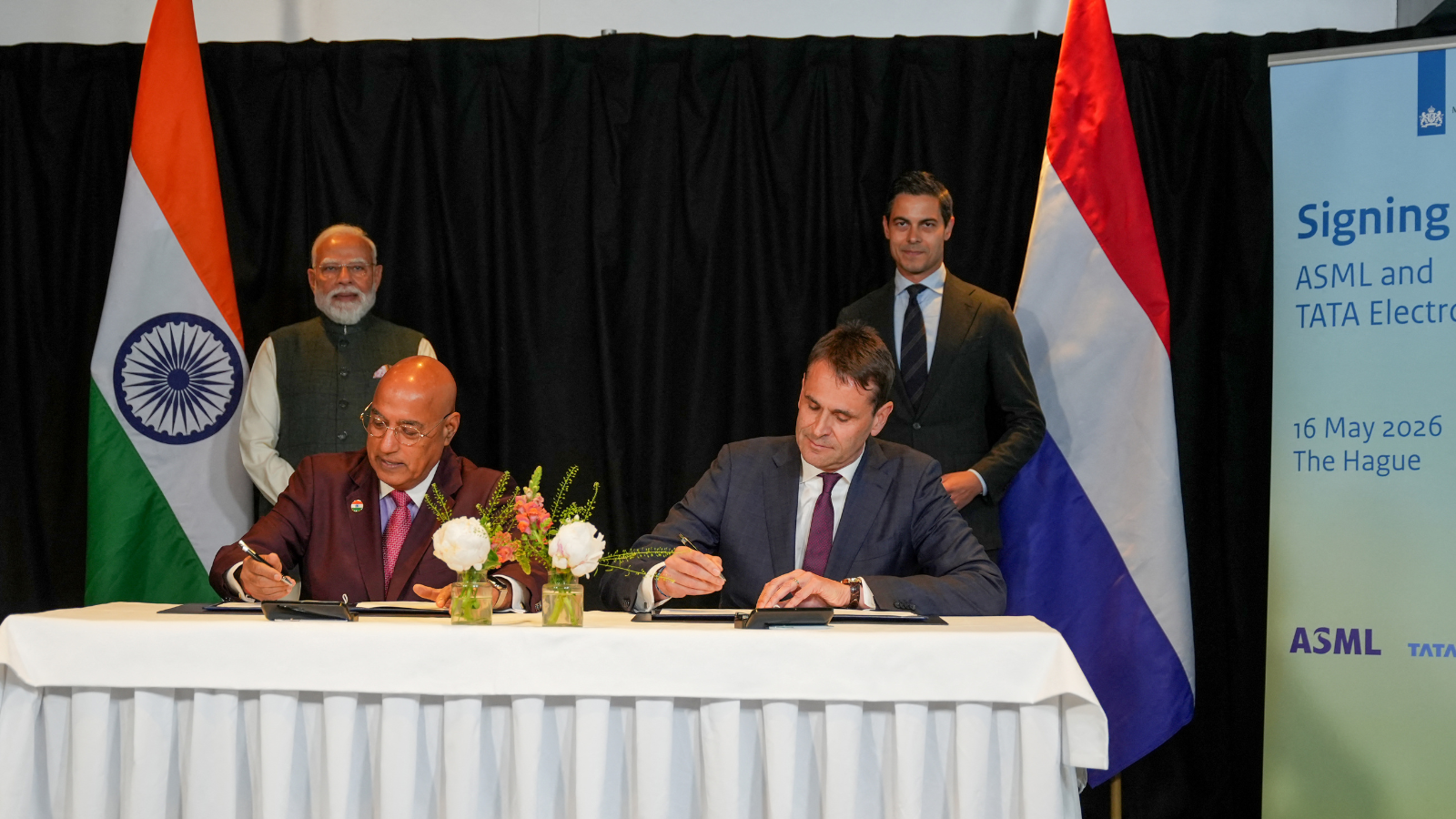
The ASML MoU with Tata Electronics is an indicator of how far the Indian semiconductor ecosystem has come. This ecosystem has been years in the making and represents real commercial logic.

Konark Bhandari
This paper examines the relationship between India’s evolving space policy and the corresponding growth in private space ventures. It analyzes both the enabling factors created by recent regulatory changes and the persistent challenges facing entrepreneurs in this capital-intensive, highly regulated industry.

Harshan Vazhakunnam

The India–EU Free Trade Agreement (FTA) is shaping up to be one of the most consequential trade negotiations, both economically and strategically. But, what’s in the agreement, what’s missing, and what will determine its success in the years ahead

Vrinda Sahai, Nicolas Köhler-Suzuki

This collection of essays by scholars from Carnegie India’s Technology and Society program traces the evolution of the AI summit series and examines India’s framing around the three sutras of people, planet, and progress. Scholars have catalogued and assessed the concrete deliverables that emerged and assessed what the precedent of a Global South country hosting means for the future of the multilateral conversation.



Nidhi Singh, Tejas Bharadwaj, Shruti Mittal, …

Trump 2.0 has unsettled India’s external environment—but has not overturned its foreign policy strategy, which continues to rely on diversification, hedging, and calibrated partnerships across a fractured order.



Milan Vaishnav, ed., Sameer Lalwani, Tanvi Madan, …