

Research
- +3
Nidhi Singh, Tejas Bharadwaj, Shruti Mittal, …

Source: Getty
The Indian Ocean Region hosts one of the densest concentrations of subsea cables in the world. Yet, despite accounting for a significant share of global internet traffic, India’s participation remains limited.
The analyses presented in this paper are based on developments up to May 31, 2026.
Undersea cables form the largely invisible but indispensable foundation of the modern internet, transmitting nearly 99 percent of global data traffic. Governments, businesses, and individuals depend on this vast network for daily functioning, from high-frequency financial transactions, to routine video calls and web browsing. Compared to satellites, subsea cables offer significantly faster and more reliable data transmission, making them essential to the digital infrastructure of modern economies. Given their critical role, undersea cables have become increasingly vulnerable to intentional acts of sabotage, in addition to being prone to damage by natural forces and maritime accidents.
For India, the stakes are clear. The rapid expansion of digital services is causing sharp growth in the demand for high-speed data connectivity, making resilient cable networks a foundational requirement. The Indian Ocean Region (IOR) hosts one of the densest concentrations of subsea cables in the world. Yet, despite accounting for a significant share of global internet traffic, India’s participation in the ownership, routing, and maintenance of this network remains limited. This gap between consumption and participation could have consequences for India’s broader digital ambitions.
This piece argues for greater engagement by Indian players in the subsea cables industry. It begins by examining the strategic importance of subsea cables for India, before mapping current capabilities and identifying key dependencies. It then moves to an assessment of the Quad as a platform for cooperation on subsea cables. The Partnership on Cable Connectivity and Resilience launched by the group in 2023 is one of the most substantial engagements India has had with other countries on subsea cables. The grouping also brings together countries that lead different aspects of the global subsea cables industry—Japan and the United States are home to industry giants that are building and laying a majority of the world’s cables, while Australia’s regulatory framework on the protection of subsea cables is considered a model framework. How the Quad performs on subsea cable cooperation is significant for the Indo-Pacific region.
Today, the global cable network comprises roughly 600 cables stretching approximately 1.5 million kilometers. As demand for high-speed connectivity increases, demand for newer and more modern cable systems with higher capacity will also grow. Nowhere is this demand more pressing than in the IOR, home to over half of the world’s internet users and several fast-digitizing economies. The region is witnessing a surge in the need for resilient, high-capacity data infrastructure. Fast emerging as a hub for AI use-cases and compute, countries like India are attracting huge investment in their AI infrastructure and positioning themselves as serious players in the global AI economy. However, underpinning all of this is the need for robust and resilient connectivity that is immune from sudden disruptions.
The IOR is particularly vulnerable to sudden disruptions. The region hosts a dense network of undersea cables, many of which converge at several strategic choke points—including the Strait of Hormuz, the Red Sea corridor, and the Strait of Malacca—that serve as key passageways for cables linking Asia, Europe, and Africa. This convergence creates potential single points of failure: Any disruption in such areas of high cable concentration will likely affect all the cable lines. The 2024 disruption of the Asia-Africa-Europe-1 line, which caused a near-total internet blackout in Ethiopia and over 80 percent connectivity loss in Somalia, underscores the consequences of such vulnerabilities.
However, the economic logic governing cable routes is slowly changing. Historically, cables have been routed through straits that provide the shortest and most direct route between any given point, thus limiting costs associated with longer routing along continental coastlines. For example, seventeen international cables connecting Europe with Africa and Asia pass through the Bab-al-Mandeb strait. However, rising instability around key straits can convert them into geopolitical choke points and erode their significance as the most economical routes. The risk of collateral damage to cables and even longer repair timelines due to blockades, might lead to alternate longer routes being preferred.
The entry of hyperscalers into global subsea cable infrastructure is also altering the economics of what was once considered financially unviable. With the kind of capital these players bring, longer routes that bypass vulnerable corridors are no longer cost-prohibitive, as projects like Project Waterworth demonstrate. Stretching for over 50,000 kilometers across the Pacific, Atlantic, and the Indian Ocean, Project Waterworth represents a shift in the scale of investment and deployment of cables. For countries like India, the concern is that if these cables are being rerouted and if the players shaping those decisions are largely foreign hyperscalers, India’s connectivity infrastructure could be redrawn in this phase of network expansion, without meaningful domestic participation.
At this juncture, it is important to assess India’s existing capabilities and identify the gaps that limit its role in the global subsea cable ecosystem.
The global subsea cable industry is comprised of several participants. The first are cable manufacturers, which design, build, and physically lay cable systems across the ocean floor. These firms do not have a direct stake in the data flowing through the cables but given the heavy concentration of manufacturing capacity in specific geographies, their role has become increasingly central to the global expansion of cable systems. States are taking a direct interest in the operation of these firms, making contracting decisions increasingly geopolitical. Three key players dominate the cable manufacturing market—Alcatel Submarine Networks of France, SubCom of the United States, and NEC of Japan. The second category of players are telecom companies, or cable carriers, which own cable systems and either use the capacity themselves or lease them out. They function through consortium arrangements, in which a group of interested parties jointly finance and share a cable system. Hyperscalers, and Big Tech more broadly, are another major group. Beyond leasing capacity on cables systems, these firms have expanded into cable ownership and are now building their own systems, participating across the full data infrastructure stack. Cable repair companies and vessels form the less visible but equally critical part of the industry. Specialized firms are contracted to locate and repair damaged cables, with key players being SubCom, Orange Marine, Global Marine, and ASN. Repair responsibilities are allocated through agreements signed by cable consortiums.
India’s current footprint in the global subsea cable network is limited, relative to both its size as a data economy and the strategic significance of its geographic position. In 2024, India had seventeen international subsea cables at around fourteen cable landing stations concentrated across five cities—Mumbai, Chennai, Kochi, Tuticorin, and Thiruvananthapuram. By 2025, that number had grown to eighteen international subsea cables across twenty-three distinct landings. For comparison, Singapore, geographically smaller than Mumbai, currently has twenty-eight cables across eight landing stations, with more likely to be added in the future. For India, the Mumbai coastline alone acts as the gateway for ninety-five percent of India’s international bandwidth.
Newer cables systems are landing along India’s eastern coast, and will help reduce congestion at the Mumbai site. The domestic players participating in this network are a small set of established telecom firms—Tata Communications, Bharti Airtel, Reliance Jio, Sify Technologies, and BSNL, among others.
Even in cable repair, there are dependencies. Indian waters are served by only two maintenance providers, based in Singapore and Dubai, with the nearest cable depot (storage spaces for spare cables) located in Galle, Sri Lanka.
Given the trans-jurisdictional stretch of cable systems, building technical capabilities will require partnerships. The clearest in terms of intent on prioritizing subsea cables have come from the Quad. The grouping’s engagement with subsea cables has been shaped in part by shared concerns over the expansion of China’s role in the Indo-Pacific cable ecosystem, both in terms of market share and emerging capabilities. In response, the Quad launched the Partnership for Cable Connectivity and Resilience in 2023, signaling a collective recognition of subsea infrastructure as a strategic priority. Since then, the Quad’s efforts have produced several initiatives that reflect this shared concern. These include the articulation of the New York Principles around cable resilience and security in 2024, and the establishment of a connectivity and resilience center in Australia, which supports new cable projects in the Pacific. Another notable example is the Micronesia–Kiribati–Nauru cable, backed by the United States, Japan, and Australia, which made its final landing in 2025. In parallel, individual member states like Australia have expanded financing for regional cable infrastructure through national mechanisms, while policy dialogues such as the U.S.-India Waves Forum in 2025 have reinforced a broad consensus on the strategic importance of subsea cables. Subsea cables have consistently featured as a priority area under all Quad documents, including the latest joint statement following the foreign ministers’ meeting.
However, much of the tangible progress can be seen in bilateral or trilateral arrangements rather than Quad-wide mechanisms. While there is group-level consensus on the problem, unevenness in participation leaves room for speculation on the collective potential of the grouping. For example, India was not among the first endorsers of the 2024 New York Principles on the Security and Resilience of Undersea Cables in a Globally Digitalized World, endorsed by every other Quad member, but it acknowledged the importance of cables repair capacity in a February 2025 joint statement with the United States. The following reasons could explain why, despite aligned interests, a Quad-wide mechanism that operationalizes cooperation between the four members seems to be missing.
Firstly, while all four members situate subsea infrastructure within a shared Indo-Pacific framework, operational realities are far more localized and varied. To illustrate, consider cable repair, which has been a priority for the grouping. Repairs are inherently time-sensitive but constrained by geography and distance. Even in relatively proximate cases, such as Singapore dispatching repair ships for cable faults near India, response times run into days. The prospect of building meaningful repair cooperation across the dispersed geography of the Quad grouping could also be a challenge.
Secondly, and more fundamentally, the unevenness in the capabilities of Quad members. The United States and Japan are home to the dominant players like SubCom and NEC respectively, and these two companies together account for a substantial share of global cable-laying and maintenance capacity. Australia on the other hand has developed what is widely regarded as a model regulatory and financing framework for subsea cables and has demonstrated this with direct investment in Pacific connectivity projects. India, by contrast, remains a relatively limited participant in the industry. As a result, practical cooperation within the Quad has tended to coalesce in trilateral or bilateral settings.
And lastly, cooperation in areas like subsea cables requires long-standing partnerships. Variations in the policy priorities of individual members—with regards to financing or even multilateralism—could introduce a degree of uncertainty about the potential of the grouping as a whole.
Cable systems require redundancy. So too will cooperation mechanisms. While continuing with existing partnerships, India should also look at alternatives that are brought together not just by shared interest but also geographic logic. India could benefit from looking for partners based on complementary geography and shared stakes in connectivity in the region. A potential candidate could be Australia, which brings strong experience in financing and regulating subsea cable projects and already plays an important role in Pacific cable infrastructure. The Australia-India Cyber and Critical Technology Partnership (AICCTP) serves as a ready anchor in building deeper engagement between the two sides on technical and regulatory capabilities. African countries could also be valuable partners as both regions see rapid growth in data demand and AI infrastructure. A routing corridor through the Indian Ocean could create opportunity for co-investments in shared infrastructure that serves both sides. In West Asia, both Oman and Saudi Arabia are actively investing in digital infrastructure and positioning themselves as hubs linking Asia, Africa, and Europe, making them important potential partners.
Subsea cables will only continue to amass more strategic importance. As global cable networks undergo gradual change in the financial logic that determines deployment and routing decisions, India must use this window to influence how this infrastructure develops in its own region.

Research Analyst, Technology and Society Program
Charukeshi Bhatt is a research analyst with the Technology and Society program at Carnegie India. Her work focuses on the intersection of emerging technologies and international security.
Recent Work



Nidhi Singh, Tejas Bharadwaj, Shruti Mittal, …

Ajay Kumar, Charukeshi Bhatt
Carnegie India does not take institutional positions on public policy issues; the views represented herein are those of the author(s) and do not necessarily reflect the views of Carnegie, its staff, or its trustees.

As AI grows more sophisticated, as the supply chains that power it become more contested, and as access to frontier models becomes geopolitically charged, India must begin to ask a different set of questions. Not what applications it can build on someone else’s infrastructure but what the world needs.

Konark Bhandari

How is AI reshaping space security, creating governance challenges, and where does international diplomacy stand today?

Tejas Bharadwaj, Almudena Azcárate Ortega
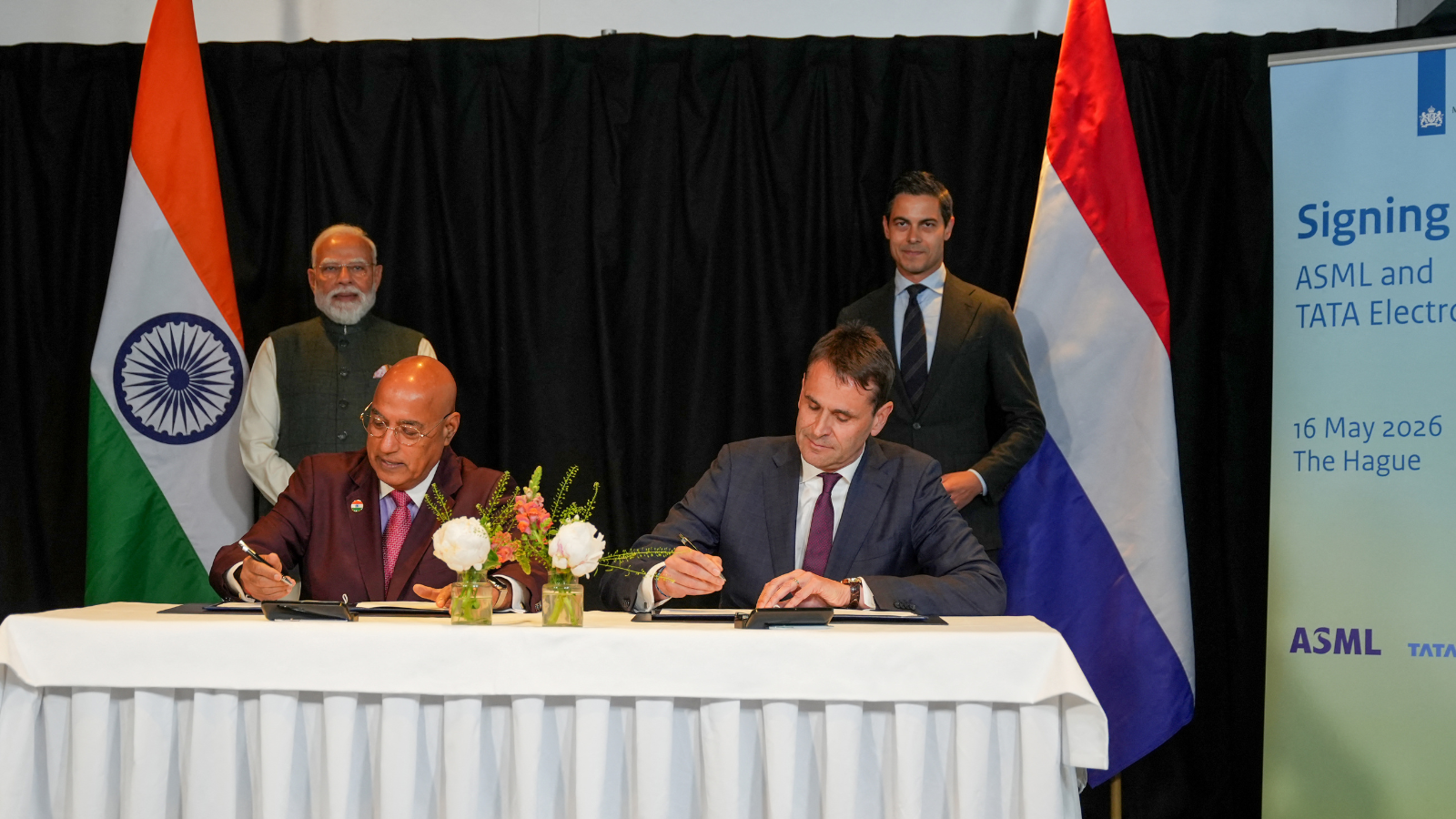
The ASML MoU with Tata Electronics is an indicator of how far the Indian semiconductor ecosystem has come. This ecosystem has been years in the making and represents real commercial logic.
Konark Bhandari
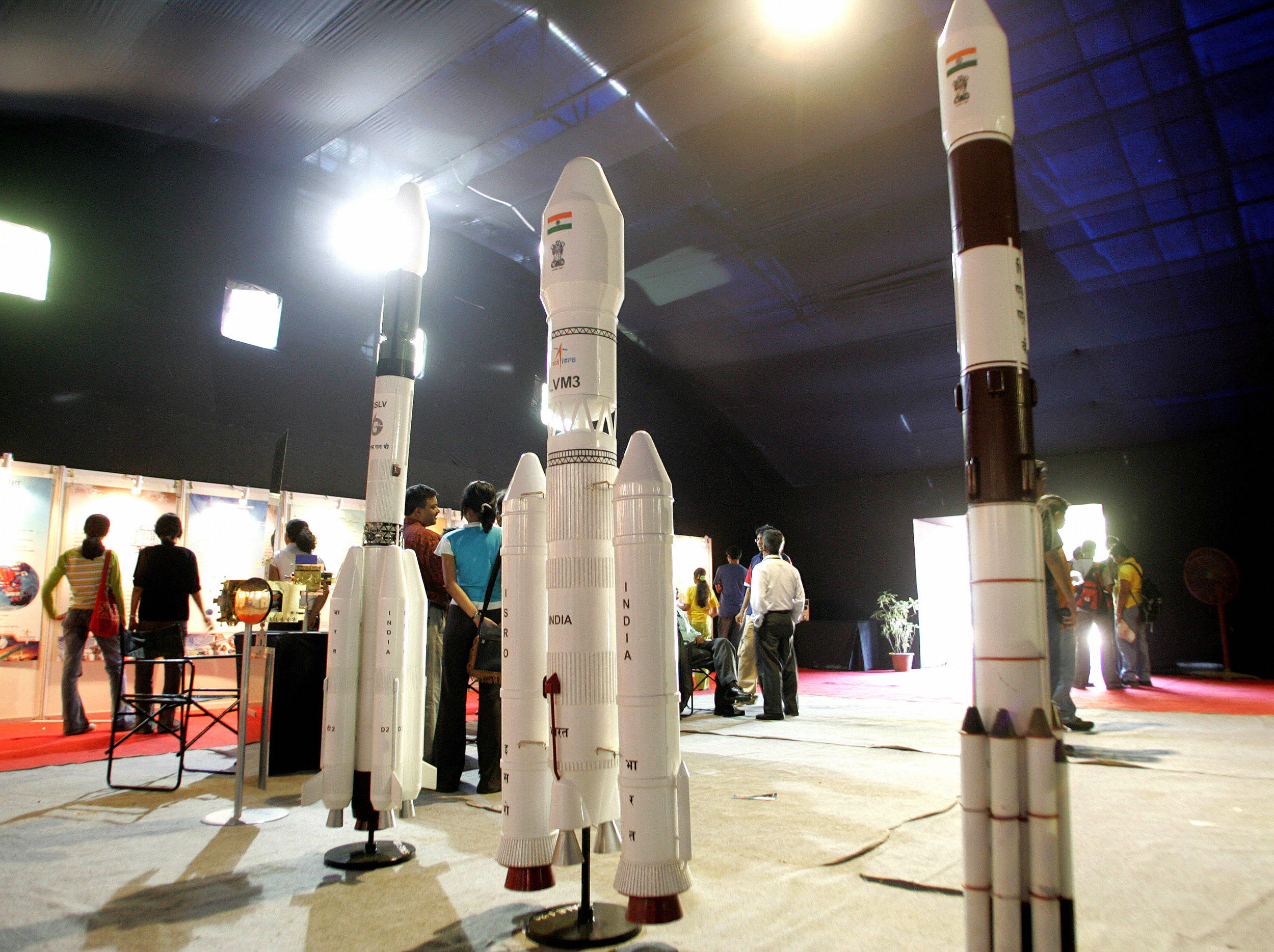
This paper examines the relationship between India’s evolving space policy and the corresponding growth in private space ventures. It analyzes both the enabling factors created by recent regulatory changes and the persistent challenges facing entrepreneurs in this capital-intensive, highly regulated industry.
Harshan Vazhakunnam

The U.S.–India semiconductor cooperation story is well-stocked with top-level strategic intent. What remains unresolved, however, are some underlying challenges that will determine whether the cooperation actually functions. Three such friction points stand out.
Shruti Mittal