

Commentary
Aron Lund
{
  "authors": [
    "Aron Lund"
  ],
  "type": "commentary",
  "blog": "Diwan",
  "centerAffiliationAll": "",
  "centers": [
    "Carnegie Endowment for International Peace"
  ],
  "collections": [],
  "englishNewsletterAll": "",
  "nonEnglishNewsletterAll": "",
  "primaryCenter": "Carnegie Endowment for International Peace",
  "programAffiliation": "",
  "programs": [],
  "projects": [],
  "regions": [
    "Middle East",
    "Türkiye",
    "Iraq",
    "Syria"
  ],
  "topics": []
}
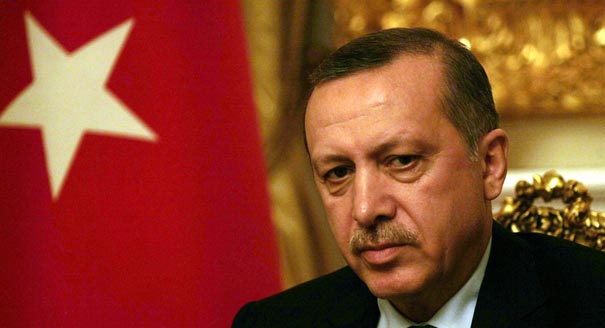
Source: Getty
While Turkey is likely to lend assistance to the U.S.-led campaign against the Islamic State, the recent parliamentary vote won’t trigger any military action by itself. For Turkey, the top priority is not to join the campaign but to leverage it for other purposes.
On October 2, the Turkish parliament voted to authorize Turkey’s government to order a military intervention in Syria and Iraq, if and when that becomes necessary to protect the nation.
Until now, Turkey has stayed out of the U.S.-led international coalition bombing extremists from the so-called Islamic State, an al-Qaeda splinter group also known as ISIS or ISIL, in neighboring Iraq and Syria. Furthermore, it refuses to intervene in support of Kurdish militants in the Kobane enclave in northern Syria, even as their defenses are overrun by Islamic State forces and refugees pour across the Turkish border. This has to do with the fact that the Kurdish fighters in Kobane are linked to the Kurdistan Workers’ Party or PKK, Turkey’s primary adversary, which is even now involved in violence against the army. But Turkey has deployed tanks to the border area and could, if it decided to, tip the balance in the battle. In addition, Turkish Deputy Prime Minister Bülent Arinc recently warned that the Islamic State is advancing toward the tomb of Suleyman Shah—a small Turkish-controlled exclave in northern Syria.
The parliamentary vote and the emergence of new crises on the border have raised expectations that Turkey will now join in the attacks on the Islamic State, whether in Kobane or elsewhere, ruffling the feathers of some regional states. “In the current situation, the countries of the region must act with responsibility,” warned Iran’s foreign minister, Mohammad Javad Zarif.
But the Turkish decision is far less dramatic than it seems. While Turkey is likely to lend assistance to the U.S.-led campaign, the parliamentary vote won’t trigger any military action by itself. Much of the reporting and commentary on the vote has overlooked that this is in fact the third year in a row that Turkey’s parliament has issued an authorization for military force.
The first of such resolutions was passed in October 2012, after several exchanges of fire across the Syrian-Turkish border. The one-year authorization took aim at the government of Syrian President Bashar al-Assad, serving as a shot across the bow by lowering Turkey’s threshold for intervention.
However, no intervention ever came. The parliament therefore extended its one-year deadline in October 2013. Again, no intervention took place during the year, and the resolution is set to expire today. That’s why the Turkish parliament has issued a resolution now—not because of the fighting in Kobane or the U.S.-led coalition against the Islamic State, although it may of course be used to join these battles.
As for Iraq, a similar Turkish policy has existed since October 2007, when the parliament voted to give a one-year authorization to intervene against PKK militants hiding in northern Iraq. In spring 2008, the Turkish army conducted a major cross-border campaign and it struck the PKK camps again in late 2011. But most years, the resolution has simply been renewed as a routine matter with no expectation of imminent military action.
Two things are different this time around. Instead of simply presenting the Iraq and Syria resolutions for renewal, as per the usual routine, the Turkish government merged them into one single resolution authorizing the government to “defeat attacks directed at our country from all terrorist groups in Iraq and Syria.” It also added a new element by granting the government a one-year mandate “to allow foreign troops in Turkey for the same purposes.”
That’s a broader scope than previous resolutions had, and it seems designed to grant the government a free hand in striking the Islamic State. But the vote itself doesn’t signal that an intervention is in the works. “Don't expect any immediate steps,” said Turkish Defense Minister Ismet Yilmaz. Because for Turkey, the top priority is not to join the campaign against the Islamic State but to leverage it for other purposes.
“Three things are of the utmost importance,” Turkish President Recep Tayyip Erdoğan said in late September. “Firstly, the formation of a no-fly zone; secondly, the formation of a safe haven on the Syrian side and preparation for its organization and administration; and thirdly we will discuss which actors will manage this process.”
Next week, the top two officials running the U.S. campaign against the Islamic State, John Allen and Brett McGurk, will be visiting Turkey. The Ankara government is then expected to try to negotiate accession to the anti-jihadi coalition in return for U.S. participation in a no-fly zone over northern Syria.
Such direct military intervention against Assad's government is something the United States has long sought to avoid, but it is a core goal of Turkish policy and a long-standing demand of much of Syria’s opposition. With the U.S. Air Force now operating inside Syrian airspace and the Turkish parliament having cleared the way for foreign forces on its soil, a no-fly zone is no longer the distant possibility it used to be. But U.S. and Turkish views on the issue remain far apart, and overcoming U.S. objections will prove much harder for Erdoğan than securing the support of his own parliament.
Former Nonresident Fellow, Middle East Program
Aron Lund was a nonresident fellow in the Middle East Program and the author of several reports and books on the Syrian opposition movement.
Recent Work
Aron Lund
Aron Lund
Carnegie does not take institutional positions on public policy issues; the views represented herein are those of the author(s) and do not necessarily reflect the views of Carnegie, its staff, or its trustees.
In Basra, an ethnoracial minority wages a constant struggle to assert itself in the face of marginalization.
Zeinab Shuker
In an interview, Kheder Khaddour explains that Damascus is trying to stabilize its borders, but avoiding war isn’t guaranteed.

Michael Young
As Iran defends its interests in the region and its regime’s survival, it may push Hezbollah into the abyss.
Michael Young
A recent offensive by Damascus and the Kurds’ abandonment by Arab allies have left a sense of betrayal.
Wladimir van Wilgenburg
The government’s gains in the northwest will have an echo nationally, but will they alter Israeli calculations?

Armenak Tokmajyan