

Research
- +11
Frances Z. Brown, Nate Reynolds, Priyal Singh, …
{
  "authors": [
    "Frederic Wehrey"
  ],
  "type": "commentary",
  "blog": "Diwan",
  "centerAffiliationAll": "",
  "centers": [
    "Carnegie Endowment for International Peace",
    "Carnegie Russia Eurasia Center"
  ],
  "collections": [],
  "englishNewsletterAll": "",
  "nonEnglishNewsletterAll": "",
  "primaryCenter": "Carnegie Endowment for International Peace",
  "programAffiliation": "",
  "programs": [],
  "projects": [],
  "regions": [
    "Middle East",
    "Saudi Arabia",
    "Gulf"
  ],
  "topics": []
}
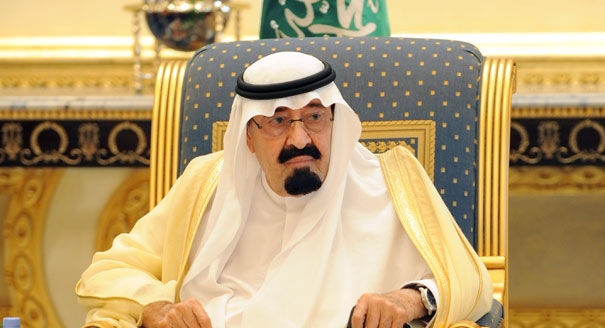
Source: Getty
Despite the speculations over the effects of Saudi succession, the kingdom’s foreign policies are likely to remain unchanged and have been remarkably consistent since the reign of King Fahad bin Abdul Aziz.
A king has passed in Saudi Arabia. And yet, despite the breathless speculation over the seismic effects of succession, the kingdom’s foreign policies are likely to remain unchanged. What is often overlooked is that Saudi foreign policy has been remarkably consistent since the reign of King Fahd bin Abdul Aziz. The Al Saud family is a tightly knit, conservative coterie that shares a similar vision of the world and Saudi Arabia’s place in it.
There are several indications to suggest that the Saudi succession is unlikely to lead to major changes in policies over the short term. King Abdullah had been largely incapacitated before his death, functioning for, at most, a couple hours a day. The new king, Salman bin Abdul Aziz, and Crown Prince Muqrin bin Abdul Aziz had represented King Abdullah at various functions in the past few years. The new head of the royal court is also the new defense minister, Mohammed bin Salman. At only thirty-four years old, he’s a young son of King Salman, but he has been head of Salman’s court as crown prince. As Salman’s health has deteriorated (he’s reportedly suffering dementia), Mohammed bin Salman has grown very powerful and influential over his father, which has made many Saudi royals very concerned about his power.
Saudi policy is likely to remain unchanged on the Iran front too. The Saudi distrust of Iranian power in the region is shared by many first generation princes. It is true that Abdullah spearheaded the Saudi-Iranian détente in the 1990s under former Iranian president Hashemi Rafsanjani. But with regard to current relations, King Abdullah was always suspicious about whether President Hassan Rouhani could deliver with the hardliners in Iran’s Revolutionary Guard Corps actually making decisions. Given recent events in Yemen as well as the ongoing conflicts in Syria and elsewhere, the enmity between Saudi and Iran is likely to continue under King Salman bin Abdul Aziz.
With the purview of Prince Mohammed bin Nayef on Syria and Prince Bandar bin Sultan on Egypt, one should expect Saudi policies toward the two countries not to change with the coming of a new Saudi king. Saudi aid to Egypt has already been curtailed and there are moves to pressure Egyptian President Abdel Fatah el-Sisi to make subsidy reforms. The Saudis cannot sustain the aid indefinitely with the declining price of oil and a projected budget deficit of more than 1 percent in 2015, the highest deficit in its history.
There are mainstream Saudis who recognize the threat posed by the Islamic State to the kingdom, but at the same time, they may tacitly acknowledge the virtues of the jihadist group as a Sunni buffer against an expanding Shia crescent. The Saudis have definitely instructed their official clerical establishment to demonize the Islamic State, but the fact remains that the Islamic State’s textbooks and ideology draw heavily from Saudi religious scholars. None of this is likely to change under the leadership of King Salman, who is thought to be more conservative than King Abdullah. The Saudi authorities under Abdullah have imprisoned Salafi clerics who opposed King Abdullah’s reforms and this trend of controlling clerical discourse will continue.
Saudi oil policy has been largely controlled by technocrats, headed by Ali al-Naimi, the Saudi minister of petroleum and mineral resources. Further, one of the most influential figures in the ministry is Abdulaziz bin Salman, the son of King Salman. Thus, again, one should not expect the change in monarch crisis to affect the Saudi oil policy in the short term. Saudi Arabia is likely to continue to favor preserving its market share even as this means the decline of the price of oil.
The swift appointment of Interior Minister Mohammed bin Nayef as the new deputy crown prince has finally shown how power would move to the next generation in Saudi Arabia. Mohammed bin Nayef, a grandson of the founder of Saudi Arabia, has led Saudi counterterrorism efforts since the early 2000s. While some may hope for reforms, as the throne moves to younger generations, one should not expect much in future years.
The current crown prince, Muqrin bin Abdul Aziz, is rumored to be a liberal, but he has reportedly argued for the suppression of Shias in the Eastern Province. Further, Minister of Interior Prince Mohammed bin Nayef may be effective at counterterrorism, but his appointment as deputy crown prince is no good news for liberal activists, as his position at the interior ministry has meant that he has responsible for the suppression of all sorts of dissent at home, including by liberals.

Senior Fellow, Middle East Program
Frederic Wehrey is a senior fellow in the Middle East Program at the Carnegie Endowment for International Peace, where his research focuses on governance, conflict, and security in Libya, North Africa, and the Persian Gulf.
Recent Work


Frances Z. Brown, Nate Reynolds, Priyal Singh, …
Charles H. Johnson, Frederic Wehrey
Carnegie does not take institutional positions on public policy issues; the views represented herein are those of the author(s) and do not necessarily reflect the views of Carnegie, its staff, or its trustees.
In an interview, Roger Diwan discusses where the global economy may be going in the third week of the U.S.-Israeli war with Iran.

Nur Arafeh
In an interview, Andrew Leber discusses the impact the U.S. and Israeli war against Iran is having on Arab Gulf states.

Michael Young
In an interview, Sergei Melkonian discusses Armenia’s and Azerbaijan’s careful balancing act among the United States, Israel, and Iran.

Armenak Tokmajyan
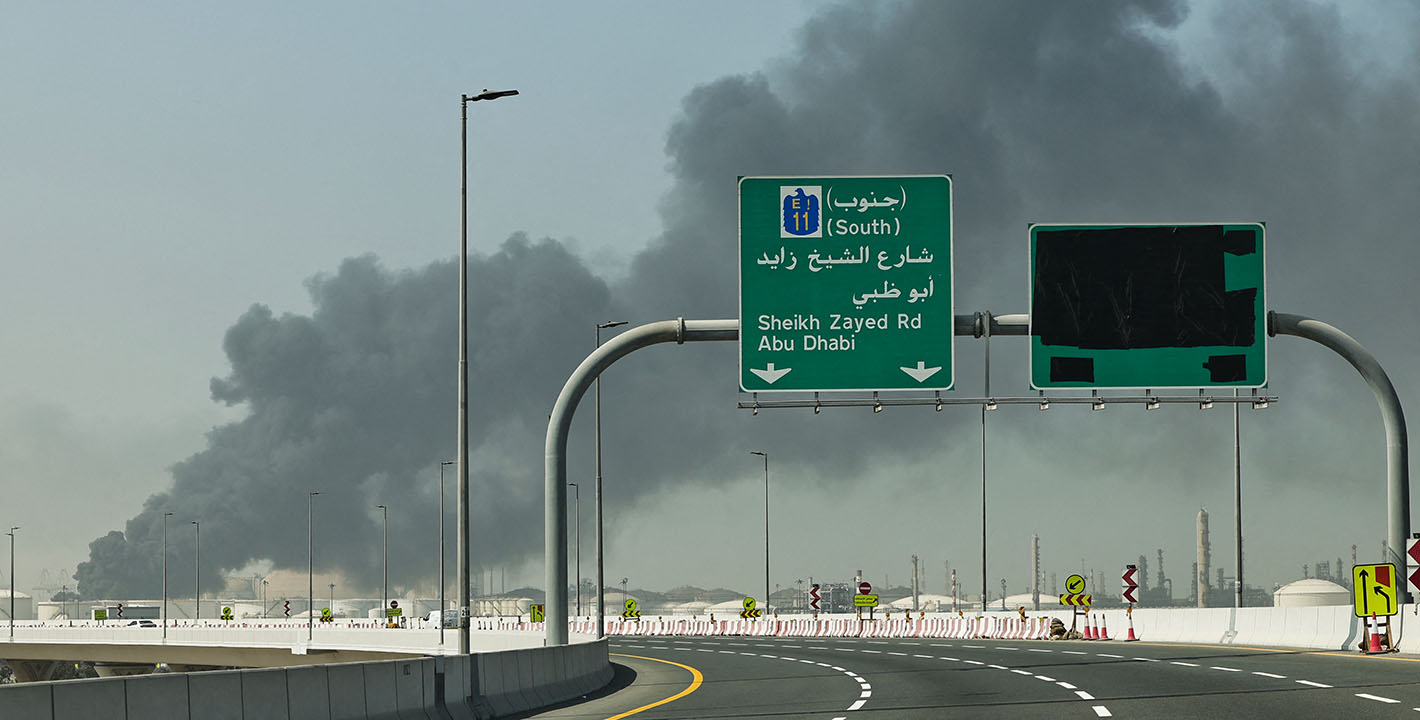
The countries in the region are managing the fallout from Iranian strikes in a paradoxical way.

Angie Omar

In an interview, Hassan Mneimneh discusses the ongoing conflict and the myriad miscalculations characterizing it.
Michael Young