

Commentary
Michael Young
{
  "authors": [
    "Michael Young"
  ],
  "type": "commentary",
  "blog": "Diwan",
  "centerAffiliationAll": "dc",
  "centers": [
    "Carnegie Endowment for International Peace",
    "Malcolm H. Kerr Carnegie Middle East Center"
  ],
  "collections": [
    "Inquiring Minds"
  ],
  "englishNewsletterAll": "menaTransitions",
  "nonEnglishNewsletterAll": "",
  "primaryCenter": "Malcolm H. Kerr Carnegie Middle East Center",
  "programAffiliation": "MEP",
  "programs": [
    "Middle East"
  ],
  "projects": [],
  "regions": [
    "Levant",
    "Lebanon",
    "Middle East"
  ],
  "topics": [
    "Economy",
    "Political Reform"
  ]
}
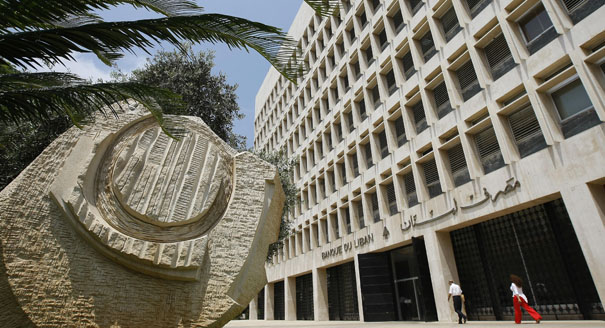
Source: Getty
A regular survey of experts on matters relating to Middle Eastern and North African politics and security.
Zafiris Tzannatos | Former professor in and chair of the Economics Department at the American University of Beirut, served as a senior advisor to many international organizations and governments, including that of Lebanon
Perhaps a more appropriate term is “crisis” and, under current economic conditions the answer to the question is “yes”—even if the crisis is half the size, say, of the one that occurred in Greece. Real GDP growth is projected to remain anemic at around 2 percent per year (representing half of Lebanon’s average in the post-civil war period until 2014) against a very tenuous fiscal position. This includes a high debt-to-GDP ratio, estimated at 150 percent by the World Bank and projected to increase, as well as a fiscal deficit of 10 percent. At the same time remittances have been declining while merchandize imports have been rising, as has the already sizable current account deficit that stands presently at 20 percent.
These three indicators (the debt and the dual fiscal and current account deficits) are not only sizeable as such, they are also among the largest in the world. This makes the size of the problem formidable, as evidenced by structural adjustment programs internationally, even if one bypasses the risks arising from the highly dollarized pegged economy and the lack of dynamism in a business environment dominated by rentierism and corruption.
Prospects can deteriorate further (and quickly) with a reversal in oil prices, increases in international interest rates, and an appreciation of the euro, which have so far been favorable to the Lebanese economy. One can only hope that regional instability will be reduced and that the political process will not revert back to stalemate. But even under the most promising scenarios in these two areas, the economic challenges are daunting.
David Butter | Associate fellow in the Middle East and North Africa program at Chatham House, the Royal Institute of International Affairs
The Lebanese economy is far from healthy, but it’s not on the brink of bankruptcy. Public debt is a daunting 148 percent of GDP, but it has been higher in the past, and there are well-established mechanisms to refinance debts as they fall due. The foreign exchange reserves of the Central Bank have climbed to $42 billion—partly thanks to switching Lebanese pound debt to Eurobonds—which is enough to cover more than two years of imports. Real GDP growth has slumped since 2010 to below 2 percent, reflecting the impact of the Syrian conflict. Syrian reconstruction and an offshore oil and gas bonanza could turn things round, but not for some time, if at all. The revival of tourism has been positive, but could be undermined by new security crises.
Keeping Lebanon solvent depends on maintaining the confidence of creditors. They are unlikely to be impressed by the government’s failure to get a grip on fiscal policy. The recent deal for higher state salaries in return for modest hikes in the value-added tax and some other taxes has been stymied by political squabbles, and the budget deficit is getting close to 10 percent of GDP.
Sami Nader | Director of the Levant Institute for Strategic Affairs, economist, and a lecturer at Université Saint Joseph in Beirut
Lebanon’s financial situation today is not so very different from that of Greece in 2009. It faces an increasing budget deficit, equivalent to 11 percent of GDP, which is leading to an alarming level of public debt, coupled with a high level of corruption and the absence of growth. In fact for the sixth year in a row, since the outbreak of the uprisings in the Arab world, particularly in Syria, Lebanon’s debt is growing five times faster than its economy—the economy is growing at an average growth rate of 1.2 percent.
Lebanon’s Central Bank has managed so far to absorb the burden of the debt through its repeated resort to financial engineering, drawing on foreign currency in banks that are already overloaded with treasury bills. However, such policy is unsustainable and will not make up for the absence of economic planning and structural reforms. Unless drastic changes are initiated to reabsorb the budget deficit, such as privatizing the national electricity utility, Electricité du Liban, which is responsible for a significant share of the deficit, and kick-starting rapid growth, Lebanon is indeed edging towards collapse.
Sami Atallah: Economist and director of the Lebanese Center for Policy Studies in Beirut
Indeed, Lebanon appears to be headed toward economic bankruptcy. Its chronic fiscal deficit, compounded with a trade deficit, is exposing the country’s financing needs. Although for many years Lebanon managed to attract capital from abroad to address this gap through overly generous interest rates offered to domestic banks, this practice may be coming to an end. Declining oil rents in the Gulf countries, which are reducing remittances, regional instability, including the war in Syria, as well as a lack of interest by Gulf governments in coming to Lebanon’s rescue, all mean the Central Bank has had to financially engineer ways to bring capital into the banking system for finance consumption.
Yet the political elite does not seem willing to actually reform the system that is serving its interests through excessive spending and debt financing. Politicians will buy time through other gimmicks and will try to monetize the Syrian refugee crisis through another international conference to collect funds, lest any economic collapse have geopolitical consequences for Europe. While some may then praise the resilience of the economic system, it will remain fragile and vulnerable, with a poor record in creating jobs and enhancing the productivity of the private sector.
While Lebanon may avoid a crash as a result of these temporary measures, one thing is for sure: The country’s policymakers are morally and intellectually bankrupt when it comes to developing an economic system that delivers equitable growth for its citizens.

Editor, Diwan, Senior Editor, Malcolm H. Kerr Carnegie Middle East Center
Michael Young is the editor of Diwan and a senior editor at the Malcolm H. Kerr Carnegie Middle East Center.
Recent Work
Michael Young
Michael Young
Carnegie does not take institutional positions on public policy issues; the views represented herein are those of the author(s) and do not necessarily reflect the views of Carnegie, its staff, or its trustees.
There is a disturbing structural parallel between the old global energy economy and the new green transition.

Angie Omar
Any move by the United States to make good on Trump’s suggestion that Washington persuade Damascus to confront Hezbollah militarily would have catastrophic consequences.

Kheder Khaddour
As talks begin between Washington and Tehran, Beirut has an opening to advance a regional plan for the party’s disarmament.
Michael Young
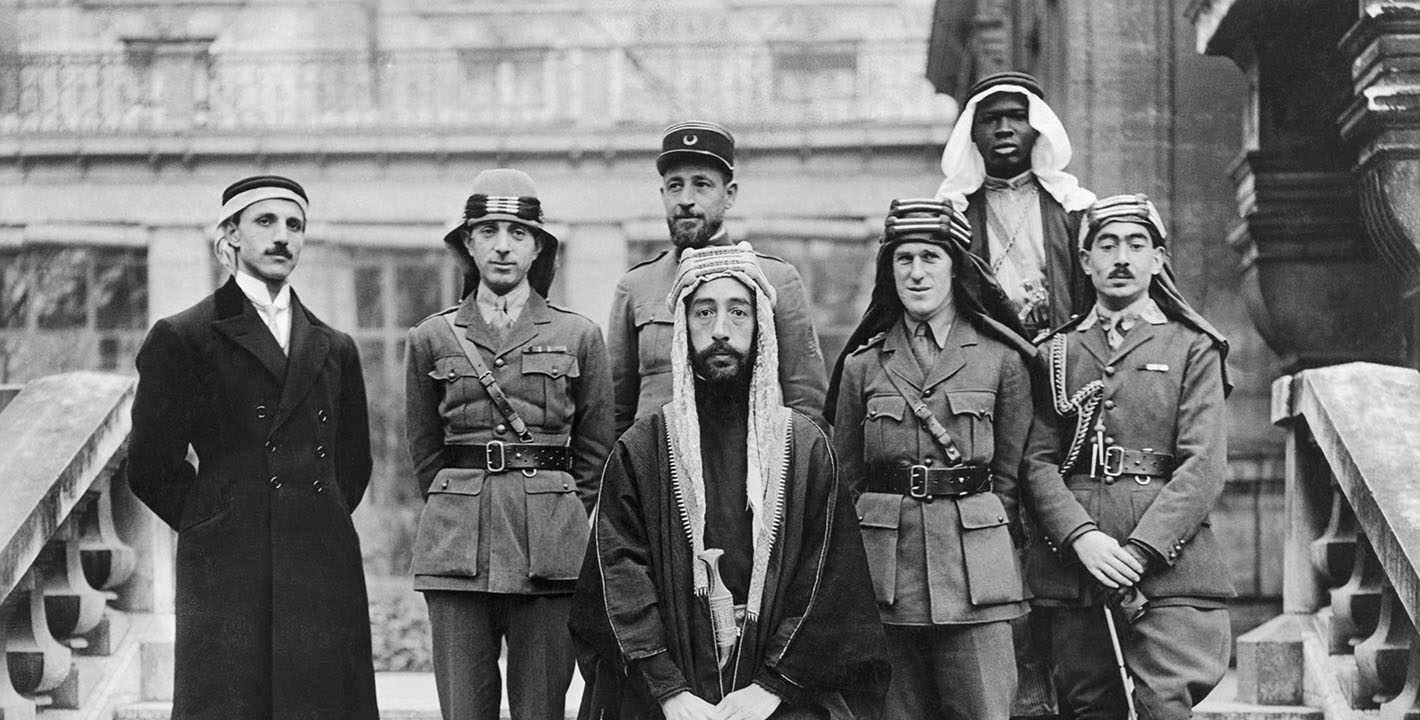
In an interview, Elizabeth Thompson recalls how the country formulated a liberal constitution in 1920, before being denied by France and Britain.
Michael Young
As negotiations with Iran and Lebanon continue, chaos is at the heart of the Netanyahu government’s calculations.
Michael Young