

Article
Kheder Khaddour
{
  "authors": [
    "Kheder Khaddour"
  ],
  "type": "commentary",
  "blog": "Diwan",
  "centerAffiliationAll": "",
  "centers": [
    "Carnegie Endowment for International Peace",
    "Malcolm H. Kerr Carnegie Middle East Center"
  ],
  "englishNewsletterAll": "",
  "nonEnglishNewsletterAll": "",
  "primaryCenter": "Malcolm H. Kerr Carnegie Middle East Center",
  "programAffiliation": "",
  "regions": [
    "Lebanon",
    "Syria",
    "Levant",
    "United States",
    "Israel"
  ]
}
Source: Getty
Any move by the United States to make good on Trump’s suggestion that Washington persuade Damascus to confront Hezbollah militarily would have catastrophic consequences.
On June 16, 2026, during a meeting with Qatar’s ruling emir on the sidelines of the Group of 7 summit in France, U.S. President Donald Trump floated a proposal that Syria, rather than Israel, “take care of Hezbollah” in Lebanon. The U.S. desire, it would seem, is to remove Lebanon from Iran’s orbit or at least reduce Tehran’s ability to use Hezbollah to its advantage. Yet the new regime in Damascus that is apparently expected to help stabilize Lebanon has yet to show that it can stabilize Syria itself following the ouster of former President Bashar al-Assad. Moreover, a U.S. attempt to pit largely Sunni Syria against Shiite Hezbollah (and by extension Iran) would almost certainly sharpen sectarianism among both Lebanese and Syrians. Ultimately, it would transform a geopolitical conflict—that between the United States and Israel on the one hand and Iran on the other—into a sectarian clash concentrated within Lebanon’s borders.
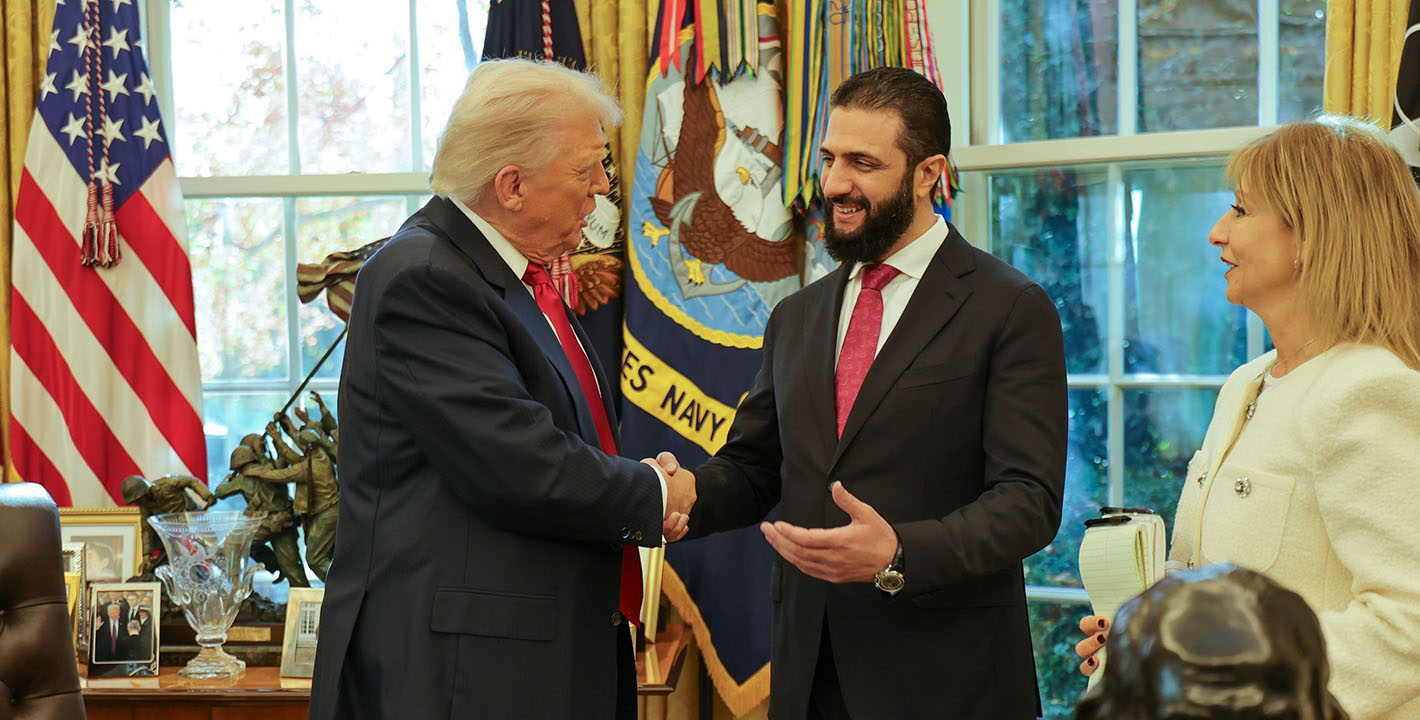
The proposal was no mere passing remark by Trump. The following day, the U.S. president said he had spoken with Syria’s President Ahmad al-Sharaa about Hezbollah. Additionally, it is no coincidence that the United States is in the process of reviewing its longtime designation of Syria as a state sponsor of terrorism. A lifting of the designation could open the way to security and even military cooperation between Washington and Damascus. Sharaa, for his part, denied that Syria had any intention to involve itself militarily in Lebanon. Pointedly, however, he recast Trump’s remarks as referring to “Syria’s role in seeking a safe and peaceful solution” for Lebanon. Even in this (admittedly more vague) scenario, Washington and Damascus may find that they can remove Lebanon from the set of bargaining chips that Iran wields in its repeated rounds of negotiations with the United States.
Indeed, in Washington’s calculation, the problem is not Hezbollah’s weapons alone, but that Tehran insists on including Lebanon in the negotiations; Iran has linked the durability and evolution of its fragile Memorandum of Understanding (MoU) with the United States to an Israeli withdrawal from Lebanon and a cessation of attacks on Lebanese targets. Thus, as long as Israel continues to occupy Lebanese land and launch strikes on various parts of the country in its quest to cripple Hezbollah, Tehran will repeatedly pause or suspend the MoU. In bringing Syria into the equation to battle Hezbollah, the United States could move Israel out of it. Syria would replace Israel as Hezbollah’s nemesis and fulfill the joint U.S.-Israeli objective of neutralizing and disarming the group. Presumably, Washington would portray Damascus’ involvement in Lebanon as a Syrian matter over which it has no control, and therefore something that must remain unconnected to U.S.-Iranian negotiations.
Yet herein lies the paradox. Washington is not considering trying to persuade Damascus to assume such an interventionist role because Syria is capable of doing so, but merely because it is hostile to Hezbollah, which supported Assad’s regime militarily. Hostility, however, does not make for sound policy, nor does it translate into control over consequences. Syria today is not a fully formed state with a unified national army and institutions; it is a fledgling regime trying to use a domestic military victory to reconstitute Syrian statehood.
Damascus is struggling to govern a country emerging from fourteen years of civil war, where power remains divided among factions and regions. The army is undergoing a process of rebuilding, the governing administration is still being assembled, and relations with minorities remain unsettled. Sectarian violence on the coast as well as in Suwayda, in which the regime’s security forces were heavily involved, along with tensions with Kurdish forces, have shown that the Syrian question boils down to whether a new center can persuade the country’s myriad communities that it represents them. Asking Damascus to intervene in Lebanon would bypass what should be given precedence: the new regime’s own political maturation.
Moreover, any Syrian military campaign in Lebanon would encounter serious obstacles. It would come face-to-face with a country emerging from a devastating Israeli onslaught and a collapsed economy, with a state unable to care for its citizens or make decisions of war and peace. Nearly 4,200 people have been killed, over 11,000 wounded, and around 1.2 million displaced in Israel’s pummeling of Lebanon, while tens of thousands of homes have been damaged or destroyed. This bitter reality is reshaping the country’s internal mood.
Even those Shiites taking part in the Lebanon-wide debate over whether Hezbollah should hand over its weapons to the Lebanese army have a more pressing matter with which to contend: the social and humanitarian catastrophe that war with Israel has brought upon their community. The sight of a largely Sunni Syrian force crossing the border to neutralize Lebanon’s most popular Shiite party could plunge Shiites as a whole into an existential crisis. This in turn might well galvanize even those members of the community who are not ordinarily disposed toward Hezbollah to rally around the group.
Other communities would respond with different fears and calculations. Christians do not form a single bloc with a unified position for or against Hezbollah. Whereas many view the party as an arm of Iran and its weapons as a source of war, others fear that a move by Damascus to break it could cause internal strife or even usher in a new period of Syrian domination of Lebanon. The Druze by and large read the new dispensation in Damascus through what is happening to minorities in Syria—particularly their kith and kin in Suwayda—meaning that most do not trust the new regime.
Because many Sunnis have long resented Hezbollah’s role in domestic Lebanese politics as well as its support for the toppled Syrian regime, some might look favorably on a decisive move against the party. Yet it would be foolish to regard the community in its entirety as a ready-made constituency for backing an externally mounted campaign targeting Hezbollah. Many Sunnis, embittered by how they were treated by the Lebanese authorities over their support for the uprising in Syria—the issue of pro-revolt Sunni Islamists still languishing in Roumieh prison remains a particularly sore point—are wary of enduring the same harsh measures. Ultimately, the idea of a Syrian military campaign against Hezbollah serves to drive a wedge between the Lebanese, even those within the same religious or sectarian community.
Indeed, Trump’s proposal reveals a misreading of Lebanon’s internal dynamics. In the larger scheme of things, it also reflects a problematic way of looking at the Levant. Tom Barrack, U.S. ambassador to Turkey and then-special envoy for Syria, captured something of this view in September 2025 when he said that the Middle East is not made up of nation-states—but rather tribes and villages and other oftentimes small sociopolitical units. His assertion indicated a tendency to see the region less as states in need of reconstruction and more as communal spaces that it is possible to rearrange for security-related ends. Lebanon is thereby reduced to a card to be removed from Iran’s hands, and Syria to an instrument for that purpose.
Yet countries do not overcome their challenges, much less emerge from ruin, when they are used in this way. The vacuum left by the absence of the state in Lebanon cannot be filled by a Syria that suffers from much the same problem. If anything, such an approach is liable to foment conflict. The conflict in question might prove less outwardly explosive than a regional war but more internally corrosive—in that it embeds itself within a single state, pitting its people against one another.
Nonresident Scholar, Malcolm H. Kerr Carnegie Middle East Center
Kheder Khaddour is a nonresident scholar at the Malcolm H. Kerr Carnegie Middle East Center in Beirut. His research focuses on tribal structures in the Levant, civil-military relations in Syria, and the role of borders in shaping local and national identities across the Middle East.
Recent Work
Kheder Khaddour
Kheder Khaddour, Issam Kayssi
Carnegie does not take institutional positions on public policy issues; the views represented herein are those of the author(s) and do not necessarily reflect the views of Carnegie, its staff, or its trustees.
As the U.S.-led Coalition withdraws, the Kurds’ reliance on Baghdad, and on themselves, will only increase.
Wladimir van Wilgenburg

In an interview, Ian Lustick and Eli Clifton discuss their new book on why a prominent ally has so much influence in America.

Michael Young

As the U.S. stumbles in its war with Iran, we are likely to see an acceleration of its disengagement from the region.
Michael Young
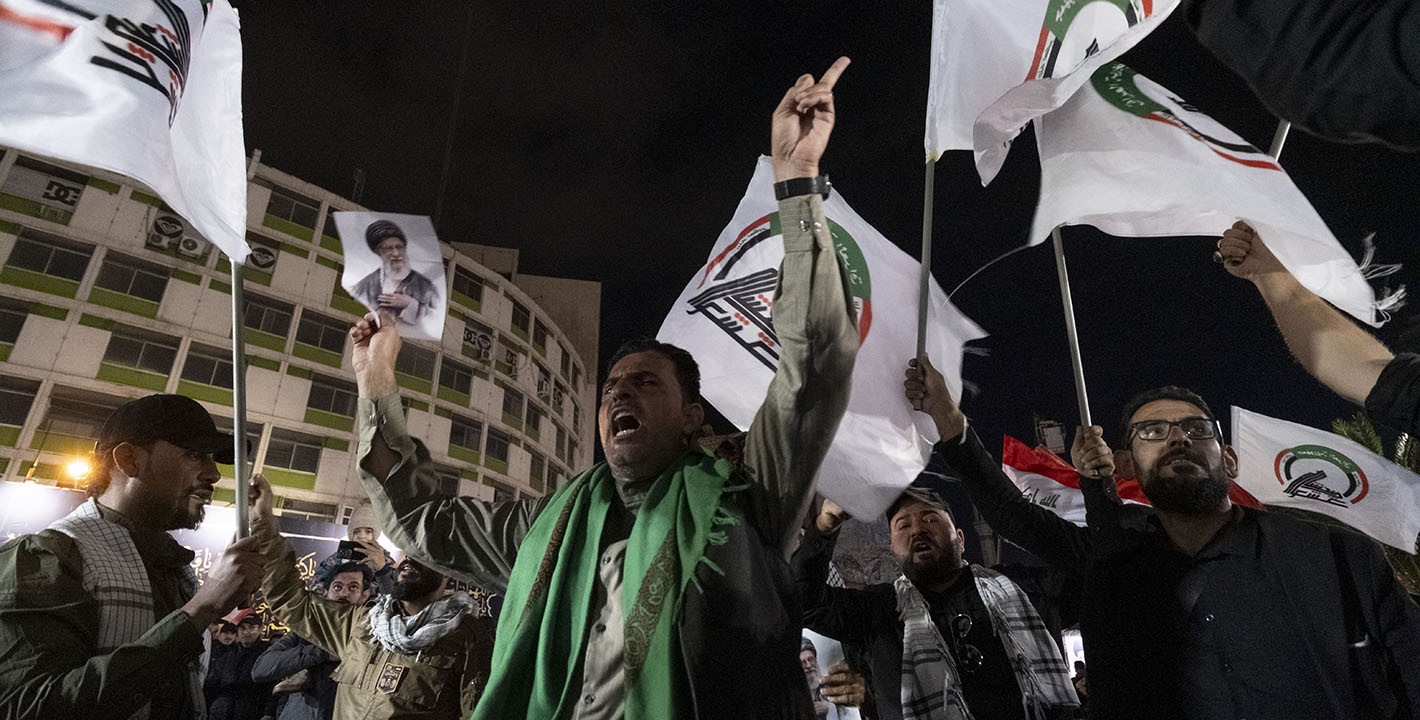
The Zaidi government’s objective to collect weapons is constrained by regional conflict, but it can take certain measures at home.
Ali Al-Mawlawi
It is improbable that Israel’s forthcoming elections will alter much in terms of how the country thinks about security.

Nathan J. Brown